House of Leaves Tirana: 700 Lek, Hours, What's Inside
Tirana's secret-police museum: 700 lek (about €7.60), cash only, daily 09:00-19:00 in summer, shut on winter Mondays. What's in its 31 rooms.
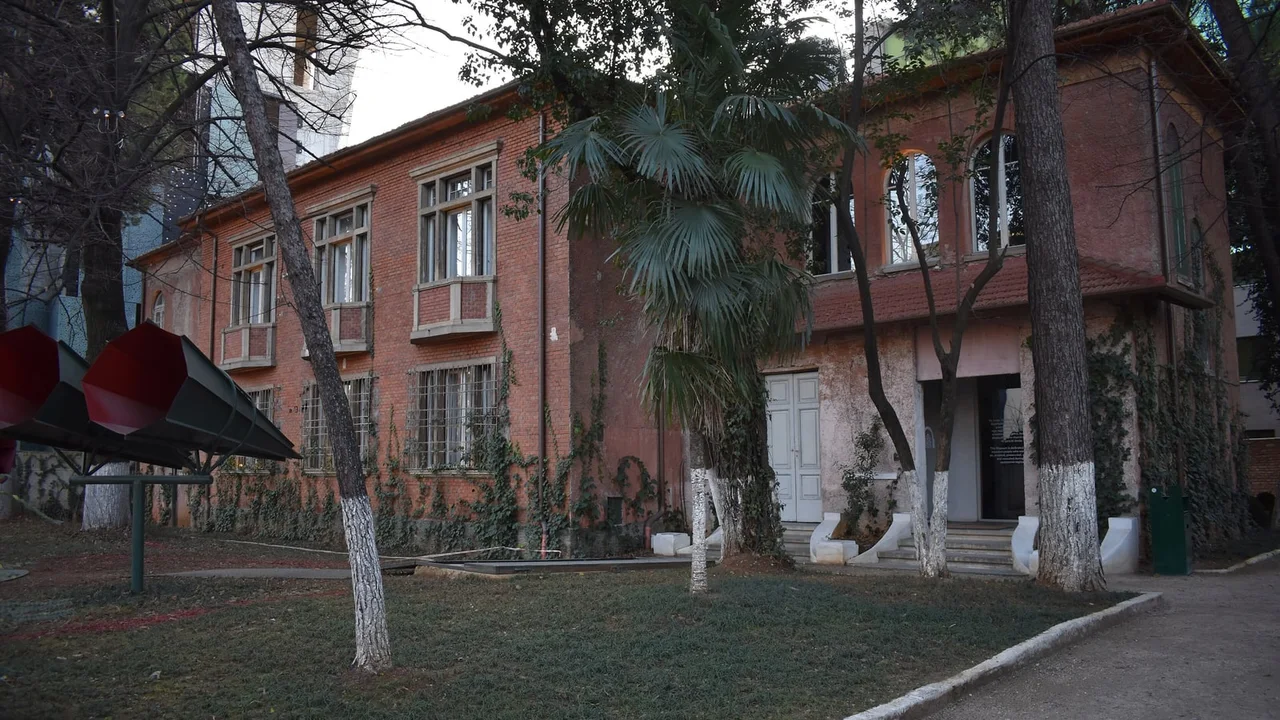
The House of Leaves is the villa where Albania’s secret police did its listening, and since May 2017 it’s been a museum of 31 rooms across the road from Tirana’s Orthodox cathedral. A ticket costs 700 lek (about €7.60, $8.50 or £6.50), cash only, and through the summer it opens daily from 09:00 to 19:00. Plan on an hour to an hour and a half. Bunk’Art 2, five minutes’ walk away, tells the whole police story from 1912; this is the close-up on the listening itself: informers, tapped phones, opened letters.
That summer timetable has an end date nobody announces. Sometime after mid-October the museum moves to winter hours (in 2025 its own website was still showing summer hours on 26 October), and in winter 2025-26 that meant closed on Mondays, 09:00 to 16:00 Tuesday to Saturday and 10:00 to 15:00 on Sundays.
A maternity clinic that became the listening post
The house went up in 1931 as an obstetric clinic, founded and run by the physician Dr. Jani Basho, and the museum calls it the first of its kind in Albania. During the German occupation it temporarily housed the Gestapo. In the first years after the war it was an investigation centre, which, in the museum’s own plain words, also made it a place where people were tortured.
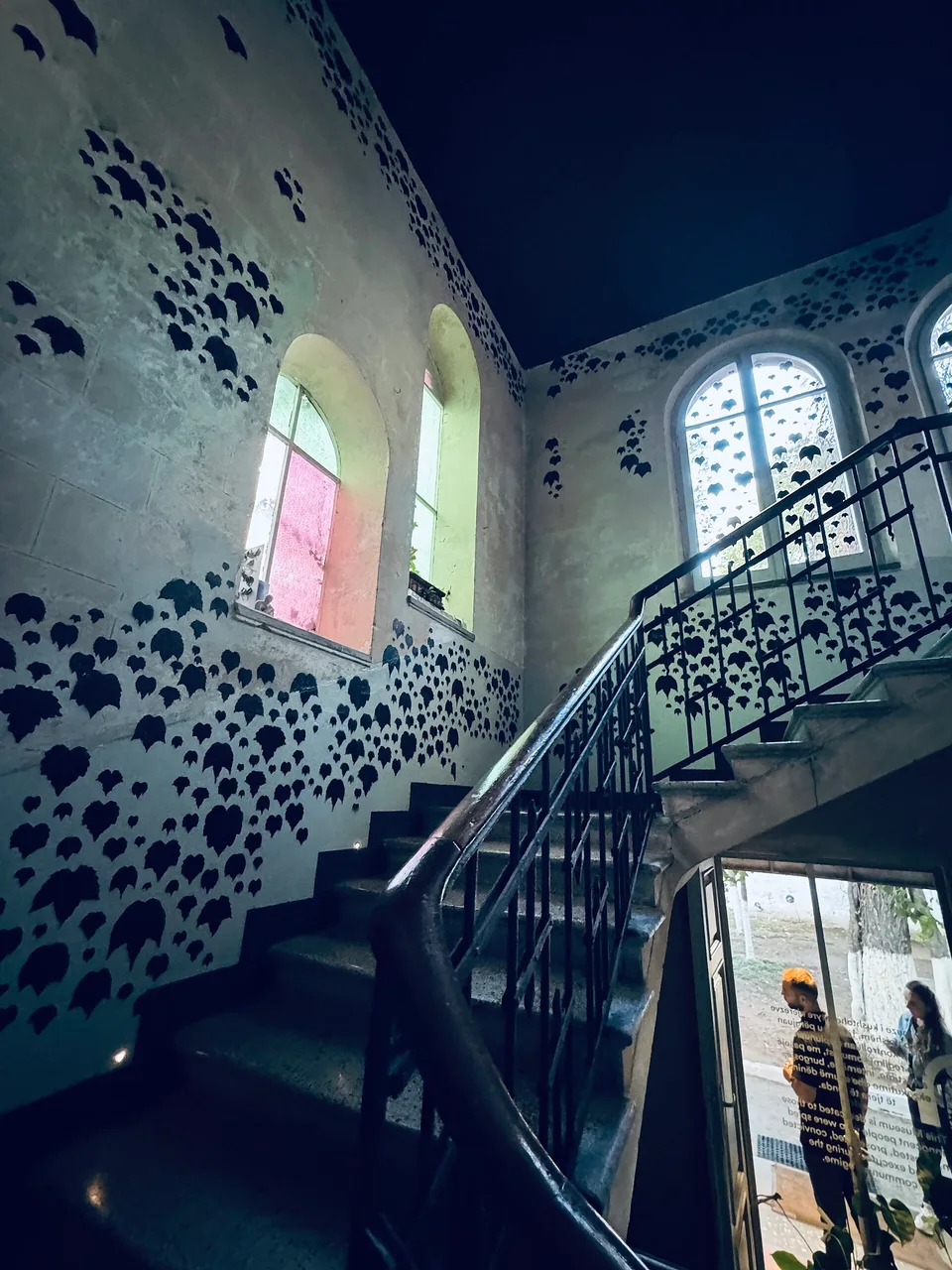
From the 1950s it became the seat of the Sigurimi’s technical and scientific branch: the department that planted bugs, tapped telephones and checked the post, plus a section that kept watch on foreigners. That work didn’t stop until the secret police was dissolved in 1991. The creeper over the front gave the house the name Tirana still uses, Shtëpia me Gjethe, the house with leaves.
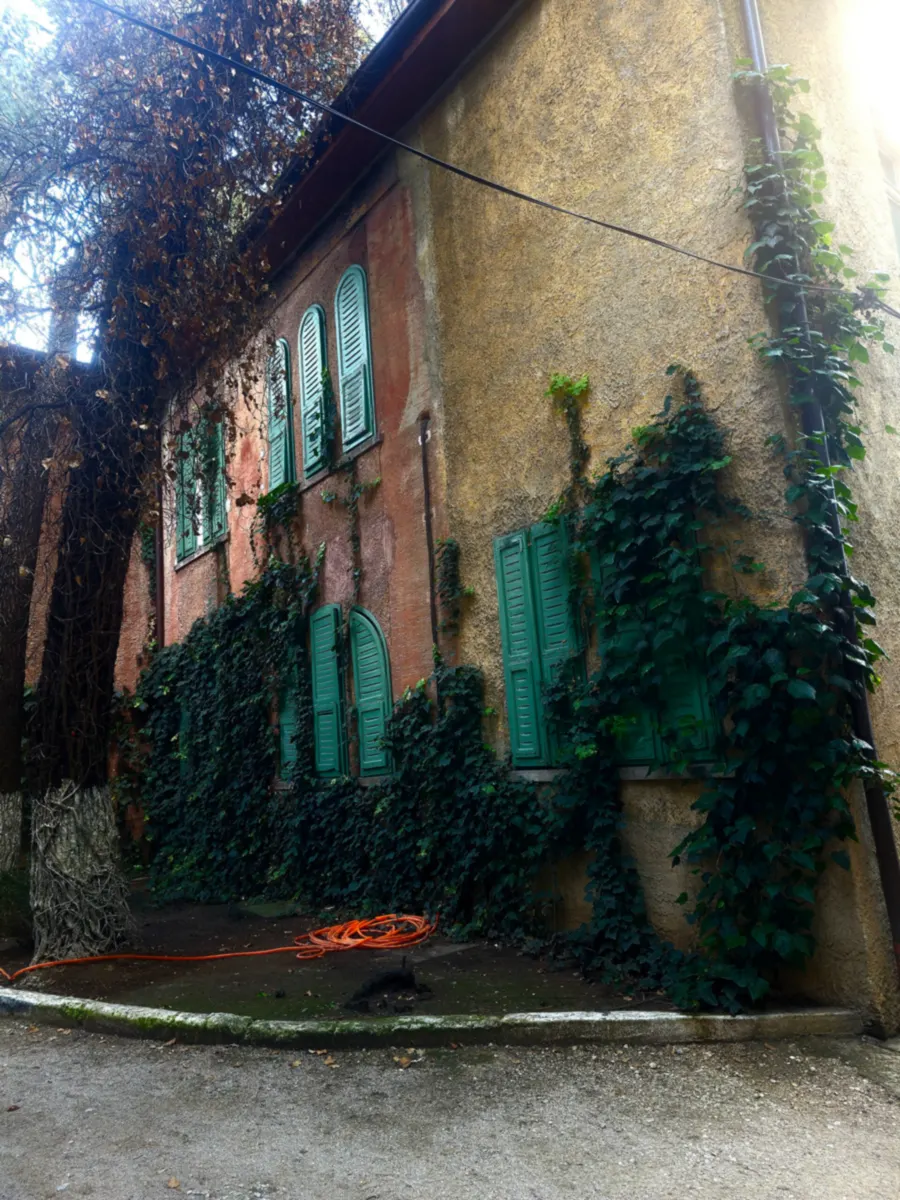
At the opening, the architect and curator Elisabetta Terragni said her team had asked for nothing to be moved and had spent two years studying the equipment. She pointed to the old doors and windows, the cracks left untouched and the original wooden parquet, which she called unbearably creaky. In a building devoted to eavesdropping, a floor that announces every step feels a little pointed. In December 2019 the culture committee of the Council of Europe’s Parliamentary Assembly chose it for the Council of Europe Museum Prize 2020; Roberto Rampi, its representative for the prize, called it “a very moving museum run on a very low budget by enthusiastic staff”.
What’s inside the 31 rooms
The exhibition is split into nine sectors over two floors, and it moves from the machines to the people who used them to the people they ruined. The sector names are the museum’s own:
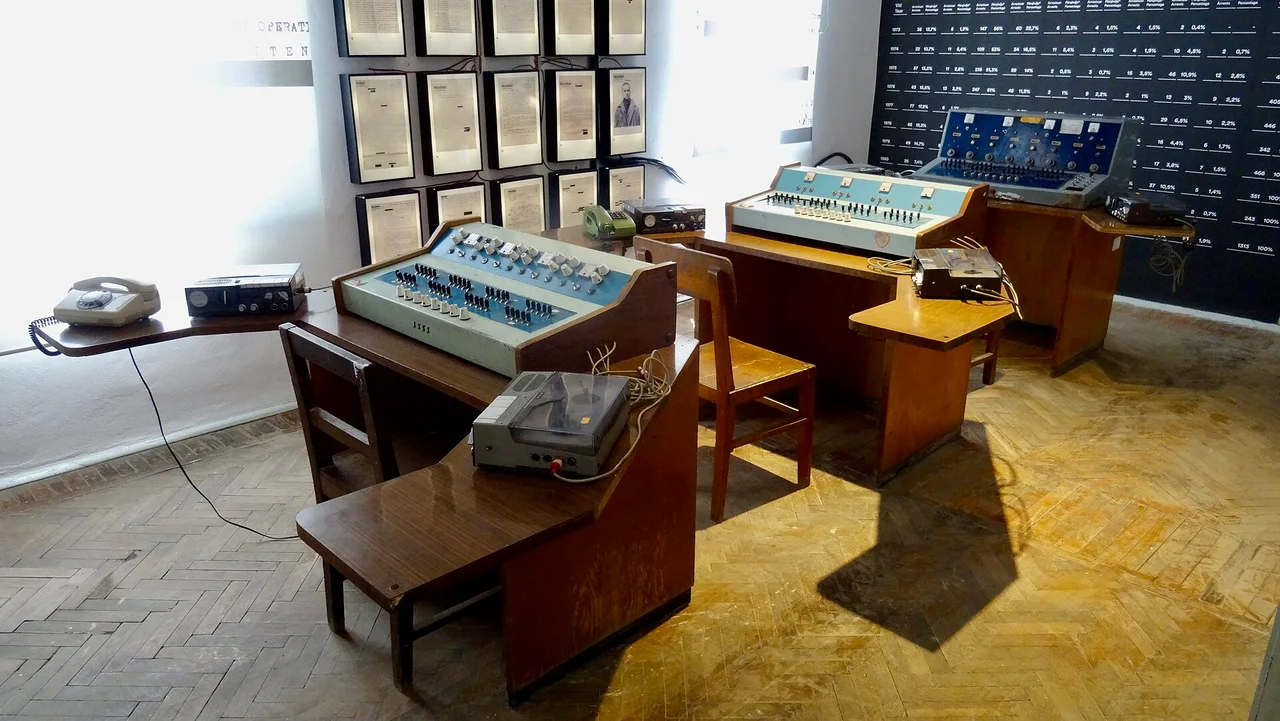
- Bugs and other creatures. Microphone transmitters, miniature cameras, tape recorders and the Interior Ministry’s instructions for the officers who planted them. The small radio bug is the star of the room.
- Living microphones. The informers, who usually went in before any device did. Declassified files show agents working under code names such as “Big Cupboard”, “Artist” and “Mountain”.
- What is the enemy? Show trials, and a room listing people imprisoned or killed for their politics. The museum’s figures: around 18,000 imprisoned and more than 5,500 executed, with or without a trial.
- The external enemy. Foreigners and diplomats were watched from here, and the documents trace interception cables near hotels and plans of surveillance equipment in the embassies area.
- Everyday life. A telephone-tap list from the Interior Ministry archive. In the 1970s Tirana had about 1,500 private phones, all handed out by special permission, and when the Sigurimi turned on a party official his phone wasn’t taken away. It had become a listening channel.
- Voices of the past. Recordings of intercepted conversations, with a sample of the transcripts State Security staff wrote up.
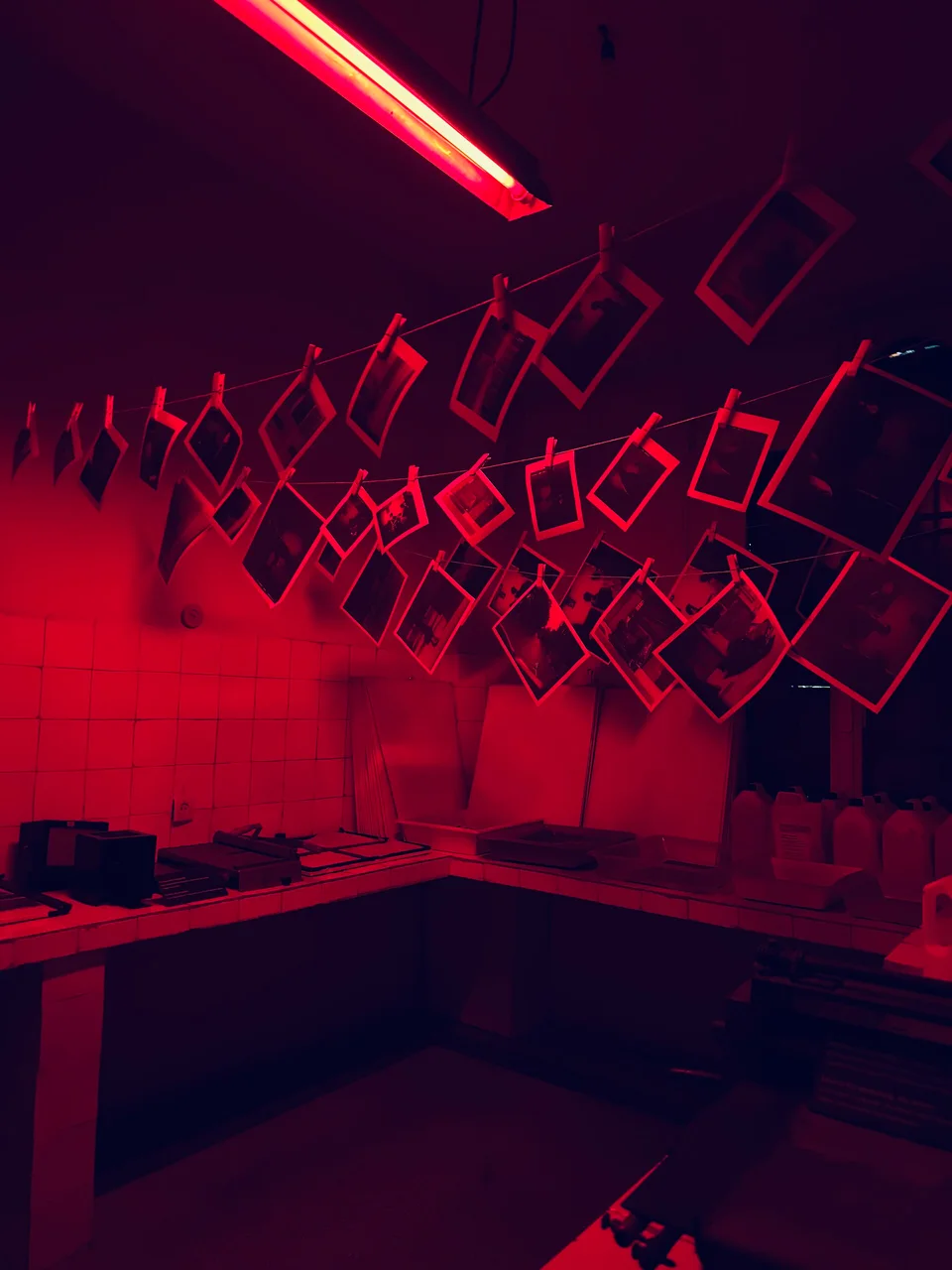
- Panopticon. The old clinic’s laboratory, where film was developed, keys were cut for doors and safes, and envelopes were opened and tested for invisible ink.
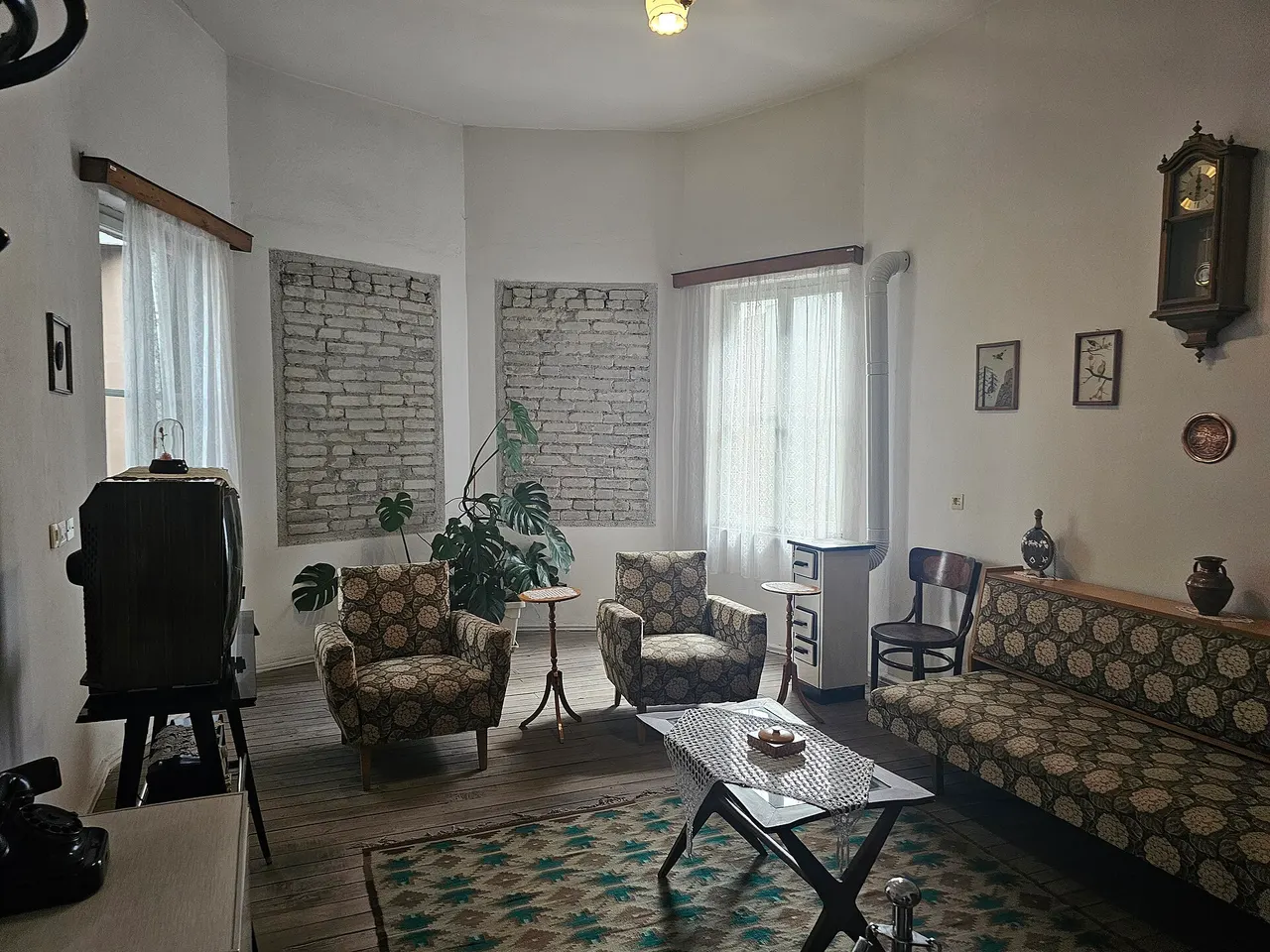
Not every room is about electronics. One sector, which the museum calls the Intermezzo, is simply a 1970s living room with real furniture from the period, and the chess box on display there was used to hide microphones. Elsewhere you’ll find a black coat, made in Albania in the 1980s, with a camera lens fitted behind one button and triggered from a grip in the pocket, and an ordinary-looking leather bag with room inside for a professional camera. They’re far less dramatic than the consoles and tape decks, and somehow worse.
Look out for the map in the middle of one room in the foreigners’ sector. The museum says it shows why this particular house made the perfect listening post. Its website doesn’t give the answer away, so that one you’ll have to read on the spot.
Cash at the desk, and a shorter winter day
Prices come from the museum’s own list (the page was last updated in September 2025):
| Who | Ticket |
|---|---|
| Standard entry | 700 lek (about €7.60) |
| Pupils and students | 210 lek |
| Pensioners, orphans, disabled visitors and one companion | 350 lek |
| Groups of more than 12, per person | 500 lek |
| Paraplegic and tetraplegic visitors | Free |
| Children under 12 | Free |
The English version of the price page says children go free only up to 8, while the Albanian version says under 12, so with a 9- to 11-year-old, be ready to pay. Free and reduced entry both depend on showing “the relevant document”, in the museum’s words, so bring the child’s passport or ID card and whatever card backs your own rate; the museum doesn’t say whether a foreign student or pension card counts, so ask at the desk. Keep the ticket until you leave, too: the museum asks you to.
The English page is blunt about money: cash only, in Albanian lek, so draw the notes before you walk over; the cash or card in Albania page covers where cards work.
On hours, the museum’s website showed 09:00 to 19:00, seven days a week when we checked on 2 October 2026, and closed Mondays, Tuesday to Saturday 09:00 to 16:00, Sunday 10:00 to 15:00 through winter 2025-26. The museum gave the same two timetables to the Accessible Balkan Museums catalogue back in 2022, so the pattern isn’t new. The date of the change isn’t published in advance. Tirana’s city website says 15 October and 1 May, yet the museum’s own site still showed summer hours on 26 October 2025 and winter hours in early May 2026. From mid-October to early May, then, don’t plan it for a Monday or the end of the afternoon, and if you’re cutting it fine, ring the museum on +355 69 967 6116 first.
A handful of days are free for everyone: 18 April, 18 May, 21 May and 29 September. Admission is also free on 28 and 29 November, but only for Albanian citizens.
Will you follow it in English?
Partly. The Wilson Center, the Washington research institute, noted in 2024 that many of the materials are presented only in Albanian. The museum’s own website fills most of the gap:
- 17 object pages in English. Under its QR-code section, the museum’s website describes 17 key objects in Albanian and English: the button-camera coat, the leather bag, the chess box, a UHER tape recorder and more. Keep mobile data on so you can pull them up in the room.
- The sector pages on the museum’s site are in English and run to a paragraph or two each; skimming them first takes a few minutes and makes the rooms far easier to follow.
- A clickable floor plan. The page the site calls its virtual tour is a plan of both floors, with each sector linking to its English page, so you can see how the rooms fit together before you arrive.
There’s also an online audio guide on the site, but only in Italian and French.
Bunk’Art 2 first, then the house
The two museums are under 500 metres apart, a five- or six-minute walk past the cathedral. Bunk’Art 2 covers law and order across the century: the gendarmerie from 1912, the occupation years, then the police and the Sigurimi under the dictatorship. The House of Leaves zooms in on one corner of that machine, the people who listened and the people who were listened to.
In summer, then, do Bunk’Art 2 for the overview and the house for the detail. The house lands harder once you know what the files fed into. Doing both is a solid afternoon, not a whole day, and it’s a lot of heavy material back to back, so build in a coffee between them. From mid-October, flip it: once the winter timetable starts (last winter the house closed at 16:00, 15:00 on Sundays, and didn’t open on Mondays), it shuts well before Bunk’Art 2, which stays open to 18:30 every day, so do the house first. Tickets and the combined pass for both Bunk’Art sites are in our Bunk’Art 1 and 2 guide.
It’s also the gentler choice if bunkers make you uneasy. The House of Leaves is an ordinary two-storey villa with windows and a garden, not a concrete bunker below the street.
Guide or no guide
You don’t need one. With the English sector pages and the 17 object pages on your phone, you can follow most of it on your own. A guide earns the fee if the Albanian-only panels would frustrate you, or for the human stories behind the files.
If you book a communist-history walk, check the listing says it goes inside the House of Leaves, not just to the gate, and whether the 700-lek ticket is included. Licensed tour guides get in free under the museum’s rules, so your guide’s own entry shouldn’t appear as an extra.
Kids, stairs and heavy rooms
Children under 12 go free on the Albanian price list, as long as you can show a document with the child’s age, such as a passport or ID. Whether to bring them is a separate question. The rooms deal with interrogation and torture, executions, and whole families punished because one member was declared an enemy. Teenagers who’ve done some Cold War history will get the most out of it; for under-10s it’s a hard sell.
The exhibition sits on two floors joined by a staircase. In its 2022 entry for the Accessible Balkan Museums catalogue, the museum listed two ramps, a fixed one at the exit and a portable one for wheelchair users, and said disabled visitors don’t need to book or announce their visit. It doesn’t mention a lift, so with a wheelchair or a pushchair, phone ahead about the upper floor before you plan the day around it.
Where it fits in two or three days
- Day one, afternoon. Skanderbeg Square, then Bunk’Art 2, then the short walk to the House of Leaves while it’s still open (from mid-October, swap the two and keep day one off a Monday). In the evening head to Blloku, once off limits to ordinary citizens and, in the national tourism agency’s words, used only by the communist elite. Enver Hoxha’s house is still there, and the agency now calls Blloku the city’s most frequented area for restaurants, bars and clubs; our Tirana nightlife guide picks through them.
- Day two. The big bunker on the edge of town, Bunk’Art 1, then up the mountain on the Dajti Ekspres cable car, whose base station is close by (not a Tuesday: the cable car doesn’t run). If your first two days are a winter Monday and Tuesday, simply swap them: the cable car runs on Mondays when the museum’s shut, and the museum’s open on Tuesdays when the cable car isn’t.
- Day three. Out of the city. Kruja and Berat both work as day trips from Tirana, or you can join a multi-day tour heading north into the mountains.
Everything else in the capital, from the Pyramid to the markets, is in our Tirana sightseeing guide.
Photos
On the map
The map loads on click - to keep the page lightweight.
The map didn’t load. Check your connection and refresh the page.
Admission and opening hours
- Admission price
- 700 lek (about €7.60 / $8.50), cash only; pupils and students 210 lek; pensioners, orphans, disabled visitors and one companion 350 lek; paraplegic and tetraplegic visitors free; children under 12 free (the English price page says up to 8); free and reduced entry needs a document, such as the child's passport or ID
- Opening hours
- Summer (until a date after mid-October, not announced in advance): daily 09:00-19:00. Winter (2025-26): Tue-Sat 09:00-16:00, Sun 10:00-15:00, closed Mondays
Prices from the museum price list (Albanian version, updated September 2025). Summer hours as posted on the museum website on 2 October 2026; winter hours as the museum posted them from November 2025 to early May 2026, the same as in its 2022 Accessible Balkan Museums entry. The changeover date is not announced in advance (in 2025 the website still showed summer hours on 26 October), so check before you go.
Details checked: October 2, 2026
Read also

What to see · 9 min read
Bovilla Lake Tirana: Gamti Viewpoint & Road Tips
Updated · September 1, 2026Bovilla Lake near Tirana: 20 km by road, gravel last stretch, Gamti balcony hike, drinking-water rules, and when a guided tour beats self-drive.

What to see · 11 min read
Valbona Valley: Guesthouses, Walks & Alpine Road
Updated · August 30, 2026Valbona Valley in the Albanian Alps: arrival via Fierza and Bajram Curri, guesthouses, short walks, and the paved Alpine road.

What to see · 9 min read
Shala River Day Trip: Albania's Alpine 'Thailand'
Updated · August 27, 2026Shala River day trip in 2026: turquoise water in the Albanian Alps, boat times from Koman Lake, prices, what to pack, and how it differs from the ferry.

What to see · 10 min read
Saranda Boat Trips 2026: Kakome, Krorez & Mirror Beach
Updated · September 17, 2026Saranda boat trips to Kakome, Krorez and Mirror Beach: EUR 25-35 north and from EUR 100 south at the operators we checked, plus where boats leave.