Theth National Park: Blue Eye, Waterfall & Where to Stay
Theth in the Albanian Alps: the Blue Eye pool, Grunas waterfall, the Lock-in Tower, getting there from Shkodër, and where to stay.
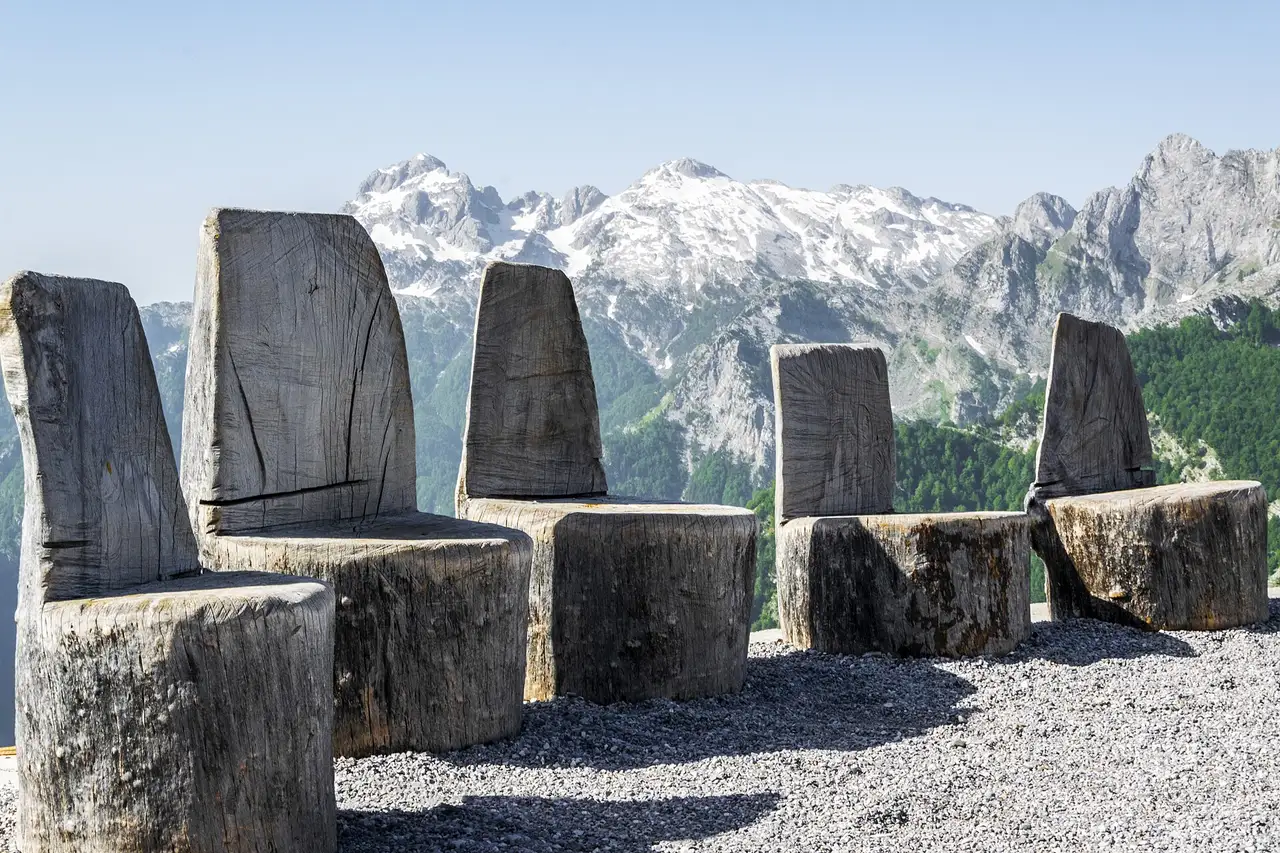
Theth is a stone village in a high valley of the Albanian Alps, ringed by the Accursed Mountains at around 750 m, and it’s the easiest way for most people to reach the far north of the country. Come for the turquoise Blue Eye pool, the Grunas waterfall, a grim little defensive tower tied to Albania’s blood-feud past, and a stone church in a meadow that has become the country’s most photographed building. This guide is about the place itself, what to see, how to reach it from Shkodër, and where to sleep; the famous day-long crossing to Valbona has its own page.
What and where is Theth
Theth (Thethi) is a village and the heart of a national park in Shkodër County, tucked deep in the Bjeshkët e Nëmuna, the Accursed Mountains, near Albania’s border with Montenegro and Kosovo. The park protects a slab of beech forest, limestone peaks and glacial valleys, and Theth village is the base you stay in to reach all of it. For most of the 20th century getting here meant a punishing drive on a rough track, which is exactly why the old way of life, the tower houses and the shepherds’ meadows, survived so intact. That isolation is now half the appeal.
The village strings along the valley floor beside a cold, clear river, with guesthouses, a couple of small shops, the church, and footpaths fanning out to the waterfalls and springs. There’s no town centre as such, no bank, no chain anything. What there is: mountains on every side, and quiet.
How to get to Theth
Everyone comes through Shkodër, the northern gateway city, so get there first. From Shkodër a shared minibus or 4x4 jeep runs up over the Qafa e Thorës pass to Theth in roughly two and a half to three hours. Named shuttles such as Thethi Busses charge EUR 12 a seat; your guesthouse will book you a seat and arrange door-to-door pickup, which is the simplest way to do it. Hours at Hotel Rozafa aren’t one number - operators post 07:00 and 14:00, and some still say 07:30 - so confirm the morning you travel. For named operators, the paved pass, 4x4 quotes and winter closures, use the full how to get to Theth logistics page.
The road itself was fully asphalted in autumn 2021, which changed everything. You no longer need a 4x4, and an ordinary rental car makes it up fine, though it’s a narrow, twisting mountain road with sheer drops and blind bends, so it’s not a relaxing drive if you’re nervous behind the wheel. Many people happily leave the driving to the shared vans and arrive with their nerves intact.
One hard limit to plan around: the pass is a winter road. Snow closes it and shuts most guesthouses from roughly November to May, so Theth is realistically a late-spring-to-autumn destination. If you’re pinning down dates, our best time to visit Albania guide sets the seasons out, and the practicalities of getting to Shkodër first are in how to get around Albania.
The Blue Eye of Theth
First, clear up the confusion, because it trips up a lot of people planning a trip. Albania has two places called the Blue Eye, and they’re nowhere near each other. The famous one most guides mean, the deep karst spring you can’t swim in, is near Saranda in the south. The one here’s a different, smaller thing: a turquoise pool fed by a cascading waterfall on the Kaprre stream, high in the mountains. If you’ve seen a photo of an impossibly blue pool with a falls tumbling into it, that’s the Theth one.
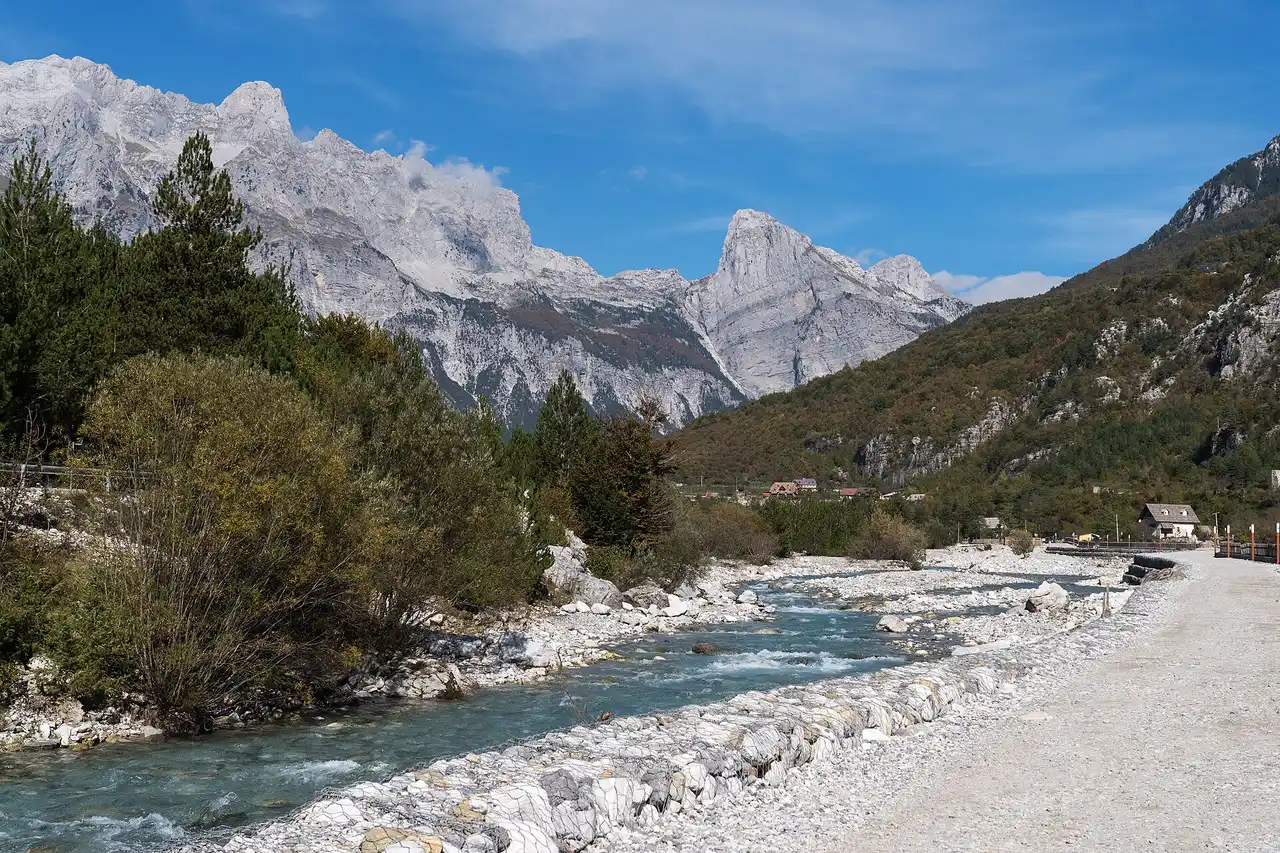
Reaching it takes some effort, and there are two ways to do it. The purist option is to walk the whole thing from Theth village, a round trip of about six to seven hours that follows the valley up past the point where you can add on the Grunas waterfall. The shortcut is to take a jeep or taxi to the hamlet of Nderlysa (also spelled Nderlysaj), further up the valley, and start walking from there, which cuts the pool down to a 1.5 to 2 hour round trip. Guesthouses arrange the Nderlysa transfer, and it’s the sensible choice if your legs are already booked for the big Valbona hike.
There’s no entrance fee and no gate, the pool is simply out there in the park, open around the clock. The water sits at a savage 5 to 7 °C even in high summer, so while swimming is allowed and plenty of people dunk for the photo, it’s a gasp-and-out affair rather than a leisurely dip. Bring shoes you can scramble in for the last rocky stretch.
Grunas waterfall
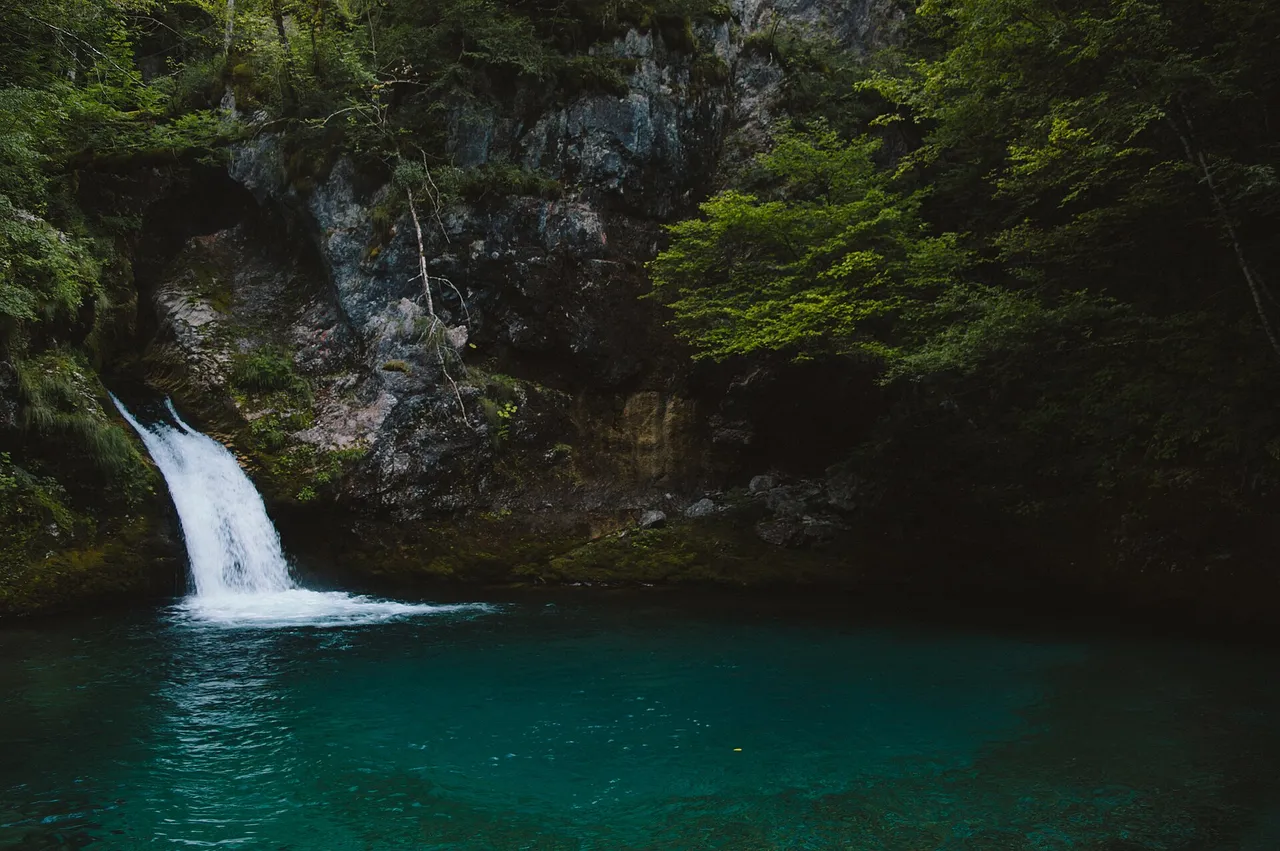
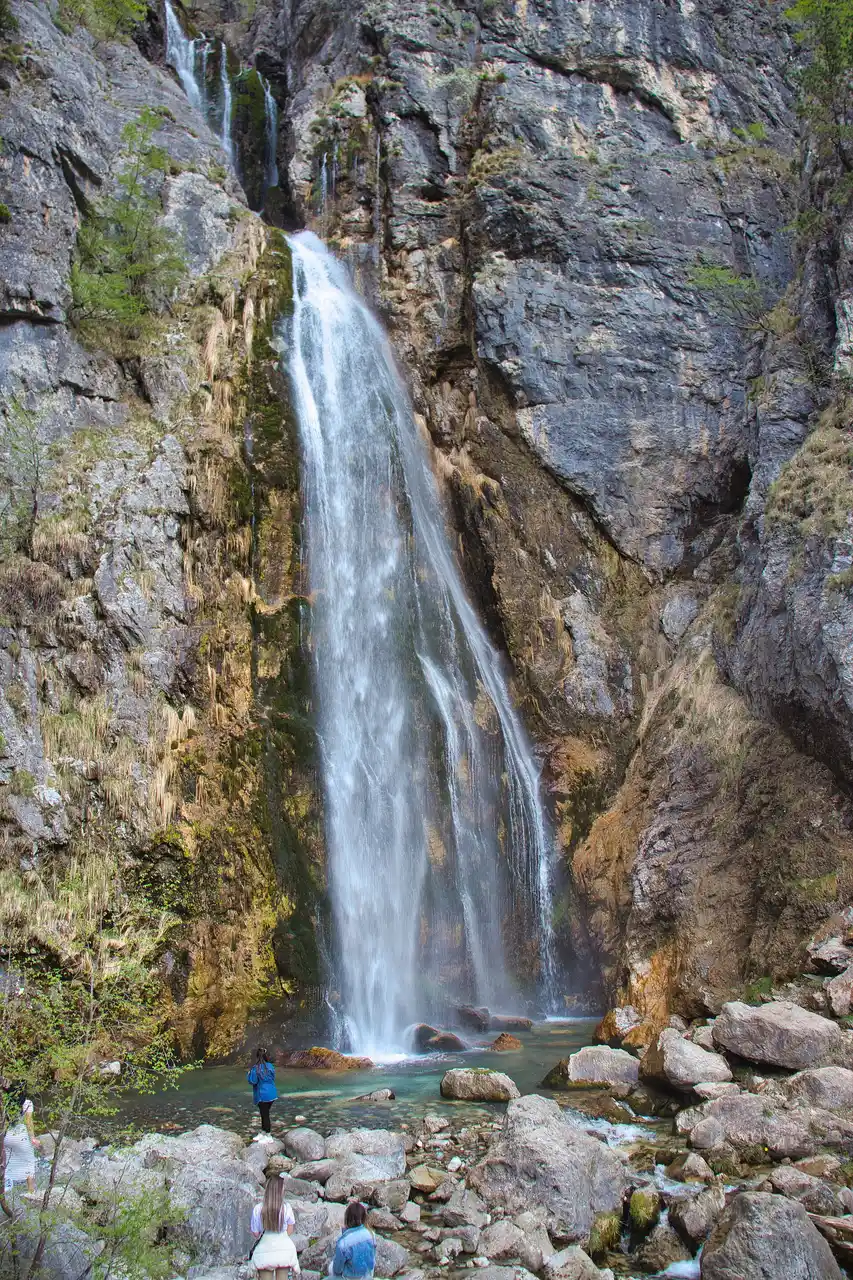
If a full day to the Blue Eye is more than you want, the Grunas waterfall is the easy win. It’s roughly a 30 to 40 minute walk south of the village, and the path to it branches off the very same trail that heads for the Blue Eye, so you can knock it off on the way or as a short outing on its own. The falls drop around 25 to 30 m over a rock lip into a shaded plunge pool, biggest and loudest in early summer when the snowmelt is running. It’s the most accessible sight in Theth and a good leg-stretcher for your arrival afternoon.
The Lock-in Tower and the church
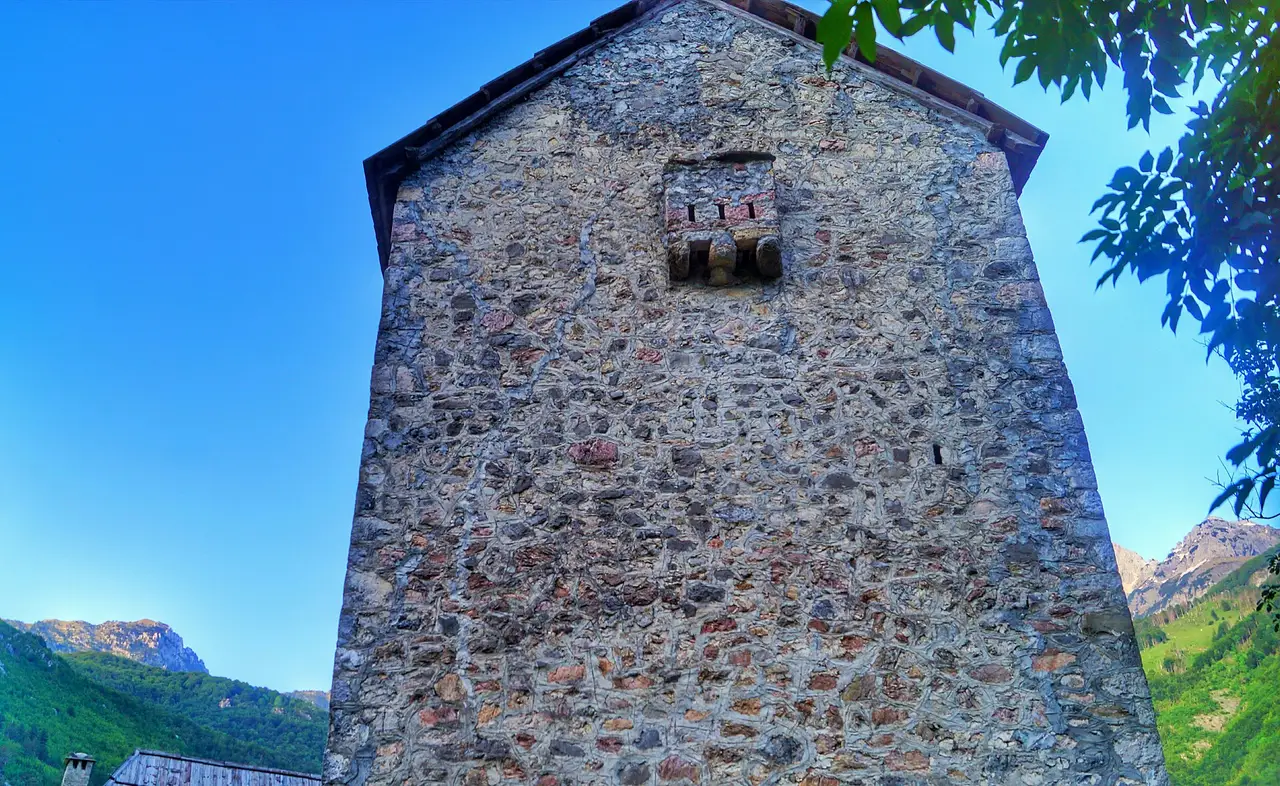
Theth’s strangest sight isn’t natural at all. The Lock-in Tower (Kulla e Ngujimit, sometimes called the Reconciliation Tower or Kulla e Pajtimit) is a squat stone tower where men once shut themselves away during blood feuds. Under the Kanun, the old code of customary law that governed the northern highlands, a killing obliged the victim’s family to take a life in return, and the cycle could run for generations. A man marked for revenge could confine himself inside a kulla like this one, sometimes for years, waiting out the feud until either the threat was gone or a reconciliation was brokered. It’s a sobering thing to stand inside, and it tells you more about old highland life than any museum.
The tower sits just off the main road, past the line of guesthouses. There are no fixed opening hours; a local family living nearby keeps the key and will open it for you on request, so ask at your guesthouse or knock next door. A small tip is the polite thing to leave.
A few minutes away stands the other landmark, the stone Catholic church in its meadow, built in the 1890s and rebuilt over the years. It’s the image on half the postcards of Albania, and at golden hour with the peaks behind it, you’ll see why.
Where to stay, and the cash rule
Theth runs almost entirely on family guesthouses (bujtina), and staying in one is the whole point: home cooking, a wood stove, and hosts who have farmed this valley for generations. Most work on half board, dinner and breakfast included, and the usual way to get a price is to message the house: hosts quote per person and per date. A few post rates online. Bujtina Polia, for one, lists a double or twin at EUR 60 and a single at EUR 50 on its own site, each with breakfast and priced per room (checked 13 September 2026), so ask what dinner adds. Whichever house you pick, confirm what the price covers when you book, and unless you’ve paid online, plan to settle up in cash. Dinner is usually a groaning table of local cheese, cornbread, stewed meat, garden vegetables and raki, and it’s more than most people can finish after a day on the trails. Beds fill up in July and August, so book ahead for peak summer.
One rule matters more than any other up here: there’s no ATM in Theth. Bring every lek and euro you’ll need for the guesthouse, the transfers, the trail cafes and any tips, drawn out in Shkodër before you leave, because a card is close to useless in the mountains. This is the single most common trip-up for first-timers, and running short is genuinely awkward when the nearest cash machine is three hours away by van. Our guide to cash or card in Albania covers how much to carry and why the north is the one region where you must not rely on plastic.
What else to do: the Valbona hike and beyond
Most people who come to Theth for more than a night use it as the launchpad for the country’s classic trek, the day-long crossing over the mountains to Valbona. It’s a big, rewarding walk on a clear trail, and it deserves a page of its own rather than a paragraph here, so the full detail, both directions, the season and the logistics, is in our Theth to Valbona hike guide. On the far side, the Valbona Valley page covers guesthouses, short walks and arrival via Fierza - useful if you’re staying a night before catching the boat out. The usual way out at the Valbona end is by the spectacular Koman Lake ferry, a boat through a flooded canyon, or a shorter Shala River day trip up the turquoise tributary that’s a highlight in its own right, which is why so many people build the whole northern loop around it. For the rest of the range - easy valley days, Jezerca, and when you actually need a border permit - see hiking in the Accursed Mountains.
Even if you never do the Valbona crossing, Theth alone is worth two or three nights: the Blue Eye one day, the waterfall and tower on your arrival afternoon, and a slow morning doing nothing but watching the light move across the peaks. If you’re picking one valley as a base and skipping the hike, Theth vs Valbona lays out how the two actually compare.
Practical notes
- Season: roughly mid-June to mid-October is the reliable window; the road and most guesthouses shut for winter, November to May.
- Cash: no ATM, bring plenty from Shkodër.
- Signal: patchy to non-existent on the trails; download an offline map before you set off.
- Footwear: proper walking shoes even for the short walks, the paths are rocky and uneven.
- Layers: mountain weather turns fast, carry a waterproof and a warm layer even in a July heatwave.
Theth is the sight that turns an Albania trip from a coastal week into a proper look at the country. Do the pool, the waterfall and the tower, sleep in a guesthouse, and it tends to be the part people talk about most on the way home.
Photos
On the map
The map loads on click - to keep the page lightweight.
The map didn’t load. Check your connection and refresh the page.
Distance ≈170 km · ~3.5-4.5 h via Shkodër
- Tirana ≈170 km · ~3.5-4.5 h via Shkodër No direct route: everyone goes through Shkodër first, then a shared van or jeep over the pass.
Read also

What to see · 9 min read
Pellumbas Cave (Black Cave) & Erzen Canyon from Tirana
Verified · October 16, 2026Pellumbas Black Cave from Tirana: 21 km by road, a 2 km hike, 360 m of pitch-dark show cave, and why the Erzen canyon pools are a summer plan.

What to see · 9 min read
Berat Castle (Kala): Onufri Museum, Hours & Open Churches
Verified · October 13, 2026Berat Castle is a lived-in quarter with one paid museum inside and a second below. Winter hours, the 400-lek Onufri ticket, which churches open, the climb.

What to see · 8 min read
Gjirokaster Castle: Prison, Weapons Museum & Cold War Jet
Verified · October 10, 2026Gjirokaster Castle: 400 lek at the gate, closed Mondays October-April, the weapons museum and 1932 prison, and the US jet on the terrace.

What to see · 8 min read
Skanderbeg Square: Et'hem Bey Mosque, Clock Tower & More
Verified · October 10, 2026Skanderbeg Square, Tirana: Et'hem Bey Mosque, the Clock Tower climb, and the National Historical Museum, shut since March 2024.