How to Get Around Albania: Buses, Furgons & Ferries
How to get around Albania in 2026: furgons, intercity buses, ferries, car rental and ride apps, with realistic fares, routes and booking tips.
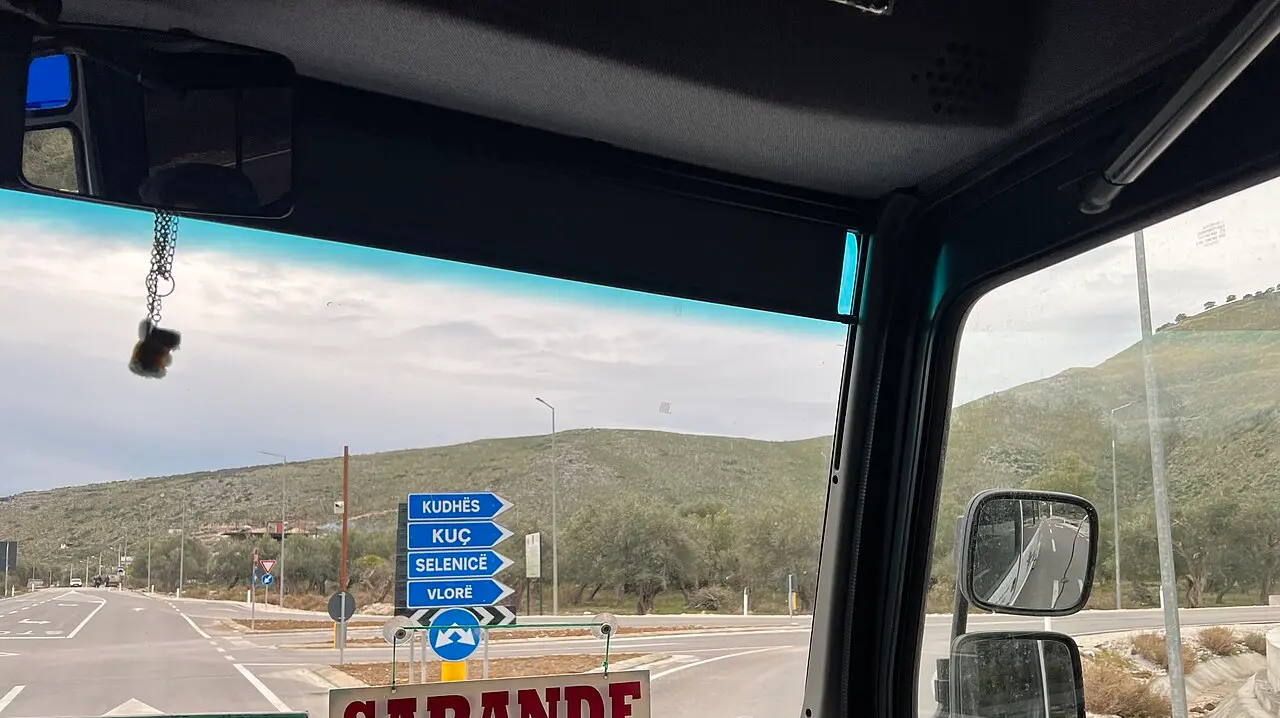
Getting around Albania means three things in practice: shared minibuses called furgons, bigger intercity buses, and a car when you want the mountains and the coast on your own schedule. There is almost no useful train network, ride apps like Uber and Bolt do not operate here, and a few ferries cover the scenic or cross-border legs the roads can’t. For most trips you mix a couple of these: a bus for the long hauls, a furgon for short hops, and a rental car for the parts of Albania that public transport barely reaches.
Fares below are realistic 2026 ranges from operators and recent travel guides, not fixed tariffs. Albanian transport prices move with season and demand, so treat every number as a planning band, pay in Albanian lek (ALL), and check the current price before you commit. If you’re still planning how to arrive, start with how to get to Albania for flights, ferries and cross-border buses.
Furgons: the shared minibuses that actually run the country
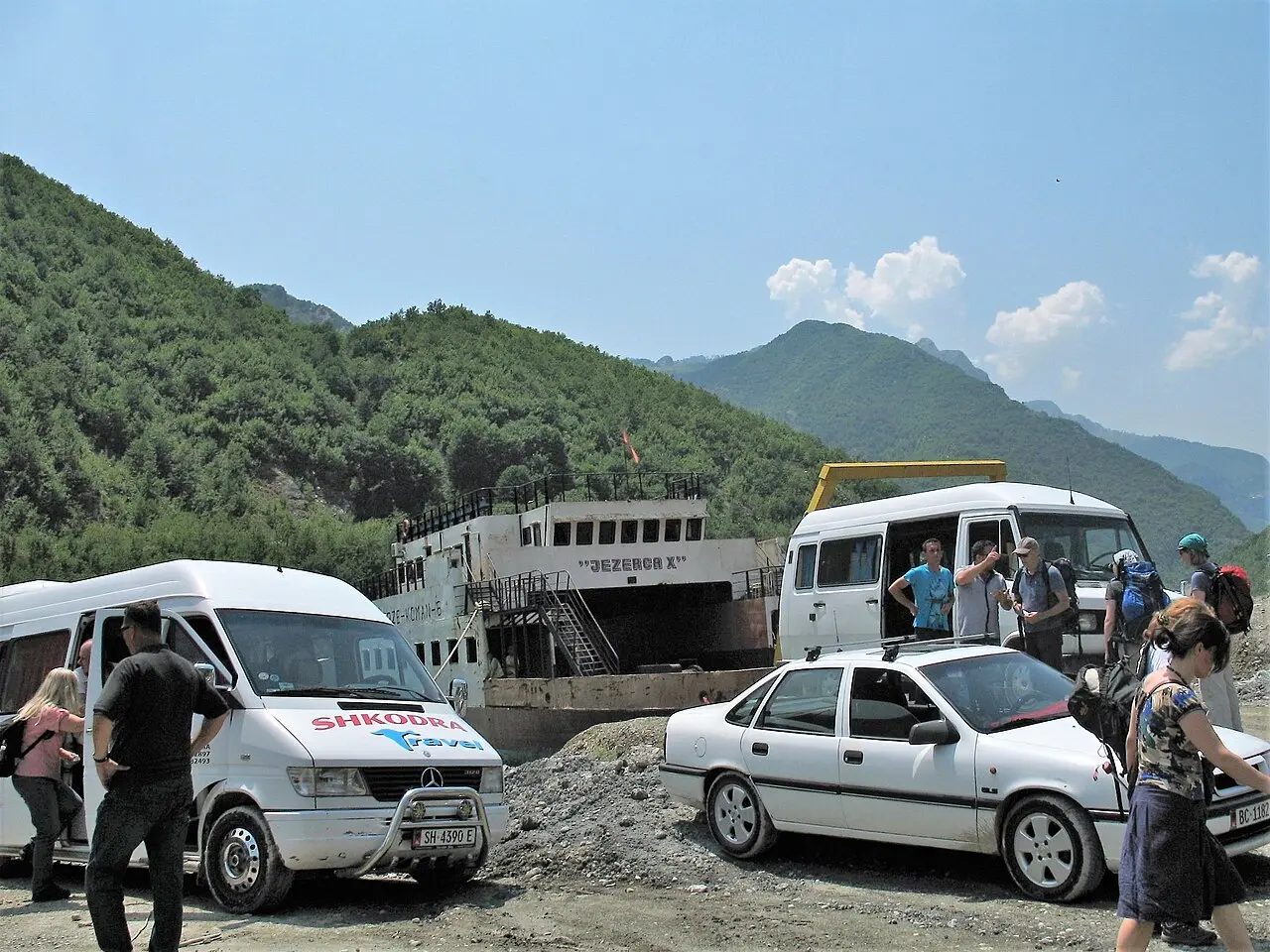
A furgon is a privately owned 12-to-15-seat minibus, usually an old Mercedes Sprinter, running a fixed route between towns. There’s no published timetable. The driver leaves when the van is full, which in summer can be every few minutes on a busy route and in low season might mean a 20-minute wait. You flag one down anywhere along the route, tell the driver where you’re going, and pay cash when you get on or off. To get out, you say “Ndal” (stop), and the driver pulls over.
That informality is the whole point: furgons are cheap, frequent on popular corridors, and faster than the big coaches because they make fewer stops. The trade-off is comfort and certainty. Departure points in each town are often a loose cluster of vans near a market or junction rather than a station, and they can move, so it’s normal to ask a local “furgon për [town]?” and get pointed down the street.
Furgons are at their best for short and medium hops, especially along the coast (Sarande-Himare-Vlore) and between neighbouring towns. Fares sit close to the bus price, sometimes a touch more, so choose a furgon for speed and flexibility rather than to save money. For a long haul like Tirana to Sarande you can take one, but a scheduled bus you can actually plan around is usually the saner choice.
Intercity buses: cheap, frequent on the main routes
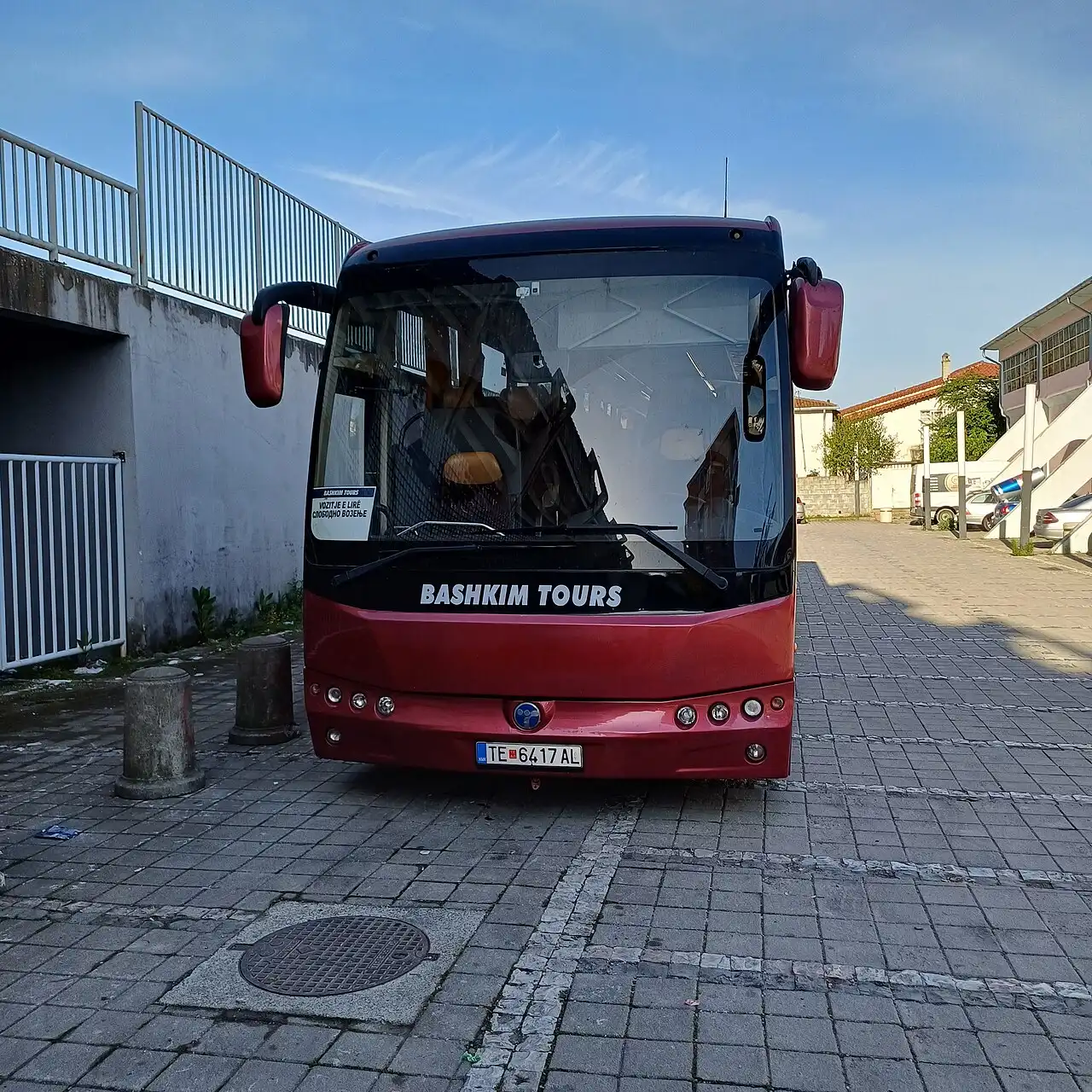
Buses are the backbone of long-distance travel. There’s no single national carrier; dozens of small private operators run the routes, with names like Tisa Travel and Olgeno turning up depending on where you are going. What you won’t find for most of them is a printed fare. The state register of licensed lines gives every departure time and stop, but no prices, and the companies on two of the busiest runs out of Tirana, to Shkoder and to Berat, don’t publish theirs either: you pay the conductor in lek as you board, so keep small notes handy. The exceptions are worth knowing. Both companies on the Gjirokaster line list 1,200 lek (about EUR 13) one way on the regional tourism portal, and the Hermes van from Tirana airport to Shkoder prints 1,000 lek on its own site.
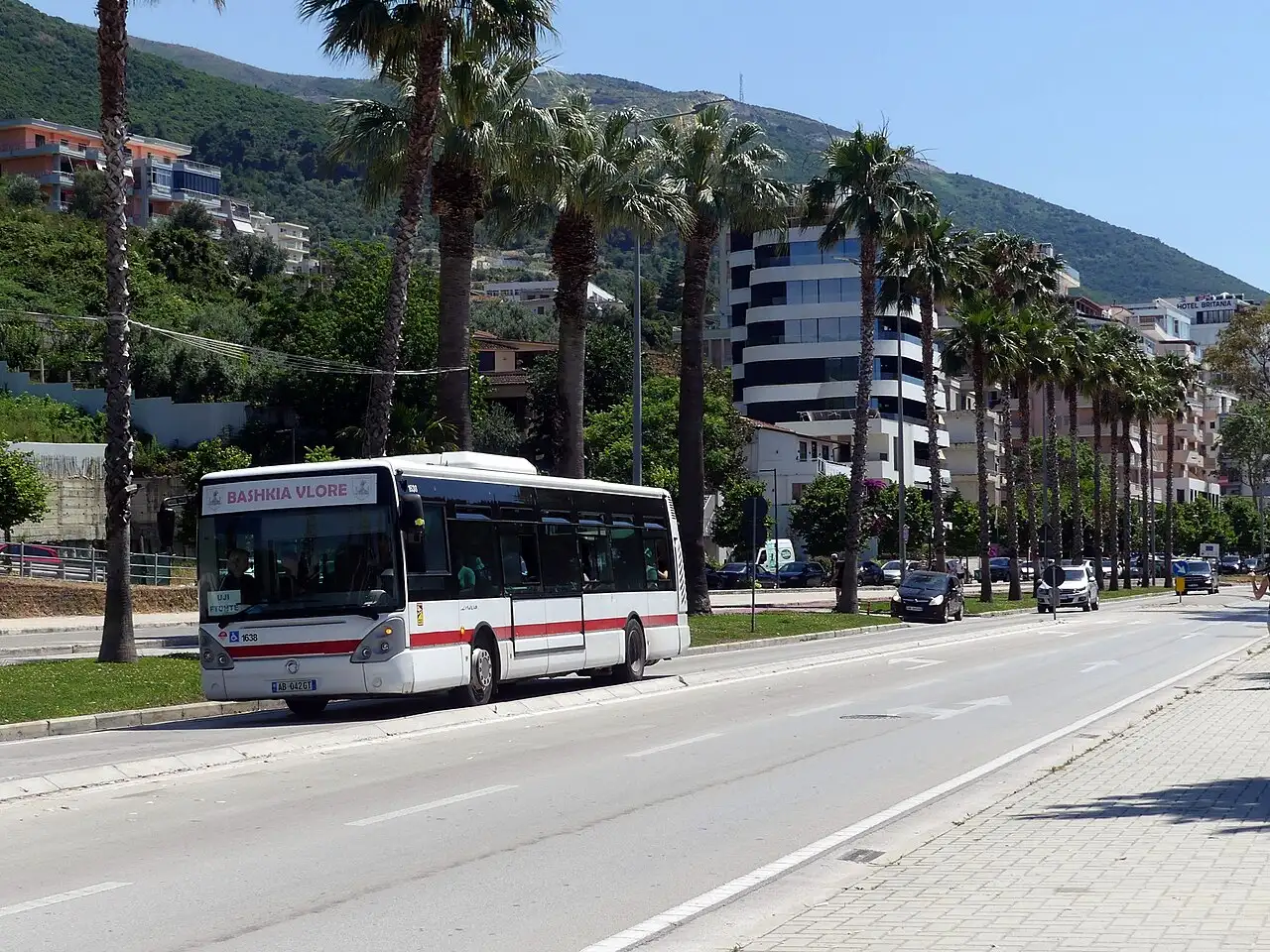
The catch is buying tickets. The default is still to turn up, find your operator’s van or coach, and pay the driver or a kiosk in cash. There’s no big central booking system the way there’s in Western Europe. The useful exception is GjirafaTravel (travel.gjirafa.com), which now sells some intercity tickets online with an e-ticket, covering cities like Tirana, Sarande, Vlore, Gjirokaster, Shkoder, Durres and Berat. It doesn’t cover every route, but for the popular long hauls it saves you guessing departure times.
Where buses leave from in Tirana
Tirana trips up a lot of first-timers because there’s no central station in the city core. Domestic intercity buses use the Regional Bus Terminal (North & South Albania), a single combined terminal out in the Kamez area northwest of the centre, near the Casa Italia outlet. That one terminal handles Shkoder, Berat, Vlore, Himare, Sarande, Gjirokaster, Durres and the rest. International coaches and some southeastern routes (Korce, Pogradec) leave instead from the Tirana East terminal at the TEG mall. Budget a taxi of roughly EUR 12-15 to reach the regional terminal, or take a local city bus toward Kamez. Older guides sometimes call it “TIRT” - staff don’t use that name, so just ask for the regional bus terminal.
Trains: skip them
Albania technically has a railway, but it’s not a tourist option in 2026. The old central station in Tirana was demolished back in 2013 to extend the city’s main boulevard. Albanian Railways (HSH) currently shows an “On maintenance” placard instead of a timetable on all three passenger lines it lists (Durrës Plazh-Peqin, Shkodër-Gjormë, Lushnjë-Rrogozhinë), so there’s no train service to plan around.
There’s one project worth knowing about: a new Tirana-Durres-Rinas line, including a link to Tirana airport, is under construction. The Ministry of Infrastructure now expects passenger trains on it in the last quarter of 2027, and the dates have slipped before, so don’t count on it for a 2026 trip. For now, getting to the airport means a bus or taxi, which is covered in the Tirana airport transfers guide.
Ferries: for the views and the borders
Ferries cover three things the roads can’t do well. The most famous is the Lake Koman ferry in the north, a crossing through a steep, fjord-like reservoir between Koman and Fierze that most travellers report taking somewhere around two-and-a-half to three hours. It runs daily in the warmer months - roughly mid-April to early November - leaving Koman in the morning (the operator lists a 09:00 departure), and it’s the classic way to reach Valbona for the Theth-Valbona trek. The passenger fare is about 1,000 ALL (around EUR 10, slightly less if you book online); if you’re bringing a car, book ahead in peak season because vehicle space is limited.
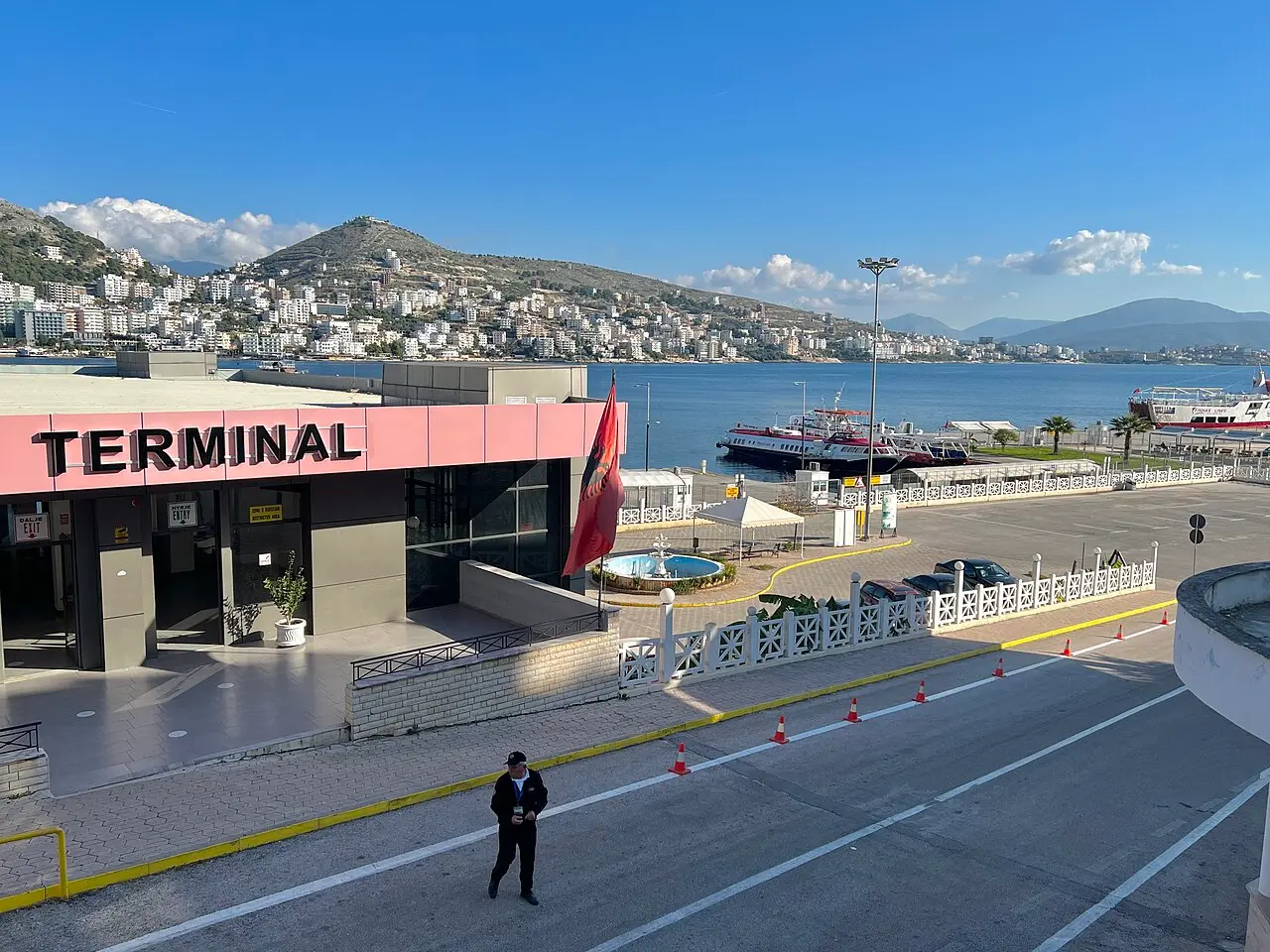
The second is the short international hop Sarande to Corfu in Greece: a fast hydrofoil does it in 30 to 45 minutes, a slower car ferry in 55 to 70, at the last high-season rate Finikas Lines published (a table with 2023 season dates, since taken off its site) of EUR 25 on the ferry and EUR 30 on the fast boat each way. Summer runs 13 sailings a day in each direction, winter drops to one. It’s the easy way to bolt a Greek island onto an Albania trip - the full Saranda to Corfu ferry timetable and fares are in their own guide, including the passport control both ends. The third is arriving from Italy: overnight and daytime ferries run Bari, Brindisi and Ancona to Durres or Vlore, with foot-passenger fares from about EUR 35 (Bari) and more for a cabin or a car. These are how a lot of road-trippers bring their own vehicle into the country.
Renting a car: how you actually reach the good stuff
A lot of Albania’s best places are exactly where the buses thin out: the Theth valley, the Riviera’s smaller coves, the Blue Eye spring, the switchbacks of the Llogara Pass. A car turns those from awkward day-long missions into easy stops. Daily rates in 2026 run roughly EUR 15-25 a day for a small car in the low and shoulder seasons, climbing to something like EUR 40-80 a day in July and August for the same vehicle, with SUVs higher. Fleets are small, so book early for summer.
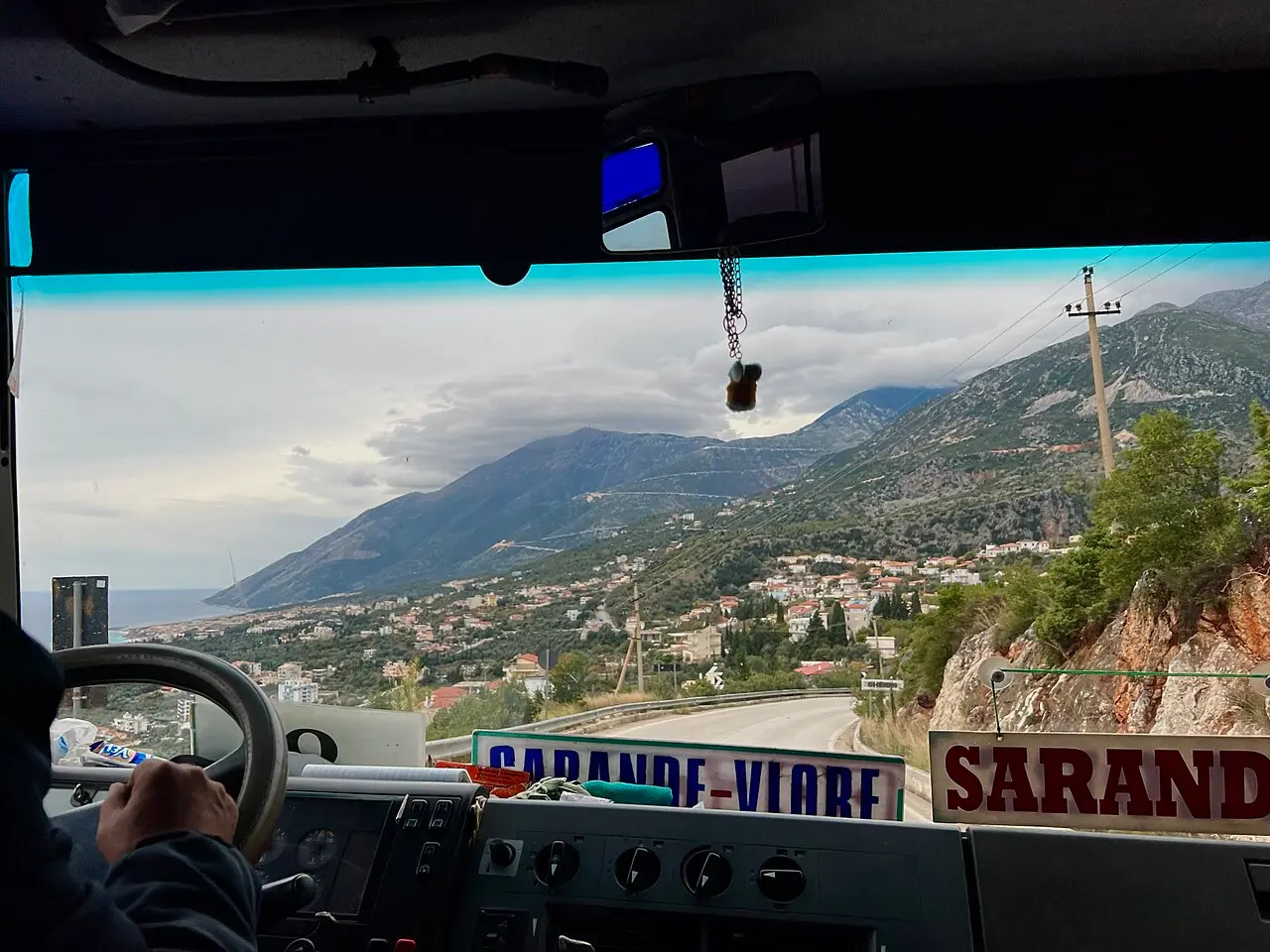
Driving here rewards a bit of caution. Roughly seventy percent of the country is mountainous, so expect steep grades, hairpins, the odd pothole and stretches with no guardrail. Local driving can be assertive, and on rural roads you’ll meet the occasional cow or goat. Read the rental contract carefully: unpaved tracks, certain mountain routes, and tyre or undercarriage damage are often excluded from the insurance, which matters if you plan to reach places like Theth. If a car is part of your plan, start with the practical how to rent a car in Albania guide before you book.
Taxis and ride apps: what works, what doesn’t
Here’s the thing tourists get wrong most often: Uber and Bolt don’t operate in Albania in 2026. Don’t land expecting to open an app you know. Cities do have taxis - plentiful in Tirana, usually cash, and you should agree the fare or confirm the meter before you set off. For app-style booking there are local options such as Patoko and Speed Taxi in Tirana, though the line-up changes, so download whatever locals are using on arrival. One firm rule for budgeting: intercity taxis are expensive. A long private transfer between cities costs many times the bus fare, so use taxis for short city trips and transfers, not for crossing the country, unless you’re splitting the cost across a full car.
How to choose, route by route
The simple framework: buses and furgons for the budget and the main corridors, a car for flexibility and the remote scenery, ferries for specific legs. If you’re doing a classic loop of Tirana, Berat, Gjirokaster and Sarande, buses handle it cheaply and you barely need anything else - our one-week Albania by bus itinerary lays out that exact route with timetables, terminals and how each fare is paid. If your wish list includes Theth, quiet Riviera beaches, the Blue Eye or spontaneous viewpoint stops, rent a car for at least part of the trip. And slot in a ferry where it earns its place: Lake Koman for the northern mountains, Sarande-Corfu for a Greek detour. For specific routes, see our guides to Tirana to Shkodër (and onward to Theth), Tirana to Lake Ohrid and the lakeside town of Pogradec, Tirana to Gjirokaster for the stone-city corridor, Tirana to Pristina for the Kosovo capital on the Nation’s Highway, and the Lake Koman ferry.
Two practical habits save the most hassle. First, reconfirm bus departure times the day before. The state register of licensed lines (etransport.al, in Albanian) lists the official times for intercity buses, but the seasonal shuttles to Theth and Valbona aren’t on it and furgons keep a looser clock, so ask at the terminal or your guesthouse as well. Second, decide early whether a given trip is bus-led or car-led; mixing them works, but patching a missed bus with a long taxi is exactly what quietly wrecks a budget. From here, the most-asked routes have their own guides: getting from the airport into Tirana, the quick hop out to the coast at Tirana to Durres, the long Tirana to Sarande run, and the wider question of whether Albania is expensive once transport is added up.
Sources and how to read the fares
Bus times on the main intercity lines come from Albania’s state register of licensed routes, and bus fares only from the companies that print their own, both checked in September 2026; ferry details are from the Lake Koman operator’s timetable, and the informal furgon network, where no official tariff is published, from recent 2026 Albania transport guides. Because so much of Albanian transport runs without fixed schedules, this guide deliberately uses ranges and “check the current price” rather than pretending one number holds all season. The honest summary: Albania is easy and cheap to travel by bus and furgon on the main routes, worth a rental car for the mountains and the coast, and best approached with a little flexibility rather than a rigid timetable.
Read also

Transport · 12 min read
Tirana to Athens: Bus, Flights & the Overland Option
Updated · October 5, 2026Tirana to Athens by bus: 04:00, 15:00 and 17:00 daily, €45 one way and 12-14 hours via Kakavia, or four direct flights a day. Checked 6 Oct 2026.

Transport · 9 min read
Tirana to Podgorica: Bus, Border & Onward to Kotor
Updated · October 5, 2026Tirana to Podgorica: about 160 km and 3.5-4 hours by direct bus via the Hani i Hotit border, two daily lines, then on to Kotor. Times checked 3 Oct 2026.

Transport · 10 min read
Butrint Day Trip from Corfu: Ferry + Site in One Day
Updated · October 4, 2026Butrint from Corfu in a day: a 30-45 min boat to Saranda, 18 km by road, a 1,000-lek ticket. Which boats work in October, November and winter.

Transport · 14 min read
Albania Border Crossings by Car: Queues, Docs & Green Card
Verified · October 2, 2026Albania's 13 customs road crossings: which stay open all night, when queues build, Green Card rules by plate, Kosovo's €15 insurance and EES into Greece.