
Blue Eye (Syri i Kaltër): Albania's Deep Spring
The Blue Eye near Saranda: a karst spring over 50 m deep, whether you can swim, the entry fee and how to get there from Saranda or Gjirokastër.
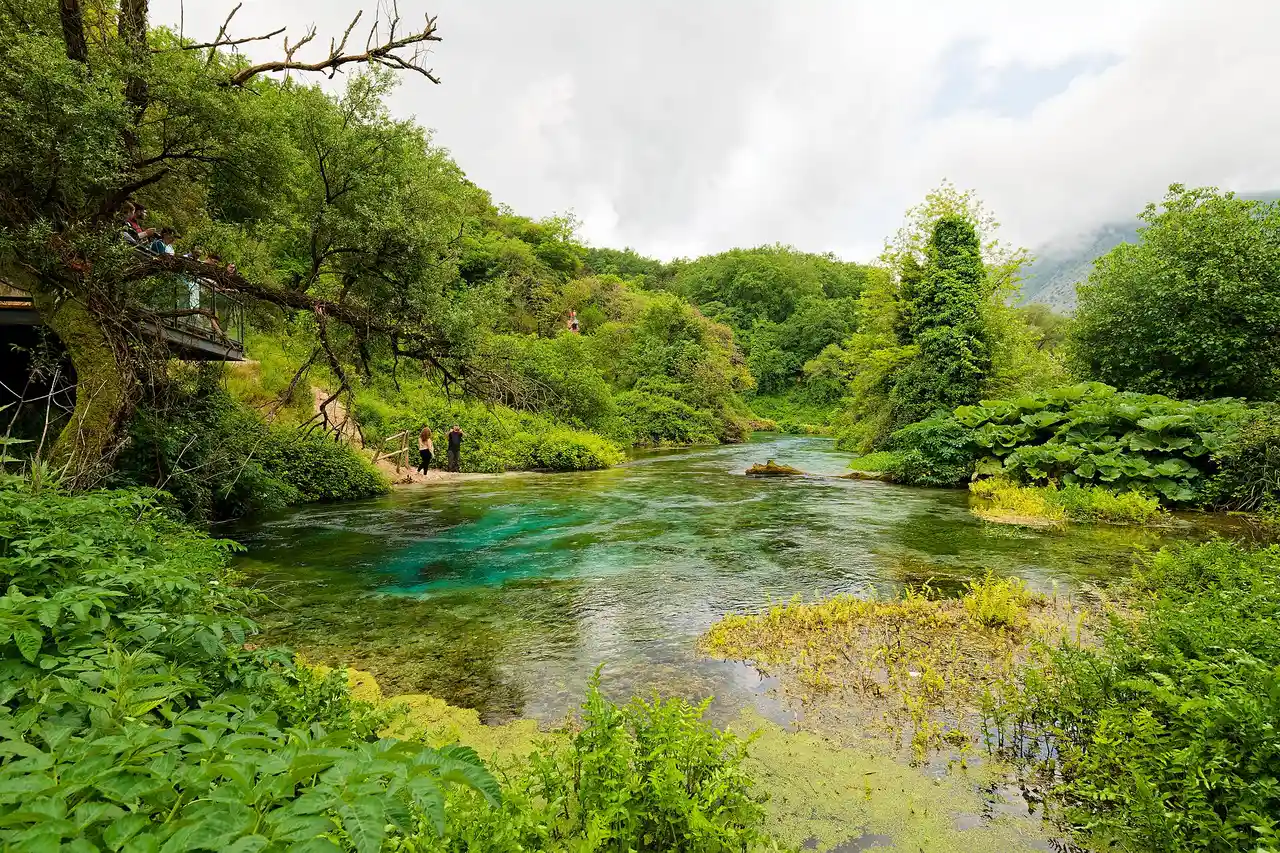
The Blue Eye (Syri i Kaltër) is a natural spring in southern Albania where water wells up from a hole in the rock so deep that no diver has ever found the bottom. It sits near the village of Muzinë, roughly halfway between Saranda and Gjirokastër, and it’s one of the easiest half-day trips on the coast: a short walk from a car park to a viewing platform over a pool that shades from an inky, bottomless blue in the centre to bright turquoise at the rim. Entry costs about 50 lek, you can’t swim in the spring itself, and the whole thing takes a couple of hours. Here’s exactly what it is, whether you can get in the water, and how to reach it.
What is the Blue Eye?
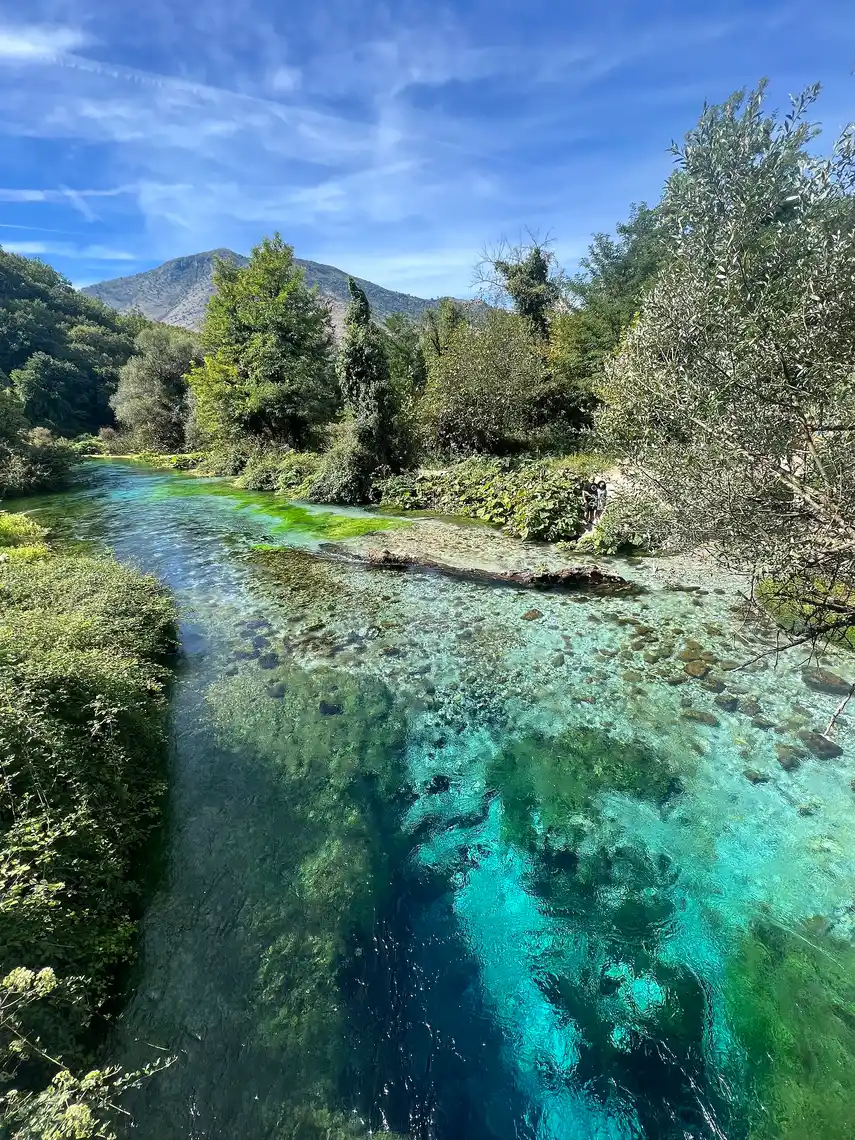
Syri i Kaltër is a karst spring, the point where an underground river forced up through limestone breaks the surface. It’s the source of the Bistrica, a river that runs about 25 km down to the Ionian Sea just south of Saranda, and it pumps out a huge, steady volume of cold, glass-clear water year round. The look that gives it its name is uncanny: a circular pool with a dark blue centre, the “pupil”, ringed by a paler blue “iris”, the whole thing eerily resembling an eye staring up out of the forest.
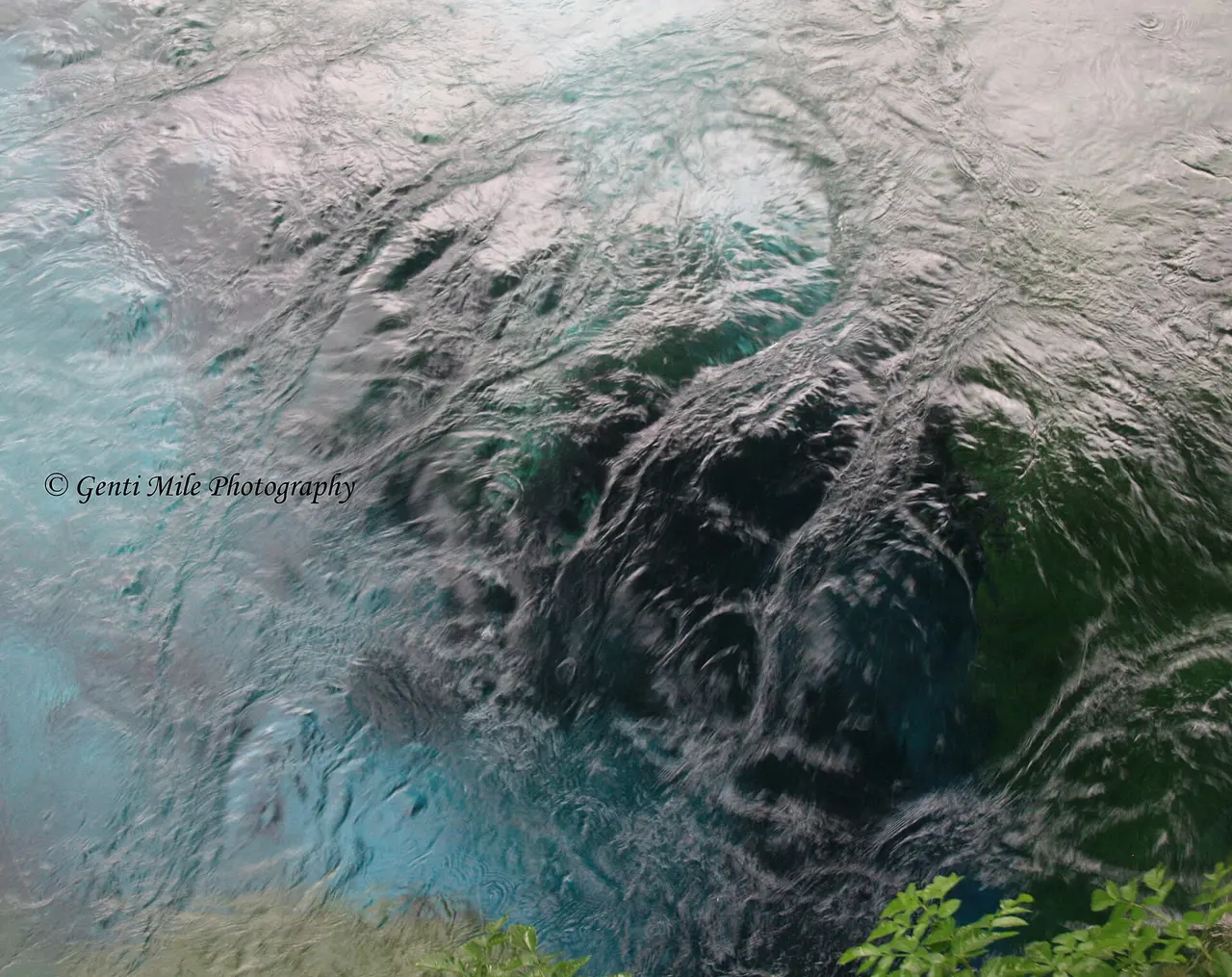
Its most quoted fact is the depth. Divers have reached at least 50 m straight down without finding the floor, so the true depth is still unknown, and the water keeps boiling up from that dark shaft with enough force to bob a thrown object back to the surface. Standing on the platform watching it churn is the appeal; it’s small, but the effect is mesmerising.
Two Blue Eyes: don’t confuse them
This is worth saying plainly, because it catches people out. Albania has two attractions called the Blue Eye, and they’re on opposite ends of the country. This page is about the southern one near Saranda, the deep karst spring. The other is a small turquoise pool fed by a waterfall high in the mountains of Theth, in the far north, and reaching it means a hike rather than a stroll from a car park. If a tour or a blog photo shows a waterfall pouring into the pool, that’s the northern one, covered in our Theth National Park guide. When people say “the Blue Eye” without qualifying it, they almost always mean this Saranda spring.
Can you swim in the Blue Eye?
Short answer: not in the spring itself. Swimming in the pupil is officially prohibited to protect the fragile spring and its ecosystem, and rangers now actively enforce the ban, so don’t plan a trip around a dip in the pool. It would be a bracing one anyway: the water sits at a shock-cold 10 to 13 °C year round, over an unknown depth with a strong upwelling current, not the gentle swim the colour suggests.
What’s fair game is the river downstream. Below the spring the Bistrica spreads into shallower, calmer stretches where paddling and a quick cold plunge are tolerated, and there are usually changing cabins near the site. Treat the spring as a thing to look at and the river as the place to cool off.
How to get to the Blue Eye
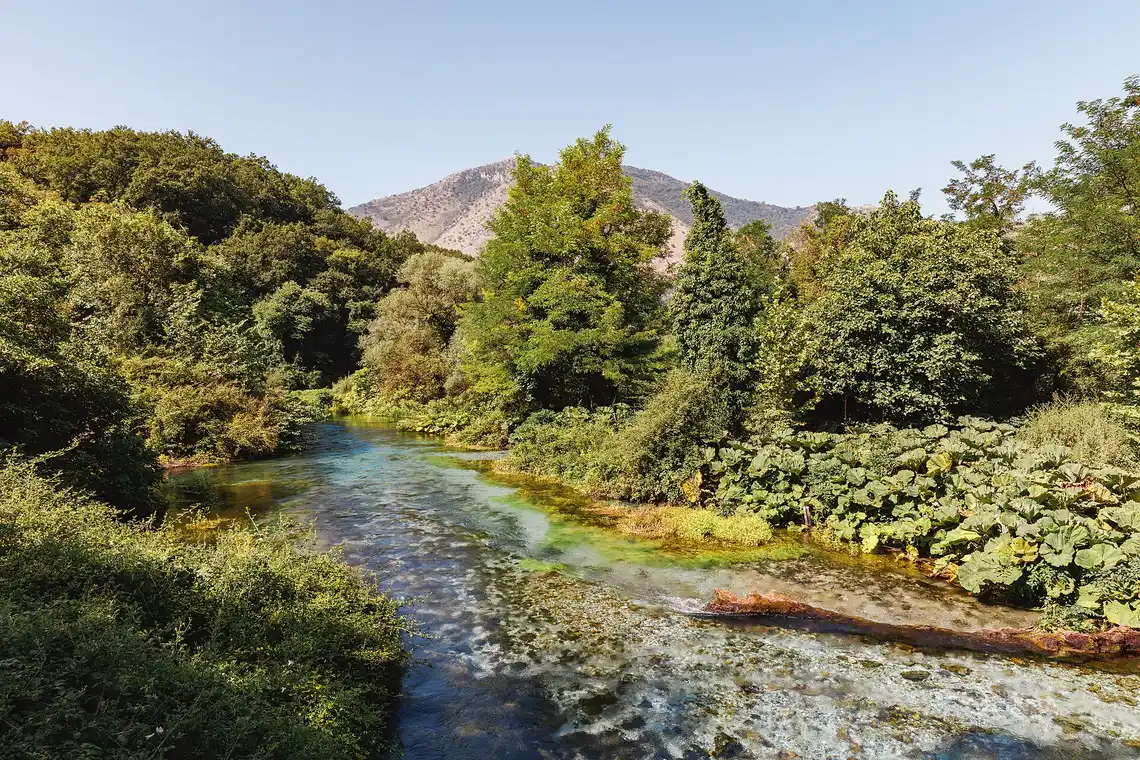
The spring lies just off the SH99, the main road between Saranda and Gjirokastër, so it’s an easy add-on however you’re travelling. From the turn-off it’s a short drive on a rough track to the car park, then a walk in to the pool.
| From | Roughly | Notes |
|---|---|---|
| Saranda (car / taxi) | ~30-40 min | The most common approach; a taxi round trip runs about 35 to 40 euros including waiting time. |
| Saranda (bus) | ~40 min | Take a Gjirokastër-bound bus and tell the driver “Syri i Kaltër” and pay the conductor in lek for the drop; you’re dropped on the main road and walk in. |
| Ksamil | ~45 min | Slightly further south; easy to fold into the same day as Saranda. |
| Gjirokastër | ~40 min | The spring is roughly halfway, so it works as a stop when moving between the coast and the old town. |
From the car park it’s about a 2 km, 20-minute walk in to the spring along the track. If you would rather not walk it, you can usually hire an electric scooter or a shuttle for around 5 euros from the parking area. The most relaxed option for most people is a guided day trip or a private transfer that handles the driving and often pairs the Blue Eye with Butrint or Gjirokastër.
If you are driving the south yourself, the practicalities of the car are in our guide to renting a car in Albania, and the spring is a natural stop on the Albania road-trip itinerary.
Tickets, hours and what to expect
Entry is cheap: around 50 lek per person (well under a euro), plus roughly 100 to 200 lek for a car at the barrier. The site generally opens daily from about 07:00 to 19:00, though the exact fee and hours are set locally and drift over time, so treat these as a guide and confirm on arrival.
A few things that make or break the visit:
- Go early or late. By late morning in July and August the tour buses arrive and the platform gets shoulder-to-shoulder. First thing or in the last hour is calmer and the light on the water is better.
- There are cafes on site. A couple of restaurants and cafes sit by the spring, so you can make a meal of it, and there are changing cabins for the river.
- Wear real shoes. The walk in and the platform steps are uneven; flip-flops are a nuisance.
- Manage expectations. It’s a small, quick sight, not a day out on its own. Its magic is the colour and the depth, best appreciated without a crowd, which is why pairing it with a bigger stop makes sense.
Combining the Blue Eye with the south
Because it’s small and roughly midway between the coast and Gjirokastër, the Blue Eye is best treated as one stop in a bigger day rather than a destination on its own. The obvious pairings:
- Blue Eye plus Gjirokastër. Heading inland to the stone Ottoman town? Stop at the spring on the way. Our Gjirokastër travel guide covers the castle and the old bazaar.
- Blue Eye plus Butrint and Ksamil. From Saranda you can loop the spring together with the UNESCO ruins of Butrint and a swim at Ksamil, though doing all three by car is a full day and many people split it. A guided tour that bundles them takes the driving off your plate.
Whichever way you slice it, Saranda is the natural base for the far south. See our Saranda travel guide for where to stay, the run-down of day trips from Saranda for how the spring fits into a wider day, and browse more Albanian attractions for the rest of the region. The Blue Eye will not fill a day, but as a 30-minute detour into something genuinely odd and beautiful, it earns its place on almost every southern itinerary.
Photos
On the map
The map loads on click - to keep the page lightweight.
The map didn’t load. Check your connection and refresh the page.
Distance ≈22 km · ~30-40 min by road
- Saranda ≈22 km · ~30-40 min by road Most visitors come from Saranda by car, taxi or tour; the spring is signposted off the SH99.
Read also

What to see · 9 min read
Pellumbas Cave (Black Cave) & Erzen Canyon from Tirana
Verified · October 16, 2026Pellumbas Black Cave from Tirana: 21 km by road, a 2 km hike, 360 m of pitch-dark show cave, and why the Erzen canyon pools are a summer plan.

What to see · 9 min read
Berat Castle (Kala): Onufri Museum, Hours & Open Churches
Verified · October 13, 2026Berat Castle is a lived-in quarter with one paid museum inside and a second below. Winter hours, the 400-lek Onufri ticket, which churches open, the climb.

What to see · 8 min read
Gjirokaster Castle: Prison, Weapons Museum & Cold War Jet
Verified · October 10, 2026Gjirokaster Castle: 400 lek at the gate, closed Mondays October-April, the weapons museum and 1932 prison, and the US jet on the terrace.

What to see · 8 min read
Skanderbeg Square: Et'hem Bey Mosque, Clock Tower & More
Verified · October 10, 2026Skanderbeg Square, Tirana: Et'hem Bey Mosque, the Clock Tower climb, and the National Historical Museum, shut since March 2024.