Where to Stay in Gjirokaster: Old Town Stone Hotels
Where to stay in Gjirokaster: Old Town stone boutiques and guesthouses versus the flat new town - cobbles, parking and what each lodging type really costs.
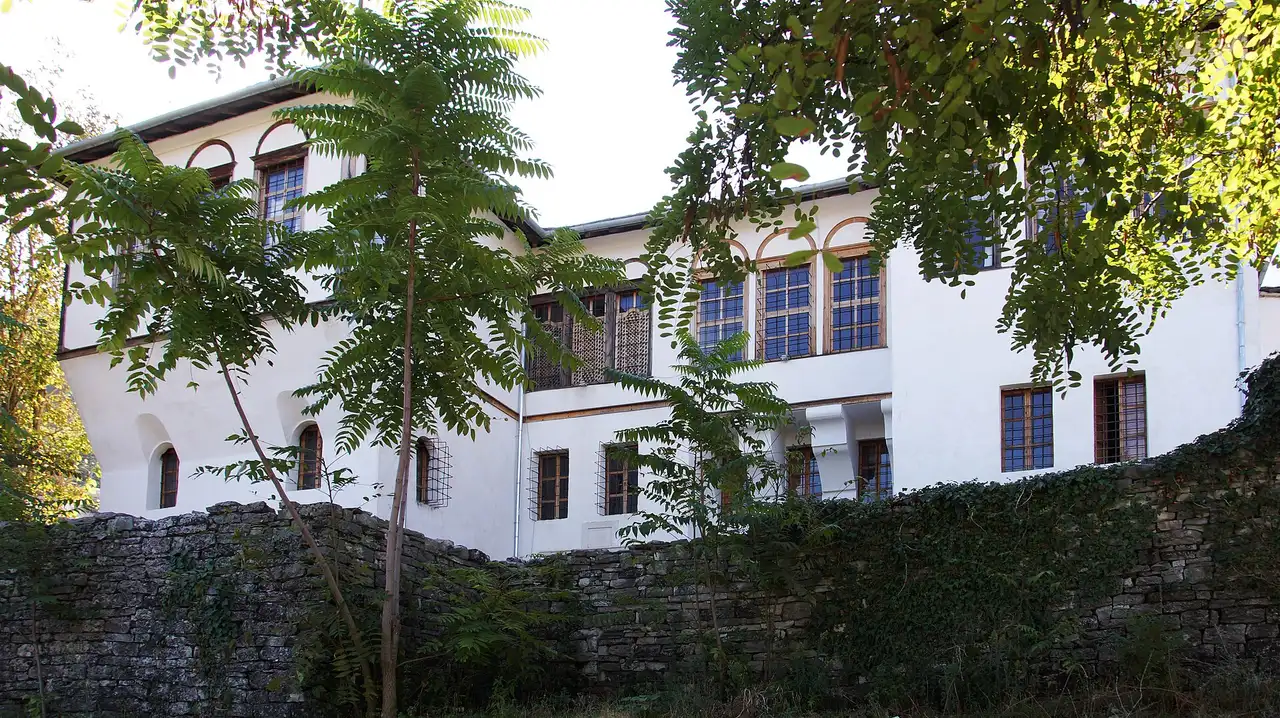
Sleep in Gjirokaster Old Town for a restored stone house within walking distance of the bazaar and castle; pick the new town on the Drino valley floor when you’d rather roll bags on flat asphalt and park at the door. The useful split isn’t star ratings - it’s lodging type and how far up the hillside your bed sits.
Gjirokaster earned its UNESCO listing for Ottoman-era tower houses (kullë), cobbled lanes and a castle ridge that still watches the valley. That same fabric is where most visitors sleep now: stone boutiques, family guesthouses and a handful of modern hotels below. Rates swing hard in July and August, so treat any euro figure you see as a snapshot and re-check before you pay.
What a stone hotel means in this town
“Stone hotel” in Gjirokaster is a lodging category, not a marketing flourish. Properties fall into three practical buckets:
- Restored Old Town boutiques inside historic houses - thick stone walls, wooden ceilings, few rooms, steep approaches, atmosphere first.
- Family guesthouses on the same cobbled lanes - simpler rooms, often breakfast, hosts who know which alley is less slippery after rain.
- New-town hotels and apartments on the valley floor - modern builds, lifts in some buildings, easy parking, a taxi or stiff walk up to the castle.
You’re choosing how much of the UNESCO town you want outside your door each morning versus how much luggage you’re willing to haul. The Gjirokaster city guide covers what to see once you’ve dropped the bags; this page is only about where those bags land.
Old Town: stone boutiques and guesthouses
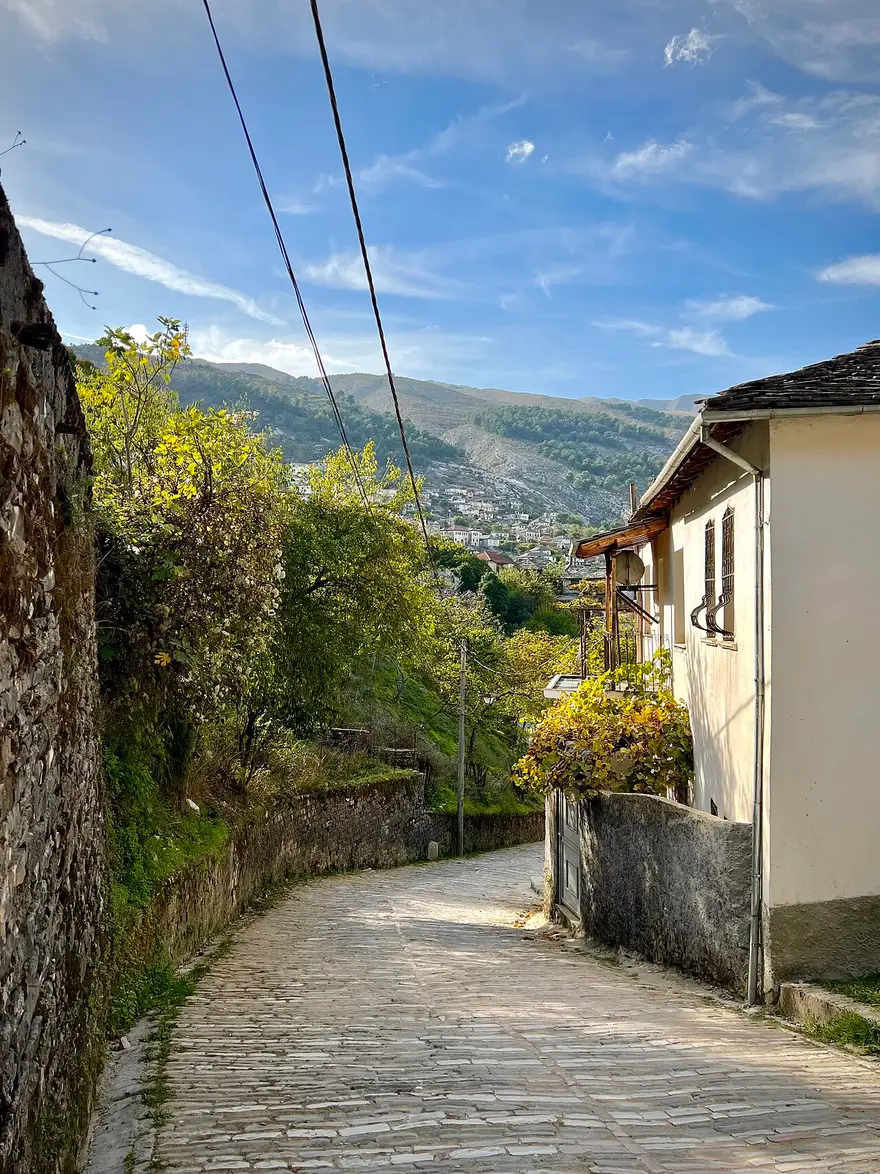
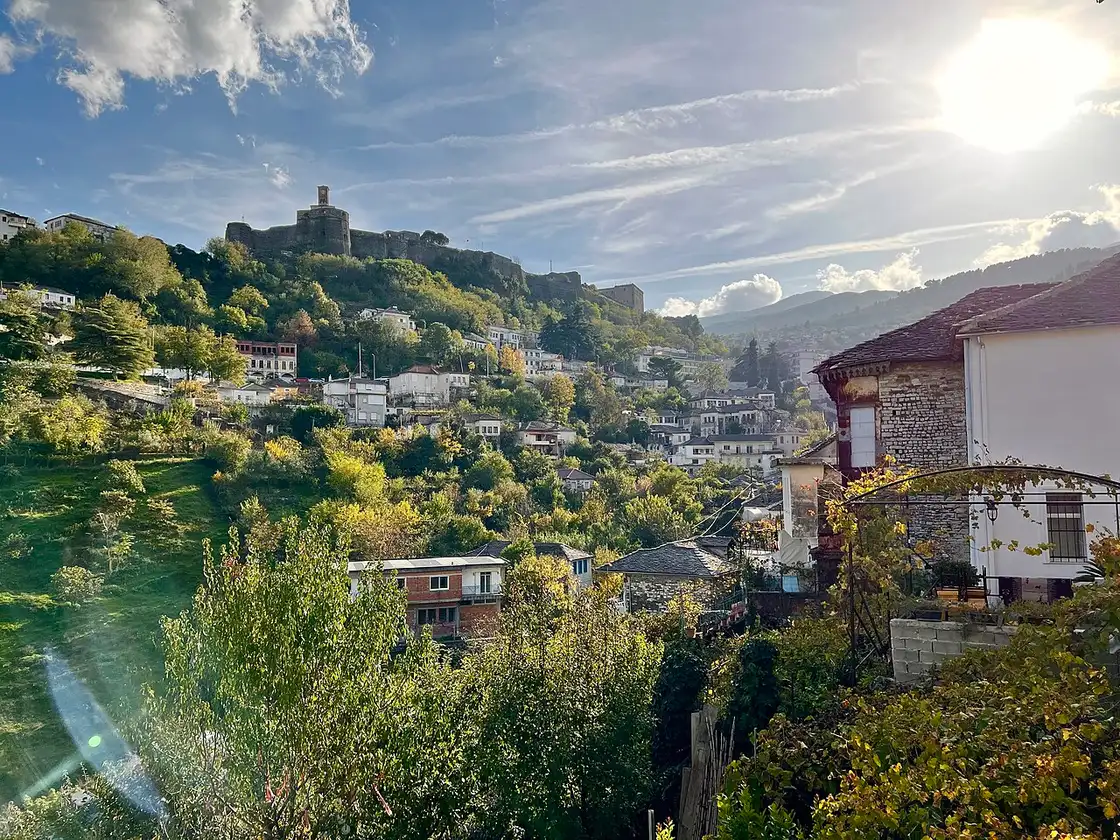
The classic base is the historic core around the Old Bazaar and the lanes that climb toward the castle. This is where restored houses put you minutes from cafes, craft shops and the castle walk - and where you’ll feel every metre of elevation with a hard-shell suitcase.
Boutique stone hotels sell the full conversion: original walls, coffered wood, small inventories. One published operator example is DAM Stone Boutique Hotel in the Old Town: five rooms, doubles listed from EUR 90 a night on the hotel’s own site (September 2026), check-in from 14:00 and check-out by 11:00, no breakfast on site, and parking directed to lots outside the largely pedestrian historic zone. N’Sokak Boutique Hotel markets the same Old Town category from Rruga Fato Berberi - Ottoman-inspired interiors in a restored neighbourhood setting. Use those as category markers, not a shortlist: inventory and rates move, and plenty of similar houses book direct or through hotel platforms.
Family guesthouses fill the same streets at usually lower rates. Expect fewer design flourishes, warmer host advice, and the same cobble problem. Ask before booking whether someone can meet you with a trolley at the nearest car-accessible point - many hosts already do this without drama.
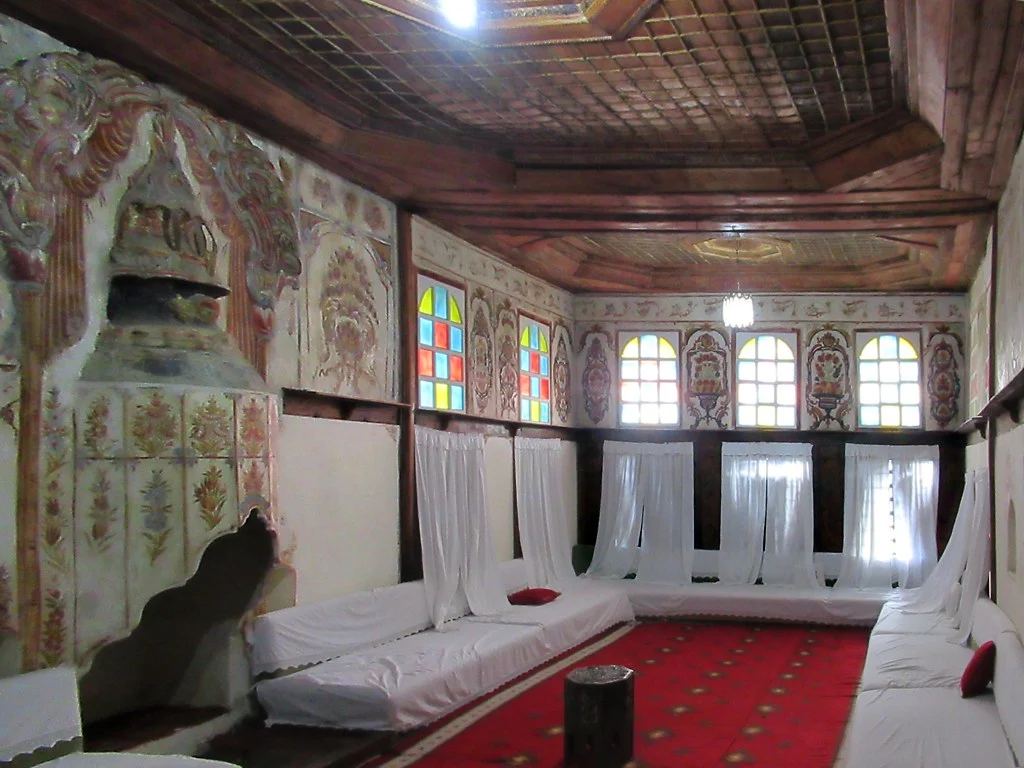
Who this suits. Couples, photographers, anyone spending most of the day on foot between the bazaar, tower-houses and castle. Who should hesitate. Travellers with heavy luggage, limited mobility, or a late-night bus arrival when dragging bags up wet stone feels like a bad idea.
Mid-slope and just below the Old Town
Between the bazaar ridge and the valley floor sits a useful middle band: still walkable to the historic centre, less brutal than the upper kullë lanes, sometimes with a driveway or a less steep approach road. Small hotels and apartments here trade a touch of postcard drama for a saner check-in.
It’s the smart compromise when Old Town evenings matter but a third-floor room above a medieval staircase does not. Pin the exact address on a map with terrain on, and message the host: “Can a taxi drop at the door?” gets a clearer answer than any listing photo.
New town on the Drino floor
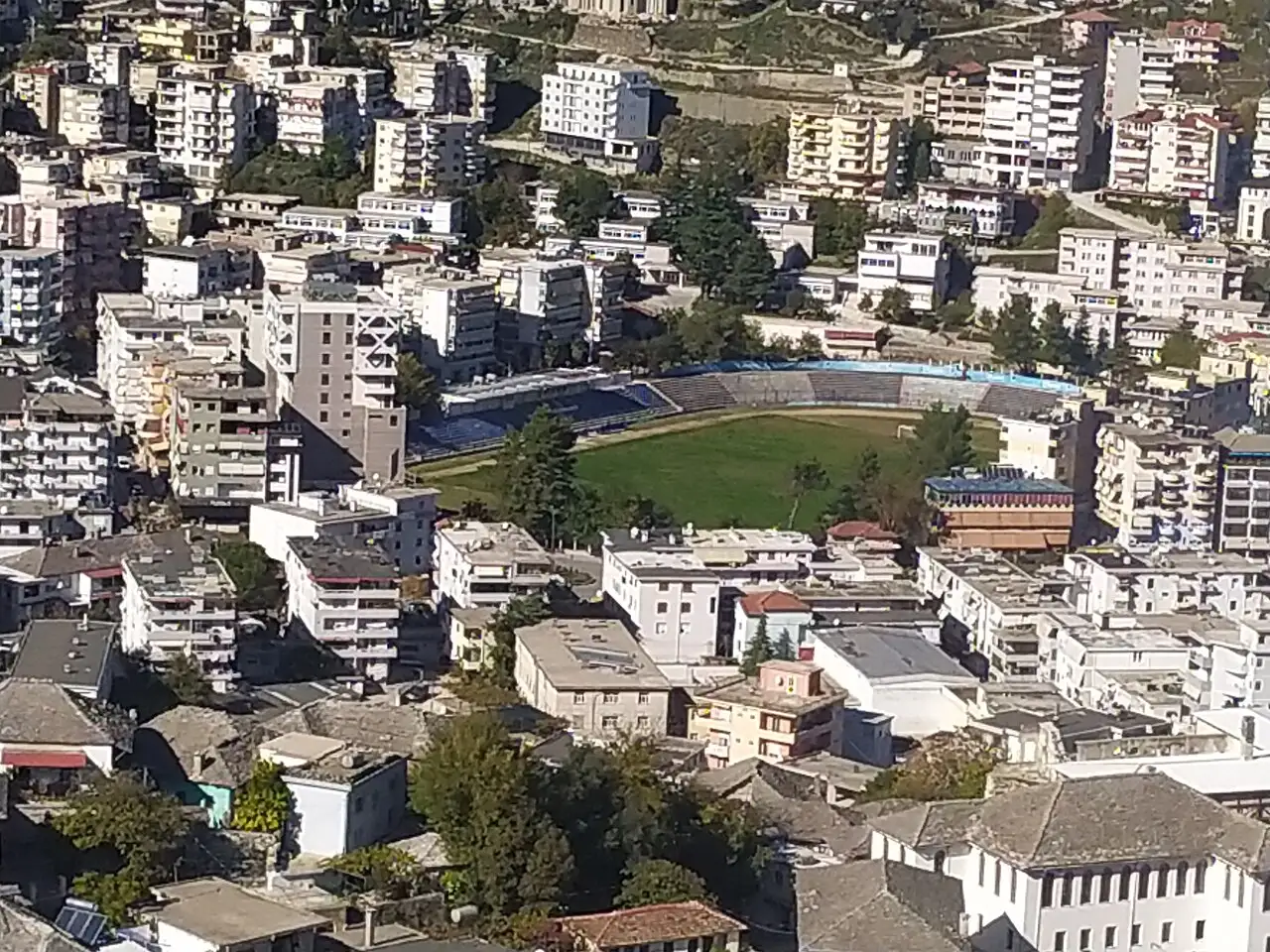
The modern grid below the hill is flat, busier with through-traffic, and denser with chain-style hotels and rental apartments. You’ll sleep cheaper on average, park more easily, and start every castle morning with either a taxi or a sustained uphill walk.
That’s not a failure mode - it’s the right call for self-drive travellers doing Gjirokaster as one overnight on a longer southern loop, for families with lots of kit, or for anyone arriving after dark. The trade is atmosphere: breakfast might overlook a petrol station instead of slate roofs. If you’re comparing Gjirokaster with Berat as overnight bases, the Berat vs Gjirokaster page sorts the towns; the lodging rule of thumb is the same in both - castle-side charm costs climb.
Booking checks that matter more than star labels
A few questions save more money than hunting another five euro on the rate:
- Air conditioning. Stone walls stay cool at night in shoulder season and bake in peak summer if the unit is weak or missing. Confirm AC in writing for July and August.
- Exact walk. “Five minutes to the bazaar” can mean five flat minutes or five vertical ones. Open the satellite view.
- Parking. Old Town is largely pedestrian. Boutique operators routinely point guests to paid or free lots just outside the historic zone and a short walk in - plan for that, don’t assume a private garage under the house.
- Cash and cards. Smaller guesthouses still prefer lek for extras; carry some even if the room was prepaid online.
- Arrival window. Check-in from 14:00 is common at boutiques (DAM publishes that window). A noon bus drop with bags means coordinating early luggage storage.
Castle timing shapes the overnight too. Per the Regional Directorate of Cultural Heritage that runs the fortress, the gate ticket is 400 ALL for an individual adult (300 ALL in groups of 12+, 200 ALL for pensioners and people with disabilities, 120 ALL for pupils and students, free under 12), with summer hours 09:00-19:00 from 1 May to 30 September. Outside that window the fortress drops to 09:00-16:00 Tuesday to Saturday and 09:00-14:00 on Sunday, closed Monday - check it before you travel, because a Monday arrival in October buys you a locked gate instead of a sunrise on the ramparts. The weapons and castle museum pavilions inside are quoted at a separate 200 ALL by the city tourism portal, but that line does not appear on the directorate’s own price list, so confirm it at the gate. Sleeping in the Old Town means you can walk up early and beat the coach groups; sleeping below means budgeting taxi time around those hours.
How many nights, and how this sits in a wider Albania plan
One night works if you’re threading the south by car and mainly want the castle, bazaar and a stone-house dinner. Two nights are better if you also want a tower-house museum visit, the Cold War tunnel and a day trip toward the Blue Eye or Antigonea without rushing check-out.
For the national picture of bases - Tirana, the Riviera, Saranda, Berat - start with where to stay in Albania. Gjirokaster is the stone-city overnight for the inland south: not a beach town, not a capital, and at its best when your room matches how you actually move - on foot uphill, or by car with flat parking. If you’re chaining it with Berat and Butrint on a cultural drive, the UNESCO Albania route maps the corridor.
Peak rule, stated plainly: July and August fill Old Town houses first and push rates up. June and September keep the same slate roofs with cooler climbs and more choice on the map. Whenever you come, decide the lodging category before you fall for a pretty balcony photo - in Gjirokaster the balcony is real, and so is the walk that gets you there. Book the climb you can live with, not the listing that photographs best.
Photos
Read also

Before you go · 13 min read
Theth vs Valbona: Where to Base in the Albanian Alps
Updated · September 13, 2026Theth vs Valbona in 2026: which Alps valley to base in without the full crossing - access from Tirana, guesthouse costs and crowds compared.

Before you go · 10 min read
Berat vs Gjirokaster: Which Ottoman Town to Visit?
Updated · September 3, 2026Berat vs Gjirokaster in 2026: white-window Berat is closer from Tirana; stone Gjirokaster fits the south. Compare sights, travel times and who each suits.

Before you go · 11 min read
Where to Stay in Shkodra: Old Town, Lake or Alps Base
Updated · August 22, 2026Where to stay in Shkodra: the Old Town, quiet Zdrale, lakeside Shiroka, or a hiker hostel that runs its own transfer to Theth and the Koman ferry.

Before you go · 9 min read
Balkan Roaming 2026: Where Your EU SIM Works Free
Verified · August 15, 2026Of twelve countries here, an EU SIM roams free in exactly three. Six more share a free zone your EU SIM cannot join. The map, country by country.