Gjirokaster Castle: Prison, Weapons Museum & Cold War Jet
Gjirokaster Castle: 400 lek at the gate, closed Mondays October-April, the weapons museum and 1932 prison, and the US jet on the terrace.
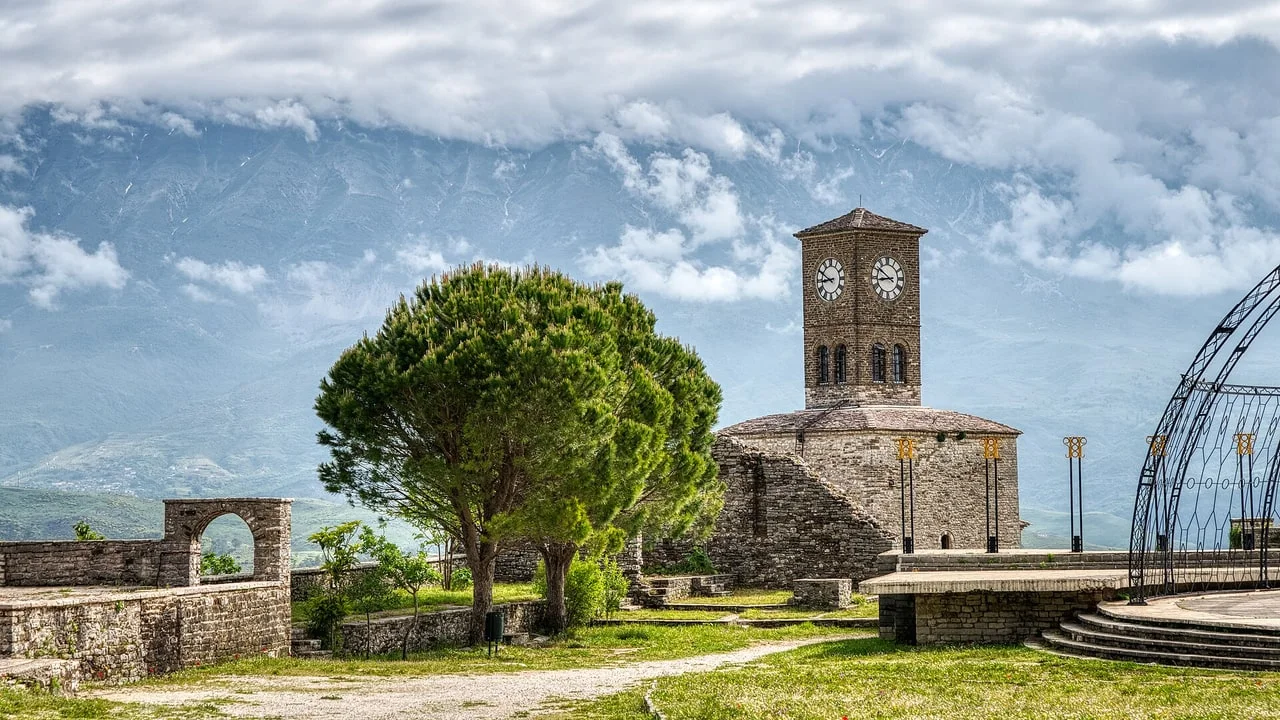
Gjirokaster Castle is the long grey fortress on the ridge above the stone city, and from 1 October to 30 April its gate is shut on Mondays, closes at 16:00 from Tuesday to Saturday and at 14:00 on Sunday. The weapons museum inside may cost extra, because the directorate’s own price list doesn’t show it. Past the gate sit a former royal prison, a gun gallery and an American jet that was forced down in Albania in 1957 and ended up on display here.
What the tickets cost, and when the gate is open
The regional heritage directorate that runs the site publishes its prices and hours on its own page, and the figures below are its numbers as read on 10 October 2026.
| Ticket | Price |
|---|---|
| Castle gate, individual adult | 400 lek |
| Group of 12 or more, per person | 300 lek |
| Pensioners and people with disabilities | 200 lek |
| School pupils and students | 120 lek |
| Under 12 | Free |
| Weapons museum, prison and town-history museum inside | 200 lek, 100 lek for pupils and students, per the tourism portal; not on the directorate’s price list |
The museum price comes from the regional tourism portal, which describes the arms museum, the former prison and the Museum of Gjirokastra as one museum seen on a single 200 lek ticket. The directorate’s own price list names only the gate tickets, so ask at the gate whether the museum is charged on top of the 400 lek; if it is, an adult pays 600 lek, about EUR 6 at the portal’s own 100 lek to the euro.
Hours depend on the date. Between 1 May and 30 September the castle opens daily from 09:00 to 19:00. From 1 October to 30 April it opens Tuesday to Saturday from 09:00 to 16:00 and on Sunday from 09:00 to 14:00, and it’s closed on Monday. That Monday closure matters most on a day trip from the coast: arrive on a Monday between October and April and you’ll be walking the town and looking up at the walls. Treat these as published figures that a directorate can change; its page is the authority, and the gate is the final check.
The gun gallery, the prison and the museum
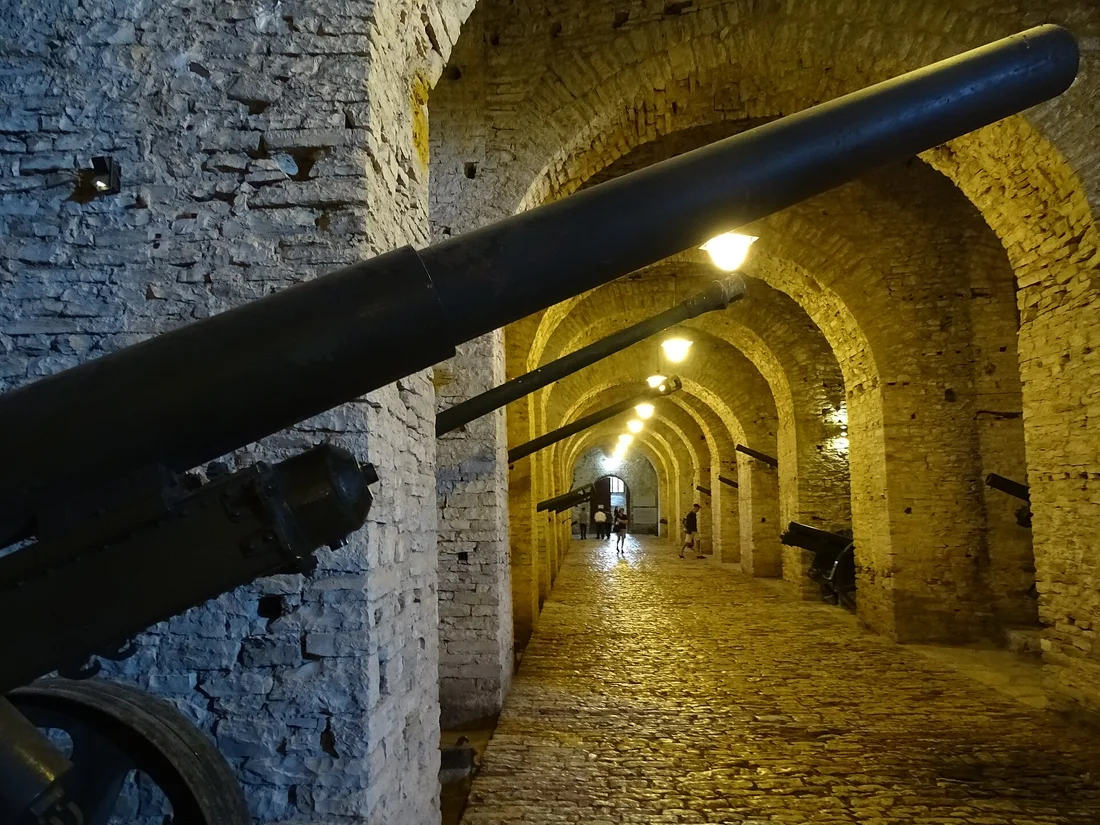
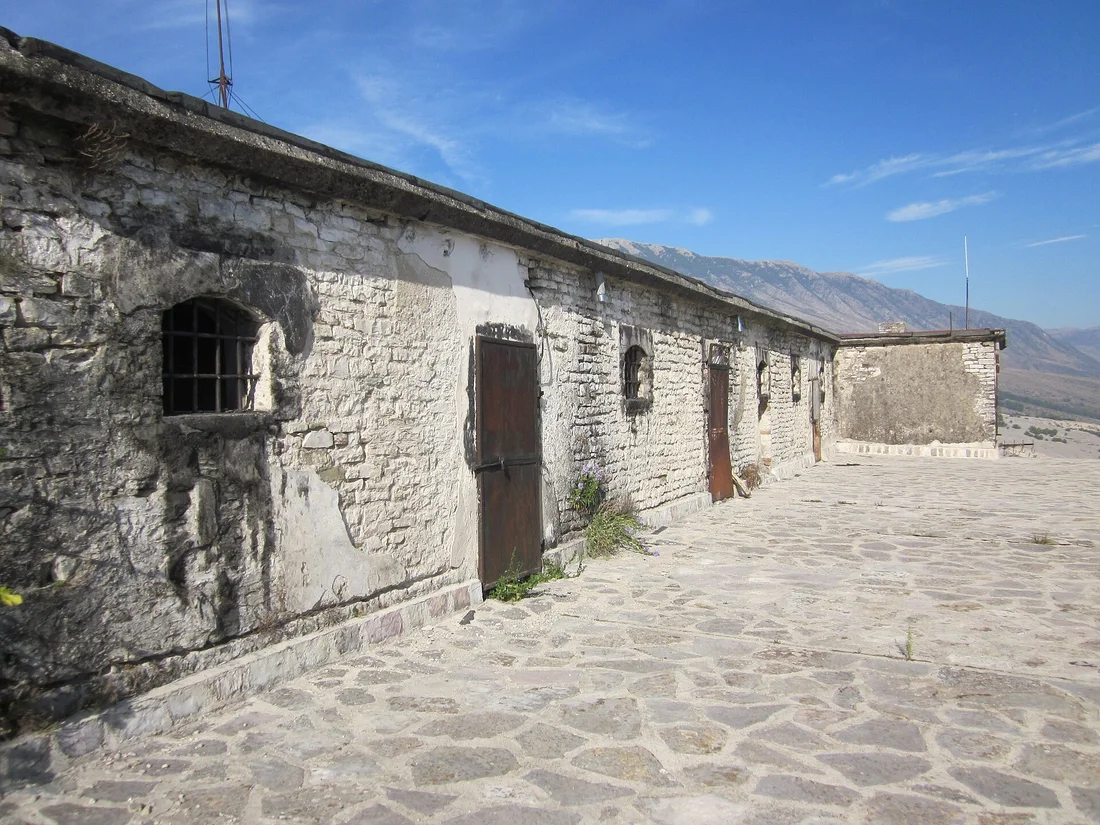
You walk in under the walls and the first thing you meet is a long gallery of artillery, guns gathered over the years from different wars. The directorate describes the museum of arms beyond it and, in the same breath, the prisons where inscriptions left by prisoners can still be read.
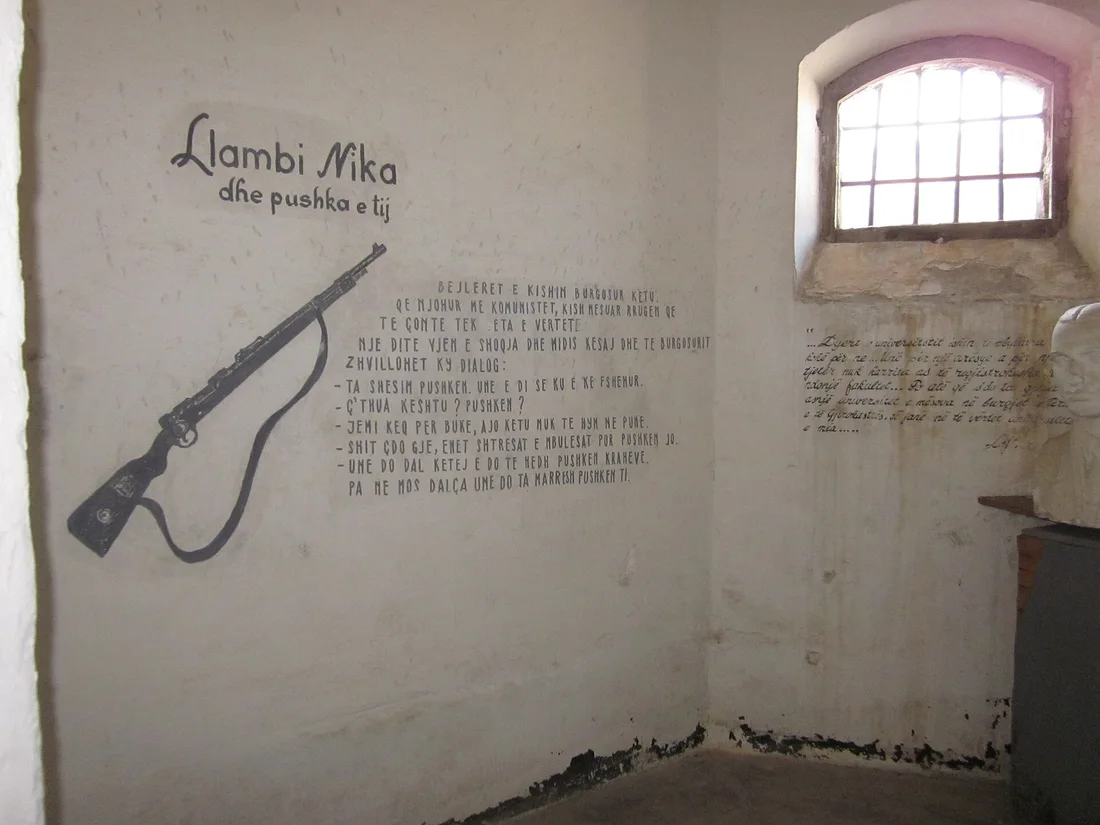
The prison is the more interesting story, and the portal tells it plainly. It was completed in 1932, commissioned by King Zog and built by Italians, and the stones came from the aqueduct that Ali Pasha had built. The Italian and German occupation forces used it during the war, and after 1944 the communists expanded it and held political prisoners there. It closed as a prison in 1968 and part of it became a museum, opened in 1971.
The collection covers Albanian arms from independence in 1912 to the end of World War II, with most of the space given to the partisan struggle against Italian and German occupation between 1939 and 1944. One point from the portal helps with reading the rooms: the writing on the walls comes from the letters and diaries of people jailed under King Zog and during the occupation, and none of it mentions the communist regime. So the prison walls speak, but only about some of the people held there.
There’s also a town-history museum in the complex, which the directorate names for Gjin Zenebishta; the portal counts the town museum inside the same 200 lek museum ticket.
The jet on the terrace
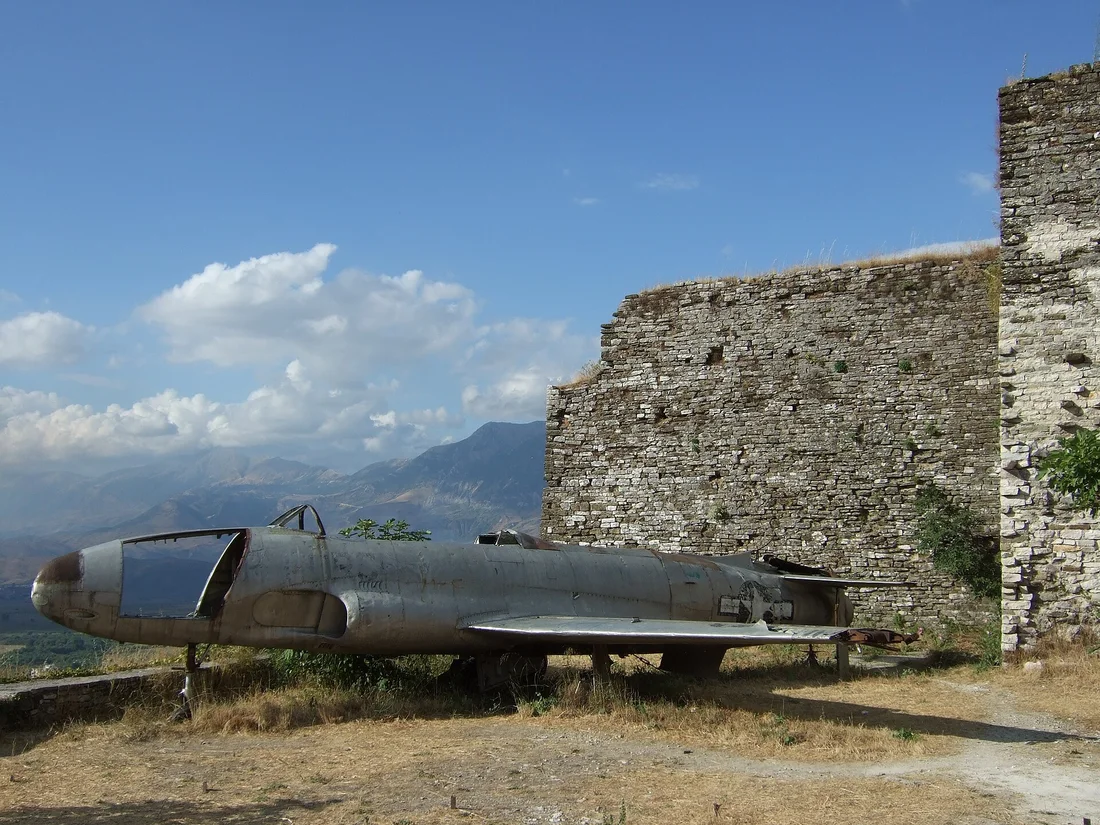
The jet on the terrace is the castle’s oddest exhibit. It’s a Lockheed T-33A, a USAF two-seat jet trainer, and an aviation write-up puts its landing on 23 December 1957: it strayed into Albanian airspace, MiG-15s were scrambled, and the low-fuel pilot put down on the unfinished runway of what’s now Tirana airport, which political prisoners were building at the time. The regime called it a spy plane, and the directorate’s page still says it is believed to have been one and has stood in the castle since 1969. The aviation account describes a navigation error and a low-fuel landing rather than espionage.
Read that story with care. The detailed 1957 account is an enthusiast’s write-up, not an official record, so read the date and the circumstances with that in mind. The aircraft also stands outdoors, and the same write-up says it has not been maintained or protected, so expect weathered metal rather than a restored exhibit.
The stage, and the legend of Argjiro
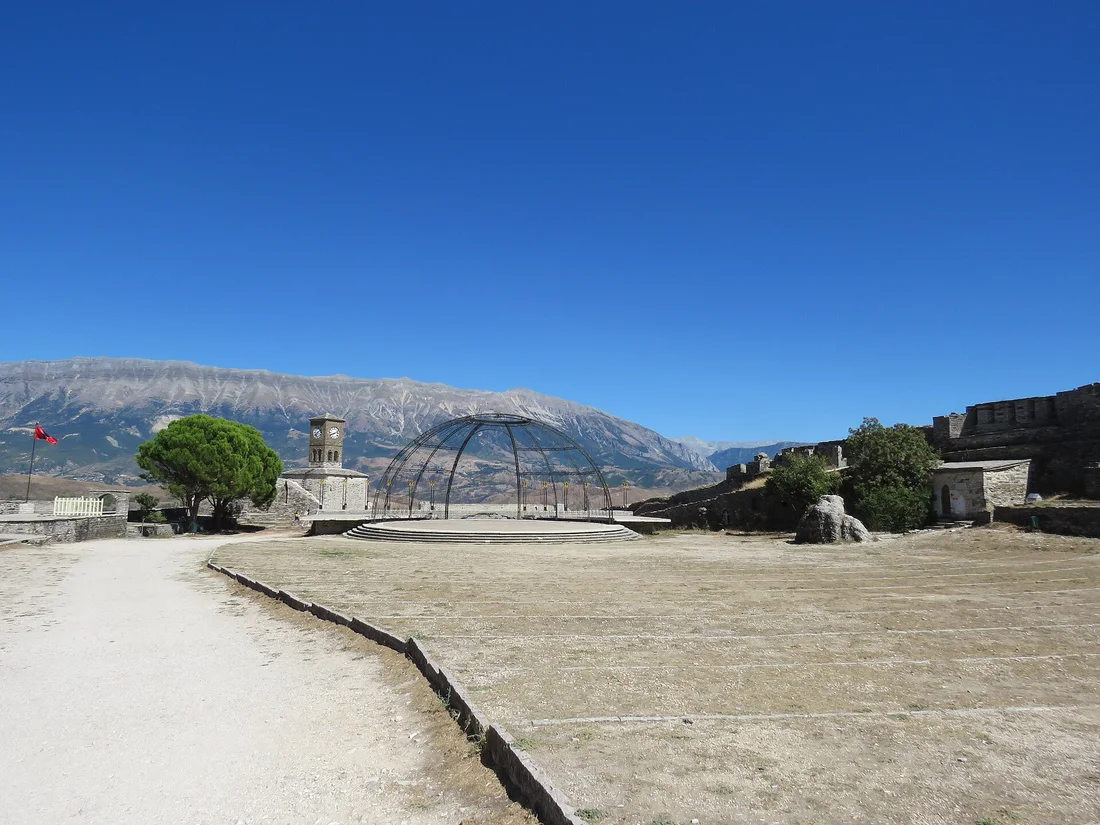
The open-air stage that you pass on the terrace is the National Folklore Festival stage. The directorate says the festival has been held in the castle since the 1980s, gathering iso-polyphony groups from every region of Albania, and our events calendar shows where the next edition stands. Outside festival years it’s an empty amphitheatre with a view over the valley, and it’s a good place to sit.
The castle also carries a legend. The directorate’s page says it is named for Princess Argjiro, who threw herself from the clock tower to escape the Ottoman invaders. It’s folklore rather than history, but it explains the castle’s name.
How busy it gets
The directorate publishes visitor counters on the same page, and they’re worth a look before you plan the hour. The castle logged 263,048 visitors in 2024 and 307,164 in 2025, and 223,280 from January to August 2026. The page also shows three monthly figures with no year attached: 62,006 for August, 51,118 for July and 40,220 for June. Spread over the 31 days of August that’s about 2,000 people a day through a gate open 10 hours, so a midday August visit is the one to avoid.
In practice that points to the opening hour, or the last two hours before closing, and to any day outside July and August. Off season the hours shrink too: the gate shuts at 16:00 Tuesday to Saturday and at 14:00 on Sunday, so be at the top two hours before closing to fit both museums and the terrace.
The Cold War tunnel is not in the castle
It’s easy to assume the Cold War tunnel is part of the castle; it isn’t. The tunnel is an 800 m bunker with 59 rooms, built in secret in the early 1970s, and its entrance is near the municipality building, a separate stop with a separate ticket of 200 lek and a tour of about 20 minutes, per the regional tourism portal. That portal gives its hours as 09:00 to 18:00 from April to October and 08:00 to 14:00 from November to March. Count it as a second half-hour in town, not part of the castle visit.
The town around it
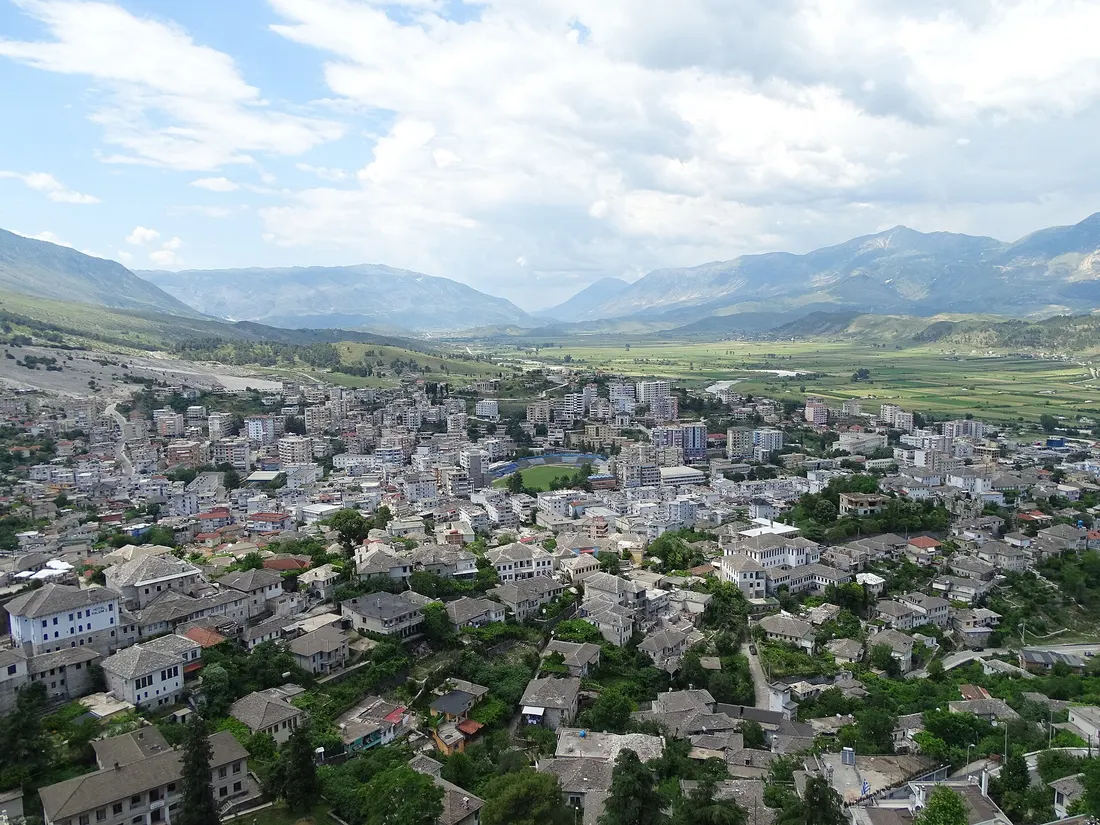
The castle is the top of the old town, and the climb to it is part of the visit: steep cobbled lanes through the bazaar, with the stone houses stacked on the slope below. Allow about two hours including both museums and the terrace. For the bazaar, the tower-houses and where to eat, our Gjirokaster guide has the longer list, where to stay in Gjirokaster compares the neighbourhoods, and Berat vs Gjirokaster helps if you’re choosing between the two stone towns. Coming from the capital, Tirana to Gjirokaster has the timetable and the fare. Count the climb through the bazaar inside those two hours, and in the off season start it early enough to be at the top two hours before the gate shuts.
On the map
The map loads on click - to keep the page lightweight.
The map didn’t load. Check your connection and refresh the page.
Admission and opening hours
- Admission price
- Castle gate 400 lek adult, 300 lek per person in groups of 12 or more, 200 lek pensioners and people with disabilities, 120 lek school pupils and students, free under 12; the tourism portal lists 200 lek (100 lek pupils and students) for the weapons museum inside, which is not on the directorate's price list - ask at the gate whether it is extra
- Opening hours
- 1 May - 30 September 09:00-19:00 daily; 1 October - 30 April Tuesday-Saturday 09:00-16:00, Sunday 09:00-14:00, closed Monday
Gate prices and hours from the Regional Directorate of Cultural Heritage, Gjirokaster (drtkgjirokaster.com); museum fee from the regional tourism portal visit-gjirokastra.com. Checked 10 October 2026.
Details checked: October 10, 2026
Read also

What to see · 9 min read
Pellumbas Cave (Black Cave) & Erzen Canyon from Tirana
Verified · October 16, 2026Pellumbas Black Cave from Tirana: 21 km by road, a 2 km hike, 360 m of pitch-dark show cave, and why the Erzen canyon pools are a summer plan.

What to see · 9 min read
Berat Castle (Kala): Onufri Museum, Hours & Open Churches
Verified · October 13, 2026Berat Castle is a lived-in quarter with one paid museum inside and a second below. Winter hours, the 400-lek Onufri ticket, which churches open, the climb.

What to see · 8 min read
Skanderbeg Square: Et'hem Bey Mosque, Clock Tower & More
Verified · October 10, 2026Skanderbeg Square, Tirana: Et'hem Bey Mosque, the Clock Tower climb, and the National Historical Museum, shut since March 2024.

What to see · 9 min read
Pyramid of Tirana: From Hoxha's Museum to Tech Hub
Verified · October 9, 2026The Pyramid of Tirana in 2026: steps to climb with no ticket listed, a free tech school for teens inside, and how Hoxha's 1988 museum dodged demolition.