Gjirokaster, Albania: The Stone City Guide
Gjirokaster guide: the UNESCO stone city, the hilltop castle and weapons museum, the Old Bazaar, the tower-houses, Cold War tunnel and day trips.
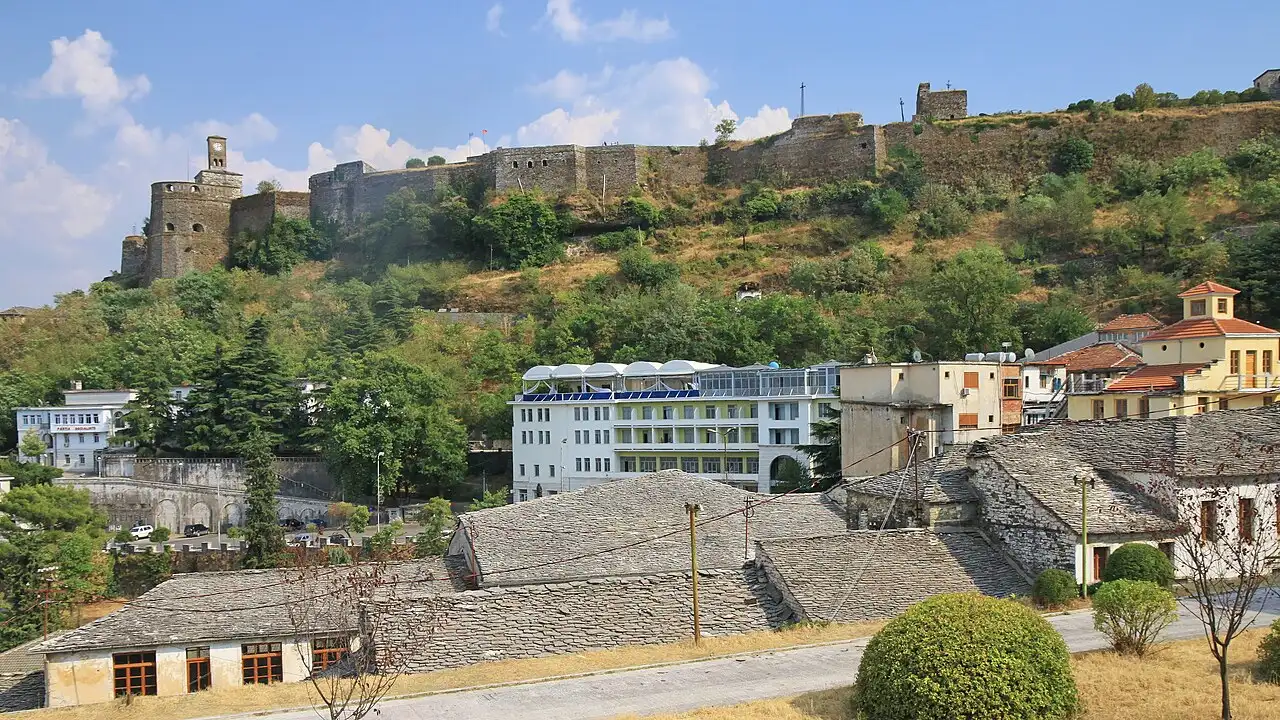
Gjirokastër is Albania’s “stone city” - a UNESCO World Heritage town of grey slate-roofed Ottoman houses climbing a steep hillside in the south, watched over by one of the largest castles in the Balkans. It’s the birthplace of the novelist Ismail Kadare and the communist dictator Enver Hoxha, and it earns a day or two on any southern Albania trip: walk up to the hilltop fortress with its weapons museum and Cold War tunnel, wander the cobbled Old Bazaar, step inside a fortified tower-house, and look out over the Drino valley from the ramparts.
The castle is the centrepiece here, and it’s an unusual one - among the largest in the Balkans, with a weapons museum and a Cold War tunnel built into ramparts that look out over the Drino valley. Down the slope, the same stone town produced both the novelist Ismail Kadare and the dictator Enver Hoxha.
What to see in Gjirokastër
Gjirokastër’s old town is steep, cobbled and compact, and the headline sights cluster around the bazaar and the castle above it. The pleasure is as much in the climbing - the stone lanes, the slate roofs, the valley views - as in any single monument. UNESCO inscribed the town in 2005 as a rare surviving example of an Ottoman-era merchant town, and that lived-in old core is the real attraction.
Gjirokastër Castle and the weapons museum
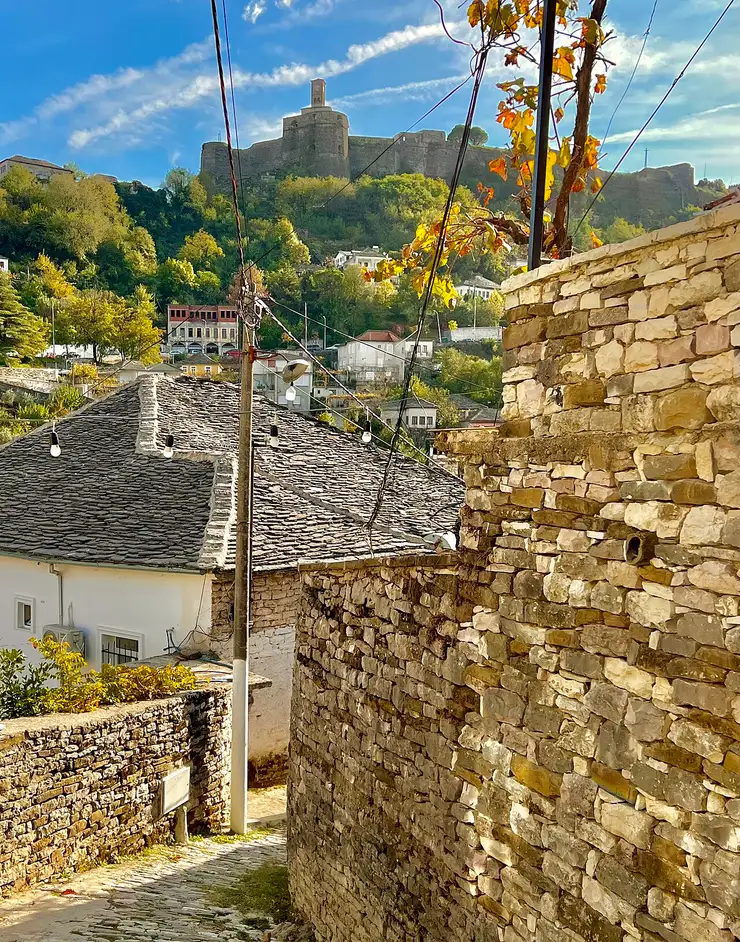
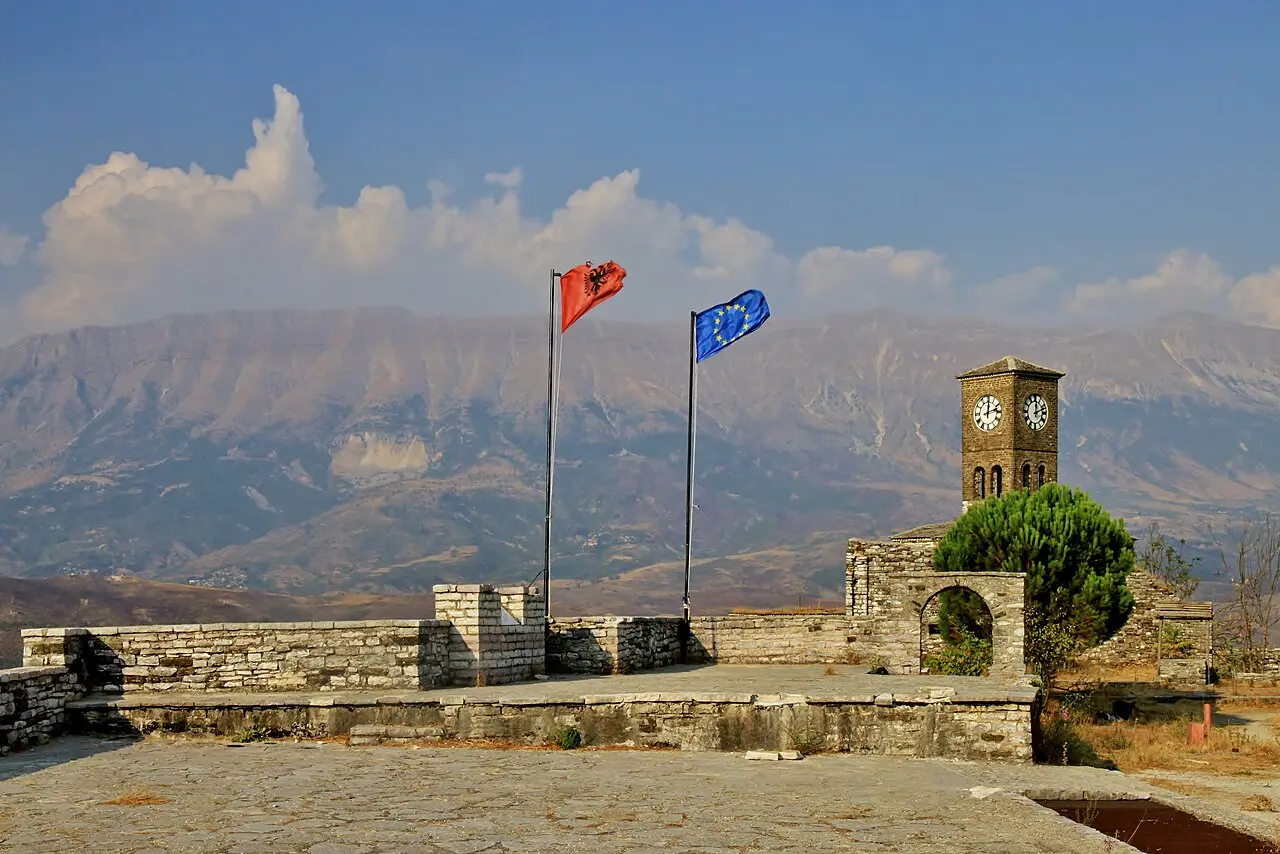
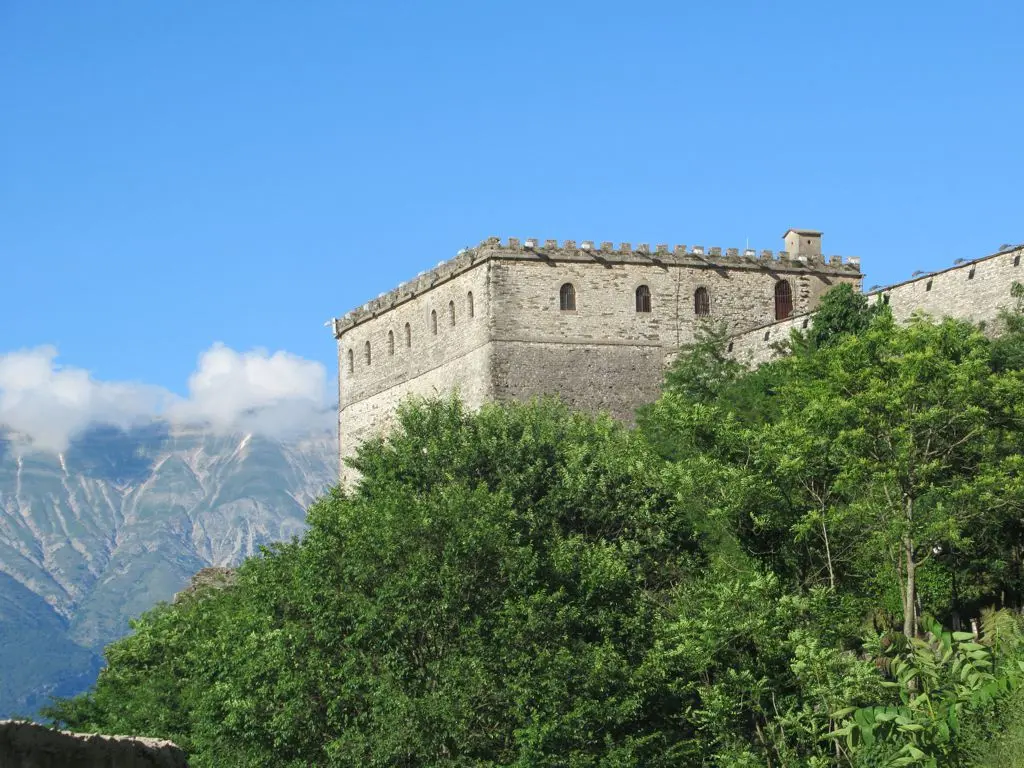
The single must-do is the climb up to Gjirokastër Castle (Kalaja), the long grey fortress that stretches along the ridge above the town. It’s one of the largest castles in Albania, fortified since antiquity and much rebuilt over the Byzantine, Ottoman and later periods, and its battlements give the best views in town - out over the slate roofs below and across the wide Drino valley to the mountains beyond.
Inside the walls, a long vaulted gallery houses the National Weapons Museum (the Museum of Armaments), with a line of artillery and captured weaponry on display, and there’s a famous American military aircraft parked on the terrace - a relic the regime presented as a downed US spy plane during the Cold War. The castle has also served as a prison, and the dark stone galleries carry that weight. Wandering the ramparts, the gun gallery and the terraces easily fills a couple of hours.
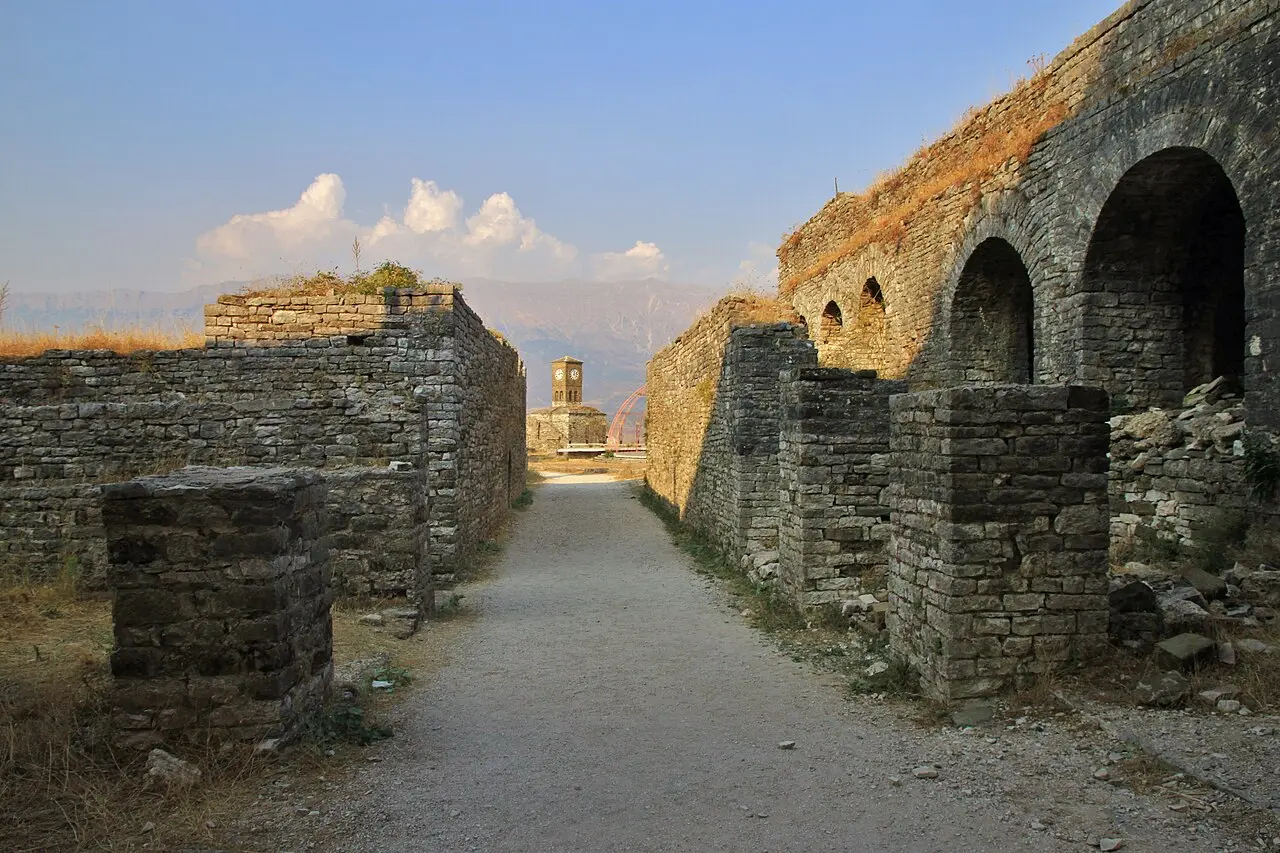
The castle gate and the weapons museum are two separate tickets, and the second one catches people out. Getting through the gate onto the ramparts runs 400 lek for an individual adult, 300 lek per person for a group of 12 or more, 200 lek for pensioners and people with disabilities, and 120 lek for anyone 12 to 18 or holding a student card; under-12s go free. The weapons museum inside adds 200 lek (100 lek for pupils and students) on top. Castle hours are 09:00 to 19:00 daily from 1 May to 30 September, and outside that window 09:00 to 16:00 Tuesday to Saturday and 09:00 to 14:00 on Sunday, closed Monday, per the regional heritage directorate that runs the site - treat these as the latest published figures, not a guarantee, and confirm the total for both tickets at the gate before you pay.
The Drino valley and the Cold War tunnel
The position is the point: from the castle and the upper town, the land falls away into the broad, flat Drino valley, ribboned with fields and ringed by bare mountains - the panorama that has made Gjirokastër a strategic stronghold for centuries.
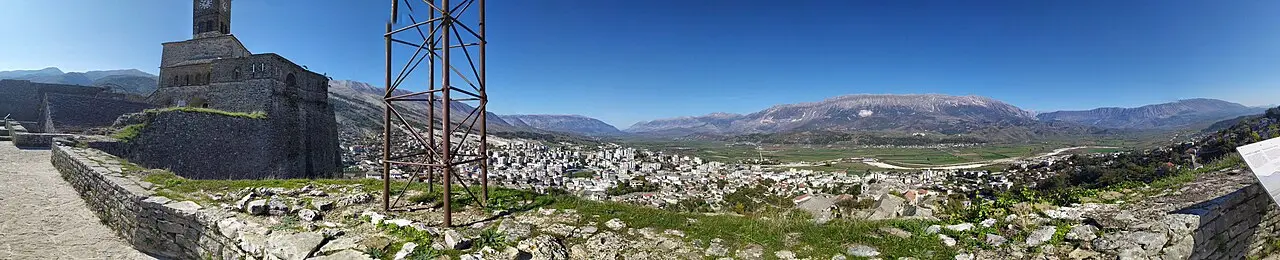
Beneath the town, a Cold War tunnel - a large bunker built under the communist regime as a shelter for the local leadership in case of attack - can be visited on a short guided tour from near the bazaar. It’s a cool, bare, concrete reminder of the paranoia of the Hoxha years, and a quick, atmospheric counterpoint to the Ottoman houses above. Tours and times vary; ask locally or at the tourist information point.
The Old Bazaar
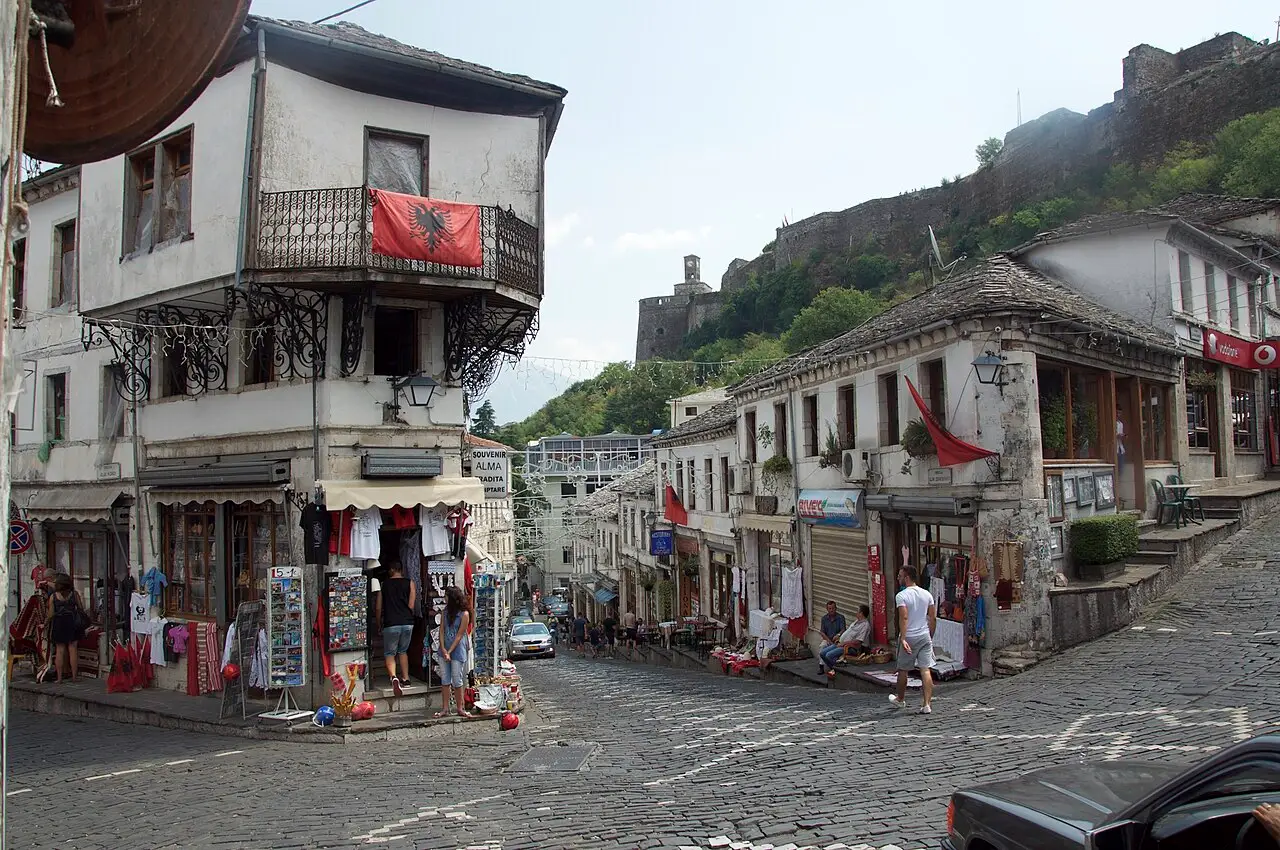
The heart of the lower old town is the Old Bazaar (Pazari i Vjetër), a cobbled junction of streets lined with stone-built shops under wooden eaves, many now selling carpets, antiques and souvenirs. It’s the social centre of Gjirokastër - cafés spill onto the slope, the lanes climb toward the castle, and it’s the natural place to start a wander or end one over a coffee.
The tower-houses and the Zekate House
Gjirokastër’s signature buildings are its fortified tower-houses (kullë) - tall, white-and-stone Ottoman mansions built like small fortresses, with thick walls, shuttered windows and richly decorated upper floors. Several are open to visitors, and the grandest is the Zekate House, an early-19th-century mansion with twin towers, a domed reception room and frescoed interiors that show how a wealthy Gjirokastër family lived. The Skënduli House and the Ethnographic Museum (set in a tower-house on the site where Enver Hoxha was born) are other good options. Between them they explain why the whole town, not just the castle, is the World Heritage site.
The stone roofs and the writers’ town
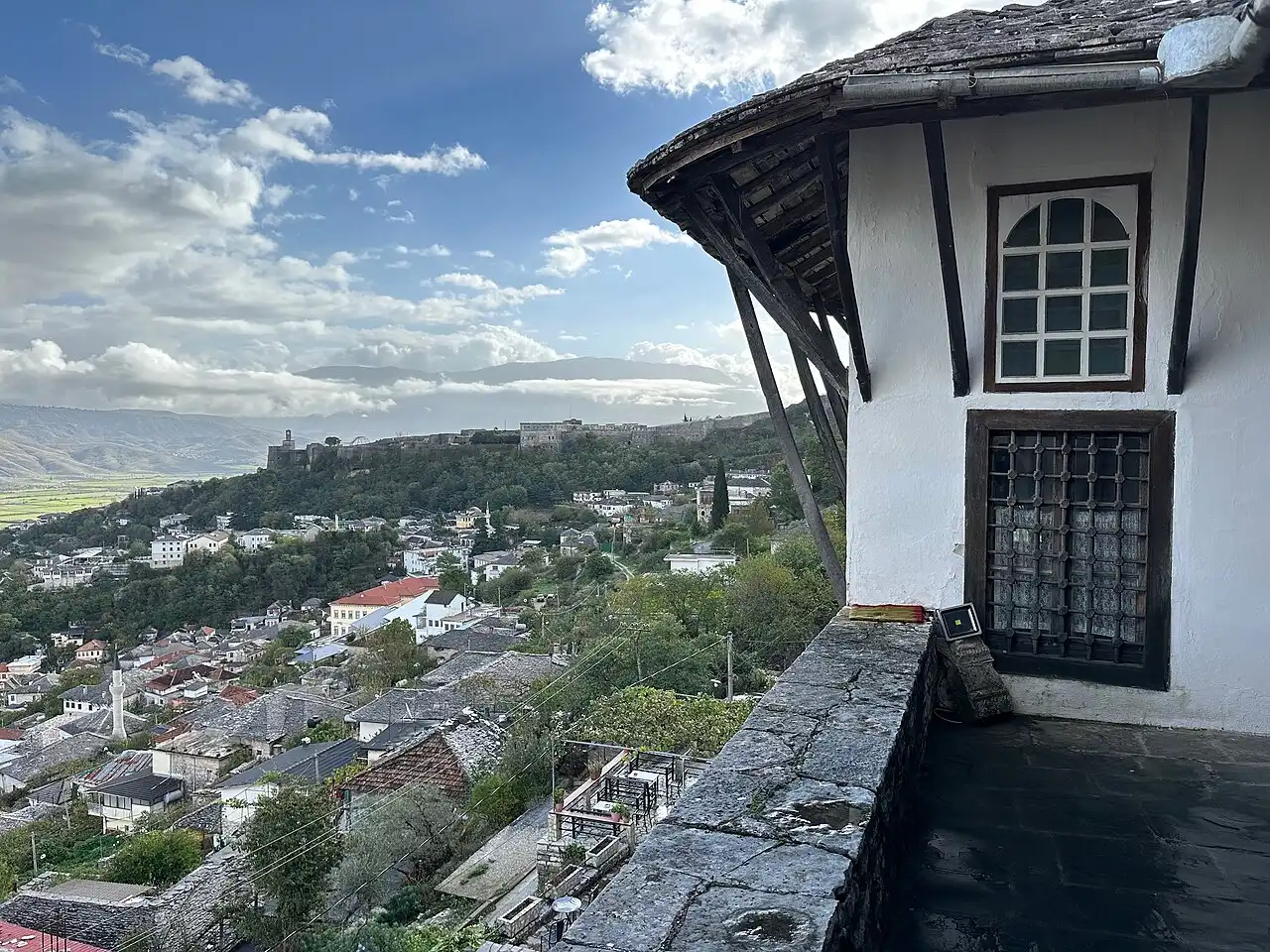
The name “stone city” is literal: the old houses are roofed in heavy grey slabs of local stone laid like slate, and from above the town reads as a sea of stone roofs flowing down the hillside. Gjirokastër is also a town of words - the Booker-shortlisted novelist Ismail Kadare was born here and set much of his fiction (including Chronicle in Stone) in these lanes, and the regime leader Enver Hoxha grew up in the same streets. Reading a few pages of Kadare before you climb the cobbles is the best primer there is.
Where to stay in Gjirokastër
The old town is the natural base, but it’s worth knowing how steep a stretch you’re picking before you commit to a guesthouse three switchbacks above the bazaar.
- The old town (around the bazaar). The classic choice: traditional guesthouses in restored stone houses, often with wooden interiors, balconies and castle or valley views. Atmospheric and central, though it means steep cobbles with your bags.
- Just below the old town. A short, less steep walk from the bazaar, with a mix of guesthouses and small hotels - a good compromise if the climb is a concern.
- The new town (Drino valley floor). Flat and modern, with lower rates and easy parking - a sound choice if you’re touring by car and would rather not carry bags up the old town’s cobbles at all.
For stone Old Town guesthouses versus valley hotels, see where to stay in Gjirokaster. Rooms in the old town book out first for July and August, and prices climb with them; outside those two months you’ll find both better rates and a cooler walk up to the fortress.
Where to eat
Gjirokastër eats like the Albanian south: hearty, slow-cooked and meat-forward. The town’s signature dish is qifqi - small fried balls of rice and egg seasoned with herbs, found here and almost nowhere else - and you’ll also see oshaf (a fig-and-sheep’s-milk dessert), slow-roasted lamb, byrek and oven bakes on local tables. Restaurants and taverna cluster around the bazaar and the old town, several with terraces facing the valley or the castle.
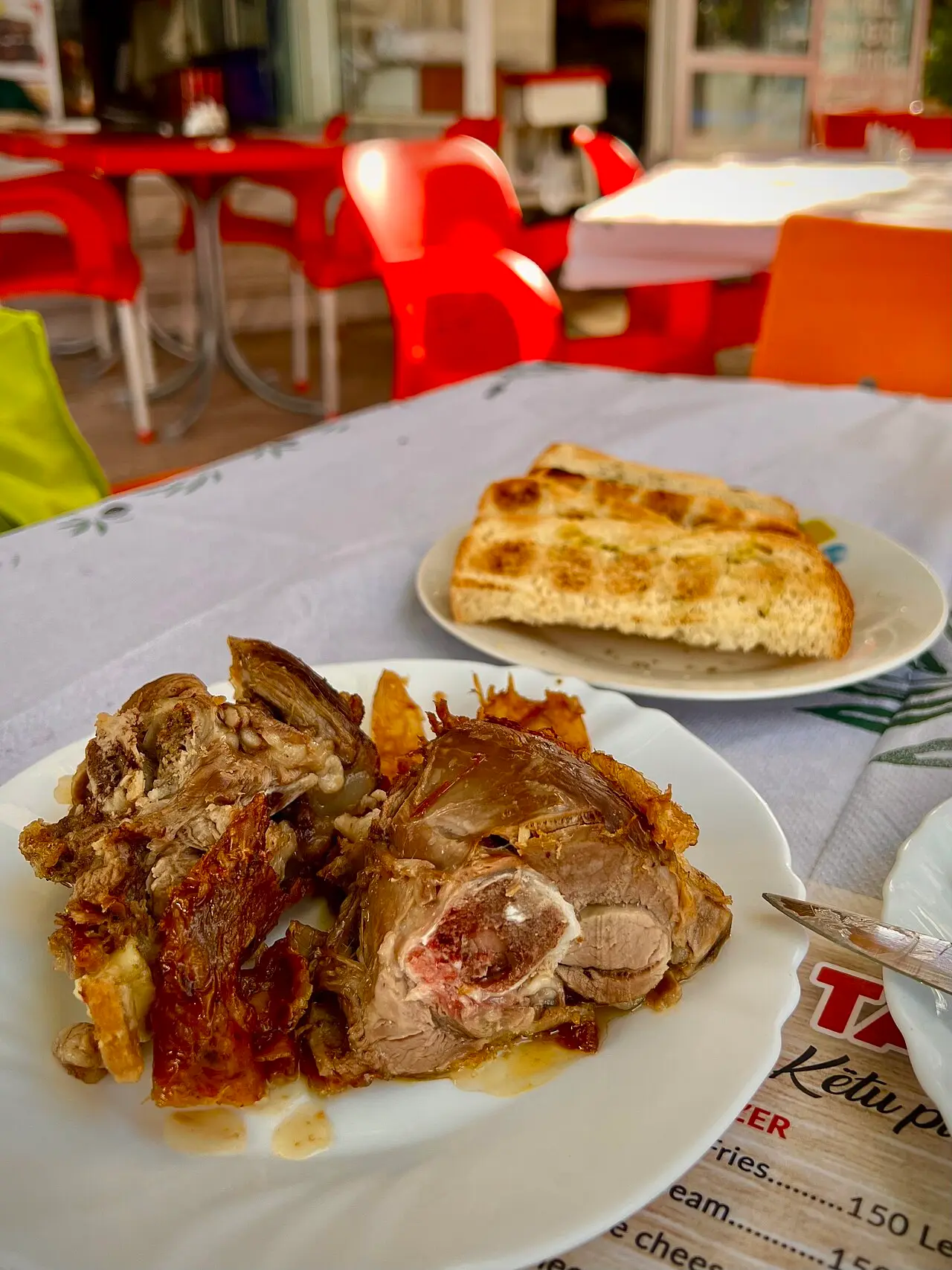
As ever, we don’t quote specific prices or menus for individual venues because they change with the season - check current boards when you go, and ask your guesthouse for their pick. For the full rundown of what to order around the country, from tavë kosi to raki and local wine, our guide to Albanian food has the national picture.
Best day trips from Gjirokastër
Gjirokastër sits well for half-day and day trips into the southern Albanian countryside, especially with your own car.
The Blue Eye (Syri i Kaltër)
The most popular outing is the Blue Eye, a karst spring on the road between Gjirokastër and Saranda where water wells up from a pool so deep and clear it shades from pale turquoise at the edges to a near-black blue at the centre, ringed by green forest. It’s roughly partway to the coast and usually reached by car, taxi or an organised tour; from the car park it’s a short walk or shuttle to the viewing platforms. Swimming in the spring itself is banned and the rangers enforce it, but it’s a striking, quick stop.
Antigonea Archaeological Park
About 14 km from town, Antigonea is the hilltop ruin of a Hellenistic city founded around 296 BC by King Pyrrhus of Epirus and named for his wife, Antigone. The site - now an archaeological park in the hills above the Drino valley - preserves the line of its walls, streets and houses, with sweeping views, and sees far fewer visitors than the castle. It suits anyone who likes ruins with a view and some quiet.
Bënjë thermal baths and the Lengarica canyon
Further out, and a full day rather than a half one, the Benja thermal baths sit under an Ottoman bridge at the mouth of a canyon 14 km beyond Përmet - about two hours each way from Gjirokastër. Bathing is free, the water is warm rather than hot, and the site has been a building project through 2026, so it rewards checking before you set off.
How to get to Gjirokastër
Gjirokastër sits inland on the main southern route, the last proper stop before the coast road takes over, or the first one back.
| Route | Roughly | Notes |
|---|---|---|
| Saranda → Gjirokastër | ~53 km / ~1 h 05 | The common pairing; combine with a Blue Eye stop on the way. |
| Tirana → Gjirokastër (coach) | timetabled 4 h 31 min, 13 a day | Direct departures through the day via the inland motorway; the usual way to arrive without a car. Full times and fares: Tirana to Gjirokaster. |
| Tirana → Gjirokastër (car) | ~230 km / ~3.5-4 h | Straightforward drive on the SH4; the old town has parking below the cobbles. |
| Berat → Gjirokastër | ~3.5-4 h | Long but scenic; often combined on a southern loop. |
There’s no train. Coming up from the coast, Gjirokastër pairs naturally with Saranda and the Riviera, and it’s the classic inland stop on a southern loop. Coming down from the capital, the Tirana to Gjirokaster guide covers the coaches and the drive. Having your own wheels makes the Blue Eye, Antigonea and the wider valley far easier to reach than waiting on infrequent local buses - read how to rent a car in Albania for the insurance and deposit details first, or the full Albania road trip itinerary that finishes here.
Practical tips for visiting Gjirokastër
Worth knowing before you visit:
- Currency. The lek (ALL) is the only currency that works at the castle gate, the tower-houses and most guesthouses in the old town - bring enough cash for a full day out, since cards really only show up at the bigger restaurants and hotels.
- How long to stay. The castle, the bazaar and a tower-house fill a full day comfortably; add a second and there’s room for the Blue Eye or Antigonea as well.
- Wear good shoes. The lanes climbing from the bazaar to the castle gate are the steepest stretch of any day here, all cobbles with nowhere flat to catch your breath - tackle them in the cooler morning or early evening rather than midday.
- When to go. Spring and autumn keep the worst of the Drino valley heat off that climb, and they’re quieter months for the Blue Eye and Antigonea besides; midsummer on the exposed ramparts is properly hot. See our guide to the best time to visit Albania for the month-by-month picture.
- Gjirokastër as a base. It’s the natural inland anchor of the south - close to the Blue Eye and an easy add-on between Saranda and the rest of the country.
Gjirokastër is the stranger of Albania’s two UNESCO towns to spend a day in: a fortress that doubled as a prison and now shows off a captured spy plane, a Cold War bunker under the bazaar, and a run of streets that raised both a celebrated novelist and the dictator he lived under. Do the ramparts for the view, then spend the rest of the day at street level in the bazaar and a tower-house - between the two, the stone city stops feeling like a museum piece.
What’s nearby and read also
- Browse more Albanian city guides for your next stop.
- Heading to the coast? See our Saranda travel guide for the south, and the best day trips from Saranda if you would rather visit the stone city on a day out from the sea.
- Want the inland counterpart? Read the Berat travel guide, the other UNESCO stone town.
- Continuing past Kakavia into Greece? The Albania to Greece road trip runs Saranda - Gjirokaster - Ioannina - Meteora and covers the Green Card limits honestly.
- Tying it together by car? Follow the Albania road trip itinerary and our how to rent a car in Albania guide.
Photos
On the map
The map loads on click - to keep the page lightweight.
The map didn’t load. Check your connection and refresh the page.
Distance ≈230 km · ~3.5-4 h by road
- Tirana ≈230 km · ~3.5-4 h by road Buses and furgons run through the day via the inland motorway; no train.
Read also

Cities · 10 min read
Korca Travel Guide: Bazaar, Beer & Southeast Albania
Updated · August 14, 2026Korca (Korce) guide: walk the Old Bazaar, see medieval icons, taste Birra Korca, then day-trip to Voskopoje or Lake Ohrid.

Cities · 10 min read
Permet, Albania: the Vjosa, Rafting & Gliko
Updated · August 8, 2026Permet travel guide: rafting the Vjosa (EUR 35), gliko and raki, the 1944 Congress, Leusa church, the Benja baths, where to stay and how to get there.

Cities · 13 min read
Dhermi, Albania: Beaches, Drymades & the Old Village
Updated · September 25, 2026Dhermi and Drymades guide: which beach is which, what a sunbed costs, boat trips to Gjipe, the old Greek village above the coast and the bus-stop catch.

Cities · 11 min read
Pogradec & Lake Ohrid: The Albanian Side
Updated · October 2, 2026Pogradec on the Albanian shore of Lake Ohrid: pebble beaches, the promenade, the Drilon springs, koran trout and Lin's mosaics, without Ohrid's crowds.