Saranda to Corfu Ferry Timetable 2026: 13 a Day, €25
Saranda to Corfu ferry 2026: 13 sailings a day to 15 Oct, 30 min, €25-30 one-way, car €50. Passport control both ways. Operator pages checked 2 Aug 2026.
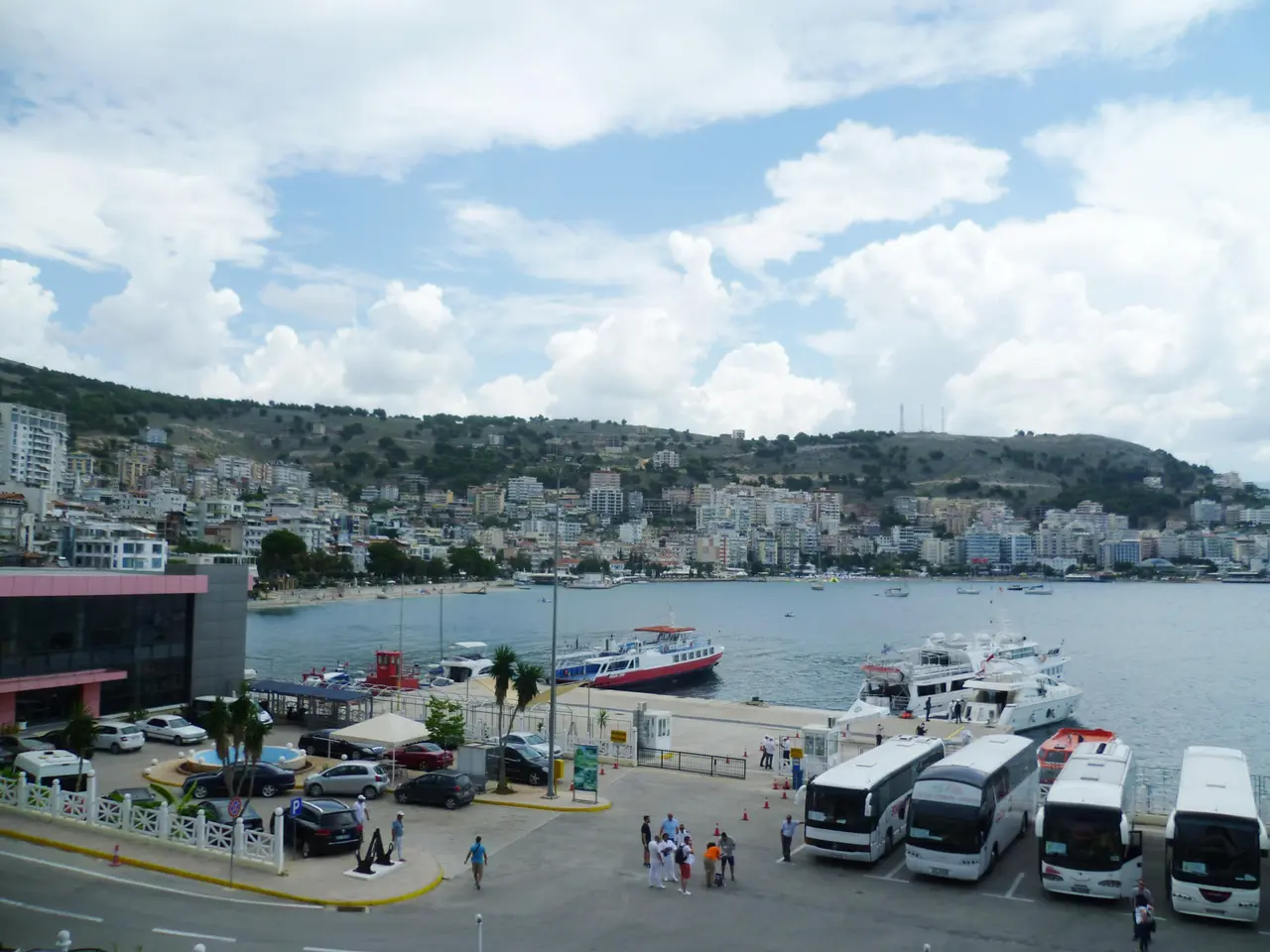
Albania to Greece takes half an hour on this route, and in summer there are thirteen sailings a day each way. An adult one-way costs EUR 25 on the conventional ferry and EUR 30 on the fast boat at the operator’s published high-season rate, roughly USD 29-35 or GBP 21-26; a car is EUR 50. Finikas Lines runs the grid 1 June to 15 October 2026 and Ionian Seaways 1 July to 30 September; out of season sailings are far fewer, so check the operators’ current season pages for any date after mid-October. Between them, in high summer, the middle of the day is close to a boat an hour.
Three things decide whether the day goes smoothly, and none is the ticket. This is a real international border: Albania sits outside the EU and Schengen, Greece is inside both, so you clear passport control twice. Boarding closes 30 minutes before departure and the operator wants you at the terminal a full hour ahead, which isn’t the same as “turn up for the boat”. And Corfu runs an hour ahead of Saranda, so a 09:00 departure puts you ashore at 10:30 local and your return is sold on Greek time. Every time and fare below was rechecked against the operators’ own pages on 2 August 2026.
How long the crossing takes
Two kinds of boat run here and the difference is bigger than the timetable suggests. Ionian Seaways labels its high-speed craft and Flying Dolphin hydrofoils at 30 to 45 minutes and its passenger and car ferries at 55 to 70 minutes across the same 15-odd nautical miles. Finikas marks its Flying Dolphins Kristi, Hariklia and Stavros at 30 minutes, its car ferries Marina and Kaliopi at 50.
If you only want to be in Corfu, take the fast boat. If you’re carrying a vehicle, or you’d rather have an open deck and a steadier ride, take the slow one. The channel picks up wind through the afternoon, so morning crossings are calmest - a second reason the early sailings fill first.
Who operates the ferry
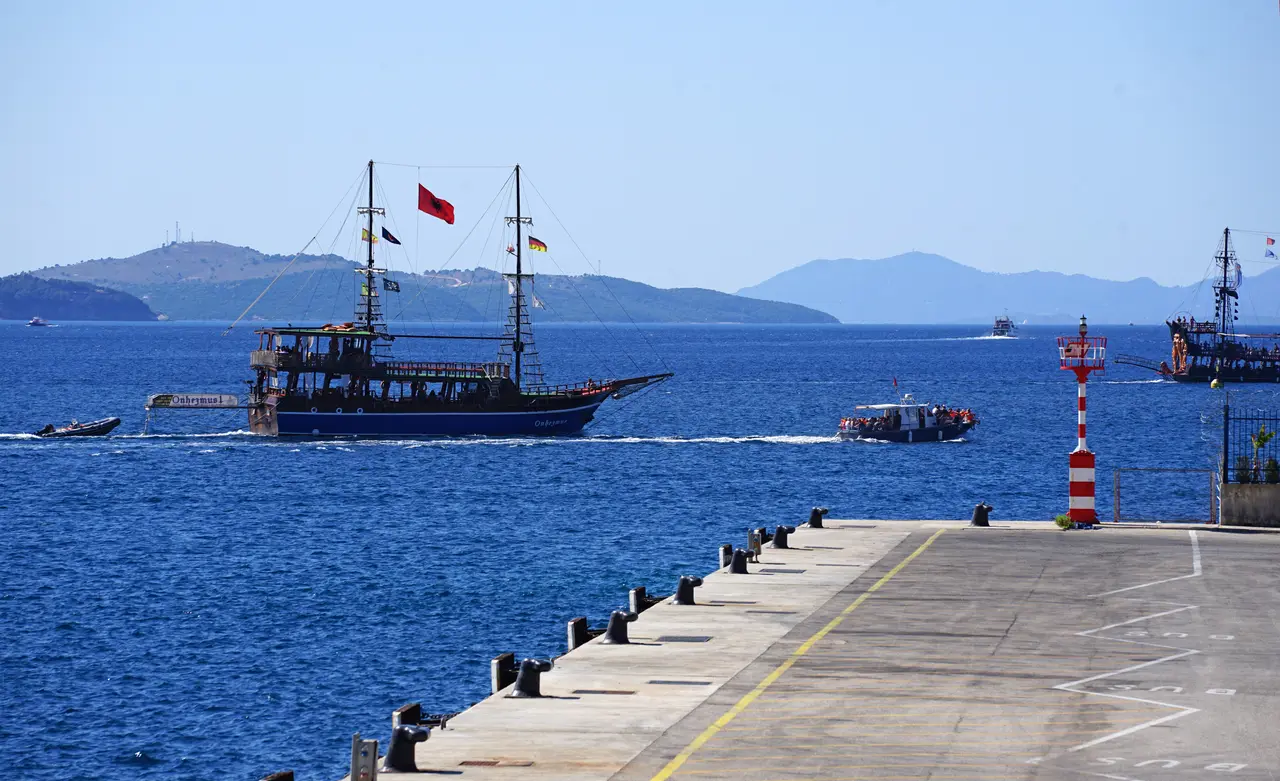
Two companies carry the route. Finikas Lines has been on it since 1994 and sells from its own site and its office by Saranda port; Ionian Seaways works out of Corfu’s New Port through the Terini agency on the Albanian side. A third brand, Albania Luxury Ferries, turns up on booking sites. Don’t agonise: on a half-hour crossing the boats are comparable, so choose on departure time and price.
The 2026 timetable
Neither operator changes the grid week to week; each publishes one seasonal block and runs it daily, Monday to Sunday, so there’s no weekday-versus-weekend catch here. Finikas Lines printed 1 June to 15 October 2026 and Ionian Seaways 1 July to 30 September. As published by Finikas and rechecked on 2 August 2026:
Saranda to Corfu: 06:00, 07:00, 08:00, 09:00, 10:00, 11:00, 12:00, 13:00, 14:00, 15:00, 16:00, 18:00, 20:00.
Corfu to Saranda: 08:30, 09:00, 10:00, 11:00, 12:00, 13:00, 14:00, 15:00, 16:00, 18:00, 19:00, 20:30, 22:30.
Ionian Seaways prints all but one of those slots for July to September, dropping the 14:00 out of Saranda. Not every departure runs on every boat type and sailings can be pulled at short notice, so treat this as the shape of the day rather than a promise.
What matters more is the end of the season. Ionian Seaways’ winter block for 1 January to 6 March 2026 was a single crossing a day each way: 09:00 out of Corfu, 10:00 back from Saranda. Spring rebuilds it slowly, two a day in March and four from mid-April. Out of season that one boat is your whole plan, and a cancellation costs a day rather than two hours.
What it costs, in euros and at home
The only numeric tariff either operator published was the price table on the Finikas Lines site, and it came with a caveat: the page was headed “2026 Corfu - Saranda - Corfu Lines”, but the fare table inside it still carried 2023 season dates, and by 3 October 2026 the page had gone from the site (the last archived copy is from 2 August 2026). Read it as the operator’s anchor rather than today’s quote. On it, a high-season adult one-way is EUR 25 on the conventional ferry and EUR 30 on the fast boat (EUR 20 and EUR 25 in low season), which at European Central Bank rates for 31 July 2026 is about USD 29-35 or GBP 21-26. Children were EUR 13-15 in high season, and Finikas’ home page still offers half fare to children aged 5 to 11, though its terms say 4 to 12 with under-4s free (both read 3 October 2026), so give the exact age when you book. The table also listed infants at EUR 4-5, a bicycle EUR 5, a motorcycle EUR 25, a car EUR 50, a minivan EUR 70 and a camper EUR 150. Elsewhere the same site quotes a looser “around EUR 10 to 25 per person”, so a quiet spring Tuesday comes in well under the table. Treat EUR 25-30 as the summer planning figure and don’t be surprised by less.
Two discounts are printed on the operators’ sites and almost never mentioned anywhere else, and both aim squarely at the day-tripper:
- Same-day return, 10 percent off. Finikas Lines takes 10 percent off passenger and vehicle tickets when you come back the same day, but only if both legs are issued together in one booking. Buy the return in Corfu that afternoon and you’ve paid full price for two singles.
- Book early online, 10 percent off the official rate. The same site sells online up to four hours before departure and prints a 10 percent early-booking discount for doing it in advance rather than at the desk.
The smaller print is friendly too. Ionian Seaways allows 25 kg of luggage free, warns that seats aren’t numbered, and says its tariffs already include port taxes and fees. One last money note: Saranda prices in lek, Corfu in euro, and juggling two currencies for one day out is what our guide to cash or card in Albania exists to make cheaper.
At the port: the 30-minute rule
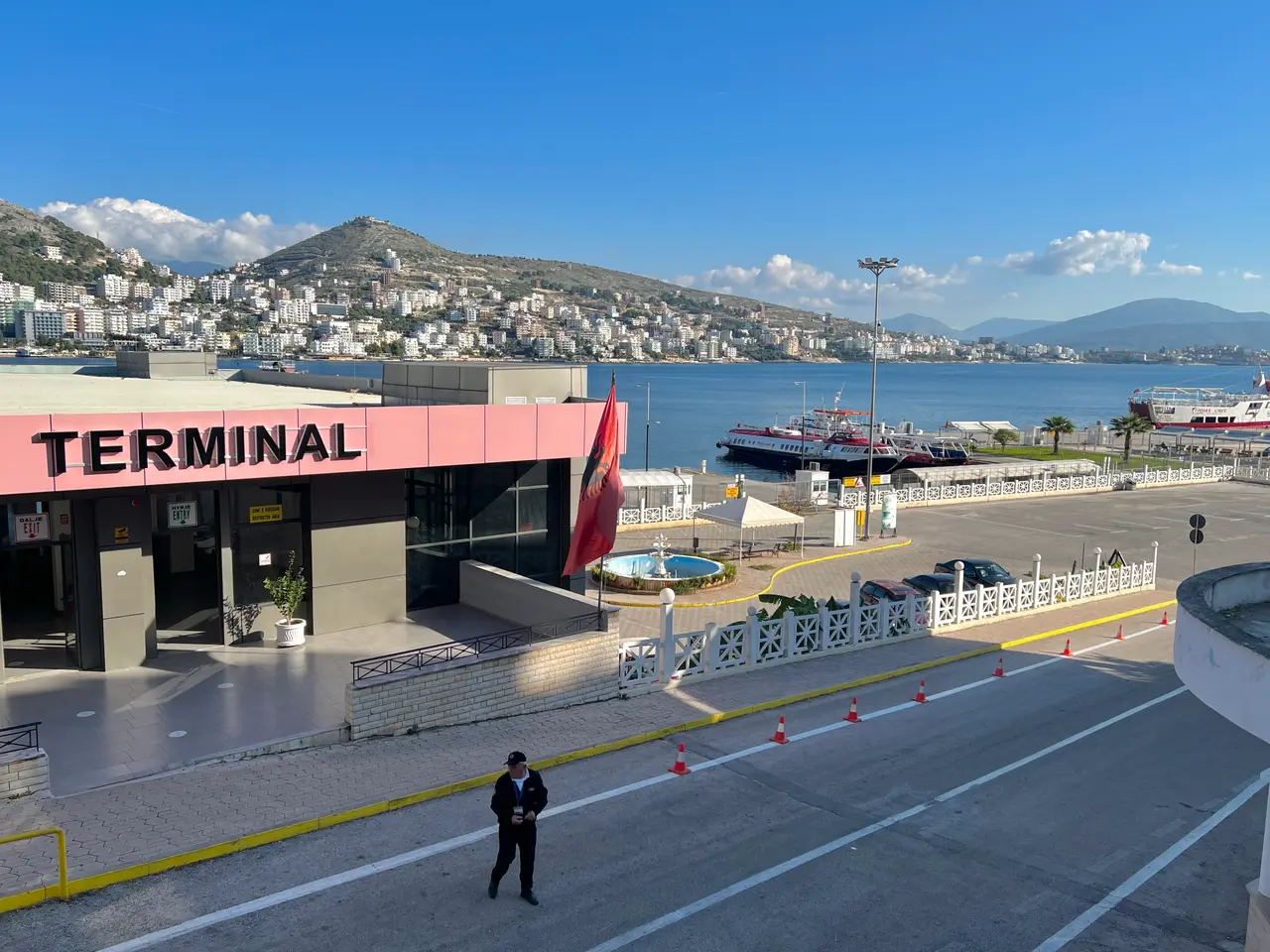
Here’s the detail that turns a EUR 25 ticket into a wasted morning. Ionian Seaways’ boarding rules are explicit: be at the international passenger terminal at least one hour before departure, boarding opens one hour before the sailing and closes 30 minutes before it. At the terminal you show your ticket to security, clear passport control, then customs, and only then reach the boat. Drivers get the same instruction with more paperwork.
So the working rule for a summer midday sailing: be there an hour early, because arriving 29 minutes out means you are not travelling. An online ticket sends you straight to the international terminal instead of the town agency first, worth ten minutes on its own.
Taking a car across, and why your rental can’t go
You can bring a vehicle, but only on the conventional car ferry, never the fast boats, and the Finikas table puts a car at EUR 50 one way on top of the passenger tickets. Deck space is finite, so book well ahead in summer.
Then read the line Ionian Seaways prints in Greek above every one of its season tables: rental cars may not be carried from Corfu to Albania. That’s the operator’s own rule, not a rumour off a forum, and Albanian hire agreements are usually as blunt in the other direction. Crossing a Balkan border in a hired car legally needs written permission from the rental company and a Green Card extension arranged before you collect the keys, and here the Corfu side simply refuses.
For a day trip the clean answer is to leave the car in Saranda and cross on foot, then use Corfu’s buses or a taxi. If you’re hiring in Albania at all, how to rent a car and driving in Albania cover the paperwork.
Passports, EES and the ETIAS question
This is a genuine international crossing: Albania is outside the EU and Schengen, Greece is inside both, so you clear an Albanian exit check and a Greek entry check even for six hours on the island. Bring a passport. EU, EEA and Schengen citizens can use a national ID card; US, UK, Canadian and Australian travellers cannot, and the passport wants at least three months’ validity left on it.
Two things have changed at that Greek desk. The EU’s Entry/Exit System went fully operational on 10 April 2026, after a roll-out that began in October 2025 across 29 countries. Instead of a stamp you get a digital record: facial image, fingerprints and the dates of every entry and exit. Budget a few extra minutes the first time your biometrics are taken, and remember what the record is for. Your Corfu day trip spends a day of the 90-days-in-180 Schengen allowance, which matters if Greece is one stop in a longer European summer.
The second thing is what people worry about needlessly. ETIAS, the paid travel authorisation, is still not running. The official ETIAS site says the system is not in operation and not accepting applications, and the late-2026 launch window it used to advertise was pulled in July with no replacement date (checked 1 August 2026). Nothing to apply for, nothing to pay, so anyone selling you an ETIAS for a Corfu ferry this summer is selling you nothing. Recheck nearer your dates, and see our Albania visa and entry guide for the Albanian half.
Doing it as a day trip
Take the 07:00 or 08:00 fast boat and you’re walking into Corfu Old Town by mid-morning Greek time. The UNESCO-listed old town, the two fortresses, the Liston arcade and an afternoon on a beach all fit into one visit, and the 18:00 or 20:30 return gets you back for a late dinner. Book both legs together for the 10 percent, and remember the day is an hour shorter in Albanian time than it looks.
Don’t bank a tight onward connection on the Saranda side: if the afternoon channel kicks up, sailings run late. If a few hours feels rushed, our Saranda to Corfu itinerary turns the crossing into a five-day Albania and Greece combo. Going the other way, from a base on Corfu, our Butrint day trip from Corfu picks the boats that make it work.
Getting to the boat from a long-haul flight
There’s no airport in southern Albania: Vlora International was still delayed and not flying commercially as of mid-2026, so don’t plan around it. From inside the country you arrive overland; see how to get around Albania and, if you land in the capital first, Tirana airport transfers.
Here’s the move most people flying in from London, Dublin or New York never think of: run it backwards and arrive through Corfu. Corfu is a well-served summer charter and package destination in its own right, and the real advantage is geography: Corfu’s New Port, where the Saranda boats dock, is about 4 km from the terminal, ten minutes in traffic, while landing in Tirana leaves you a four-to-five-hour drive from Saranda. Land in the morning, taxi to the port, take an afternoon boat, and you’re eating dinner on the Albanian Riviera the same day with no long drive south. It works on the way out too, which is why this suits a one-week Riviera trip better than an out-and-back through the capital.
What to book before you go
Four things, and only the first is the ferry.
The crossing. Book both legs together online for the same-day return discount, days ahead for a July or August midday slot. Walking up to a waterfront agency is fine in May and a gamble at the peak.
The ride to the terminal. This is where the day usually breaks. Boarding shuts 30 minutes out, the operator wants you an hour out, and the Tirana or Ksamil bus cares about neither. A fixed-price transfer removes the one variable you cannot control. From the capital, Tirana to Saranda sets bus times against driving.
A bed on the side you’ll actually be on. Costs aren’t symmetrical across this channel, as our Albania versus Greece comparison sets out, so day-tripping from the Albanian side is usually the cheaper shape of the same trip. Our where to stay in Saranda guide covers the districts; the port end is a short walk from the terminal. Still weighing whether Saranda deserves more than a ferry stopover? Is Saranda worth visiting makes the case both ways.
Insurance naming both countries. An EU policy or an EHIC doesn’t stretch to Albania, and an Albanian policy won’t necessarily cover a day in Greece. Buy one listing both, especially if you’ll drive or hire a scooter either side; our Albania travel insurance guide explains what to look for.
The short version
Take the fast boat if you just want to be in Corfu: 30 to 45 minutes, around EUR 30 one-way. Take the car ferry only if you’re carrying a vehicle you’re allowed to carry: 55 to 70 minutes, EUR 50 for the car, no rentals from the Corfu side. Book both legs in one booking, be at the international terminal an hour early, carry the passport, and set your watch forward an hour the moment you step ashore.
Do that and this is the easiest border in the Ionian: two countries, two currencies and two languages inside a single morning. Times and fares come from the operators’ own pages, rechecked on 2 August 2026; the one thing worth checking again is the live departure list for your date.
Read also

Transport · 12 min read
Tirana to Athens: Bus, Flights & the Overland Option
Updated · October 5, 2026Tirana to Athens by bus: 04:00, 15:00 and 17:00 daily, €45 one way and 12-14 hours via Kakavia, or four direct flights a day. Checked 6 Oct 2026.

Transport · 9 min read
Tirana to Podgorica: Bus, Border & Onward to Kotor
Updated · October 5, 2026Tirana to Podgorica: about 160 km and 3.5-4 hours by direct bus via the Hani i Hotit border, two daily lines, then on to Kotor. Times checked 3 Oct 2026.

Transport · 10 min read
Butrint Day Trip from Corfu: Ferry + Site in One Day
Updated · October 4, 2026Butrint from Corfu in a day: a 30-45 min boat to Saranda, 18 km by road, a 1,000-lek ticket. Which boats work in October, November and winter.

Transport · 14 min read
Albania Border Crossings by Car: Queues, Docs & Green Card
Verified · October 2, 2026Albania's 13 customs road crossings: which stay open all night, when queues build, Green Card rules by plate, Kosovo's €15 insurance and EES into Greece.