Tirana to Durres 2026: Bus €2-3, 35-50 Min, Every 20-30 Min
Tirana to Durres: 35 km, buses and furgons every 20-30 minutes for 150-300 lek (about €2-3), 35-50 minutes, first about 06:00, last about 21:00; no train.
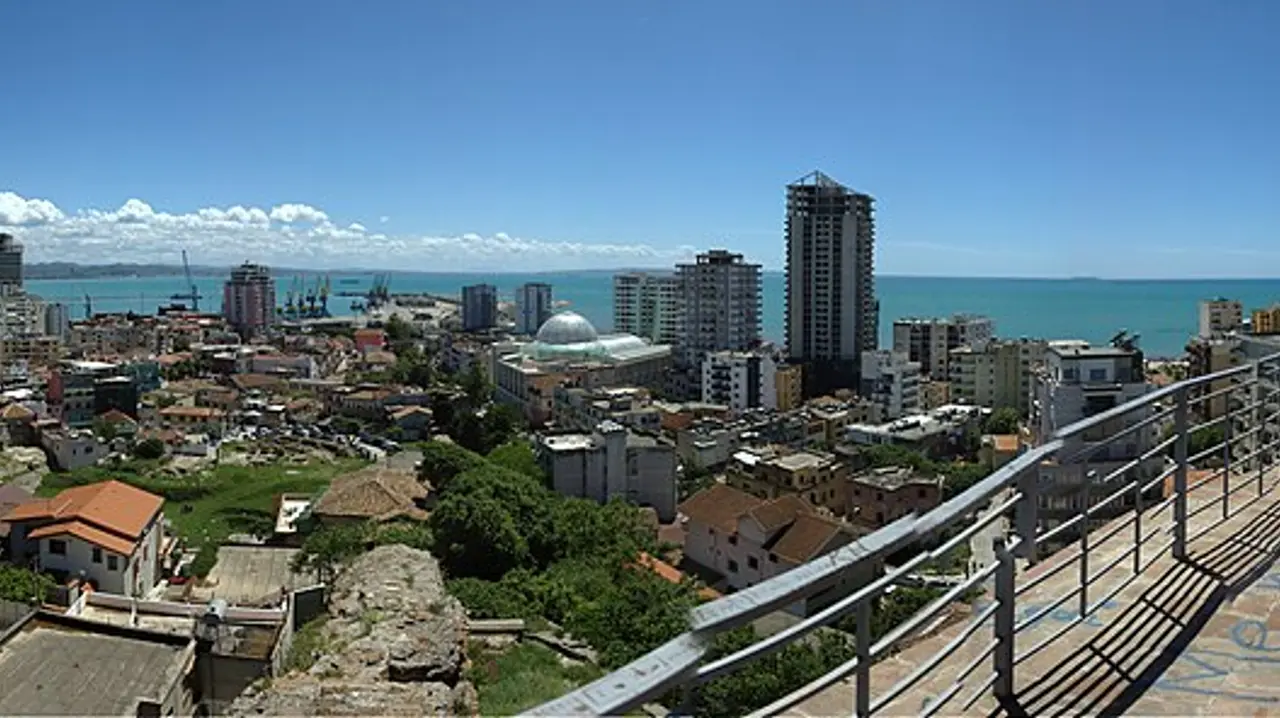
Tirana to Durres is the easiest trip in Albania: about 35 km that takes 35 to 50 minutes on a fast highway, with buses leaving every 20 to 30 minutes for roughly 180-300 ALL (around EUR 2-3). There is no working passenger train despite what old maps suggest, so it comes down to the bus, driving the A2, or a taxi. For a beach day from the capital it’s the obvious target - you can be on the sand or among Roman ruins less than an hour after leaving Tirana.
Fares and times below were checked in July 2026 against the GjirafaTravel booking platform and recent Albania travel guides. This is a high-frequency commuter corridor, so prices and exact departures drift; pay in lek (ALL), carry small notes for the cash fare, and don’t bother planning around a fixed timetable - there’s always another bus soon.
The bus and furgon: just turn up
Buses and furgons run between Tirana and Durres constantly. GjirafaTravel lists around 47 departures a day, and on the ground it feels like more: something leaves roughly every 20 to 30 minutes from early morning until evening, with the first buses around 06:00 and the last around 21:00-21:15. You do not need to book. Walk up, find the bus or van marked for Durres, and pay the driver or conductor in cash once you’re moving.
The fare is small and you’ll see it quoted a few different ways. Larger buses run cheapest, around 150-200 ALL, while furgons and some operators charge a little more, up to roughly 300 ALL (about EUR 2-3). GjirafaTravel’s online prices look higher in euros because they add a booking fee, but for a walk-up cash ticket budget EUR 2-3 and you’ll be right. The ride itself is 35 to 50 minutes depending on traffic leaving Tirana and how many stops the driver makes.
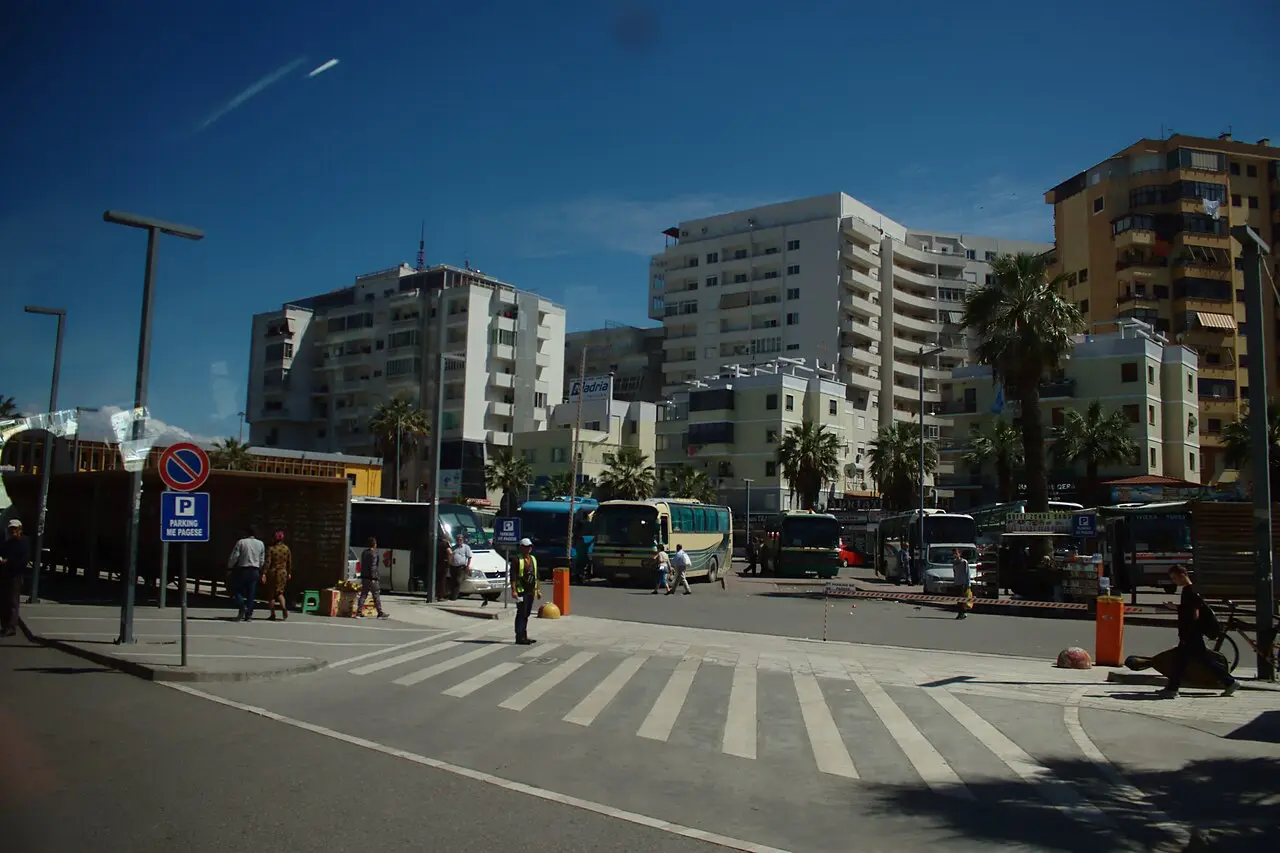
The catch, as ever in Albania, is knowing where to catch it. In Tirana, Durres services use the combined Regional Bus Terminal (North & South Albania) out in the Kamez area northwest of the centre - the same terminal that handles Berat, Vlore and the south. It is not in the city core, so take a short taxi or a local city bus toward the terminal rather than expecting to flag a Durres bus on Skanderbeg Square. Older guides mention a central “Dogana” stop; construction closed it, so don’t rely on it. At the Durres end you’re dropped at the main bus station next to the old railway station, a few minutes’ walk from the port and the seafront.
Why there’s no train (and when there might be)
If you’ve seen a railway line on the map between Tirana and Durres, ignore it for now. There is no passenger train running this route in 2026. The old line closed for a full rebuild, Tirana’s central station was demolished years ago to extend the main boulevard, and the wider network run by Hekurudha Shqiptare has shrunk to a skeleton of slow, infrequent services elsewhere.
There is a real project here, and it’s a big one: a rebuilt Tirana-Durres line with a new branch to Tirana airport, funded by European loans and grants. The civil works have been targeted for completion around the end of 2026, but the line still needs electrification and an operator, and the railway itself has said passenger services are expected to begin testing and running in the first quarter of 2027 at the earliest. Dates here have slipped repeatedly, so treat 2027 as optimistic and don’t build a 2026 trip around a train that isn’t carrying passengers yet. For now, reaching the airport means a bus or taxi - covered in the Tirana airport transfers guide.
Driving the A2: under 40 minutes
A car is the fastest way to do this trip and the most flexible if you’re chaining Durres with a beach further south. The A2 motorway (Autostrada Tirane-Durres) runs the whole way: a proper divided highway, well signed, with the drive itself taking roughly 35 to 40 minutes outside rush hour. It’s about 35 km city centre to city centre, and there’s no toll on this stretch.
The honest downside is parking and timing rather than the road. Central Durres and the beach strip get busy in summer, and the A2 itself clogs on Friday evenings and Saturday mornings in July and August, when half of Tirana drives to the coast. If you’re renting for a coastal trip, leave early or midweek, and read how to rent a car in Albania first for the insurance and deposit terms. A taxi covers the same route for roughly 2,500-3,500 ALL (about EUR 23-32); agree the fare before you set off, or use a local ride app like Speed Taxi rather than hailing on the street. For a pre-booked door-to-door car you can get a transfer quote, which makes sense mainly for groups or with luggage.
Durres as a beach day trip
This is what most people actually come for. Durres pairs a walkable old core with a long sweep of Adriatic coast, and being under an hour from Tirana it works as a genuine day trip rather than an overnight. The shape of a good day: see the Roman city in the morning, eat fish by the water, then pick a beach for the afternoon. For the full rundown of the sights and where to stay, see our Durrës travel guide.
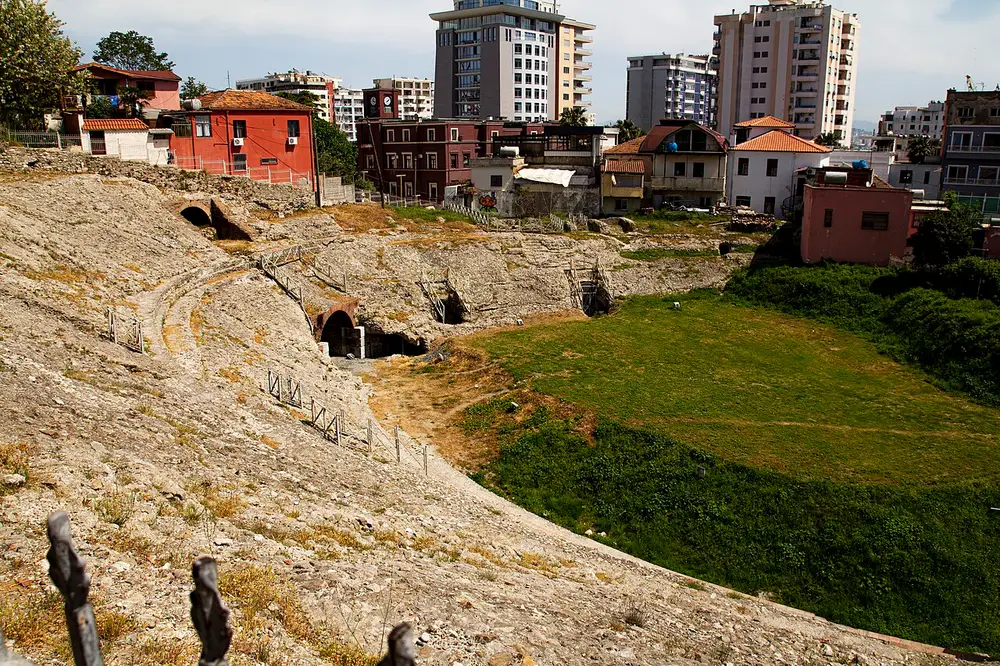
The headline sight is the Roman amphitheatre, built in the 2nd century AD and one of the largest in the Balkans, tucked right into the modern town with houses crowding its rim. Entry is around 300 ALL and you’ll want 30 to 45 minutes; there’s a small Byzantine chapel with early mosaics inside. From there it’s a short walk to the Venetian Tower and the surviving Byzantine city walls, and then the seafront promenade along Rruga Taulantia, lined with cafes and good for a coffee stop.
Then the beaches, where it pays to be picky. The wide main city beach south of the centre is sandy and convenient but gets crowded and a bit scruffy in peak summer - fine for a quick dip, better in June or September. For clearer water, locals head north of the centre to Currila, where the coast turns rockier, the sea is noticeably cleaner, and there are beach bars and wooden decks to sit at. South of the city, Golem is the long sandy strip the package crowd uses, with a row of fish restaurants behind it; further on, Lalzit Bay has the softest sand and the resort developments, both covered in our best resorts in Albania roundup. If swimming quality is your priority, choose Currila or head out to Lalzit; if you just want sand within walking distance of the bus, the main beach does the job.
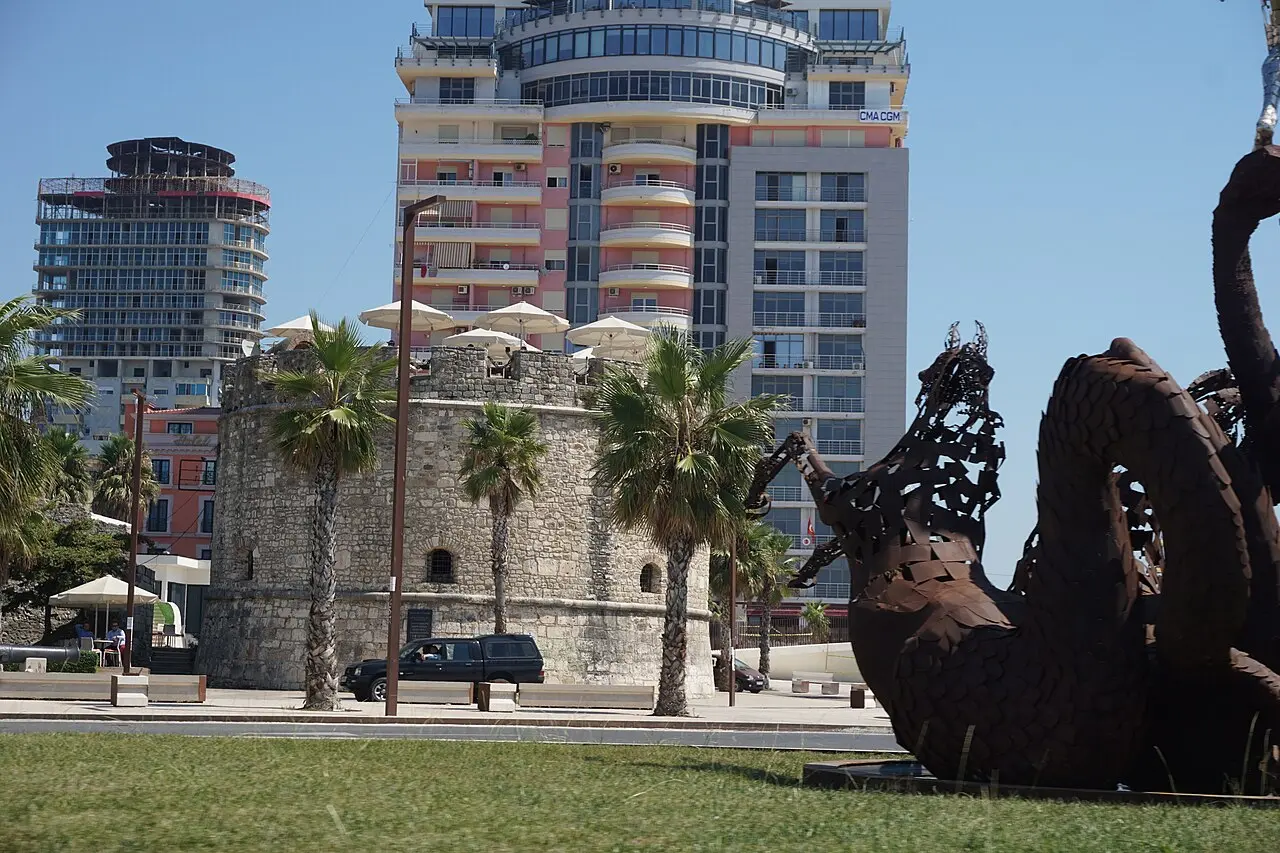
For food, skip the restaurants with the biggest signs on the promenade and look for the ones busy with Albanian families - that’s the local shorthand for fresh fish at a fair price. A day here costs very little once you’ve paid the EUR 2-3 each way: amphitheatre entry, a seafood lunch and a couple of coffees barely dent a budget. The wider question of whether Albania is expensive breaks down those day-to-day costs.
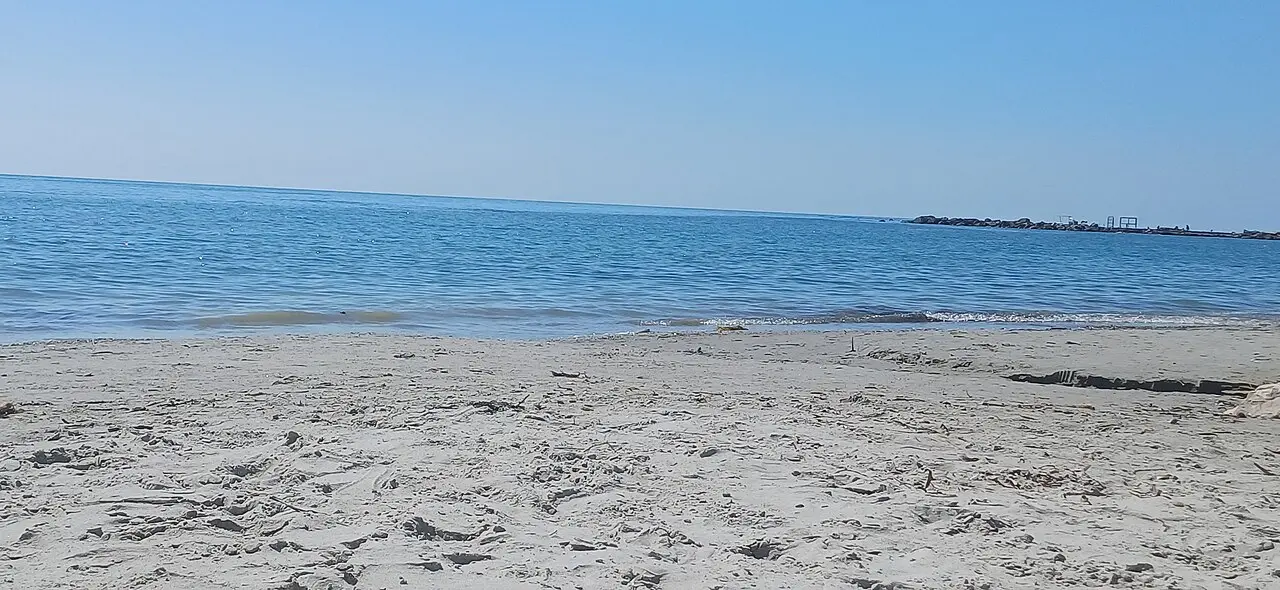
Should you stay, or push on south?
Durres earns a day, not necessarily a night. The Roman sights are genuinely worth it and the coast is fine, but the water and the beaches get much better further down. If you’re chasing the best swimming, treat Durres as the easy warm-up and save your beach time for the Albanian Riviera - Vlore, Dhermi, Himare and the south, where the sea turns properly turquoise. Plenty of travellers do exactly that: a half-day in Durres for the history, then on to the Riviera for the rest. Staying over instead works too - where to stay in Durres splits Plazh from Golem.
If you’re around for longer, the question of where to base yourself is worth a look - Tirana works as a hub for day-tripping to Durres, while the coast rewards those who move down to it. Either way, the journey is the least of your worries here: this is the one trip in Albania you can genuinely do on a whim.
So which should you take?
For a day trip with no luggage, the bus wins outright: EUR 2-3, every 20 to 30 minutes, no booking, under an hour. Drive or take a transfer if you’re carrying beach gear, travelling as a group, or planning to carry on down the coast the same day - the flexibility is worth more than the small fare saving. And forget the train until at least 2027. However you arrive, build it around the rhythm of a beach day: ruins and coffee in the morning, fish for lunch, and the afternoon on whichever stretch of sand suits you.
For the bigger picture on moving around the country - furgons, ferries, car hire and the routes the buses don’t cover - see how to get around Albania, and for the long run down to the far south there’s the Tirana to Saranda guide.
Sources and how to read the times
Times, fares and frequencies here were checked in July 2026, primarily against the GjirafaTravel route page and recent 2026 Albania travel and transport guides, with the railway status taken from Albanian news reporting and the line’s own operator. Because this is a frequent, informal commuter route with no single fixed tariff, the fare is given as a range and you should expect to pay cash on the day; the amphitheatre entry and taxi figures come from recent guides, so treat them as a guide rather than a fixed quote and reconfirm on the spot.
Read also

Transport · 12 min read
Tirana to Athens: Bus, Flights & the Overland Option
Updated · October 5, 2026Tirana to Athens by bus: 04:00, 15:00 and 17:00 daily, €45 one way and 12-14 hours via Kakavia, or four direct flights a day. Checked 6 Oct 2026.

Transport · 9 min read
Tirana to Podgorica: Bus, Border & Onward to Kotor
Updated · October 5, 2026Tirana to Podgorica: about 160 km and 3.5-4 hours by direct bus via the Hani i Hotit border, two daily lines, then on to Kotor. Times checked 3 Oct 2026.

Transport · 10 min read
Butrint Day Trip from Corfu: Ferry + Site in One Day
Updated · October 4, 2026Butrint from Corfu in a day: a 30-45 min boat to Saranda, 18 km by road, a 1,000-lek ticket. Which boats work in October, November and winter.

Transport · 14 min read
Albania Border Crossings by Car: Queues, Docs & Green Card
Verified · October 2, 2026Albania's 13 customs road crossings: which stay open all night, when queues build, Green Card rules by plate, Kosovo's €15 insurance and EES into Greece.