Berat Castle (Kala): Onufri Museum, Hours & Open Churches
Berat Castle is a lived-in quarter with one paid museum inside and a second below. Winter hours, the 400-lek Onufri ticket, which churches open, the climb.
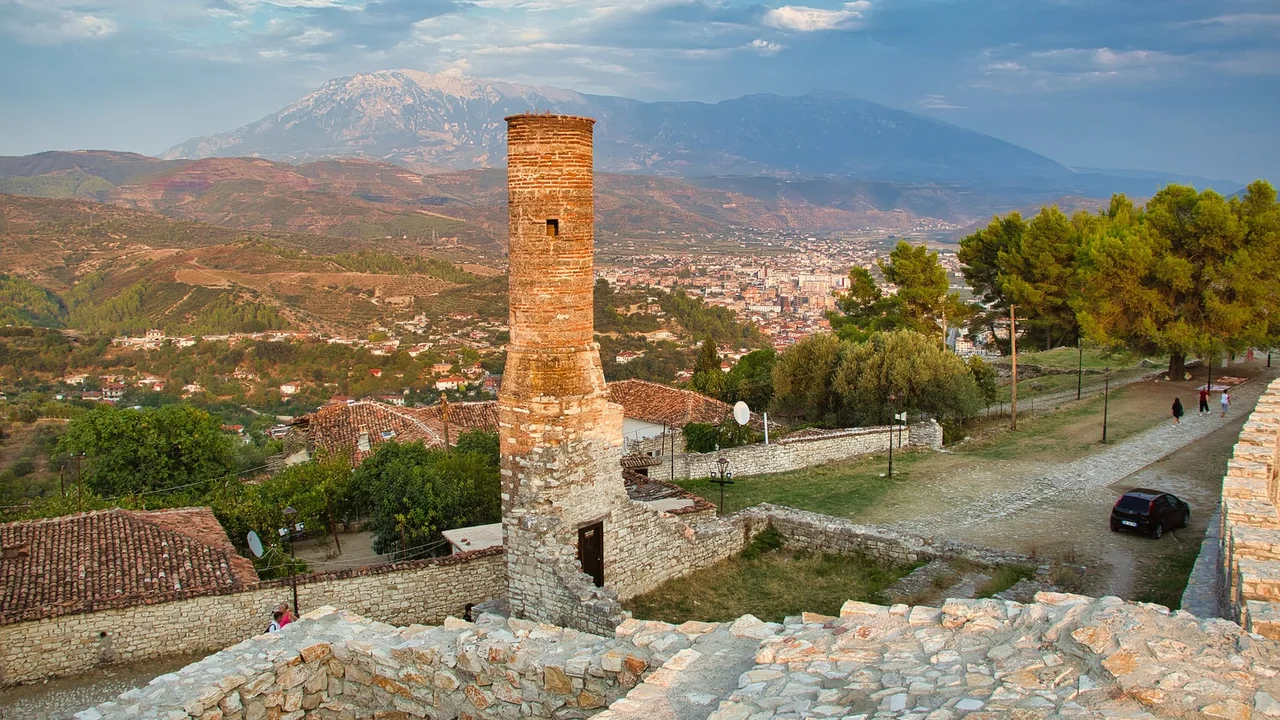
Berat’s Kala is a neighbourhood with a wall around it, so the money goes on the two state museums run by the town’s museum centre: the Onufri icon museum inside the walls at 400 lek, and the Ethnographic Museum down the hill at 300. The calendar is the trap here, not the price. The centre’s posted summer hours run to 31 October 2026. From 1 November 2026 it lists Monday as closed until 30 April 2027, with the doors shut at 16:00 on Tuesday to Saturday and at 14:00 on Sunday, a schedule that can end a half-day plan before it starts.
This page is the castle on its own: what’s inside, what’s open and when, and the order that works. For the town below it, the Mangalem and Gorica quarters and where to sleep, there’s the Berat city guide, and if you’re still choosing between this fortress town and the one in the south, the Berat vs Gjirokaster comparison does that job.
The climb, in numbers
From the Gorica bridge to the Onufri museum, the walking route on OpenStreetMap is about 1.4 km. Elevation data puts the bridge at roughly 48 m and the museum at roughly 210 m, so you climb about 160 m. Both figures are model values we pulled on 13 October 2026, not surveyed ones, but they’re enough to plan by. Naismith’s rule of thumb, 5 km/h plus a minute for every 10 m climbed, gives about 33 minutes without stops.
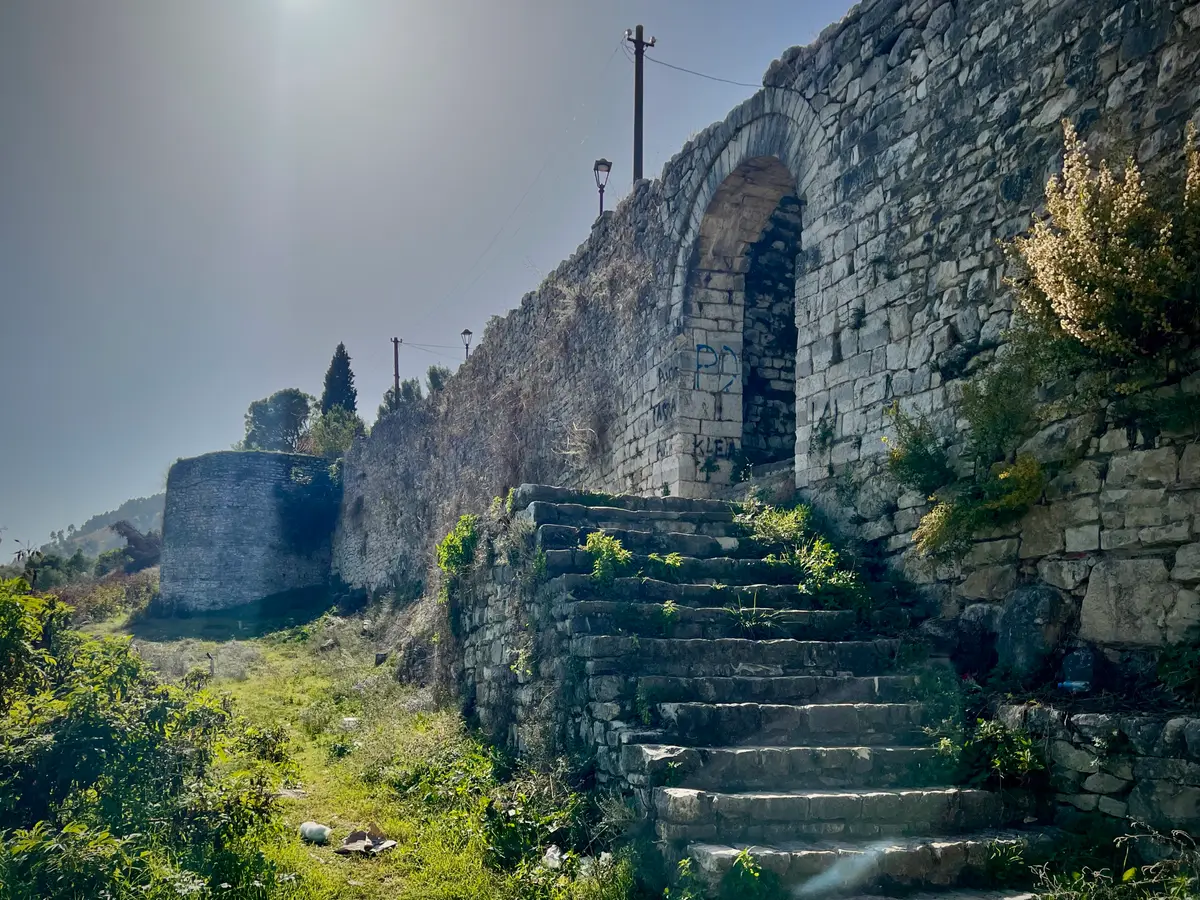
You don’t have to walk it. The museum centre’s visit page says the Onufri museum can be reached by car or bus up to the castle’s entrance gate. It also says the museum has no car park of its own, only places nearby where you can leave a car. The Ethnographic Museum is the reverse: cars can get near its entrance but can’t park there, and buses stop about 100 metres short.
If you’re coming from the capital, the last bus home sets the clock for everything else on this page; the Tirana to Berat guide has the departures, and the winter closing times below make the museum the first stop of the day, not the last.
What’s inside the walls
UNESCO lists the Kala as a castle most of which was built in the 13th century, with origins that go back to the 4th century BC. The citadel area holds many Byzantine churches, mainly from the 13th century, and several mosques from the Ottoman era, which began here in 1417. The listing started with Gjirokastra in 2005, and its boundaries were extended in 2008 to take in Berat.
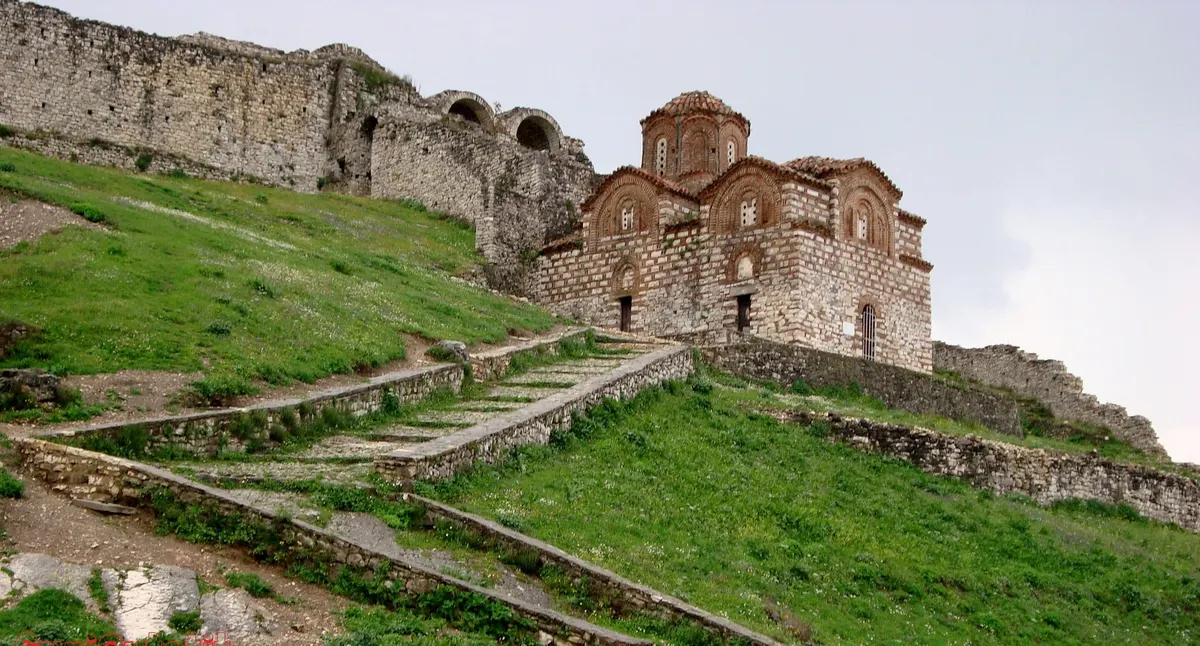
The fact that sets it apart from a ruin is that people live in it. A local heritage official quoted by the Albanian press in August 2023 put the quarter at about 130 dwellings, some of which have been turned into guesthouses and hotels. Treat the lanes as someone’s street: the doors you pass are front doors, and the open churches are kept by volunteers from the Orthodox community.
The Onufri museum, and what the 400 lek buys
The museum sits in the Dormition of St Mary cathedral, which the centre says was built in 1797 on the foundations of an older Byzantine church; the museum has occupied it since 27 February 1986. Inside are 200 objects, icons and liturgical items dated from the 14th to the 20th century, gathered from churches and monasteries of the region.
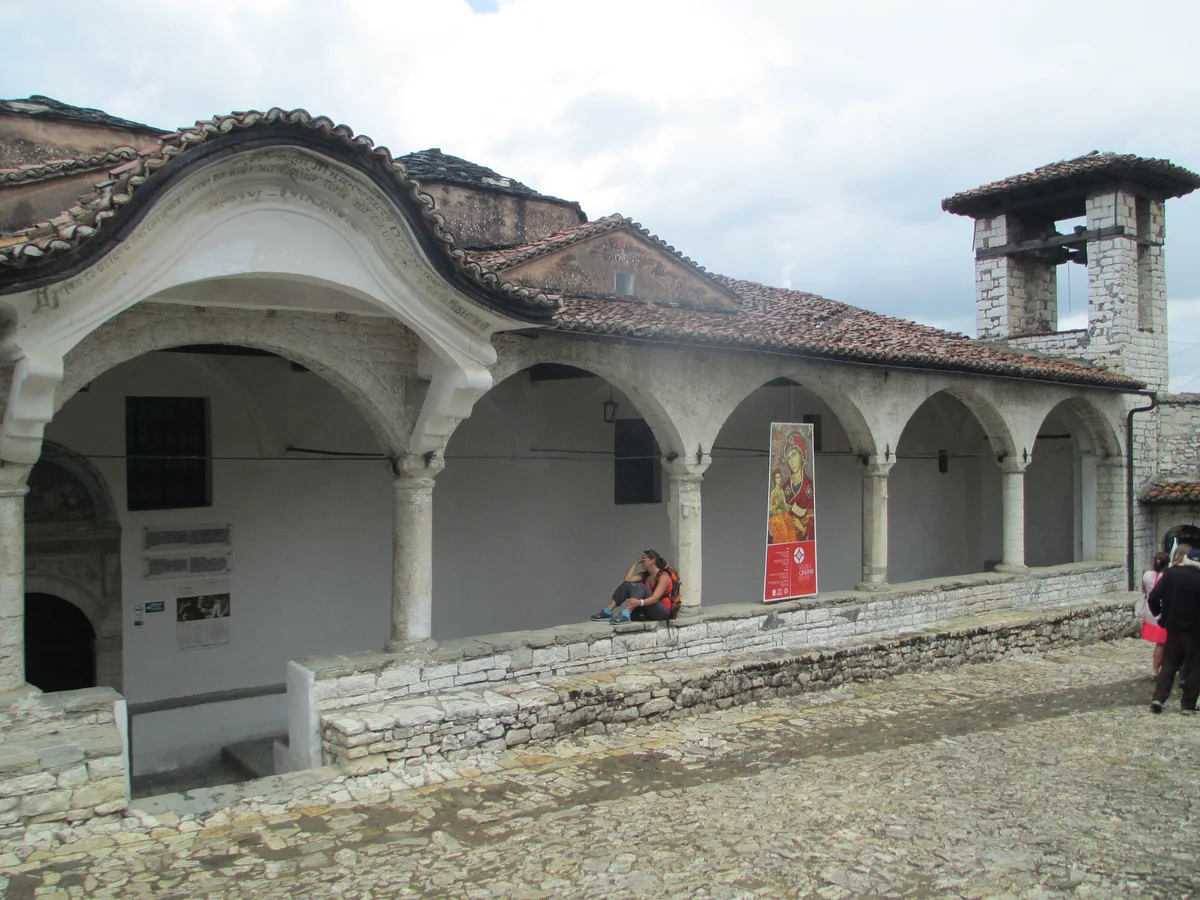
Three things to have in your head before you go in:
- The painters. The centre’s own page credits the 16th-century icon “Jesus Appearance in Temple” to Onufri and says it came from the Saint Trinity church in the castle, so the paintings you see once hung within a few minutes’ walk.
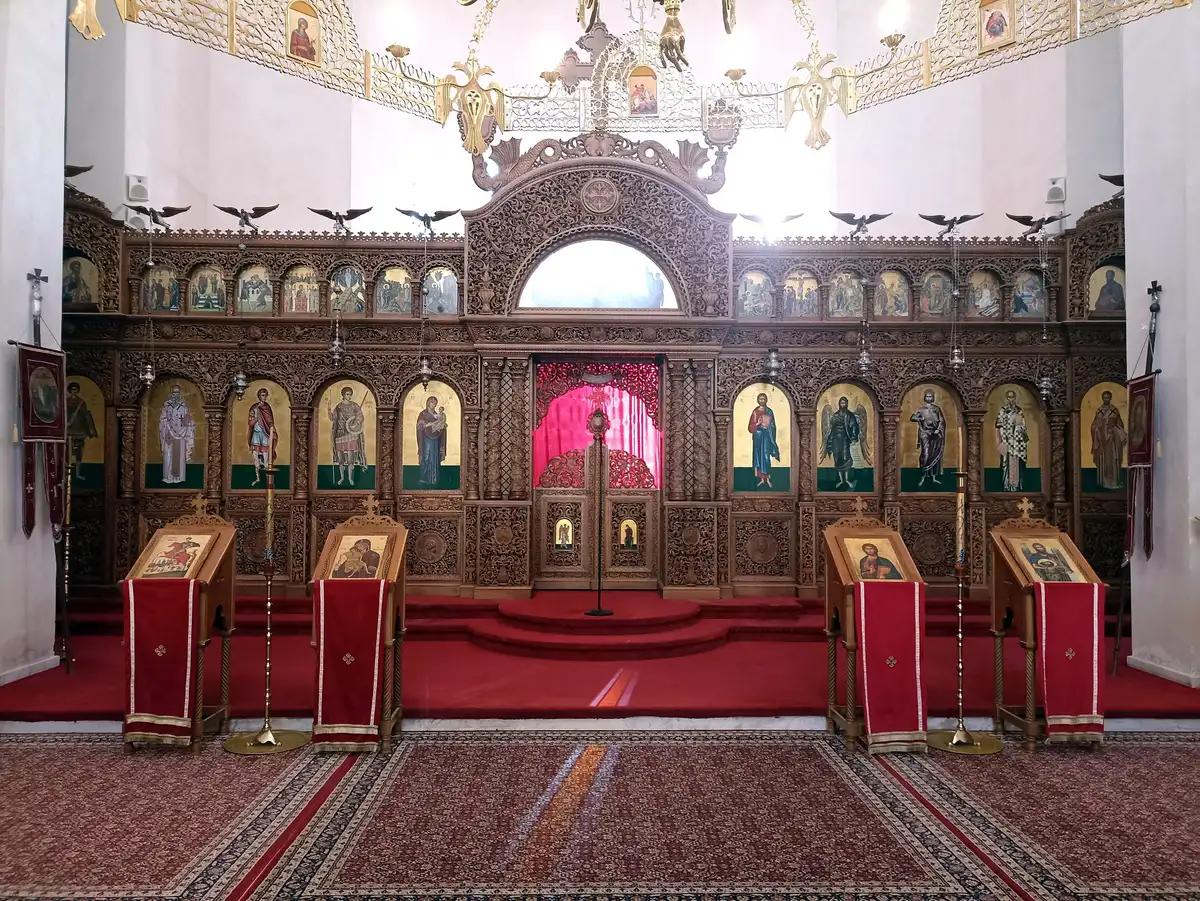
- The iconostasis. The carved screen dates from 1807, and the centre calls it one of the finest pieces of Albanian woodcarving.
- The codices. The Purple Codex and the Golden Codex of Anthimos were found on 12 August 1968 in a small metal box in the crypt beneath the apse. Both are on UNESCO’s Memory of the World list, and the centre’s text describes them as discovered here.
Plan on around an hour. The centre puts its guided tour of the Onufri museum at 55 minutes, and the Ethnographic Museum at 30 to 45. Its visit page lists photography and filming as prohibited and says the museums aren’t accessible to visitors with disabilities, which matters with the climb.
Hours and tickets, season by season
The centre’s current page splits the year in two. Both tables below are from that page, read on 13 October 2026.
| Period | Onufri Museum | Ethnographic Museum |
|---|---|---|
| Summer season (to 31 October in 2026) | Monday to Sunday, 09:00-19:00 | Monday to Sunday, 10:00-17:00 |
| 1 November 2026 to 30 April 2027 | Monday closed; Tuesday to Saturday 09:00-16:00; Sunday 09:00-14:00 | Same as Onufri (the centre posts one winter schedule for both) |
| Ticket | Onufri Museum | Ethnographic Museum |
|---|---|---|
| Individual | 400 lek (about $4.90, €4.40 or £3.70) | 300 lek |
| Children under 12 | Free (the centre’s line misprints it as “+12”) | Free |
| Reduced, 50% | 200 lek | 150 lek |
| Ages 12 to 18 and students | 120 lek | 90 lek |
| Audio guide | 500 lek, listed as its own line | - |
The dollar, euro and pound figures use the Bank of Albania’s rates for 13 October 2026. Reduced and student tickets need documents at the ticket office, and the page doesn’t say who qualifies for the 50% rate, so ask there. The centre also lists free days: 18 April, 18 May, 21 May and 29 September for everyone, and 28 and 29 November for Albanian citizens only. Its page says the museums stay open on national holidays. The page is partly a template, and it still carries a line about free Sundays that expired in 2020, so it’s worth asking at the ticket desk if the number matters to your budget.
Which churches open
The 2023 report is the most specific picture we found. It counted 17 churches in the Kala quarter, of which five were open to visitors: the Dormition church with the museum, plus four others restored and opened that summer. Orthodox volunteers look after the open churches, and the four new ones were free to enter. The other 12 stayed shut for lack of a caretaker to show visitors round.
That was August 2023, and a locked door is a staffing decision, not a monument decision, so don’t treat the count as today’s. Expect one or two doors to be open and the rest to be exteriors, and use the Onufri ticket desk as the place to ask.
The report also says the castle’s own 300-lek entry fee was dropped in 2023. Whether that still holds in 2026 isn’t confirmed, and the museum centre’s tariff covers its two museums, so carry a few coins in case the booth at the main gate is staffed.
Down the hill: the Ethnographic Museum
Don’t skip the second museum on the way back to town. It’s in a house built in the early 18th century, where the centre has been since 1979. Its address is 13 Shtatori, in the buffer zone of the historic centre, close to both the Mangalem and Kala quarters.
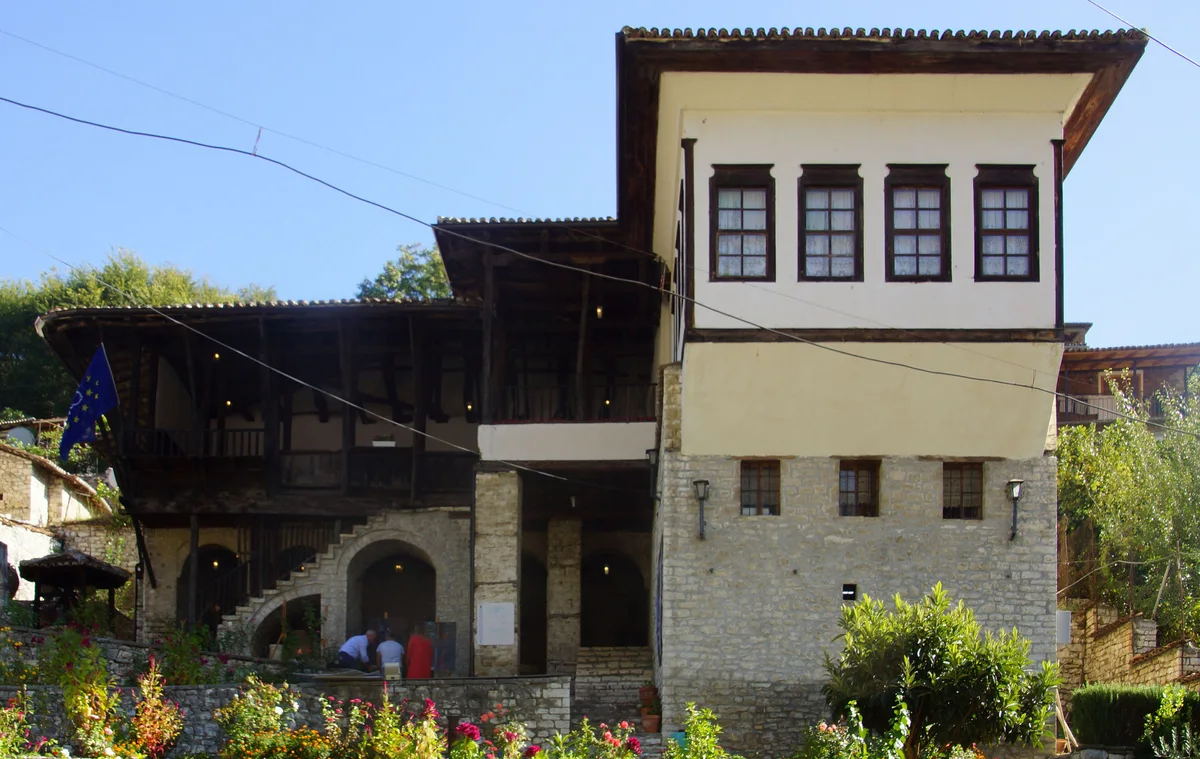
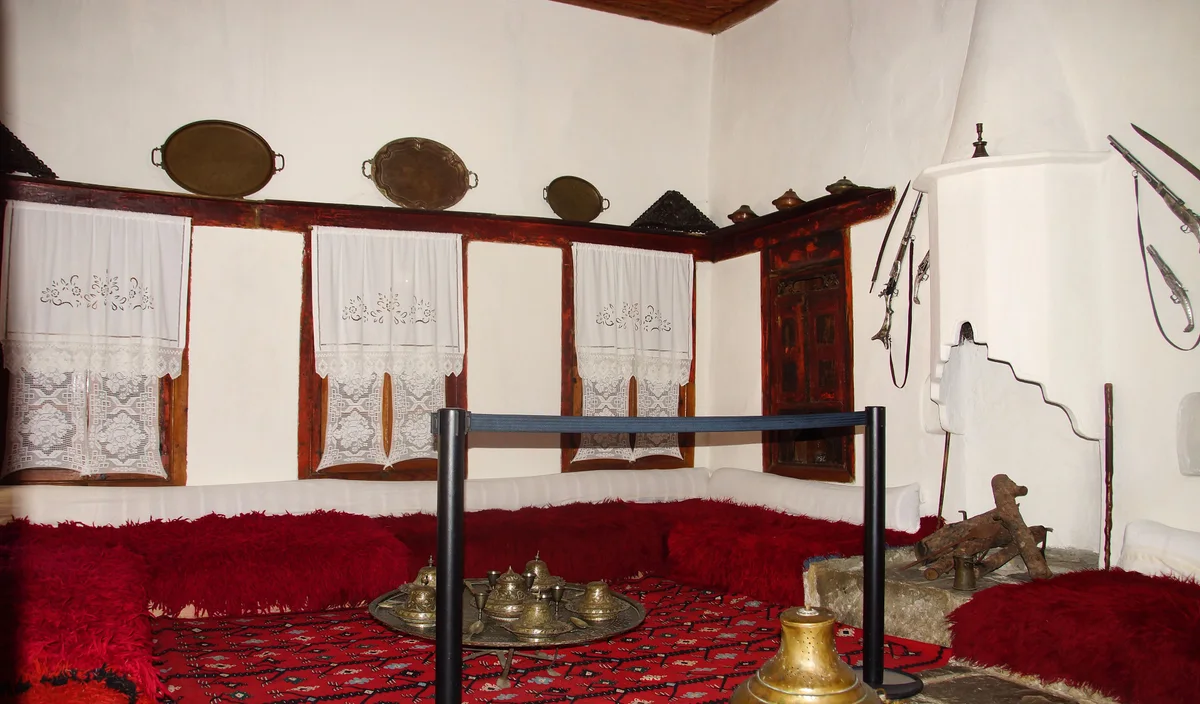
The collection is about 1,300 objects, and the rooms are the draw. The centre describes a recreated medieval bazaar, a porch with an olive-oil press, a potter’s wheel and a still for raki, and the house’s guest room. It’s a different register from the icons, and it takes less time.
With a guide or without
The castle needs no guide to enter, and the museum centre sells its own audio guide, in Albanian, English and German, with a QR-code version in Albanian, English and Italian. Where a person helps is the quarter’s history, which no sign explains well, and the closed churches. A guided town walk that includes the Kala is easy to find among Berat’s tours; whichever way you go, set the museum hour first.
Picking your day
- In the summer season (to 31 October in 2026; the centre posts each year’s dates): the Onufri museum is open until 19:00, so go in the late afternoon and walk the lanes as the day cools, with the Ethnographic Museum left for the next morning.
- A Monday between 1 November 2026 and 30 April 2027: the centre’s winter schedule has both museums closed, so this is a day for the lanes, the walls and the views only.
- A winter Tuesday to Saturday: the Onufri museum shuts at 16:00. Be at the gate by midday, spend the 55 minutes inside, then walk down and finish at the Ethnographic Museum.
On the map
The map loads on click - to keep the page lightweight.
The map didn’t load. Check your connection and refresh the page.
Read also

What to see · 9 min read
Pellumbas Cave (Black Cave) & Erzen Canyon from Tirana
Verified · October 16, 2026Pellumbas Black Cave from Tirana: 21 km by road, a 2 km hike, 360 m of pitch-dark show cave, and why the Erzen canyon pools are a summer plan.

What to see · 8 min read
Gjirokaster Castle: Prison, Weapons Museum & Cold War Jet
Verified · October 10, 2026Gjirokaster Castle: 400 lek at the gate, closed Mondays October-April, the weapons museum and 1932 prison, and the US jet on the terrace.

What to see · 8 min read
Skanderbeg Square: Et'hem Bey Mosque, Clock Tower & More
Verified · October 10, 2026Skanderbeg Square, Tirana: Et'hem Bey Mosque, the Clock Tower climb, and the National Historical Museum, shut since March 2024.

What to see · 9 min read
Pyramid of Tirana: From Hoxha's Museum to Tech Hub
Verified · October 9, 2026The Pyramid of Tirana in 2026: steps to climb with no ticket listed, a free tech school for teens inside, and how Hoxha's 1988 museum dodged demolition.