Skanderbeg Square: Et'hem Bey Mosque, Clock Tower & More
Skanderbeg Square, Tirana: Et'hem Bey Mosque, the Clock Tower climb, and the National Historical Museum, shut since March 2024.
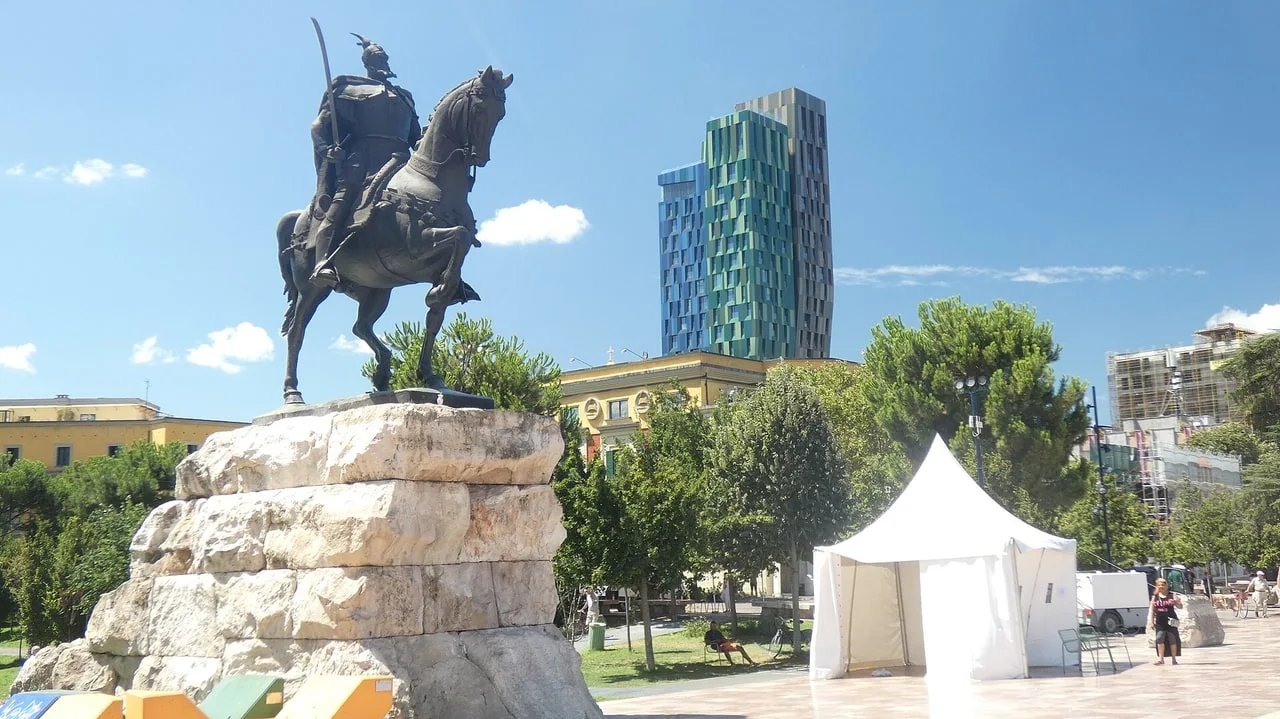
Skanderbeg Square puts Tirana’s main sights within a few minutes’ walk of each other, but its anchor, the National Historical Museum, has been shut for restoration since March 2024. That changes how you plan it: this is a square you read from outside, with two doors you can actually walk through, the Et’hem Bey Mosque and the Clock Tower, and a third, the museum, that stays closed until a reopening the project has pencilled for 2028. Plenty of guides still list the museum as a stop, so check before you build an hour around it.
What’s open on the square, and what isn’t
| Stop | Status on 10 October 2026 | What to know |
|---|---|---|
| Skanderbeg Monument | Always there | Bronze, about 11 m, unveiled in January 1968 |
| Et’hem Bey Mosque | Open to visitors | A working mosque; closed at prayer times, no operator-published hours |
| Clock Tower | Ticketed climb, run by the municipality | Price and hours aren’t published online; ask at the foot of the tower |
| National Historical Museum | Closed to the public | Closed since March 2024; its mosaic is visible from the square |
Et’hem Bey Mosque: the part you can walk into
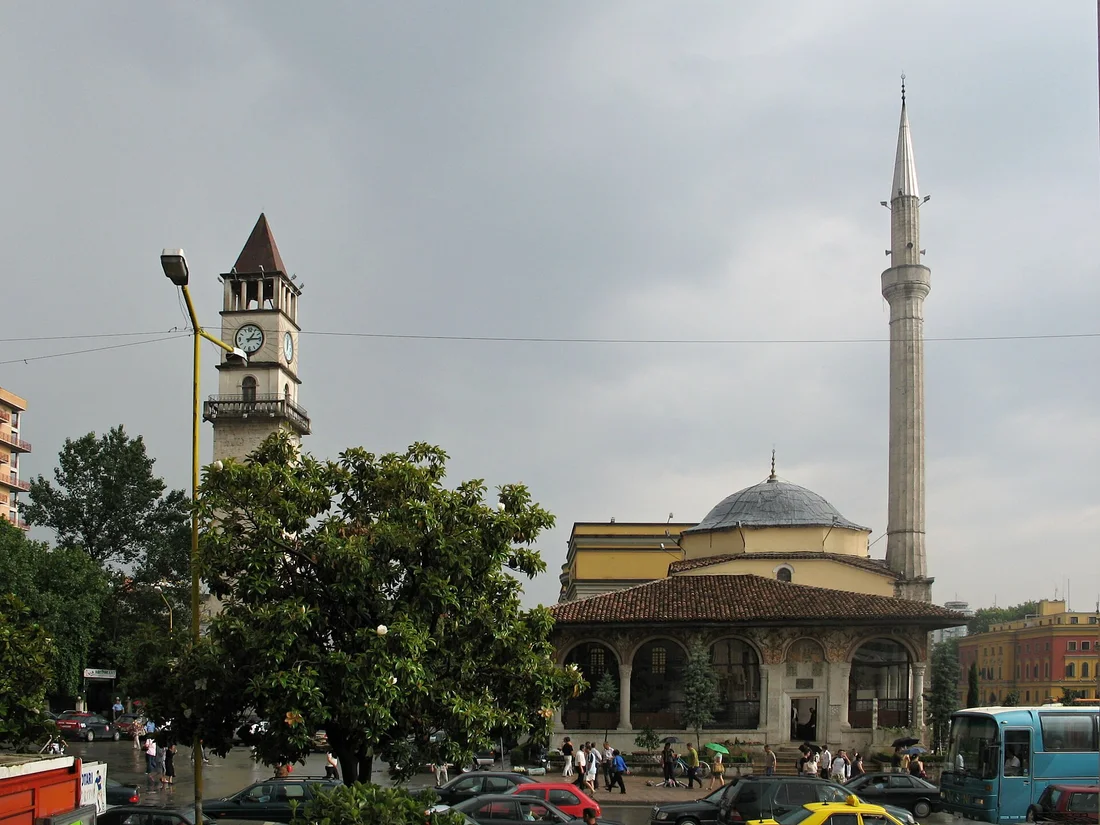
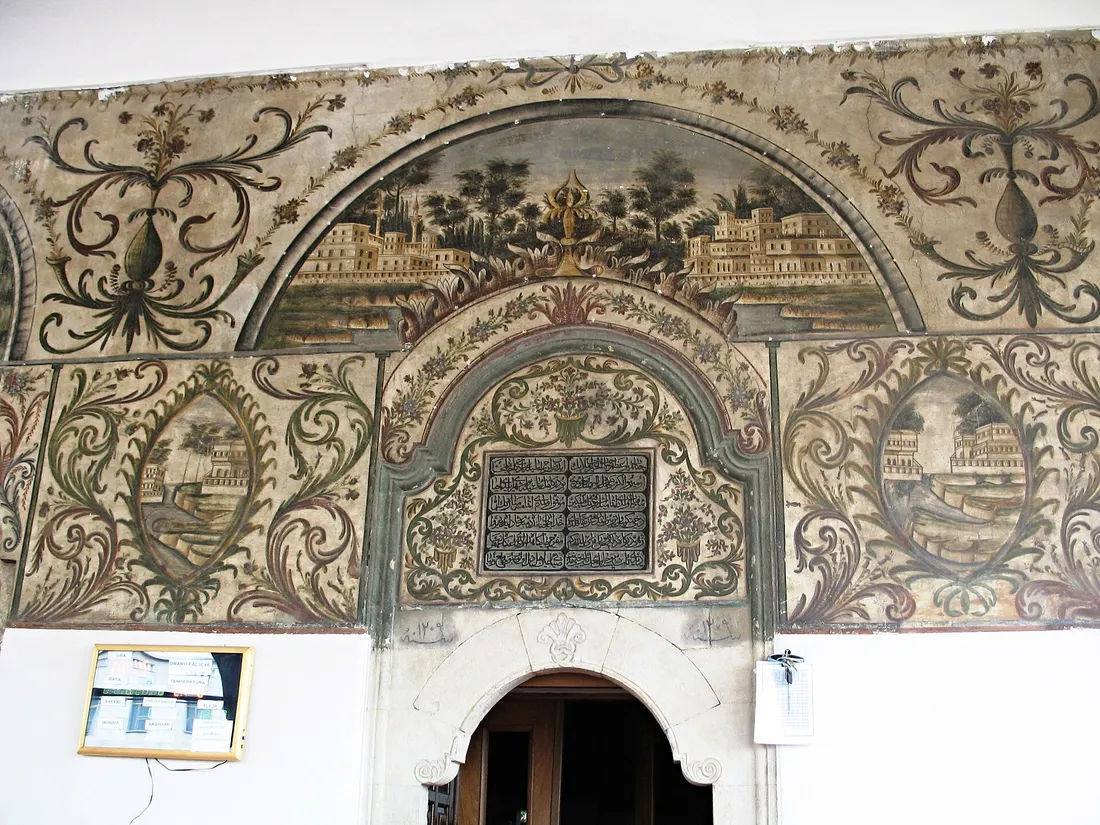
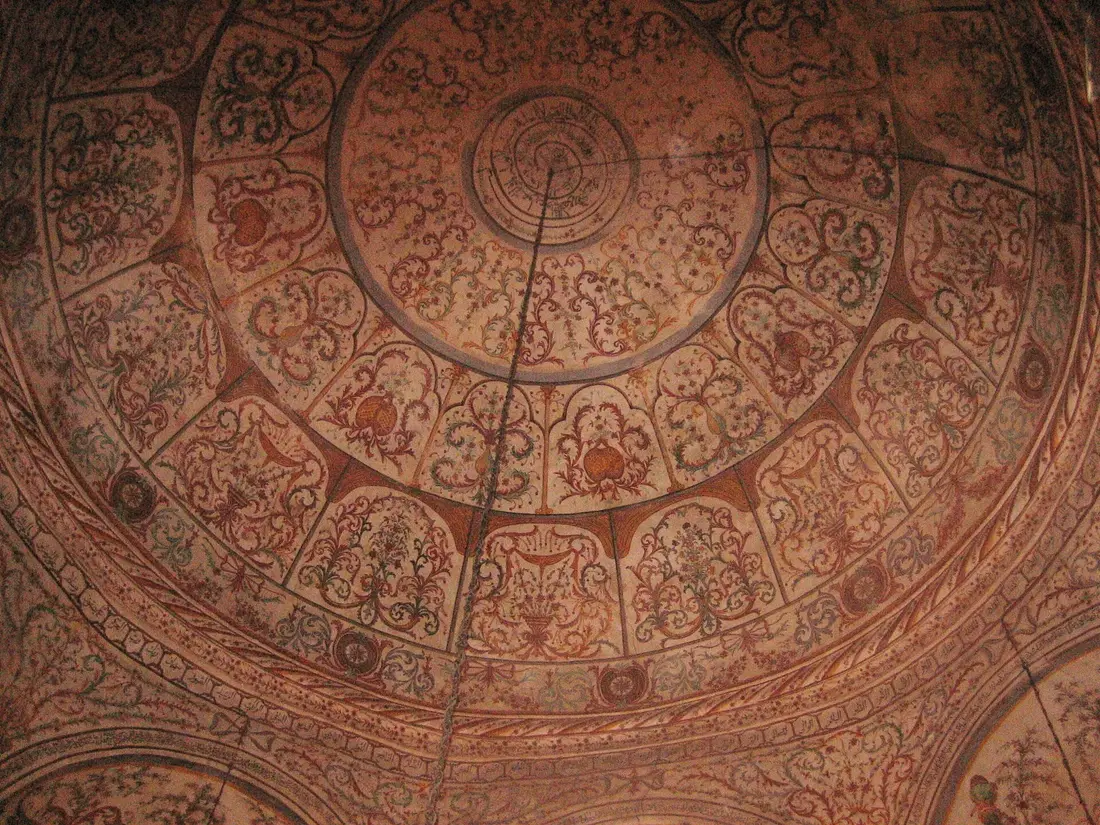
The national tourism agency describes it as built at the end of the 18th century and completed at the start of the 19th, and it singles out the rare frescoes of landscapes, flowers and oriental architecture; they cover the portico and the interior. The mosque was closed under the communist regime and reopened as a place of worship in 1991, which is why it’s more than a monument to Tirana: for locals it’s still a working mosque. It reopened again in January 2022 after a long, full reconstruction.
Practical points:
- It’s a place of prayer first. Visits stop for prayer times. The operator doesn’t publish tourist hours, and guidebooks quote conflicting windows, so go in the morning and treat any listed hour as a guess.
- Dress and shoes. Dress modestly, as in any mosque, and take your shoes off before the inner room.
- Cost. There’s no fixed ticket price published for the visit. In August 2022 the Muslim Community of Albania explained a 1 euro contribution as voluntary and for maintenance, saying no visitor is obliged to pay it, so keep a coin or two handy; we found no newer notice.
If the doors are closed when you arrive, the portico frescoes are still the main show, and they’re visible from the porch.
The Clock Tower: 35 metres and not many climbers
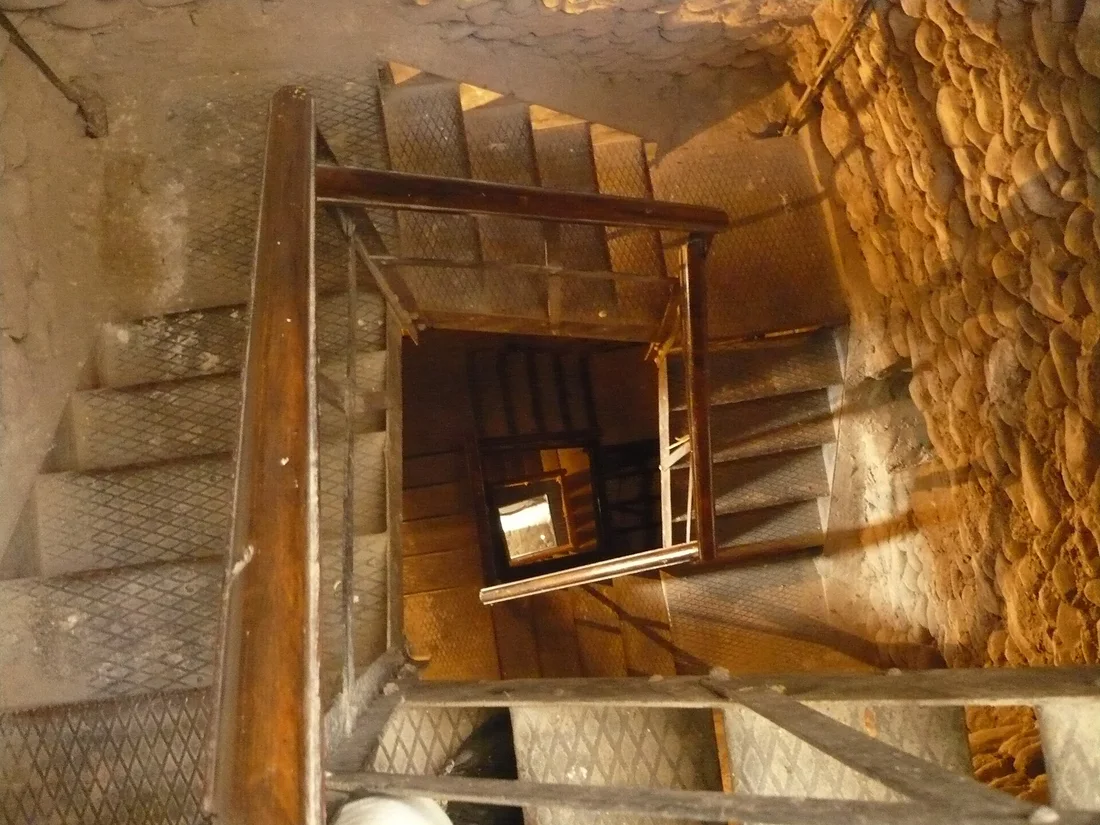
The municipality’s page dates the tower to 1822, built by Haxhi Et’hem Bey with money from Tirana’s wealthier families. It started at 30 m. In 1928 it was raised by 5 m to 35 m and given its balcony, four clock faces and Venetian-style roof, which is why the lower half reads Ottoman and the top half Western. It was the tallest building in the capital until 1970, and the original wooden stairs were replaced with metal ones during restoration.
Climbing it is a ticketed visit run by the Municipality of Tirana. Neither the municipality’s tower page nor the national tourism agency states a price or hours, so we don’t quote one. The one hard number the city does publish is attendance: its open-data portal lists ticketed visitors to the tower at 524 across the seven months from October 2025 to April 2026, from 22 in November to 180 in April, an average of about 75 a month. That’s two or three ticketed climbers a day on average, so you’re unlikely to queue. The city publishes no opening hours, so go on a weekday morning and don’t make it the last stop before a bus.
The museum you can’t enter and the mosaic you can
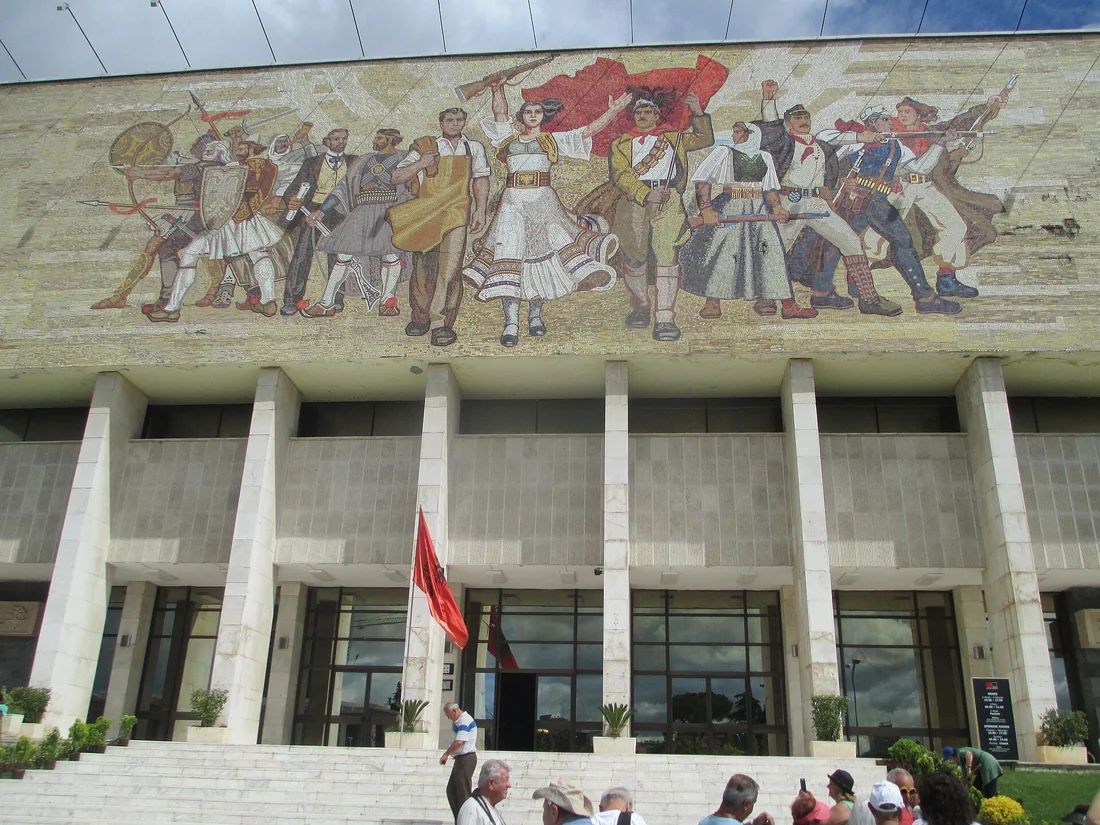
The National Historical Museum opened in October 1981 and closed in March 2024 for a restoration the press reported as a four-year closure. ArchDaily’s May 2026 report says work on the existing building is due to finish in 2026, and the new interiors, courtyard and roof come after that. Don’t plan an entry before 2028, and check the museum’s own site before you rely on that.
What you can see is the facade mosaic, The Albanians, about 11 m high and 40 m wide, completed in 1980. It’s socialist realism on a monumental scale: an Illyrian warrior, fighters of Skanderbeg’s time, a communist worker and partisans around a central figure of Mother Albania. It has been edited since: the golden star over her head was removed in the early 1990s, and the worker’s red book was replaced by an empty sack.
The square itself
The open space is about 40,000 square metres, and it hasn’t always been open. Under the monarchy it held a roundabout with a fountain; in communist times the monument’s place was occupied by a statue of Stalin, and one of Enver Hoxha stood between the museum and the Bank of Albania until it came down in 1991. The Skanderbeg Monument went up in January 1968, on the 500th anniversary of the national hero’s death, designed by Odhise Paskali with Andrea Mano and Janaq Paço.
The version you walk on today was designed by 51N4E with the artist Anri Sala and opened to the public in June 2017: a pedestrian plaza that became part of a large pedestrian zone in the centre.
Reading the buildings around the edge
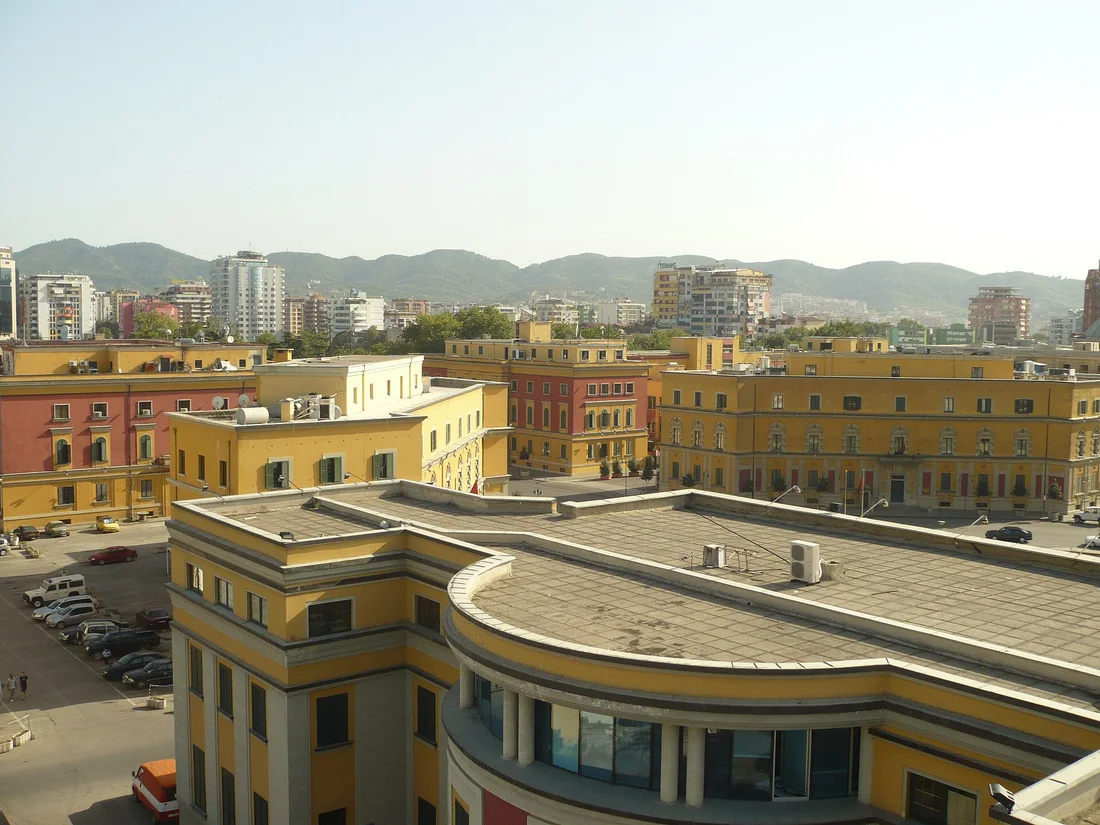
The square’s frame comes from the 1920s and 1930s. Armando Brasini drew Tirana’s first city plan in 1925, Florestano Di Fausto continued it in a Neo-Renaissance style, and Gherardo Bosio updated it in 1939 after the Italian invasion. That’s why the Palace of Culture, the National Opera, the National Library, the Bank of Albania and the City Hall share that monumental Italian-era Neo-Renaissance look. The Palace of Culture stands where the old bazaar used to be, so the bazaar itself is gone. The mosque and tower are the Ottoman remnant, a pair that the municipality itself calls a single architectural ensemble.
An hour or three on the square
An hour covers the square, the mosque and the outside of the museum. Add the tower and a coffee and you’re at two. Three hours gets you into Bunk’Art 2, a short walk away and best done first on a rainy day: our Bunk’Art guide has its tickets and hours. From here it’s a short walk to the Pyramid of Tirana and the House of Leaves, the secret-police museum behind the opera.
A guide adds something here because many of the square’s stories sit in buildings you can’t enter, like the museum and the ministries around the edge.
The longer list for the city is in our Tirana city guide.
Getting to the square
It’s the centre of Tirana, so everything arrives here. Our airport transfers guide has the airport bus, its stop and the other options. One weekend matters: the Tirana Marathon runs its 5K at 09:00 on Saturday 24 October 2026 and the 10K, 21K and marathon at 09:00 on Sunday 25 October, on streets closed to traffic for the morning, so arrive early or later on both days; the events calendar has the details.
On the map
The map loads on click - to keep the page lightweight.
The map didn’t load. Check your connection and refresh the page.
Admission and opening hours
- Admission price
- The square is open ground. Et'hem Bey Mosque: no fixed fee published; a voluntary 1 euro contribution was reported in 2022. Clock Tower climb: ticketed by the Municipality of Tirana, price not published online.
- Opening hours
- Square: always open. Mosque and Clock Tower: no hours published by the operators; the mosque closes for prayers. National Historical Museum: closed.
Municipality of Tirana Clock Tower page and open-data visitor counts, national tourism agency (AKT) mosque page; museum closure per press reports from March 2024. Checked 10 October 2026.
Details checked: October 10, 2026
Read also

What to see · 9 min read
Pellumbas Cave (Black Cave) & Erzen Canyon from Tirana
Verified · October 16, 2026Pellumbas Black Cave from Tirana: 21 km by road, a 2 km hike, 360 m of pitch-dark show cave, and why the Erzen canyon pools are a summer plan.

What to see · 9 min read
Berat Castle (Kala): Onufri Museum, Hours & Open Churches
Verified · October 13, 2026Berat Castle is a lived-in quarter with one paid museum inside and a second below. Winter hours, the 400-lek Onufri ticket, which churches open, the climb.

What to see · 8 min read
Gjirokaster Castle: Prison, Weapons Museum & Cold War Jet
Verified · October 10, 2026Gjirokaster Castle: 400 lek at the gate, closed Mondays October-April, the weapons museum and 1932 prison, and the US jet on the terrace.

What to see · 9 min read
Pyramid of Tirana: From Hoxha's Museum to Tech Hub
Verified · October 9, 2026The Pyramid of Tirana in 2026: steps to climb with no ticket listed, a free tech school for teens inside, and how Hoxha's 1988 museum dodged demolition.