Berat, Albania: City of a Thousand Windows Guide
Berat guide: the UNESCO castle, the Mangalem and Gorica quarters, the Onufri museum, the Osum canyon, plus where to stay, eat and how to get there.
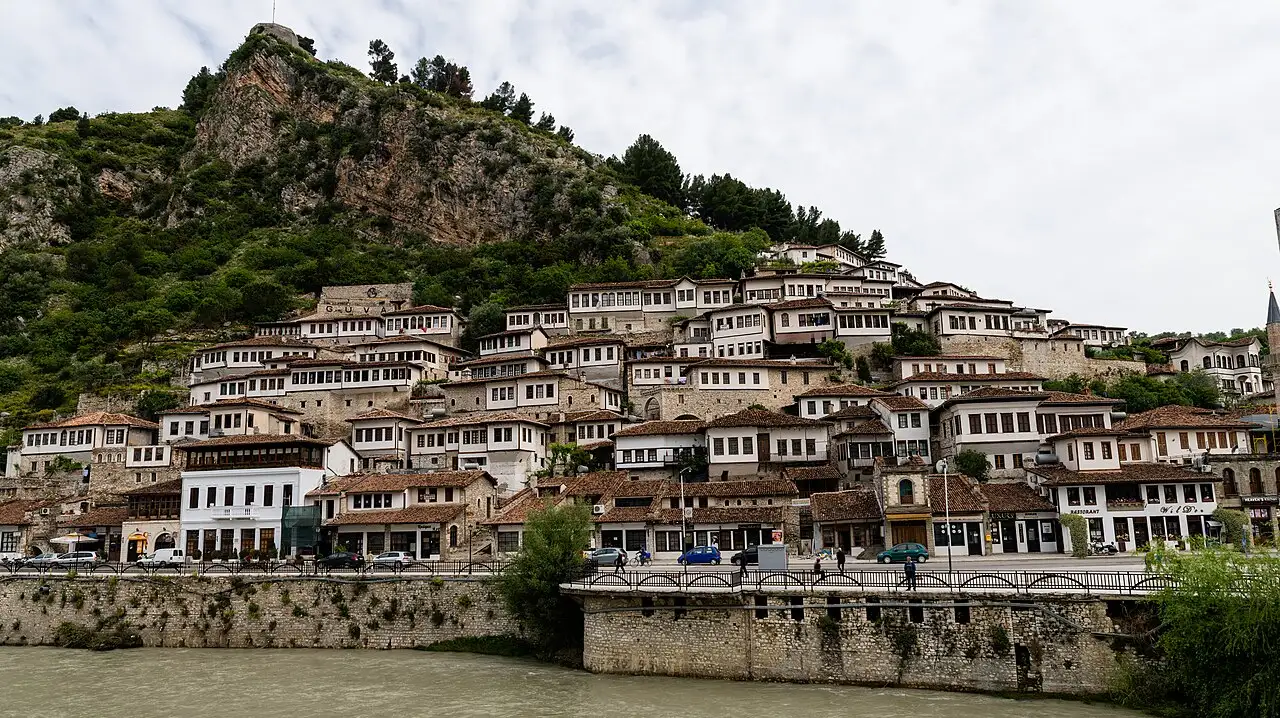
Berat is Albania’s “city of a thousand windows” - a UNESCO World Heritage town stacked up two facing hillsides above the Osum river, where row upon row of white Ottoman houses with wide wooden windows climb toward a castle that people still live inside. It earns a day or two on almost any Albania itinerary: wander the cobbled Mangalem and Gorica quarters, walk up to the inhabited Kala fortress and its Byzantine churches and Onufri’s icons, then use the town as a base for the Osum canyon and the surrounding wine country.
What sets Berat apart is that its castle isn’t a ruin you visit but a neighbourhood people still live in - families in Ottoman houses inside Byzantine walls, beside churches hung with Onufri’s icons. Give the town a day for that and the quarters below, or two if you want to add the Osum canyon and the wine country around it.
What to see in Berat
Berat’s old core is small and walkable, and most of the headline sights are within twenty minutes of each other on foot. The pleasure is as much in the wandering - the steep cobbled lanes, the river views, the stone bridge - as in any single monument.
The Mangalem quarter - the “thousand windows”
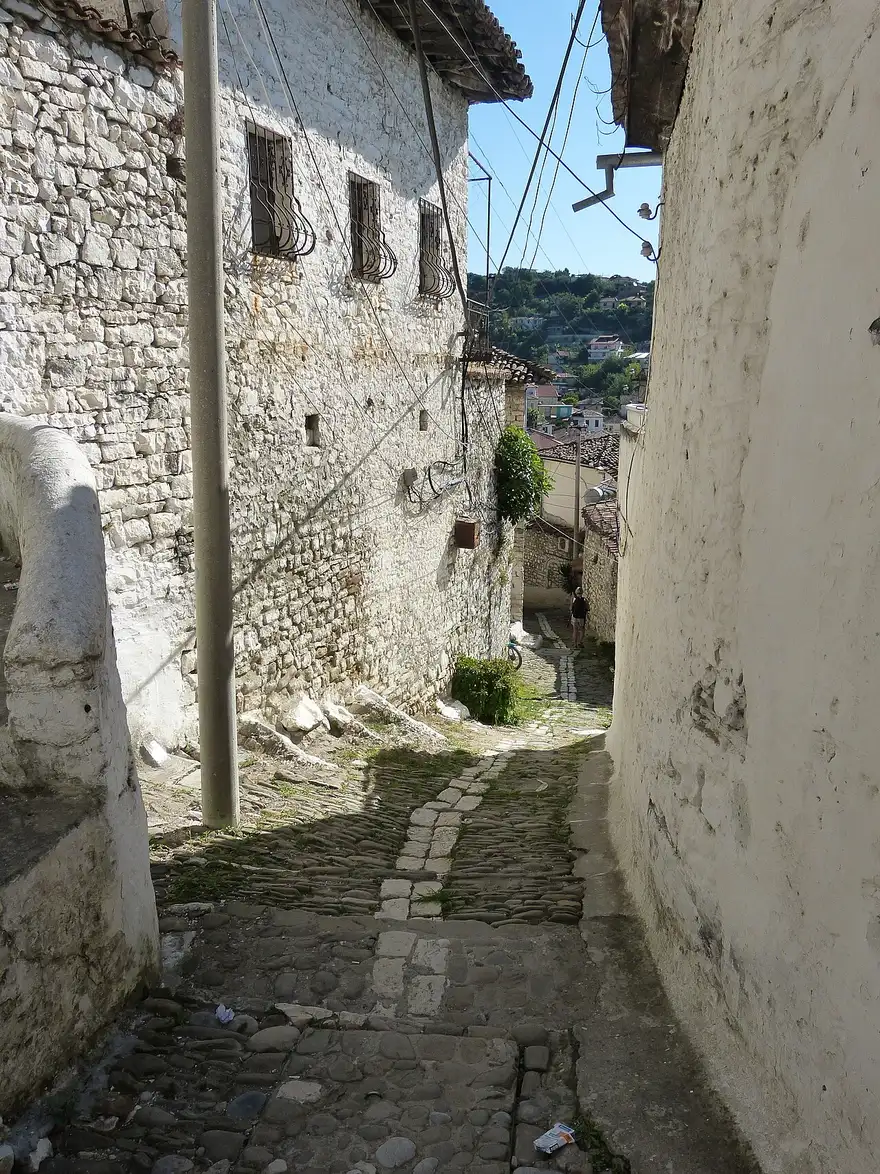
The image that sells Berat is Mangalem, the historic Muslim quarter that climbs the north bank below the castle. Its tall white houses are built almost on top of each other up the slope, each with rows of large wooden windows turned to catch the light - and seen together from across the river they look like a single facade pierced by a thousand panes, which is exactly where the nickname comes from. The streets behind are narrow, steep and cobbled, threading between stone walls and the occasional small mosque; it’s a place to climb slowly and look up.
Berat Castle (Kala) - a fortress people still live in
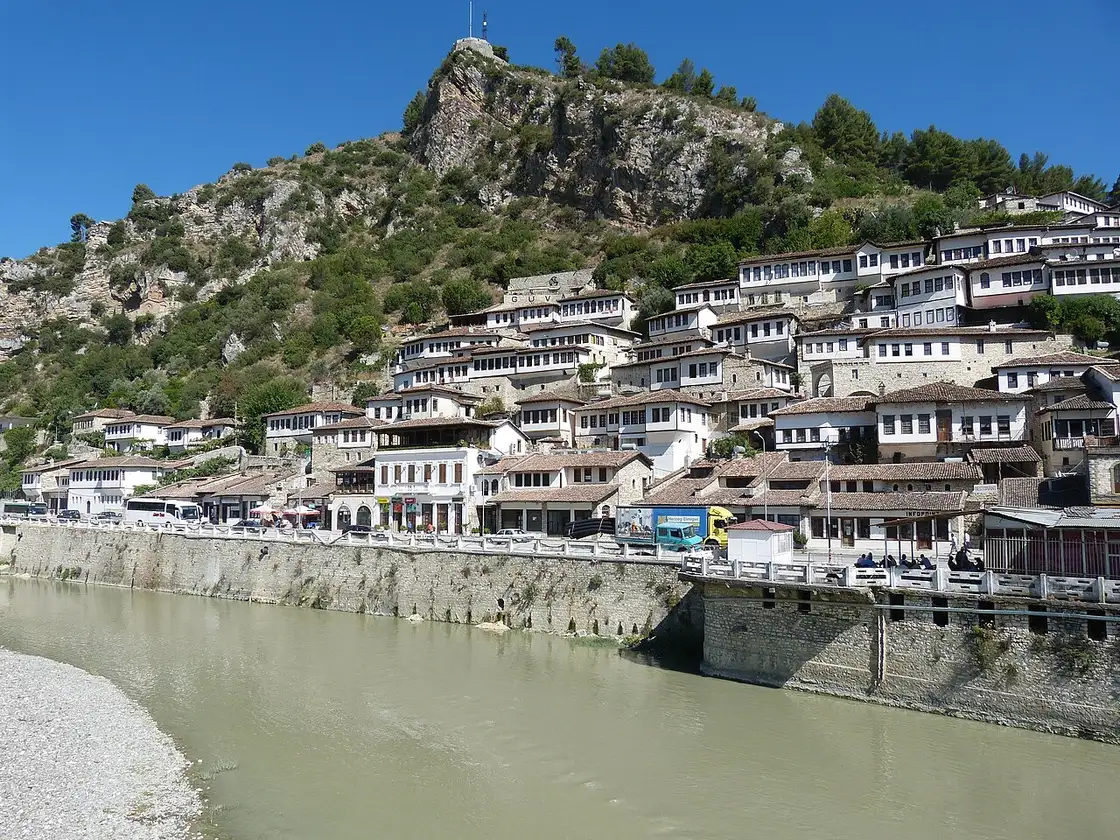
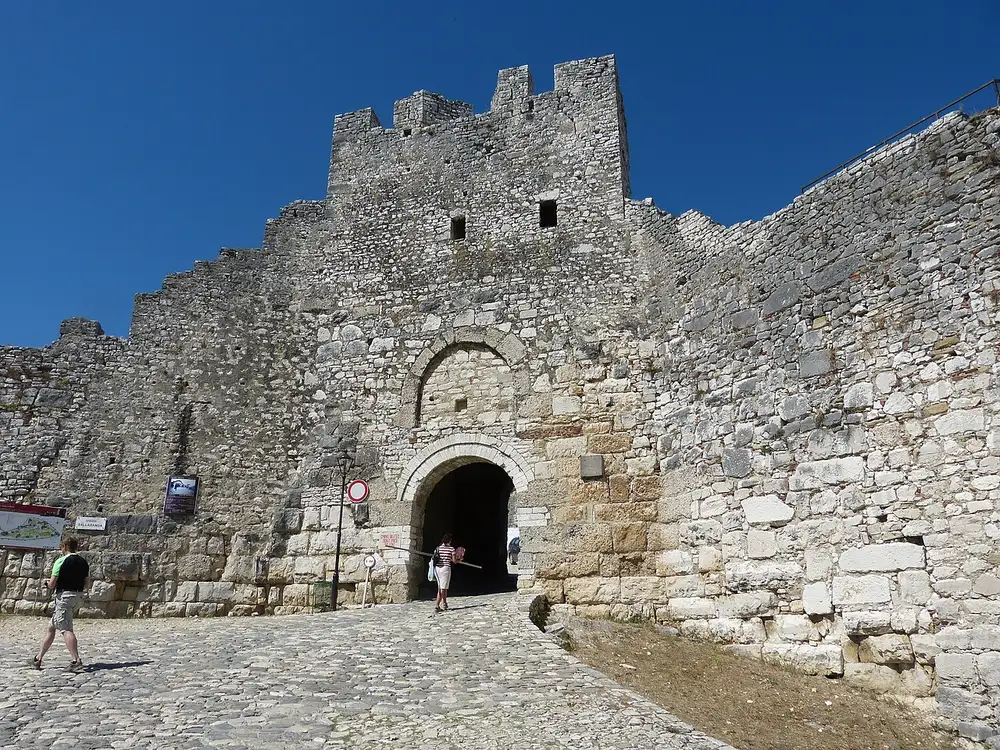
The single must-do is the walk up to Berat Castle, the Kala, on the ridge above Mangalem. Unlike most fortresses, this one is still a living neighbourhood: families have lived inside its walls for centuries, so behind the gate you find lanes, houses, gardens, small churches and cafés rather than an empty ruin. The fortified site has been settled since antiquity and rebuilt across Byzantine, Ottoman and later periods, and the views from the ramparts over the old town, the river and the surrounding hills are the best in Berat. It’s a steep cobbled climb up from town (or a short taxi or drive to the upper gate); allow a couple of hours to wander the walls and the inhabited quarter inside.
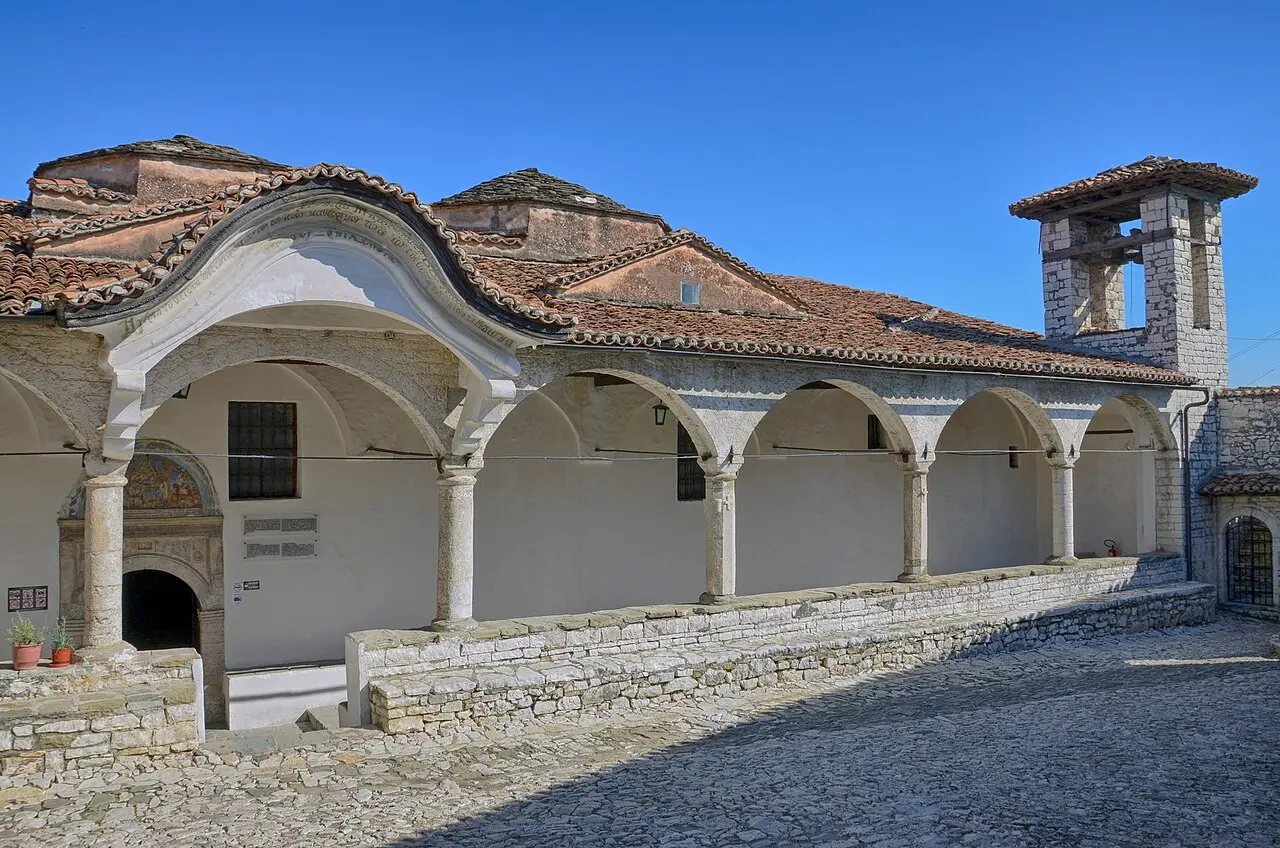
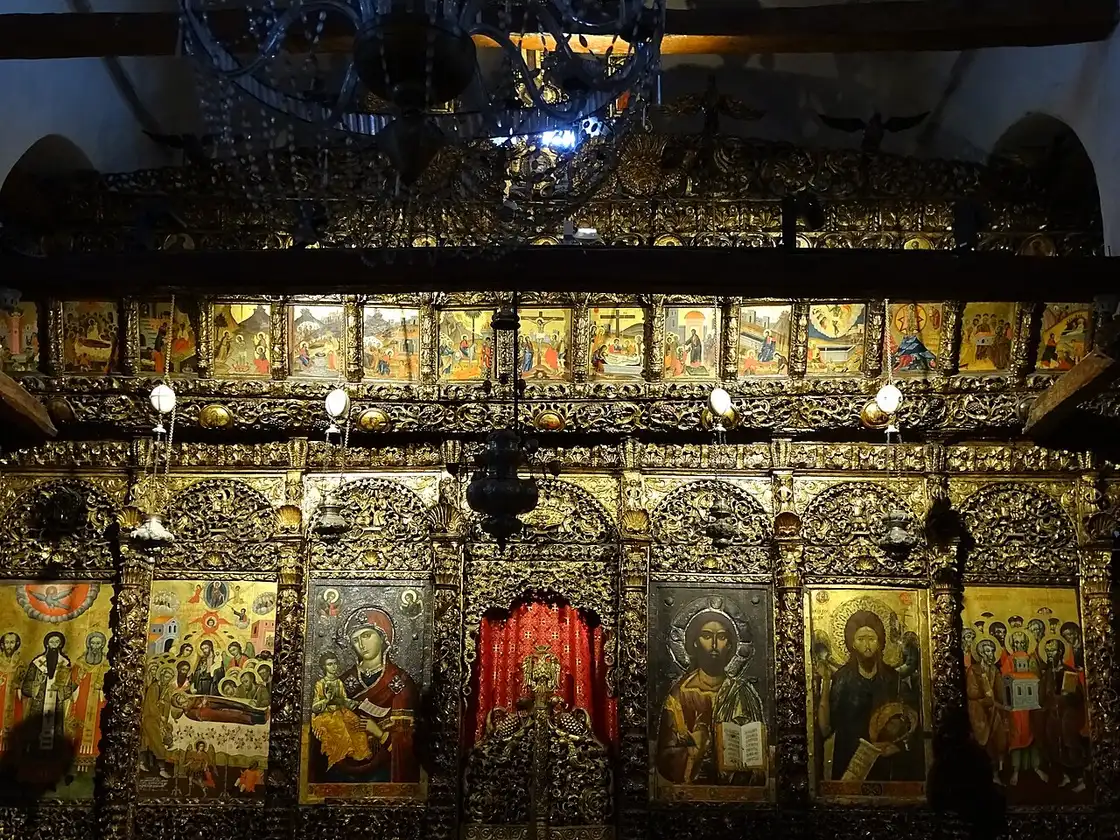
Inside the walls, the standout is the Onufri National Iconographic Museum, set in the 18th-century Church of the Dormition of St Mary. It’s named for Onufri, the 16th-century master icon painter known for the vivid red he used, and it gathers icons and a gilded iconostasis from Berat’s many Byzantine and post-Byzantine churches under one roof. An individual ticket runs 400 lek, with 200 lek for pensioners and people with disabilities and 120 lek for anyone 12 to 18 or holding a student card; under-12s go free. The museum keeps 09:00 to 18:00 from May through September; outside those months it drops to 09:00 to 16:00 Tuesday to Saturday and 10:00 to 15:00 on Sunday, per the National Museum Center that runs it - prices and hours do shift, so treat this as the latest published rate and check the board before you go.
The Gorica quarter and the Osum bridge
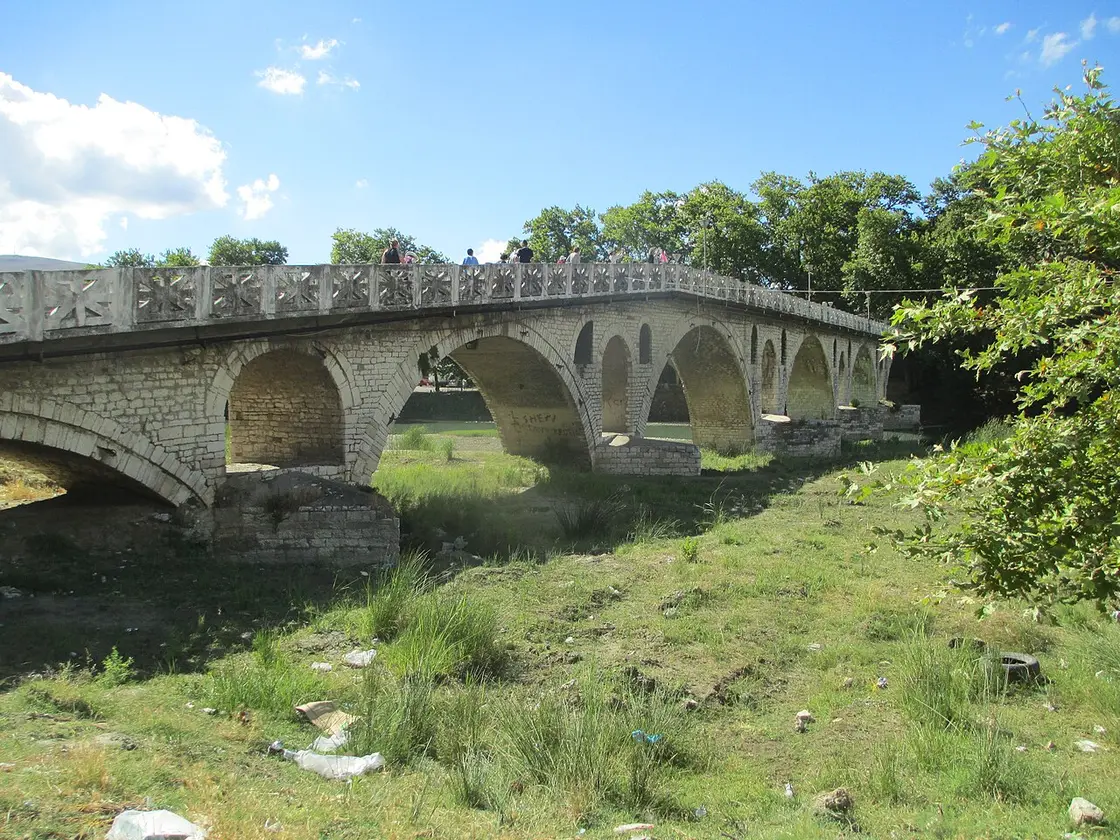
Across the river from Mangalem, the Gorica quarter is its quieter, traditionally Christian counterpart - a second tier of stone houses facing back at the “thousand windows,” with some of the best views of Mangalem from its lanes. The two halves are joined by the Gorica Bridge, a graceful seven-arched Ottoman stone footbridge over the Osum that’s one of the town’s emblems and a fine spot for photos at golden hour. Crossing between the quarters, with the castle above and the river below, is the essence of a Berat afternoon.
Berat is also a town of churches and mosques side by side - a legacy of its mixed Muslim and Orthodox population. Down in the centre, the Lead Mosque (Xhamia e Plumbit), named for the lead sheeting on its dome, and the older King Mosque are worth a look as you pass, along with the small mosques tucked into Mangalem’s lanes.
Best day trips from Berat
Berat works well as a base for a day in the hills around it, and the surrounding region is one of Albania’s emerging wine areas.
The Osum Canyon and rafting
About 50 km and an hour and a half south-east of town on a twisting road, the Osum Canyon (Kanioni i Osumit) cuts a deep, narrow gorge through the rock, its walls rising sheer above the river. In spring and early summer, when the water is higher, it’s a popular spot for guided rafting and canyoning trips; later in the season the flow drops and it becomes more of a scenic walk-and-swim outing. Most visitors reach it on an organised day tour from Berat or with their own car, as public transport is limited. Conditions and tour availability depend heavily on the season and water level, so check locally before planning around it. Our Osumi Canyon guide has the rafting season dates, the operators’ own prices and the drive to the rim viewpoints.
Albanian wine and rakia tastings
The countryside around Berat is wine country - the Berat-Roshnik area has a cluster of family wineries, and tastings of local wine and rakia (the regional grape brandy) are an easy add-on, either at cellars in the hills or arranged through your guesthouse. Combined with the canyon or a slow lunch, it makes a relaxed second day. For grapes, regions and cellar etiquette beyond Berat, our Albanian wine guide covers the national picture. Specific wineries, opening times and tasting prices vary and are best confirmed locally or through a tour operator.
Where to stay in Berat
Sleep inside one of the two historic quarters if you can - everything worth seeing is a short, if occasionally steep, walk away, and you get the lanes to yourself once the tour groups head back to their coaches.
- Mangalem. The classic choice: traditional guesthouses inside the “thousand windows” quarter, many in restored Ottoman houses with wooden interiors and views. Atmospheric and central, with the climb to the castle on your doorstep.
- Gorica. Quieter and just across the bridge, with some of the best views back at Mangalem. A short, scenic walk from the centre.
- Inside the castle. A handful of guesthouses sit within the Kala walls - a genuinely unusual place to sleep, though it means hauling bags up the hill.
- The new town. Flat, modern streets and lower rates, a short walk from the old core - the practical pick if you’ve got a rental car and don’t want to fight for parking near the quarters.
Book ahead if you’re set on Mangalem or Gorica for July or August, when the atmospheric guesthouses fill first and prices follow; spring and autumn are easier on both the wallet and the climb.
How to get to Berat
Berat sits inland, roughly halfway between Tirana and the southern coast, so most itineraries pass straight through it whether they plan to or not.
| Route | Roughly | Notes |
|---|---|---|
| Tirana → Berat (bus/furgon) | ~2-2.5 h | Direct departures through the day; the most common way to arrive. |
| Tirana → Berat (car) | ~120 km on the coastal SH4, ~100 km inland via Elbasan / ~2-2.5 h | Straightforward drive; the town has parking in the new quarter. |
| Durrës → Berat | ~1.5-2 h | Handy if you’ve come off a ferry or are based on the central coast. |
| Saranda → Berat | ~3.5-4 h | Long but scenic; often paired with Gjirokastër on the way. |
The usual approach is the road from Tirana, served by direct buses and furgons (shared minibuses) as well as your own car; there’s no train. For the full breakdown of times, fares, the drive and whether it works as a day trip, see Tirana to Berat: bus, furgon, car & day trip options. Coming up from the south, Berat pairs naturally with Saranda and the Riviera, usually via Gjirokastër. If you’re choosing between Berat and Gjirokaster for a single UNESCO stop, the Berat vs Gjirokaster comparison walks through the geography and sights side by side. Having your own wheels makes the canyon and the wine country far easier to reach than waiting on limited public transport - our guide to renting a car in Albania covers the excess and deposit traps worth knowing before you book.
Where to eat
Berat eats like an inland Albanian town with a strong traditional streak: hearty home cooking, grilled meats, byrek and oven-baked dishes, and the local speciality, pilaf and lamb-based bakes you’ll see on guesthouse tables. Restaurants cluster along the riverside and in Mangalem, several with terraces facing the bridge or the castle. Local wine from the surrounding hills is worth ordering with dinner - our guide to Albanian food and drink rounds up the native grapes and dishes worth trying nationwide. As ever, we don’t quote specific prices or menus for individual venues because they change with the season - check current boards when you go, and ask your guesthouse for their pick.
Practical tips for visiting Berat
A few things worth knowing before you go:
- Currency. You’ll be paying in Albanian lek (ALL) for almost everything here - the museum ticket booth and the smaller guesthouses don’t take cards, so carry more cash than you think you need; the bigger restaurants and hotels in town do take cards.
- How long to stay. Give it a full day for the castle, both quarters and the Onufri museum; stay a second and you can add the Osum canyon or a wine tasting at an easy pace.
- Wear good shoes. Mangalem’s lanes pitch steeply from the river, and the extra pull up to the castle gate is a proper uphill slog in summer heat - if that last stretch doesn’t appeal, a taxi will run you up to the upper entrance instead.
- When to go. Spring and autumn spare you the worst of the heat on that castle climb, and they’re also when the Berat-Roshnik vineyards are at their best for a tasting. See our guide to the best time to visit Albania for the month-by-month picture.
- Berat as a base. It’s a natural midpoint between Tirana and the south, and an easy add-on to a road trip - close enough to the capital for a long day trip, but far better as an overnight. It’s the anchor of our Albania 4-day itinerary if you’re fitting the town into a long weekend by car. Heading west toward the coast, the ancient city of Apollonia near Fier is about 70 km on and makes an easy half-day stop.
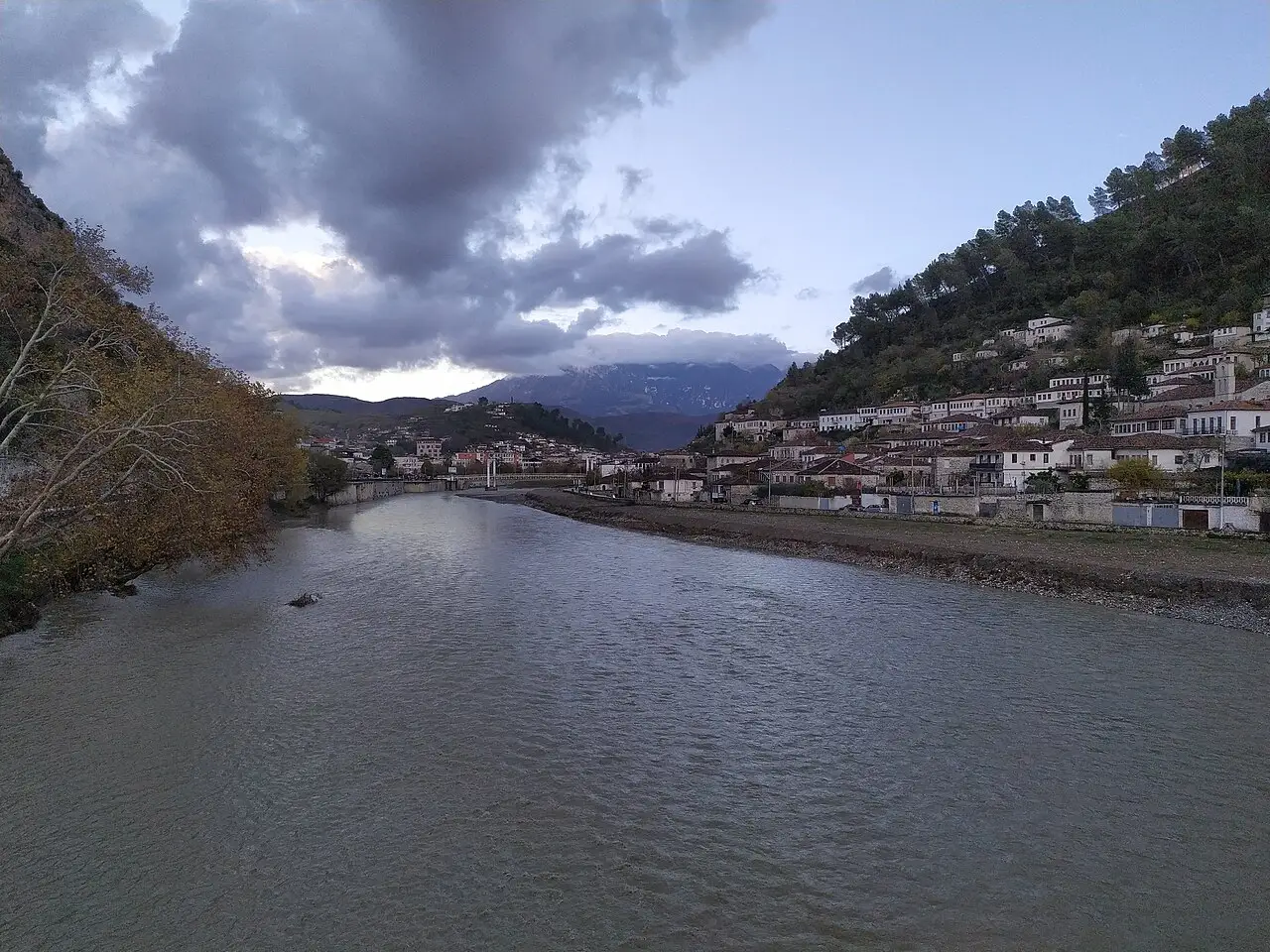
Time your visit right and Berat gives you one moment for free: crossing the Gorica bridge as the sun drops behind the castle ridge and the thousand windows across the river start catching the last light one by one. The museum, the wine, the canyon, are all good reasons to stay longer, but that walk across the bridge at dusk is the one thing worth building the day around.
What’s nearby and read also
- Browse more Albanian city guides for your next stop.
- On your way south? The Saranda travel guide covers the Riviera hub at the end of the coast road.
- Starting in the capital? Read the best things to do in Tirana.
- Driving the day trips? See how to rent a car in Albania.
Photos
On the map
The map loads on click - to keep the page lightweight.
The map didn’t load. Check your connection and refresh the page.
Distance ≈120 km · ~2-2.5 h by road
- Tirana ≈120 km · ~2-2.5 h by road Direct buses and furgons run through the day from Tirana; no train.
Read also

Cities · 10 min read
Korca Travel Guide: Bazaar, Beer & Southeast Albania
Updated · August 14, 2026Korca (Korce) guide: walk the Old Bazaar, see medieval icons, taste Birra Korca, then day-trip to Voskopoje or Lake Ohrid.

Cities · 10 min read
Permet, Albania: the Vjosa, Rafting & Gliko
Updated · August 8, 2026Permet travel guide: rafting the Vjosa (EUR 35), gliko and raki, the 1944 Congress, Leusa church, the Benja baths, where to stay and how to get there.

Cities · 13 min read
Dhermi, Albania: Beaches, Drymades & the Old Village
Updated · September 25, 2026Dhermi and Drymades guide: which beach is which, what a sunbed costs, boat trips to Gjipe, the old Greek village above the coast and the bus-stop catch.

Cities · 11 min read
Pogradec & Lake Ohrid: The Albanian Side
Updated · October 2, 2026Pogradec on the Albanian shore of Lake Ohrid: pebble beaches, the promenade, the Drilon springs, koran trout and Lin's mosaics, without Ohrid's crowds.