Pyramid of Tirana: From Hoxha's Museum to Tech Hub
The Pyramid of Tirana in 2026: steps to climb with no ticket listed, a free tech school for teens inside, and how Hoxha's 1988 museum dodged demolition.
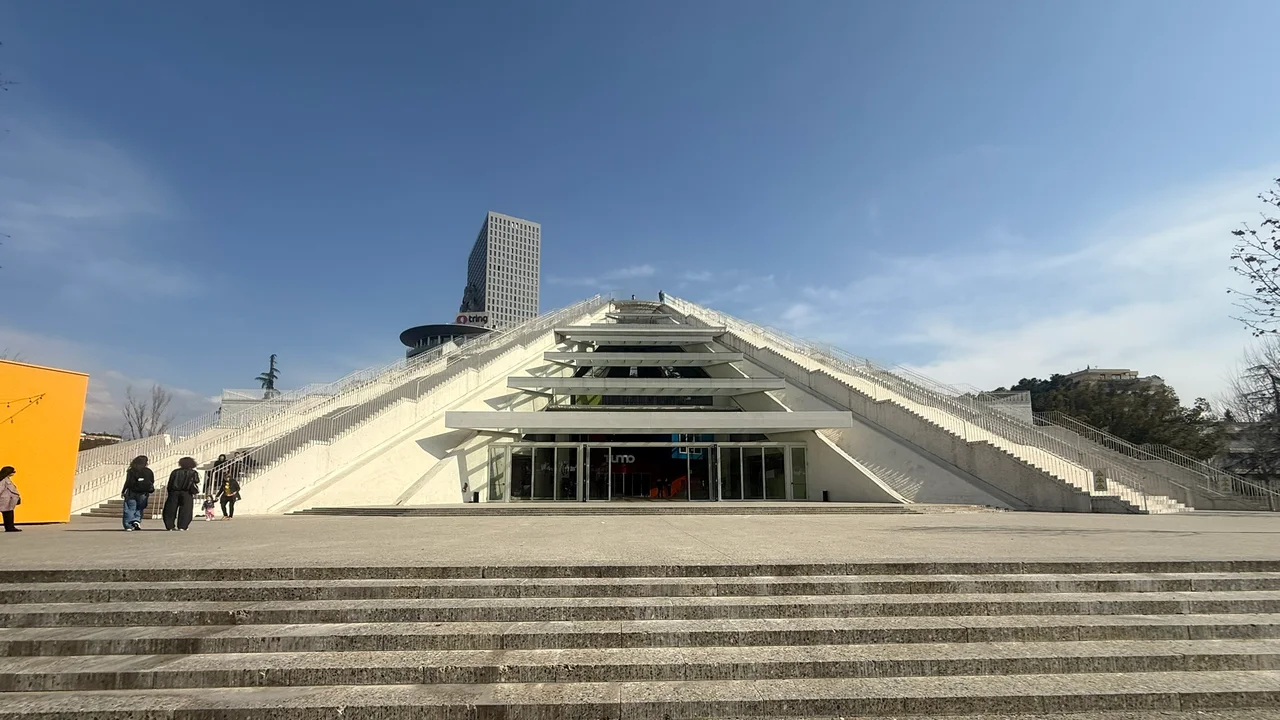
You can climb the Pyramid of Tirana without a ticket as far as we can tell: neither the building’s operator nor Albania’s national tourism agency lists a price or opening hours for the steps that now run up its sloping beams to a platform at the top, as of 9 October 2026. Opened in 1988 as a museum to the dictator Enver Hoxha, the white concrete pyramid on the city’s main boulevard reopened in 2023 as a tech-education centre, and the bright boxes inside belong to TUMO Tirana, a free after-school programme for 12- to 18-year-olds, so the place works as a school first and a sight second. Most of a visit is the climb itself, which slots easily between Skanderbeg Square and Blloku and repays you with a view over the boulevard and the park.
It sits on Bulevardi Dëshmorët e Kombit, about 700 metres south of Skanderbeg Square in a straight line, close enough to walk.
What’s there now
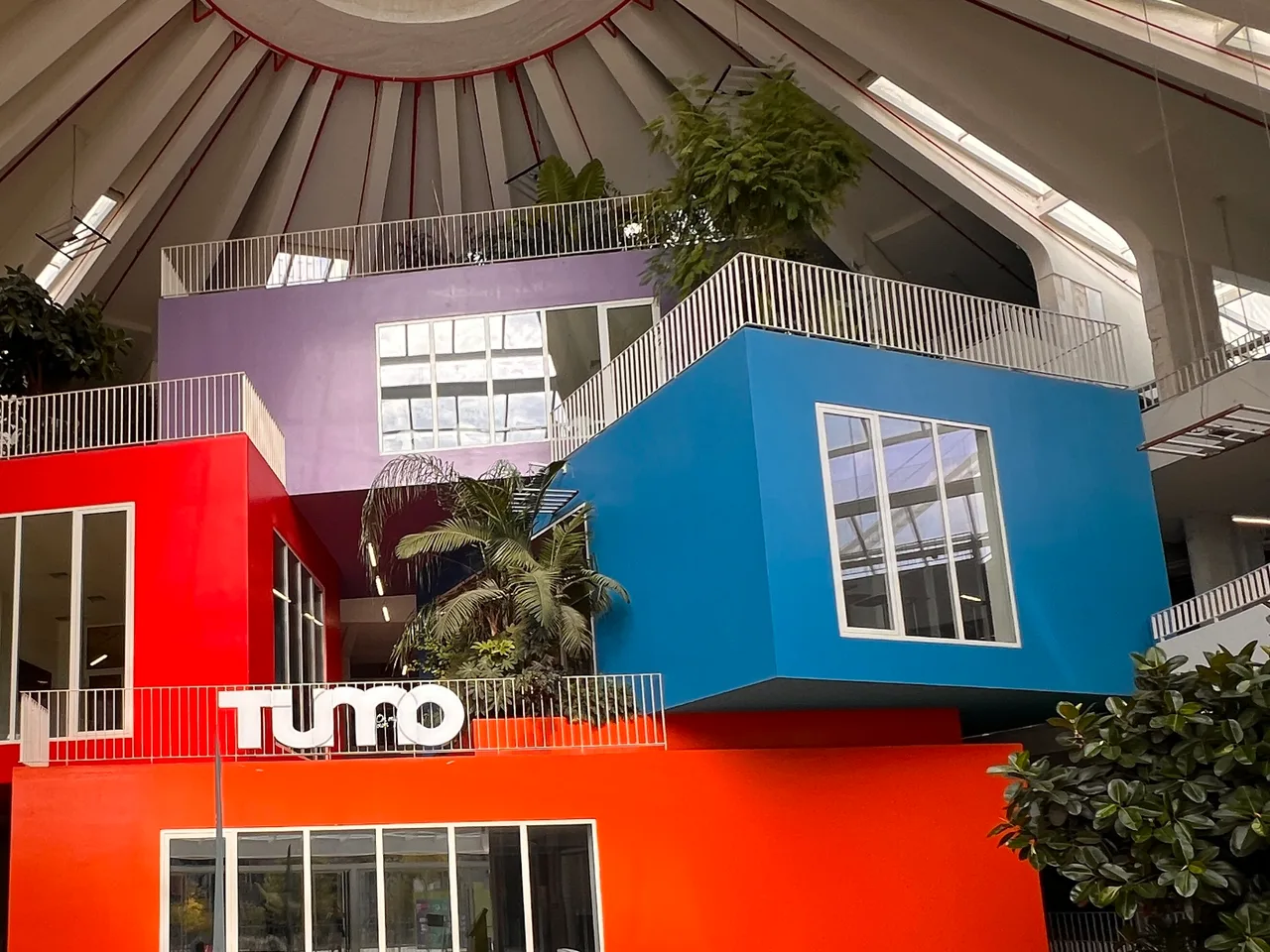
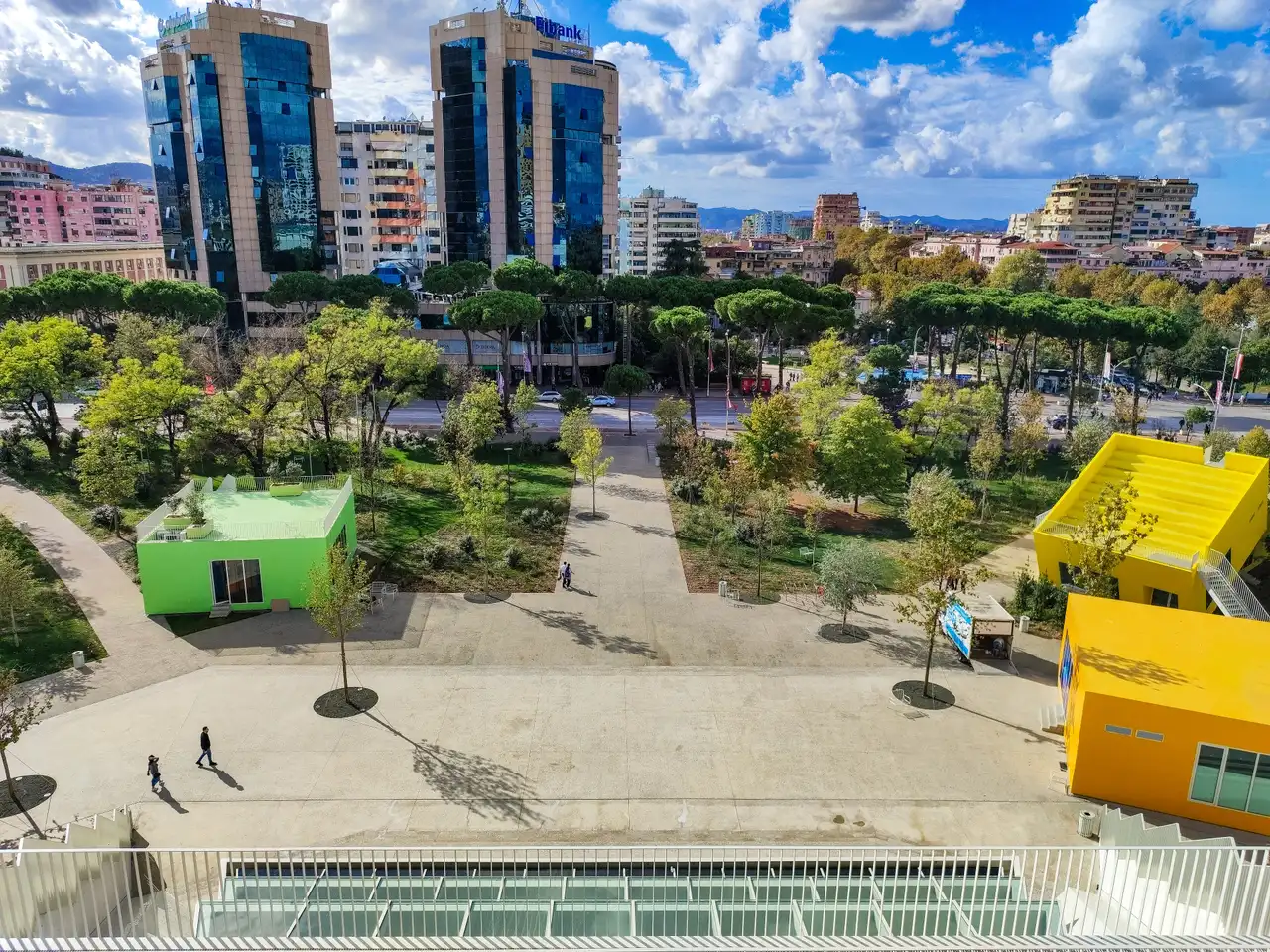
The renovation kept the concrete shell and changed almost everything around it. The design, by the architecture studio MVRDV, took the glass out of every entrance, so the ground floor opens straight onto the park instead of hiding behind doors. The operator describes what was added as a small “village” of studios, workshops, classrooms and cafés, and MVRDV’s plan built it as boxes placed inside, on top of and around the old structure.
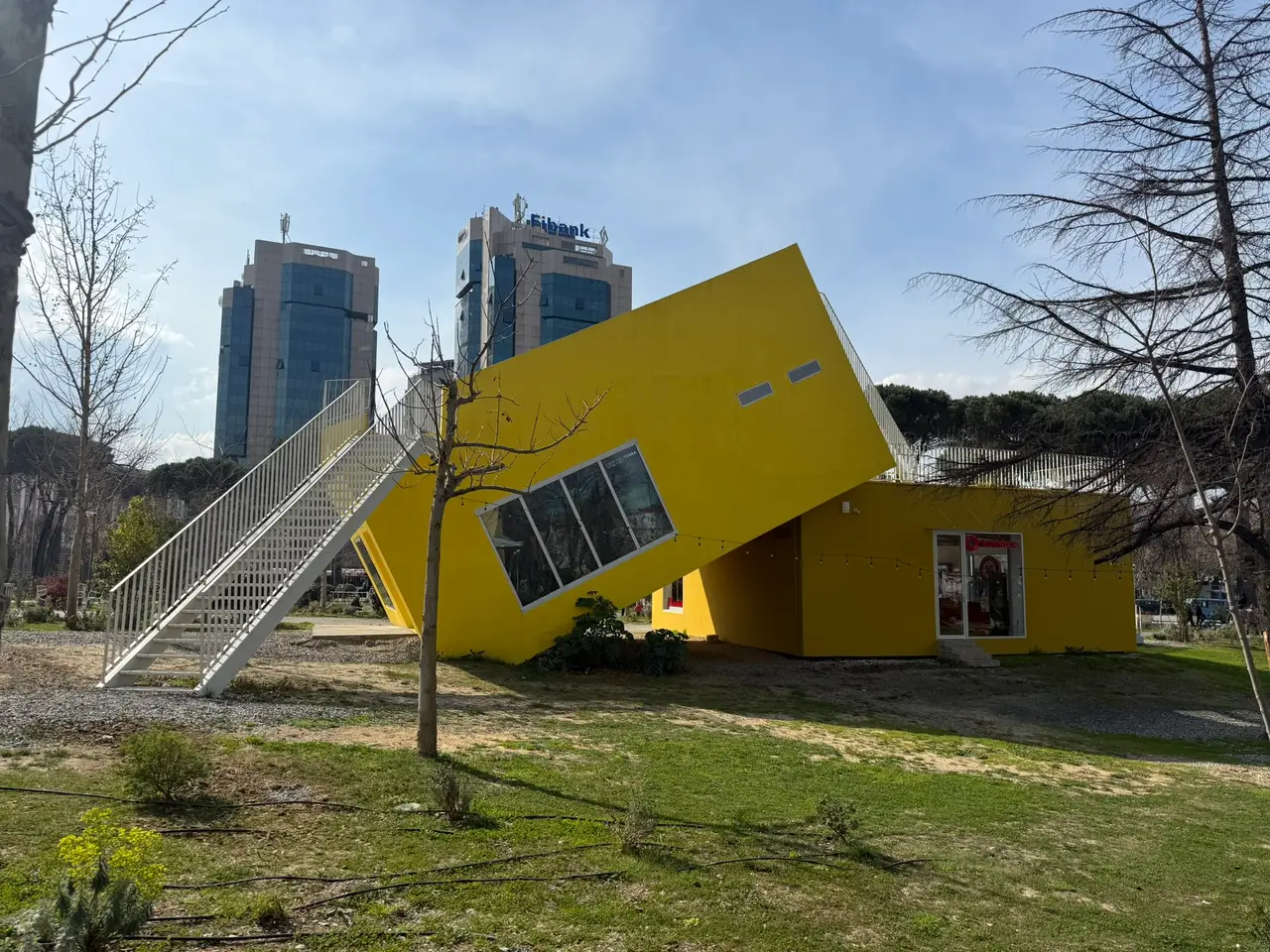
The main cluster of boxes stands under the atrium roof, stacked red, blue and purple, with the TUMO sign on the front. More boxes sit out on the plaza, some of them tilted at an angle with their own outside stairs. This isn’t a museum display. The boxes are rooms in use, which is worth remembering when a door is shut or a class is on.
Up the steps
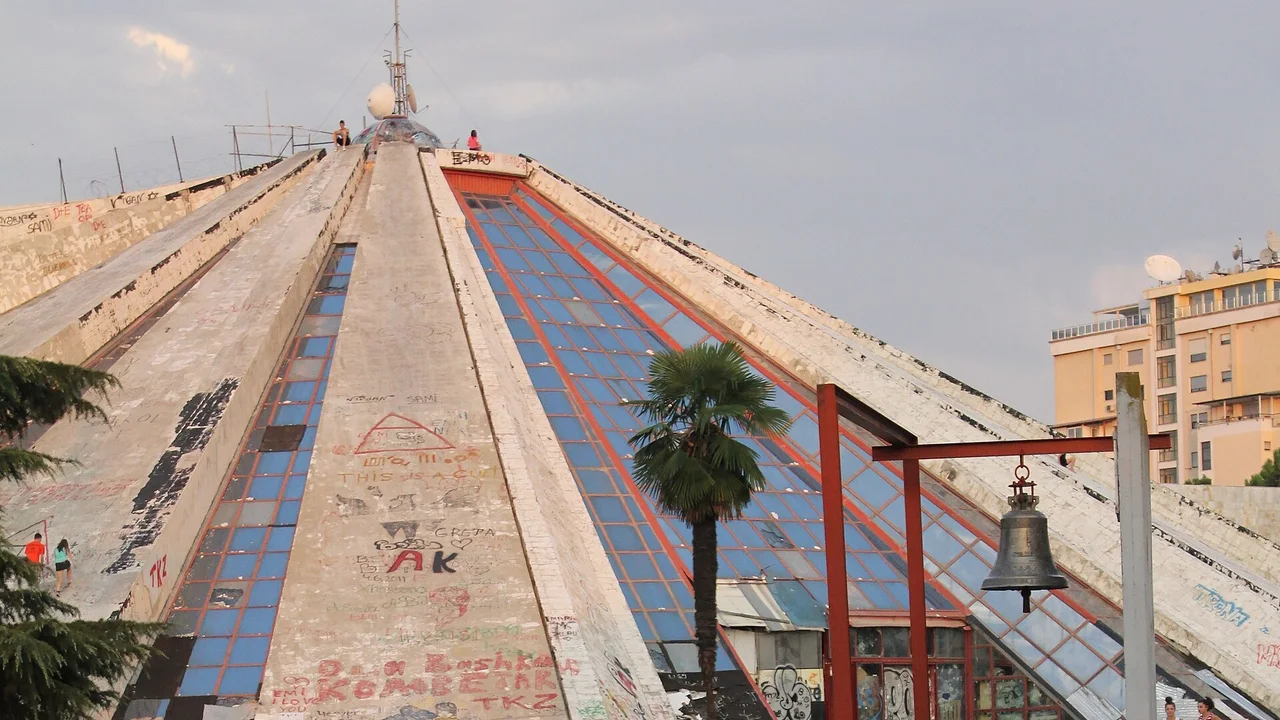
For decades the beams were bare, sloping concrete. Young Tiranans climbed them at night and slid back down, something MVRDV itself described as done “not without risk”. The renovation turned that habit into the main event. Steps now run up the concrete beams so you can walk safely over the dictator’s former museum to the top, which the operator says has its own platform for the view. The architects’ plan kept one beam as a bare slope for sliding, which they said visitors would do at their own risk, and it reused the stone tiles that once clad the facade as aggregate in the concrete of the new steps. Neither the operator nor the tourism agency says whether that beam is open for sliding today, so don’t plan on it.
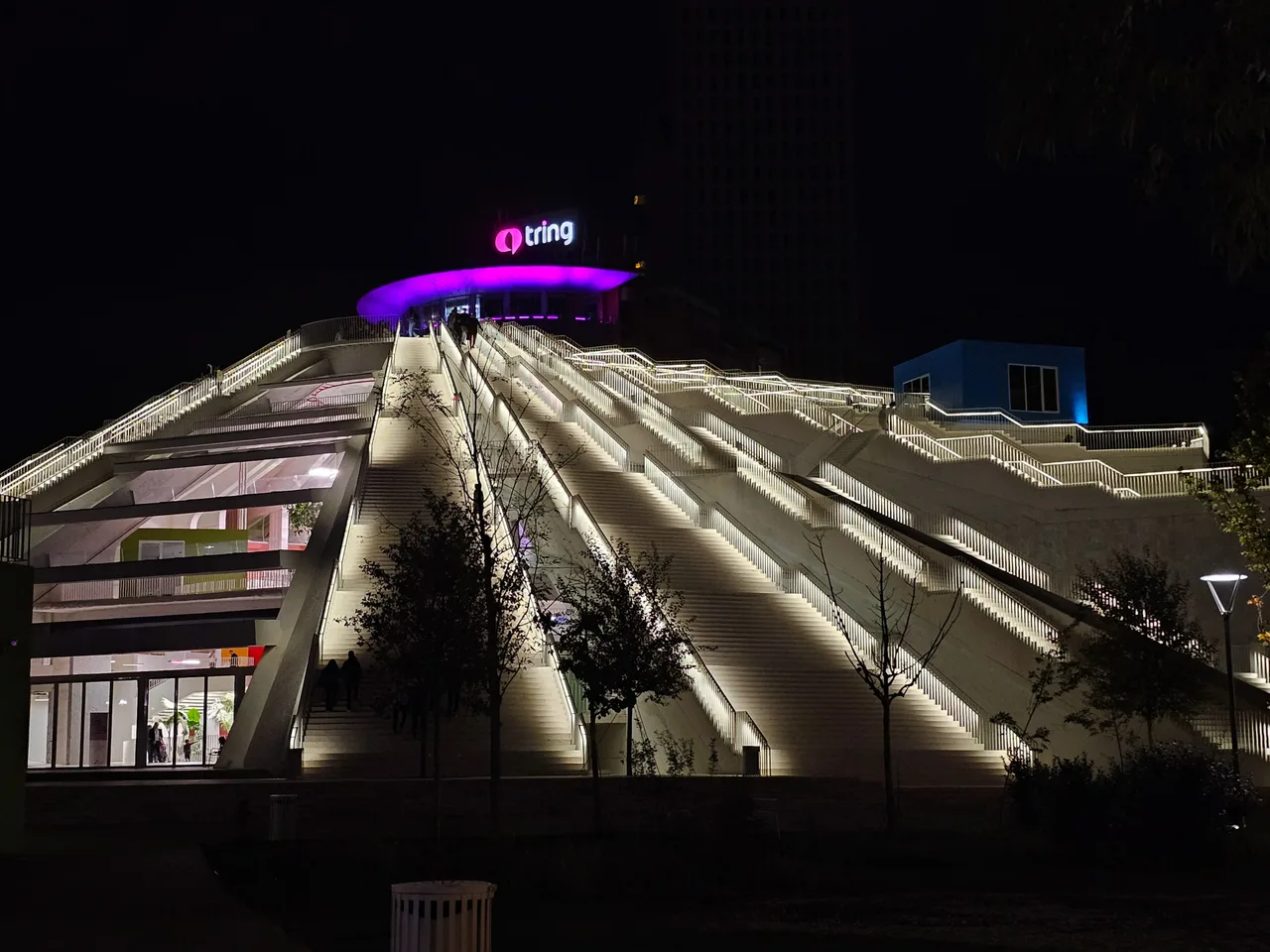
The climb is all steps, so wear shoes with some grip and use the railings. At the top you look out over the plaza boxes, the young park, the boulevard and the glass towers across it. The steps are lit after dark, and night photos show people still climbing; the operator gives no hours for the outside, so treat late visits as unofficial.
A museum for Hoxha, opened in 1988
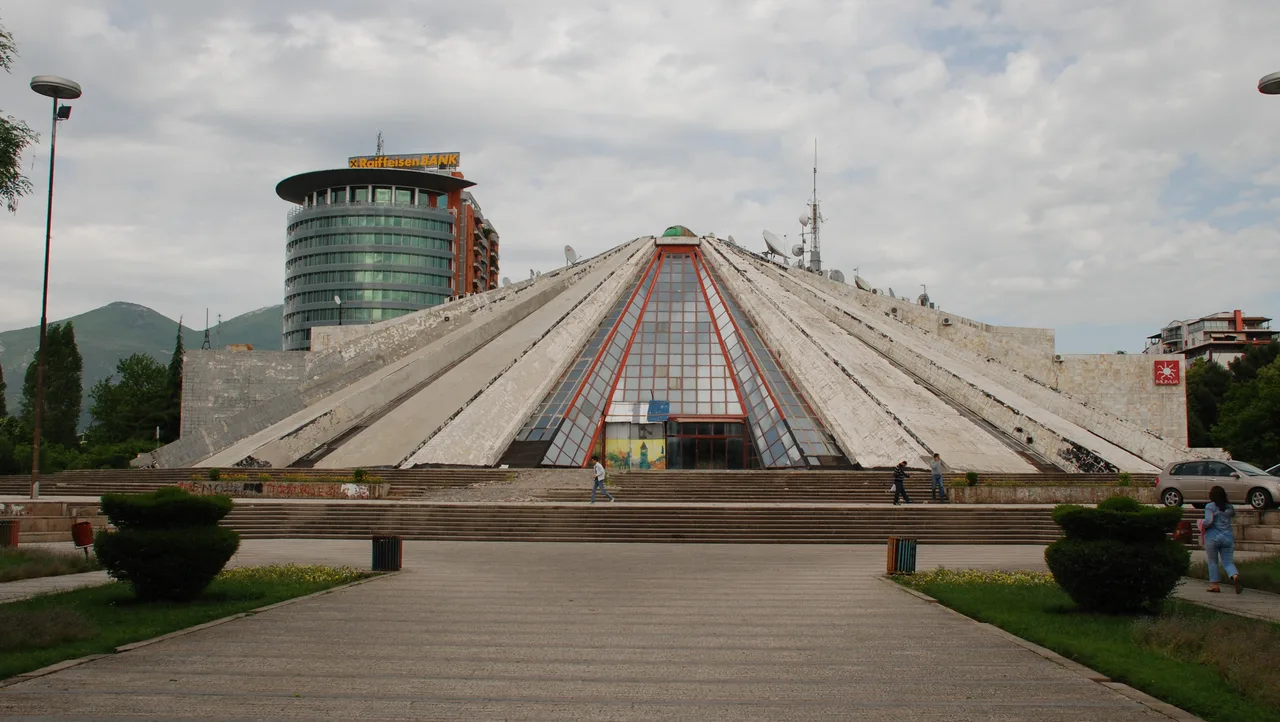
Enver Hoxha ran Albania for four decades and died in 1985. His successor, Ramiz Alia, wanted him remembered “with great respect”, and the Pyramid opened as his museum in 1988, three years after his death. The design team included Hoxha’s daughter Pranvera, an architect, her husband Klement Kolaneci, Pirro Vaso and Vladimir Bregu. The Contested Histories project, which studies disputed monuments, notes that the building was considered the most expensive structure ever put up in Albania when it was built. People sometimes call it Hoxha’s mausoleum, but it was built as a museum, not a tomb.
The museum didn’t outlast the regime by long. After 1991 the building went through a string of lives: a NATO base during the Kosovo war, a nightclub, a theatre, a venue for media outlets. In 2006 it was renamed after Pjetër Arbnori, one of Hoxha’s best-known political opponents, as the Pjetër Arbnori International Cultural Centre. Meanwhile the slopes became a playground and a canvas for graffiti.
The plan to knock it down
In 2009 the Pyramid was listed as a Category II monument, which in Albania protects a building’s exterior while allowing changes inside. That didn’t stop the next fight. In 2010 and 2011 Sali Berisha’s government planned to replace it with a new parliament building. An online petition against the plan gathered more than 6,000 signatures, and after public protests the decision was reversed in 2011.
The building passed from the Ministry of Culture to the Municipality of Tirana in 2016. MVRDV unveiled its design in 2018, working for the municipality, with a finish date of June 2019. That date slipped badly: construction only started on 4 February 2021, co-financed by the national and city governments with the Albanian-American Development Foundation, and the work was completed in September 2023. The 2009 listing helps explain the result. The rules protected the outside, so the concrete shell stayed, and the change happened in what was added to it.
TUMO: a school you walk through
TUMO Tirana is the Pyramid’s main tenant, set up by the Albanian-American Development Foundation with the Municipality of Tirana. It’s an after-school programme for 12- to 18-year-olds in eight subjects: programming, animation, game development, graphic design, filmmaking, music, robotics and 3D modelling. Students build their own learning plan on a platform called TUMO Path, and the curriculum runs in English. Albania’s national tourism agency describes the daily programmes as free. TUMO started in Yerevan, Armenia, in 2011, and Tirana is part of that network.
The agency lists TUMO’s hours as Monday to Saturday, 09:00 to 19:00; Sunday isn’t on the list. Those are the school’s hours, not the steps’. If you’re living in Tirana with teenagers, the centre is the part of the Pyramid you’ll care about most, and it takes enquiries at info@tirana.tumo.al.
A Cold War walk from the steps
The Pyramid sits in the middle of Tirana’s communist-era landmarks, and you can string several together on foot.
- Postbllok, Albanian for checkpoint, is about 250 metres away in a straight line. This Memorial to Communist Isolation, by the writer and former dissident Fatos Lubonja and the artist Ardian Isufi, puts together a concrete bunker, supports from the mine at the Spaç labour camp, where political prisoners were held between 1968 and 1990, and a painted section of the Berlin Wall from Potsdamer Platz.
- The House of Leaves, about 600 metres away, is the museum of the communist secret police’s surveillance; our House of Leaves guide has the tickets, hours and the rooms worth your time.
- Bunk’Art 2, in the centre of Tirana, is the bunker museum about the Ministry of Interior and the secret police’s surveillance; the Bunk’Art guide compares it with the much bigger Bunk’Art 1.
- Blloku, the quarter once off limits to ordinary citizens and kept for the communist elite, is the café and bar district now, and Enver Hoxha’s house is still there. The Tirana sightseeing guide covers it alongside the city’s other sights.
Two more things to know before you set off. After dark, the strip along the Lana river beside the Pyramid has bars and open-air terraces, which the Tirana nightlife guide covers. For coffee or a meal within a few minutes’ walk, the best restaurants in Tirana list includes Komiteti, a café-bar behind the Pyramid filled with communist-era objects.
To stay within walking distance of all of it, the where to stay in Tirana guide breaks the centre down by neighbourhood, and a base in or near Blloku puts the Pyramid, Postbllok and the bars on the same short loop.
Why it still divides people
Reopening the Pyramid didn’t settle the argument about it. The Contested Histories study sets out both sides: some Albanians see the building as an insult to the regime’s victims, others see keeping it as a way to remember them, and its string of later uses, tied to other political figures including Hoxha’s opponents, has made agreement harder still. The same study notes lingering complaints about how openly the renovation was decided.
What the steps do is let you make your own mind up from the top, standing on the beams of a building that was meant to make one man look permanent and now hosts teenagers learning to code.
On the map
The map loads on click - to keep the page lightweight.
The map didn’t load. Check your connection and refresh the page.
Admission and opening hours
- Admission price
- No ticket listed for the outside steps by the operator or the national tourism agency; TUMO Tirana programmes are free for 12- to 18-year-olds
- Opening hours
- Outside steps: no published hours. TUMO Tirana inside the building: Monday-Saturday 09:00-19:00
Hours and the free programmes from the national tourism agency (AKT) TUMO page; the operator site piramida.edu.al lists no price or hours for the steps. Checked 9 October 2026.
Details checked: October 9, 2026
Read also

What to see · 9 min read
Pellumbas Cave (Black Cave) & Erzen Canyon from Tirana
Verified · October 16, 2026Pellumbas Black Cave from Tirana: 21 km by road, a 2 km hike, 360 m of pitch-dark show cave, and why the Erzen canyon pools are a summer plan.

What to see · 9 min read
Berat Castle (Kala): Onufri Museum, Hours & Open Churches
Verified · October 13, 2026Berat Castle is a lived-in quarter with one paid museum inside and a second below. Winter hours, the 400-lek Onufri ticket, which churches open, the climb.

What to see · 8 min read
Gjirokaster Castle: Prison, Weapons Museum & Cold War Jet
Verified · October 10, 2026Gjirokaster Castle: 400 lek at the gate, closed Mondays October-April, the weapons museum and 1932 prison, and the US jet on the terrace.

What to see · 8 min read
Skanderbeg Square: Et'hem Bey Mosque, Clock Tower & More
Verified · October 10, 2026Skanderbeg Square, Tirana: Et'hem Bey Mosque, the Clock Tower climb, and the National Historical Museum, shut since March 2024.