Rozafa Castle 2026: Entrance Fee (400 Lek) & Opening Hours
400 lek at the gate (about €4.40), 300 online + fee; open daily 09:00-20:00 until the end of October 2026. Winter hours, city bus, parking, museum.
Rozafa Castle costs 400 lek for an adult at the gate (about €4.40 or $5), or 300 lek online through e-Albania plus a 50-lek card fee. Children under 12 go in free. In 2026 it’s open every day from 09:00 to 20:00 until the end of October. From November it’s closed on Mondays and shuts at 16:00, or at 14:00 on Sundays.
We checked those figures on 24 September 2026 at source: the culture ministry’s tariff for the site, the price and opening-hours lists on its e-Albania ticket service, and what DRTK Shkodër, the heritage directorate that runs the castle, has said about the 2026 hours. Euro and dollar figures use the Bank of Albania’s rate of 23 September.
- By bus: the city’s main line, Fermentim-Bahçallëk, stops on Democracy Square, and in March 2026 the municipality promised a bus every 20 minutes. Ride it to the old Buna bridge, then walk about 20 minutes uphill.
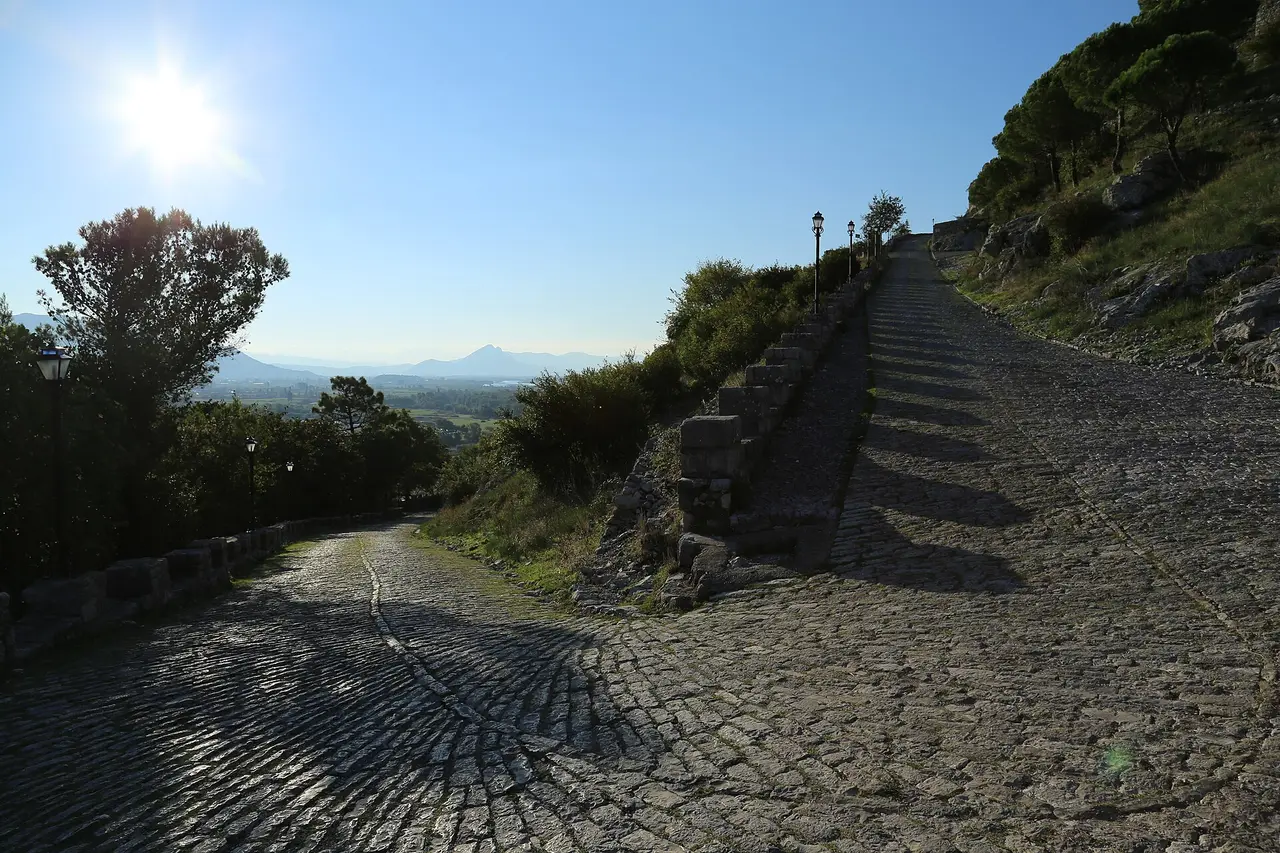
- On foot: it’s about 3 km from the centre on ordinary streets, finishing on a steep cobbled ramp with no shade.
- Parking: there’s a small car park by the entrance, and it gets crowded in peak season. A coach park and a separate car park below the walls are part of the works the directorate announced for 2026.
- Is it worth it? Yes, for the view: three rivers, the largest lake in the Balkans and the Alps from one rampart, plus a church that spent nearly three centuries as a mosque. Give it an hour and a half.
Entrance fee and opening hours in 2026
The price is the culture ministry’s. Its 2020 tariff sets 400 lek at the gate, 300 lek each for a group of more than 12, and 300 and 200 lek for the same tickets online; the e-Albania price list from September 2025 repeats the online figures, and the visitShkodër portal (visitshkoder.org), updated in March 2026, repeats the gate ones. Prices change by ministerial order, so if the board at the kiosk says something else, go by the board.
| Ticket | At the gate | Online (e-Albania) |
|---|---|---|
| Adult | 400 lek | 300 lek |
| Group of more than 12, each | 300 lek | 200 lek |
| Half-price rate | 200 lek | gate only |
| Ages 12-18 and students | 120 lek | gate only |
| Under 12 | free | not needed |
The reductions are where a foreign visitor should ask questions. The ministry’s list of reduced categories covers pupils aged 12 to 18 and students (the 120-lek rate), plus pensioners, orphans and disabled visitors. VisitShkodër’s Rozafa listing doesn’t say who the half-price rate is for; at Apollonia, run by the same ministry, it goes to pensioners and disabled visitors. Nothing the ministry publishes says whether a foreign pension card or university ID counts, so carry yours and ask at the kiosk. Some apps and listings still quote 200 lek for an adult. The ministry’s tables don’t.
Buying online means the ministry’s own e-Albania service, “Biletaria online për sitet kulturore”, which has a separate path for foreign visitors who don’t hold an Albanian e-ID. You pick Kalaja e Shkodrës and the ticket type, pay by card through Credins Bank and get an e-ticket by email, valid for a month. What the price list leaves out is the card fee: 50 lek on any payment up to 1,800 lek. So one adult ticket is 300 lek plus the 50-lek fee, 350 in all, against 400 at the kiosk. For a group of more than 12 that’s a real saving; for one person it isn’t worth the payment page. The instructions mention cards from Albanian banks and say nothing about foreign ones, so if your card is refused, the kiosk sells the same ticket for 400.
One ticket should cover everything inside the walls. The ministry’s 2020 announcement named the site “Kalaja dhe Muzeu i Rozafës”, castle and museum together, with a single set of hours, and none of its price lists since gives the museum a line of its own. Blogs still mention a second museum ticket. If someone asks you for one, ask what it’s for.
The hours are the ministry’s too, with a 2026 extension. Its 2025 timetable had the gate open 09:00-19:00 every day in season. In June, DRTK Shkodër’s director Helidon Sokoli told RTSH that the ministry had accepted the directorate’s request to keep visits going until 20:00 from May to the end of October, so groups can skip the hottest hours. From November the winter timetable takes over: closed on Mondays, 09:00-16:00 Tuesday to Saturday and 09:00-14:00 on Sundays, until the season restarts in May. The visitShkodër portal still shows a 16:00 close on summer Sundays; the ministry’s timetable doesn’t, but if Sunday is your only day, go up before four rather than count on the evening.
It’s busy without being a crush. DRTK counted 178,942 visitors in 2025, a record, and 23,678 in July 2026 alone. You’ll share the ramparts. You won’t queue as if this were a coastal fortress in August.
Folklore on the hill, archaeology in the walls
Nobody built Rozafa in one go. The hill was an Illyrian citadel long before Venice walled it, and the Ottomans took it after the siege of 1478-79. The woman walled into its foundations is folklore that grew onto the place: worth hearing, but as a story, not as a construction record.
Every Albanian child can tell you the version with three brothers. They built all day; the walls fell at night. A wise man said the foundations would hold if they walled in whichever wife brought lunch the next day, and they swore not to warn anyone. Two brothers broke the oath. The youngest kept it. His wife, Rozafa, came with the food, accepted the bargain, and asked that her right breast, eye, hand and foot stay free so she could still nurse and rock her son. There’s a sculpture of that scene at the castle museum, if it’s open when you’re there. It’s a bleak story about besa, the Albanian pledge of honour.
Marin Barleti, a Shkodran priest who published De obsidione Scodrensi in 1504, did record a founding tale - a brother and sister named Rosa and Fa. That’s in the Latin text. The full immurement ballad is a Balkan motif written down much later: Hyacinthe Hecquard, the French consul here, published a local telling in 1858, and Vuk Karadžić had already printed a Serbian epic on the same theme in 1815. Wikipedia still folds the ballad back onto Barleti. Don’t.
The ground tells a slower story. The hill has been lived on since the Early Bronze Age. The earliest fortification walls found so far date to the 4th-3rd century BC, the citadel of Illyrian Skodra under King Gentius, who surrendered to Rome here in 168 BC. Excavations resumed in 2011 still turn up Hellenistic pottery inside and below the later fortress. The circuit you photograph is still, mostly, Venetian work. A stretch of older wall survives. The arrow slits you lean on aren’t Gentius’s.
The climb from town
The castle sits about 3 km south of the centre, on the rocky hill where the Buna and the Drin meet. Getting to the foot of it is easy. The last stretch, up Rruga e Kalasë, is roughly 400 metres of steep cobbles.
By bus from the centre
Shkodra’s main city line, Fermentim-Bahçallëk, runs past the hill. In March 2026 the municipality started reorganising it, promised as a first phase a bus at every stop every 20 minutes, and put up new shelters. Catch it at Democracy Square heading for Bahçallëk and get off by the old Buna bridge (Ura e Vjetër e Bunës) or at Kisha e Zojës, on the flat below the hill. OpenStreetMap’s walking route makes it about 1.5 km from either to the gate, with roughly 100 metres of climb, so allow 20-25 minutes, a little more than visitShkodër’s 10-20. The same portal gives the fare as 40 lek, so have coins ready.
On foot or by bike
From Democracy Square it’s about 3.3 km on OpenStreetMap’s walking route, around 45 minutes to the gate, most of it on ordinary city streets. In summer, walk it early or after 16:00. A bicycle gets you to the foot easily - Shkodra is flat until it isn’t - and then you push or lock up and walk the last ramp.
Taxi, car and where to park
A taxi takes about ten minutes from the centre. More parking is planned in the EBRD-financed upgrade run by the Albanian Development Fund: DRTK’s director has described a dedicated coach park and a separate car park below the castle, along with water, toilets and a permanent stage. The tender was due in April 2026, and in August the tourism minister added a new bus station for the castle to the same project, so ask your driver whether the new car park is open yet. While the works run, expect cones or a longer walk from wherever the taxi thinks the gate is. Shoes with a grip help, too; the cobbles polish in the rain.
Coming from Tirana, the castle isn’t a separate expedition. The Tirana to Shkodra hop is about 100 km and two hours by bus. Once you’re in town, Rozafa is the first free afternoon. If you landed at the airport with bags, a pre-booked car is the expensive way to be on the hill the same day. The cheap way is still the bus, then a taxi from Democracy Square.
Three courtyards and a church that became a mosque
The plan is three wards stacked up the hill, with gates between them, the third courtyard on the top. You enter from the south-east, through a pointed arch in a thick limestone wall. The tower behind it still reads as a serious piece of artillery architecture, even with floodlights bolted to the parapet.
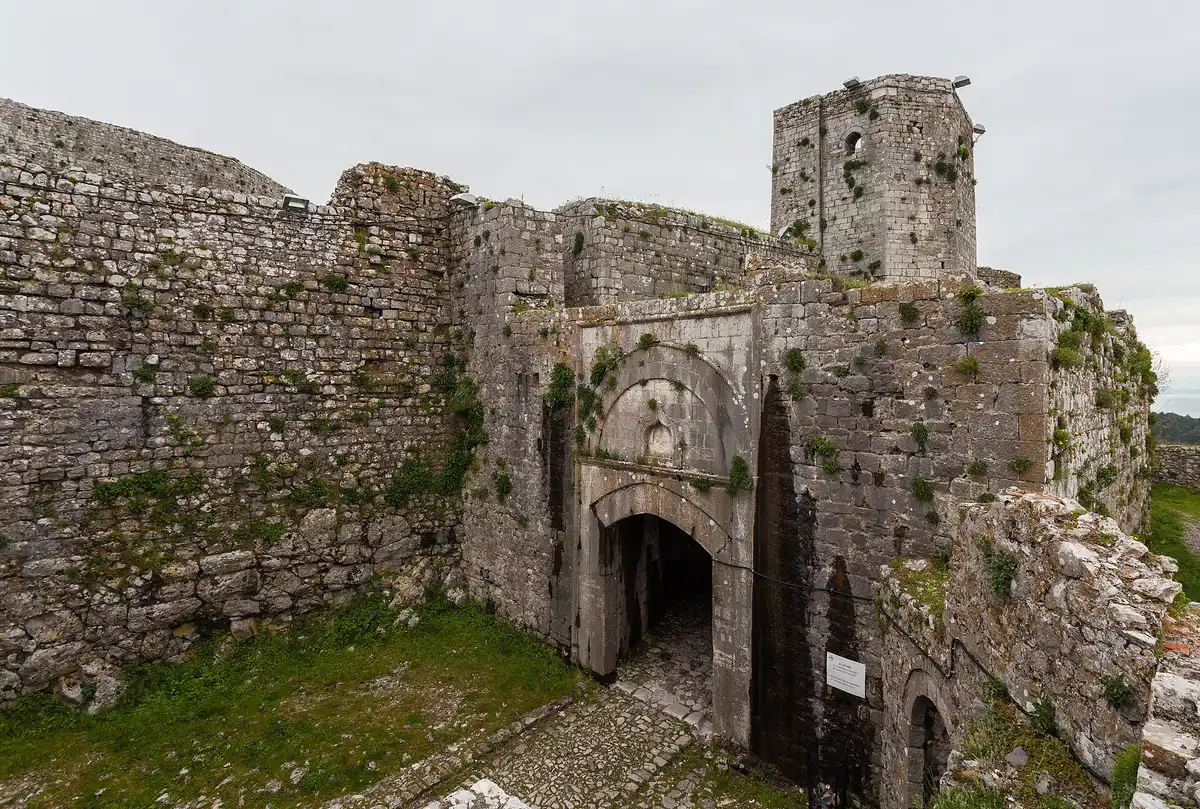
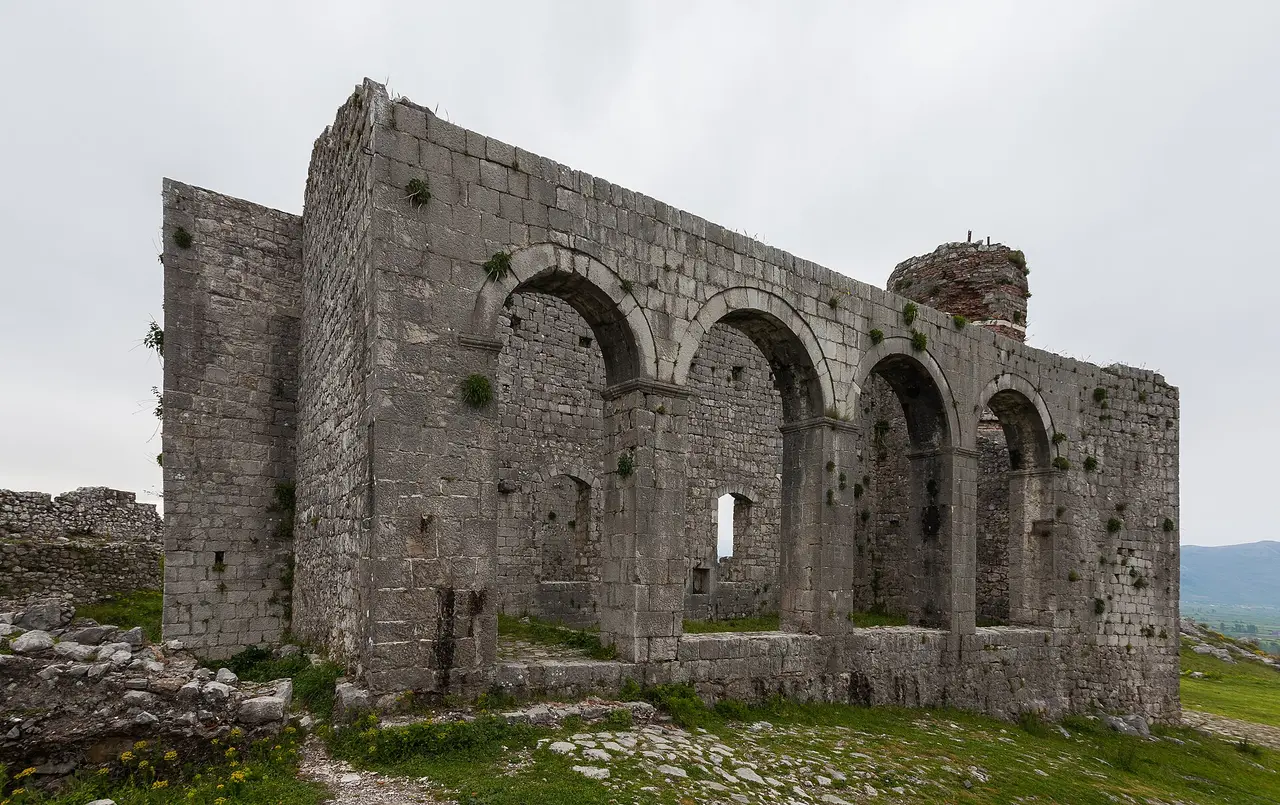
Inside, the first courtyard is the working one: ticket, a bit of shade, the start of the climb through the next gate. The second holds the ruin everyone photographs without quite knowing the name. Scholars identify it as St Stephen’s, a 13th-century Catholic cathedral that was enlarged under Venetian rule, which began in 1396. The Ottomans took the city in 1479; the building stayed a church until 1685, when it was converted into the Fatih Sultan Mehmet Mosque. The arches of the nave are still standing. The cylindrical stump to one side is the minaret base, mixed stone and brick. The roof is gone. The mosque lasted until around 1967, when it was partly destroyed under Hoxha. You’re looking at two religions in one roofless box, which is a more honest Shkodra souvenir than another shot of the lake.
The siege that changed who owned the city is the one Barleti wrote as an eyewitness. It ran from May 1478 to April 1479. Ottoman troops arrived in mid-May; Mehmed II took personal command in the summer of 1478, and when his assaults failed he went back to Constantinople, leaving a force under Gedik Ahmed Pasha to starve the city out. Venice signed the city away in the peace of 25 January 1479, and in April the surviving defenders left, most of them for Venice, and the Ottomans took the hill.
The third courtyard is the high one. A Venetian building up there holds the small Castle Museum: coins, the Illyrian and medieval layers, the Rozafa sculpture by Skender Kraja. It’s down for restoration in the 2026 works, because damp has got into the medieval walls, so whether the door is open is a gate question. If it’s shut, you haven’t wasted the climb - the point of the third courtyard is the rampart. There’s a café in season. Bring water anyway. There’s almost no shade on the walls.
The view you came for
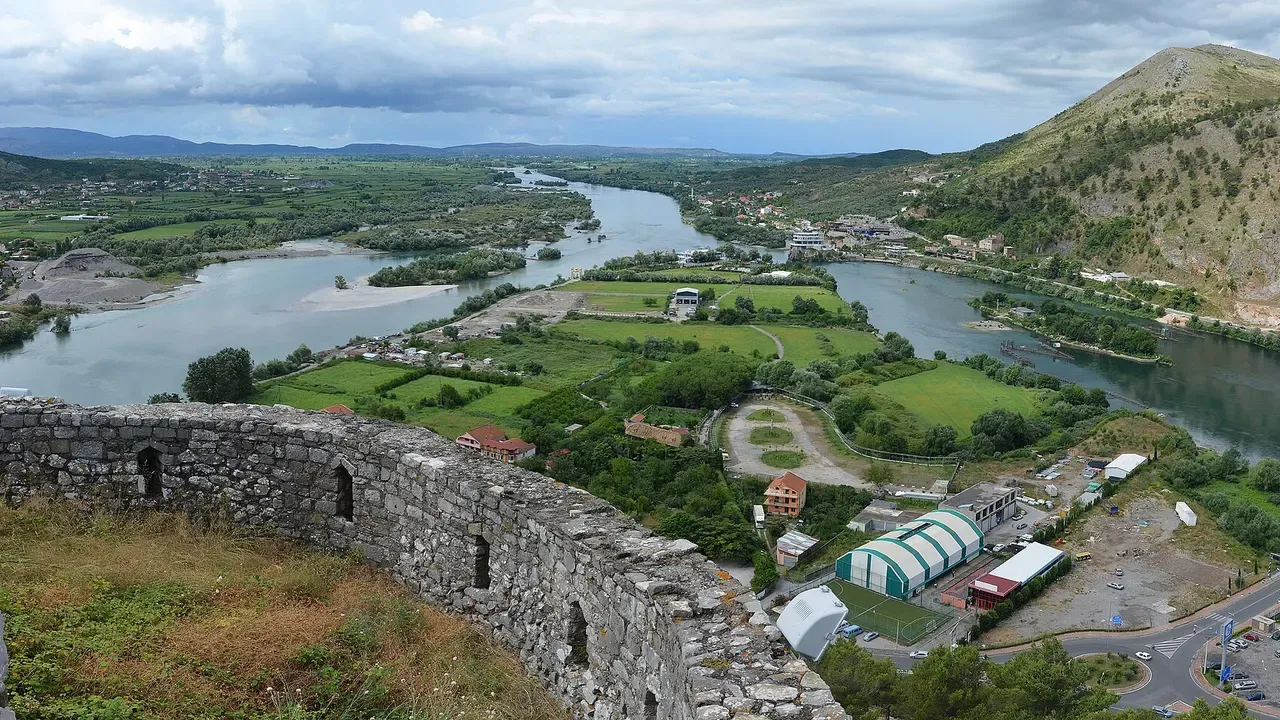
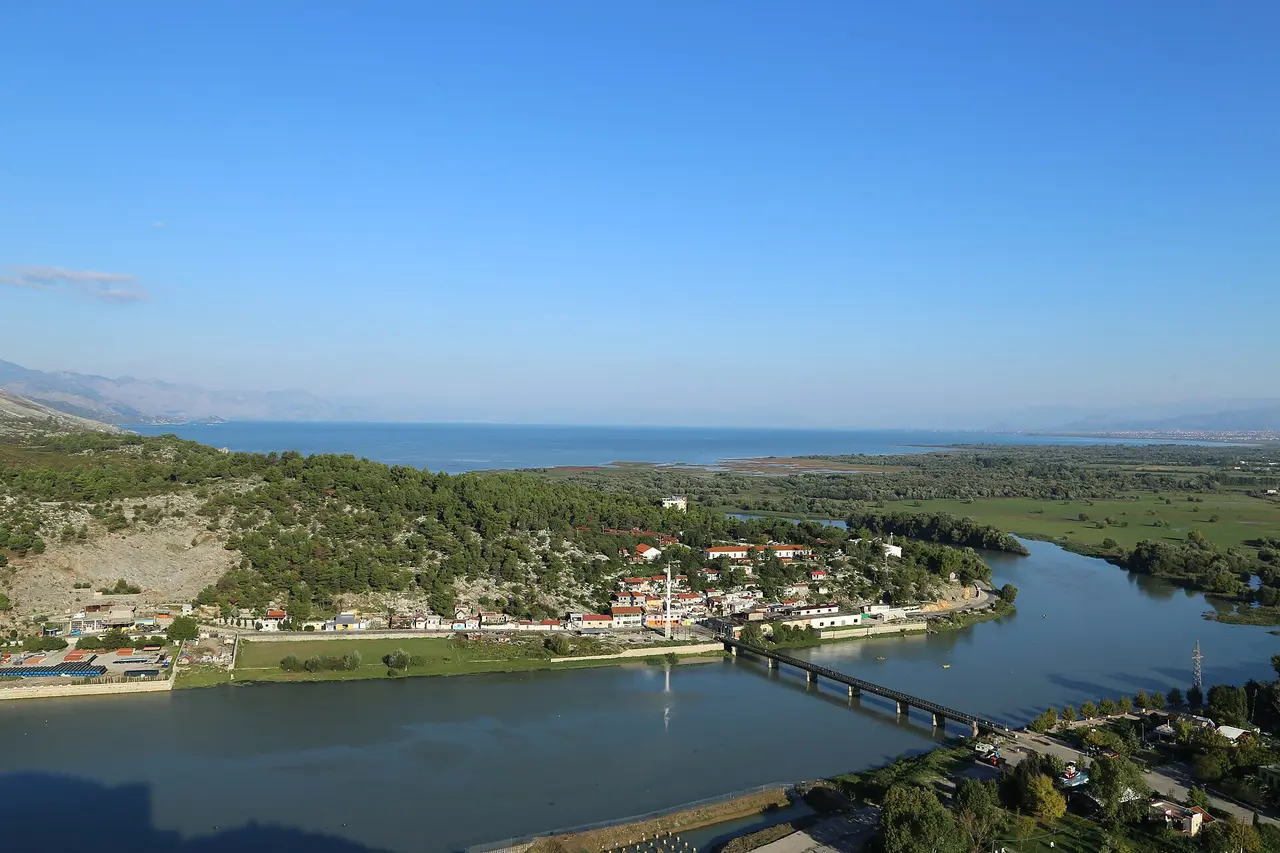
Stand on the western rampart and the geography that made this hill worth two thousand years of trouble is obvious. The Buna and the Drin meet at the foot of the rock. The Kir joins the same knot. West, the water widens into Lake Shkodra, the largest lake in the Balkans, with Montenegro already on the far shore. North, the city is a low, pale spread. Behind it, on a clear day, the Accursed Mountains go up like a wall.
That’s why people time the visit for late light, and the 2026 hours help, with a catch the timetable doesn’t mention. From August to the end of October the sun goes down before the 20:00 close, so you can watch it set from the western wall. From late May to the end of July it sets after the gate shuts, as late as 20:21 at midsummer, so you get the golden hour but not the sunset itself. And in winter the kiosk closes at 16:00, a few minutes before a December sunset at about 16:10. Midday in July is harsh, white, and a bit stupid. Morning is kinder on the cobbles.
The castle and its surroundings are an Archaeological Park. That sounds grander than the experience, which is open stone, grass in the joints, and a few signs. You aren’t in a reconstructed fortress with costumed guides. You’re on a working ruin with a ticket kiosk. Count that as a plus. The gaps in the walls are the view.
How long to allow, and what to do after
Sixty to ninety minutes on the hill covers the three courtyards, the church-mosque, a slow lap of the ramparts and, if it’s open, the museum. Two hours if you sit. Don’t try to “do Shkodra” from up here. The city is down the hill, and it’s a different job.
The Shkodra travel guide is the page for Marubi, the Kolë Idromeno stroll, the lake ride to Shiroka and the Mesi bridge. If you have one afternoon, do the town first and climb for the late light, leaving enough daylight for the cobbles on the way down. If you’ve got a morning and a bus out, do the castle and skip the rest without guilt. The view doesn’t need a second attraction to justify itself.
For one weekend in late July the hill is more than a ruin with a café. Za Fest puts two music nights inside the walls. Every edition from 2022 to 2026 fell between a Thursday and a Sunday in the second half of July, four of them Thursday to Saturday; the tenth was 23-25 July 2026. Festival tickets are separate from the daytime one; don’t assume the 20:00 close still applies when a stage is up.
Most people who come this far are heading into the Albanian Alps the next morning: the Koman ferry, or the minibus towards Theth. That’s a dawn start. Rozafa is the evening before. Climb it the afternoon you arrive from Tirana, eat in town, sleep, leave early. How to get around Albania covers the buses.
The legend will be offered as if it were the reason the walls stand. It isn’t. The walls stand because this rock pinches three rivers and a lake, and because Venice and then the Ottomans kept a gun on that pinch. Listen to the story anyway. Then walk the rampart and look at the water. That’s the part you can’t get from down in town.
Photos
On the map
The map loads on click - to keep the page lightweight.
The map didn’t load. Check your connection and refresh the page.
Admission and opening hours
- Admission price
- Adults 400 ALL at the gate (about €4.40), or 300 ALL online through e-Albania plus a 50 ALL card fee. Groups of more than 12: 300 ALL each (200 ALL online); half-price rate 200 ALL; ages 12-18 and students 120 ALL; under 12 free.
- Opening hours
- 2026 season: daily 09:00-20:00 until the end of October. Winter: closed Mondays, Tuesday-Saturday 09:00-16:00, Sunday 09:00-14:00.
Prices from the culture ministry's tariff and its e-Albania price list; the 20:00 close from DRTK Shkodër (RTSH, June 2026); winter hours from the ministry's 2025 timetable. One ticket covers castle and museum, and online saves one adult 50 lek after the card fee.
Details checked: September 24, 2026
Distance ≈100 km · about 2 h by road
- Tirana ≈100 km · about 2 h by road Bus and furgon through the day on the SH1. The castle is a short hop south of the city once you arrive. See Tirana to Shkodra for the hop itself.
Read also

What to see · 12 min read
House of Leaves Tirana: 700 Lek, Hours, What's Inside
Updated · October 2, 2026Tirana's secret-police museum: 700 lek (about €7.60), cash only, daily 09:00-19:00 in summer, shut on winter Mondays. What's in its 31 rooms.

What to see · 9 min read
Bovilla Lake Tirana: Gamti Viewpoint & Road Tips
Updated · September 1, 2026Bovilla Lake near Tirana: 20 km by road, gravel last stretch, Gamti balcony hike, drinking-water rules, and when a guided tour beats self-drive.

What to see · 11 min read
Valbona Valley: Guesthouses, Walks & Alpine Road
Updated · August 30, 2026Valbona Valley in the Albanian Alps: arrival via Fierza and Bajram Curri, guesthouses, short walks, and the paved Alpine road.

What to see · 9 min read
Shala River Day Trip: Albania's Alpine 'Thailand'
Updated · August 27, 2026Shala River day trip in 2026: turquoise water in the Albanian Alps, boat times from Koman Lake, prices, what to pack, and how it differs from the ferry.