
Byrek in Albania: Fillings, Lakror, How to Order, Cost
Byrek is Albania's everyday pastry pie. Learn the menu words, how lakror differs, how to order and what one costs on a 2026 menu. Checked 15 Nov 2026.
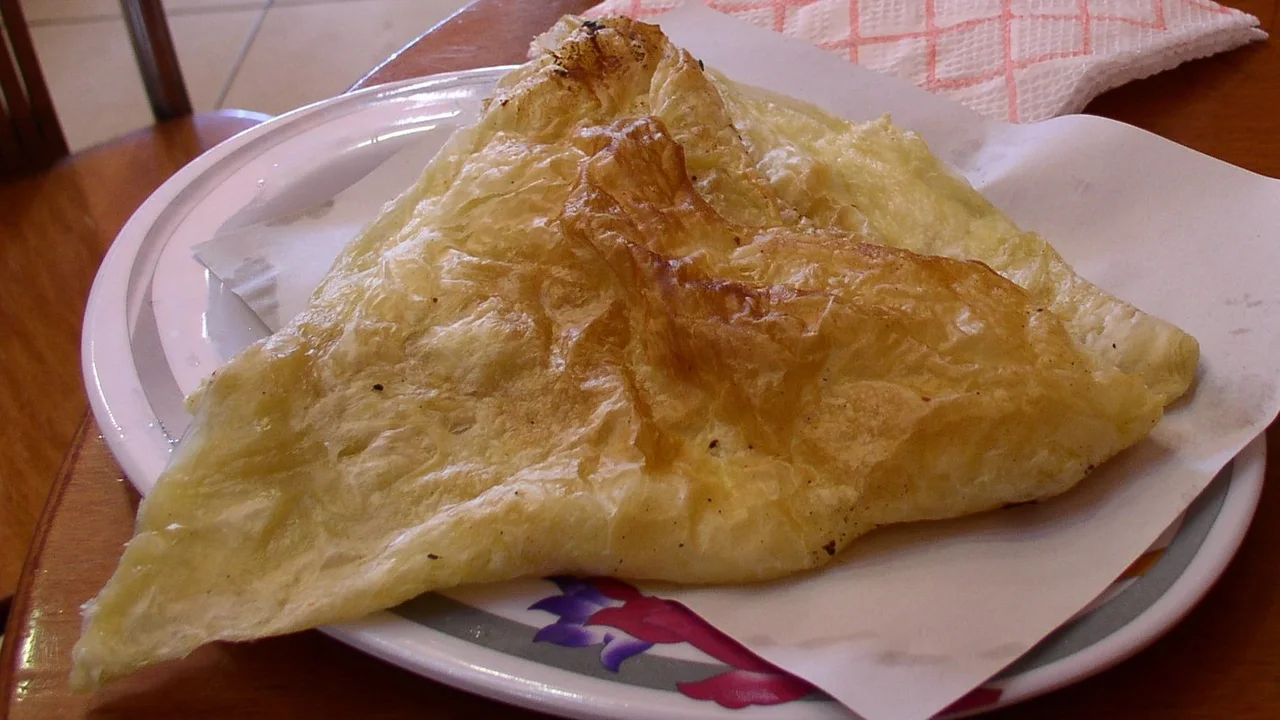
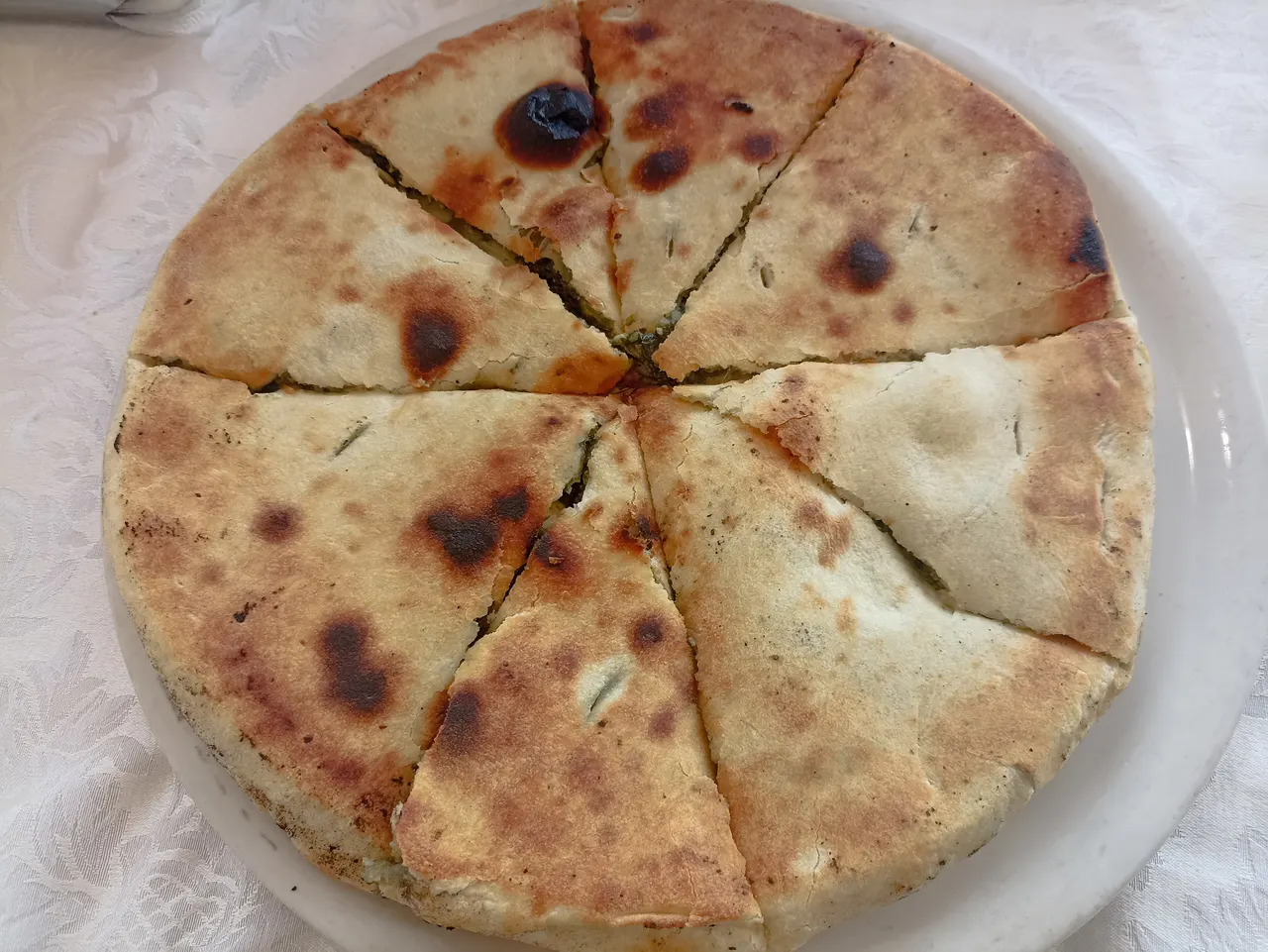
On one Shkodër kitchen’s Wolt delivery menu, read on 15 Nov 2026, a spinach or potato byrek is ALL 70 and a meat one ALL 80, both under a euro. A Tirana byrek shop’s menu the same day listed its standard byrek at ALL 100 to 120. For that you get Albania’s pastry pie: thin dough around a filling, sold hot by the slice or the triangle, ordered by pointing at the tray and naming what’s inside. What’s worth learning before you queue is the vocabulary, because the pastry travels under three names, byrek, burek and pite, and the menu words tell you the filling.
One pastry, three names
Byrek is the Albanian name for the filled-pastry family Turkish calls börek: thin flaky dough around meat, cheese, spinach or potatoes, made across West Asia and Southeast Europe. In Albania the dough is traditionally rolled out by hand into thin layers, and in Kosovo and a few other regions the same dish is called pite. If a Kosovar friend or a sign says pite, think byrek, not Greek pita bread.
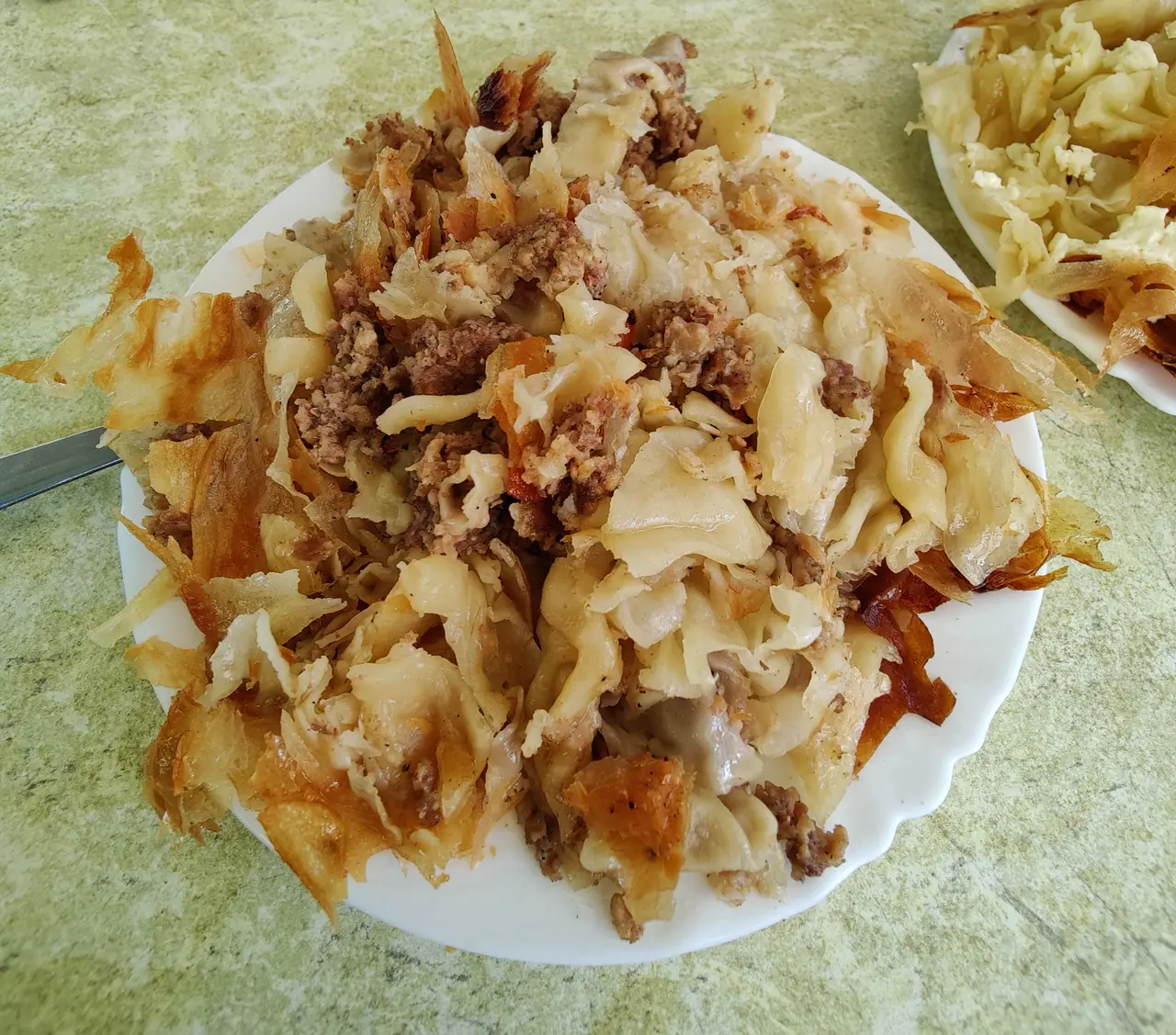
The word has a long trail. Its exact origin is unclear, but a Kipchak-Turkic and Arabic dictionary from the early 14th century already defines it as pieces of dough stuffed with meat. In the countries of the former Yugoslavia and in Hungary it’s spelled burek, so the pie you met in Sarajevo or Skopje belongs to the same family under another spelling; in Albania you order it as byrek.
Then there’s lakror, the cousin you’ll hear about in the south. Wikipedia describes it as a traditional regional pie with vegetable or meat fillings and says Korçë and its surroundings have kept a particular tradition of it. The word comes from lakër, cabbage or leafy greens, which were probably the original filling. Many lakrors are baked in a saç, a lid covered with hot embers, and Korçë holds a Lakror Feast with the municipality’s support. Albania’s national inventory of intangible cultural heritage puts it in the August-September period, usually in villages of the district such as Polenë, Voskopojë and Boboshticë, where the pies are baked in the saç in front of visitors. We found no date for 2027 on 15 Nov 2026, so ask locally if that’s your reason for going. Our Korçë guide covers the rest of the town.
The working rule: in Tirana and on the coast you’ll find byrek, and around Korçë lakror is the local pride. Don’t argue the difference at the counter; ask what’s inside.
What lakror adds
Lakror is the version people cook at home for occasions. Its fillings run from greens and vegetables such as cabbage, nettle, spinach, orache, squash, onions and leeks to beef and lamb. Other variants combine tomato and onion, or spinach with cheese, and one called brushtul lakror is made with eggs, butter and a filling of feta and cottage cheese. Among Orthodox Albanians, lakror is also made to commemorate St. Basil’s day.
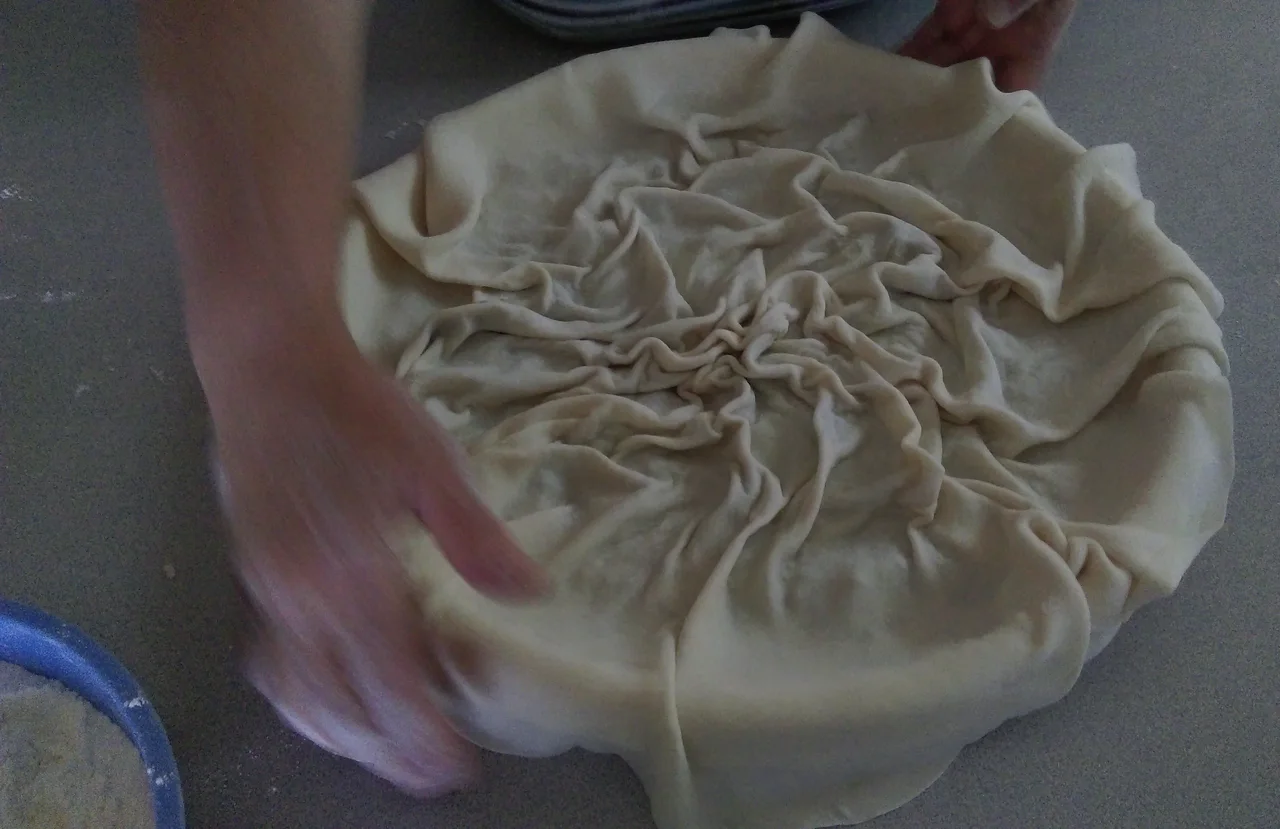
What that changes on the road: a restaurant in the Korçë area that lists lakror is offering something regional, not a rebranded byrek, so order it. The home-baked kind is tied to occasions, so a byrektore counter in Tirana is the reliable daily option, and lakror is the one you plan around a stop in the south-east. If you’re on the Tirana to Korçë run, our Tirana to Korçë transport guide has the options for getting there.
Reading the menu
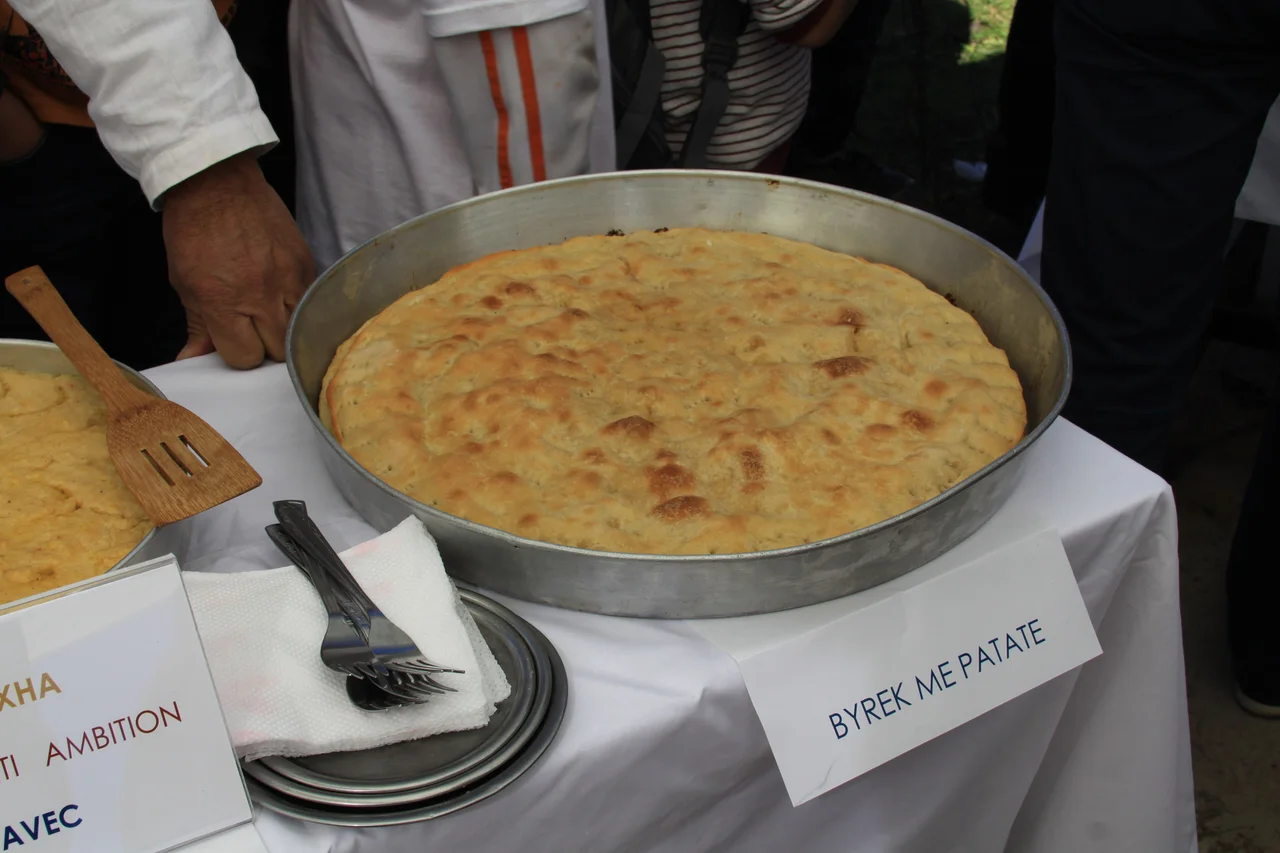
Fillings come after me, “with”. Here’s the byrek section of the Hojza kitchen’s menu on Wolt in Shkodër, which shows the vocabulary in the wild next to the prices. Each price is for one item on that venue’s delivery menu, read on 15 Nov 2026.
| On the menu | What it is | Price (ALL) |
|---|---|---|
| Byrek me spinaq | spinach | 70 |
| Byrek katror me gjizë | curd cheese, in a square cut | 50 |
| Byrek me kos | yoghurt | 50 |
| Byrek me qepë & domate | onion and tomato | 70 |
| Byrek me patate | potato | 70 |
| Byrek me mish | meat | 80 |
| Byrekë të vogla | small byreks | 30 |
Spinaq is spinach, mish is meat, and patate needs no help. If you don’t eat meat, spinach, onion-and-tomato, potato, curd cheese and yoghurt are the likely-safe ones, but ask what the pastry is brushed with if that matters to you; a slice from a counter has no ingredient label.
One small trap: katror means square, so it describes the cut, not a special filling. On the Hojza menu it’s the curd-cheese byrek that comes as a katror.
How to order and eat it
You don’t need Albanian. Point at the tray, say një (one) or dy (two) and name the filling: një me spinaq. Ask for it hot, because flaky pastry dries at the edges as the tray sits, so a shop with a queue is a good sign. Our Albanian food guide describes the standard breakfast of a slice with dhallë, a yoghurt drink, and advises cash for byrek shops and market stalls, so carry small notes. It’s made to be eaten walking, with a paper wrap and one hand.
A realistic first order goes like this. Pick one savoury slice for the road, say a spinach or onion-and-tomato one, and one cheese slice to compare. If the shop has the small byrekë të vogla the Shkodër menu lists, those are the bite-sized ones, handy when you want a taste of three fillings without committing to a whole slab. Eat the first while it’s hot and keep the second for the bus or the walk; it’s still good lukewarm, though the pastry softens as it cools.
Where to find it
Look for a byrektore, a small shop whose counter is all pies, and for any bakery with a glass case near a market or bus stop. In Tirana, the lanes around Pazari i Ri, the restored New Bazaar, are thick with byrek shops, as our Tirana restaurant picks point out. In Shkodër, Berat or Korçë the same rule holds: where the morning queue is, the tray is fresh.
Eating it with a guide
If you’d rather have someone steer, a cooking class is the surest way to get your hands on the dough. Both Tirana classes in our cooking class and food tour comparison put byrek on the menu, and one of them, Go As Local, teaches lakror too, which saves the trip to Korçë if that’s the pie you’re after. A food walk is looser: operators choose the stops, so check the listing for a pastry stop before you book.
What it costs
The ALL 30 to 80 range above comes from one venue in one northern city, on a delivery app, so read it as one data point, not a national tariff. In Tirana the same day, Byrektore Te Nëna’s Wolt menu listed spinach, curd-cheese and onion-and-tomato byrek at ALL 100 and meat at ALL 120 (about EUR 1.10 and EUR 1.30), and its larger home-style versions at ALL 180 to 200. Counter prices can differ from delivery menus in both cities. At these numbers even two slices and a drink stay a small spend; for a whole-day budget, our cost guide has the wider bands.
Read also

Food · 7 min read
Where to Eat in Gjirokaster: Qifqi and Bazaar Tables
Verified · November 15, 2026Where to eat in Gjirokastër: qifqi and its rival recipes, terrace tables above the old town, bazaar rooms and what to order. Checked 15 Nov 2026.

Food · 8 min read
Where to Eat in Berat: Mangalem Tables, Berat Dishes, Wine
Verified · November 15, 2026Where to eat in Berat: which tables book out, the dishes the Berat area claims, a kitchen outside town, wine and cooking classes. Checked 15 Nov 2026.

Food · 8 min read
Albanian Raki: Types, How to Drink It, Customs Limits
Verified · November 14, 2026Albanian raki is mostly grape brandy, poured as a welcome. What to expect, where to taste it and how much you can bring home. Checked 14 Nov 2026.

Food · 11 min read
Albania Cooking Classes & Food Tours: What to Book
Updated · October 31, 2026Tirana cooking classes from €40, a food walk at €80 a head, a food tour at €75 for one or €125 for two, Berat classes at €35 and €59 and a Fier farm class.