
Albanian Raki: Types, How to Drink It, Customs Limits
Albanian raki is mostly grape brandy, poured as a welcome. What to expect, where to taste it and how much you can bring home. Checked 14 Nov 2026.
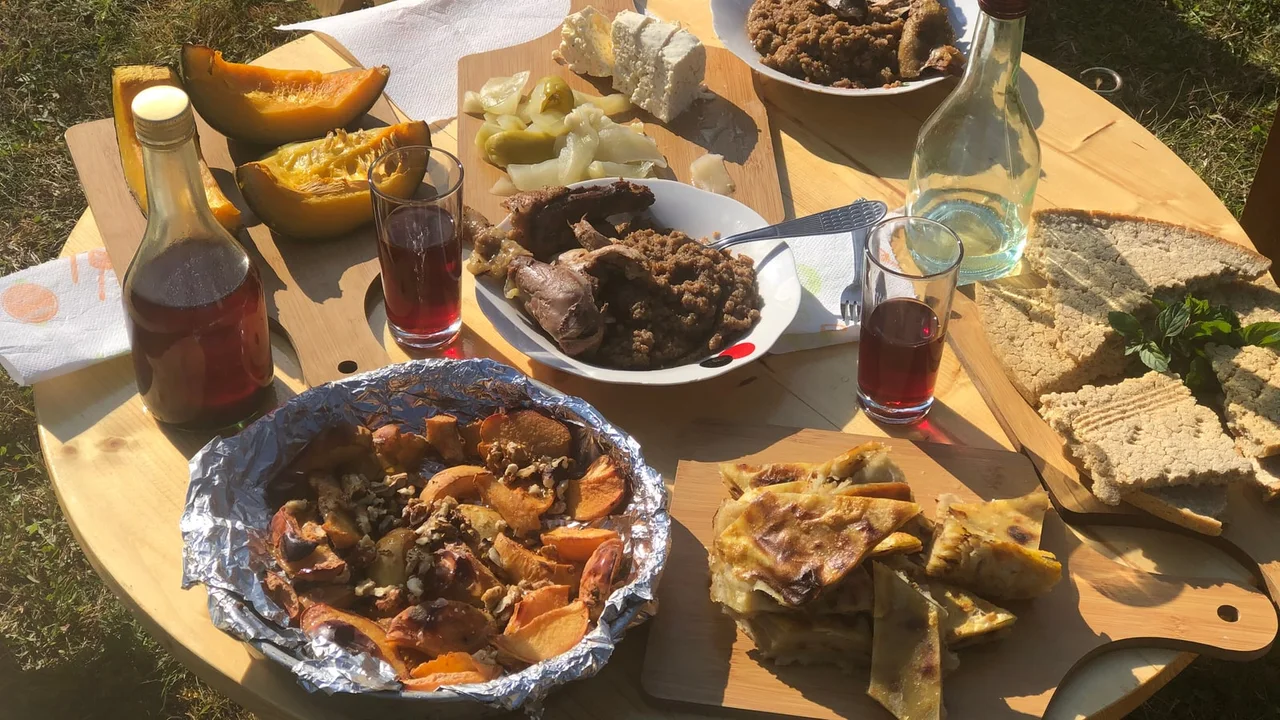
Raki is Albania’s everyday brandy: clear, strong, usually made from grapes, and very often poured before you’ve ordered anything. Say yes to the first glass, sip it with the white cheese and olives that arrive alongside, and you’ve done the whole ritual. The part to plan for comes on the flight home: the duty-free allowance for spirits runs from one litre in the EU, the US and Northern Ireland up to four in Great Britain, and going over it means declaring the bottles and paying duty.
What’s in the glass
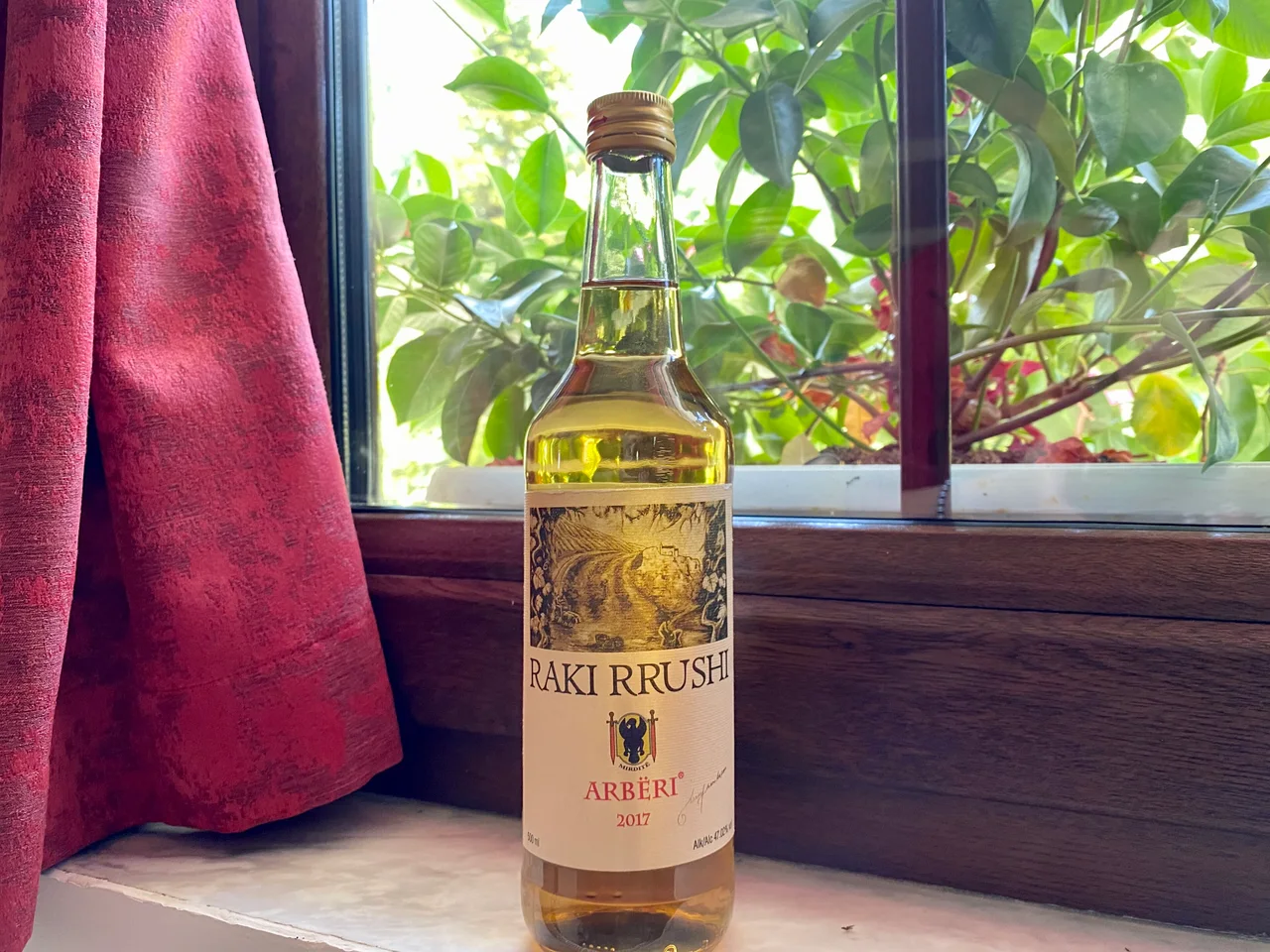
Grape is the default. The whole Balkans distils the same fruit brandy under different names, and the Albanian grape version is raki rrushi, the words you’ll see on a menu or a shop label. Rrushi means grape, so if you only learn one word, make it that one.
Grape isn’t the only fruit. Plums, mulberries and even walnuts sometimes go into raki too, with plum popular in the north and mulberry the rarer find. You can see the plum side in the south-east too: the Albanian Tourism Agency’s brochure on tourist villages sends visitors to Voskopojë for “wild plum raki” next to roast lamb and local pies, which makes the village a sensible lunch stop on our Voskopojë and Dardhë guide.
Region matters more than any label. The tourism agency also describes raki as the traditional drink of the Skrapar area, around Çorovodë and the Osum canyon, “known for its quality and tradition of preparation”, served with meals and local celebrations. That’s an official nod to a place, not a grade, but it tells you where a local will point when you ask who makes the good stuff.
Most of what you’ll drink is homemade, distilled at home with methods handed down in families, and for a visitor that means two things. The bottle may carry no label at all, and nobody can read the strength off it. Assume every unlabelled pour is stronger than it tastes.
How the glass arrives
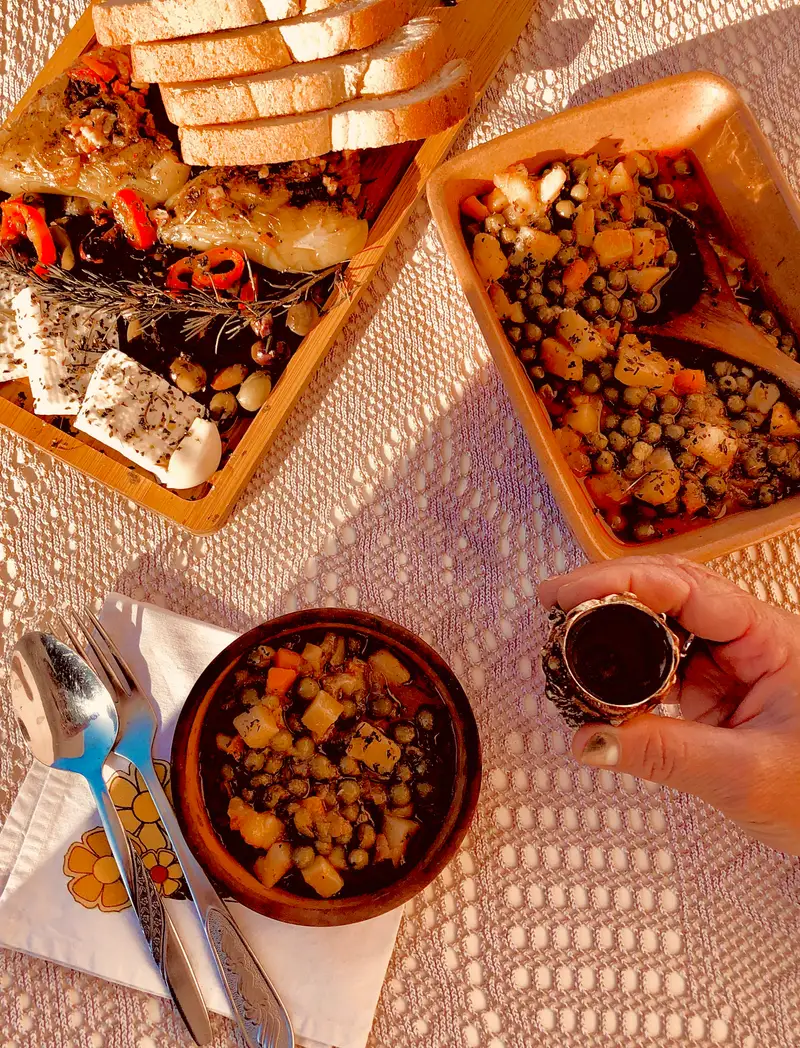
Raki comes as a welcome. In a village guesthouse it appears when you sit down, often with a small plate of white cheese, olives and bread; in a Tirana restaurant it can land with the menu or at the end of the meal as a digestif. Our Albanian food guide describes the same spread. You don’t order it so much as get handed it.
A few habits make the next hour easier:
- Sip, don’t shoot. It’s a small glass meant to last through a conversation. A second one says you’re settled, not that you’ve accepted a dare.
- Eat while you drink. The cheese and olives aren’t decoration; they’re why a glass at lunchtime is survivable.
- Declining is fine. A hand over the glass and a smile works, and being the driver is the best reason there is.
- Leave the car for later. Albania’s drink-drive limit is close to zero, so one glass can put you over (our driving safety guide has the detail), and village roads are narrow and winding.
Toasts are short. Gëzuar is the word you’ll hear; say it, clink, drink.
Tasting it on purpose
You don’t have to wait for a host to pour. There are four easy routes, from most to least structured.
A class or tour with a pour included. One Tirana cooking class promises homemade wine and raki poured right through the meal, which is the gentlest way to find your taste with someone explaining it. Which class, at what price and on what cancellation terms is laid out in our comparison of cooking classes and food tours. For general tastings and food tours in the capital, the box above shows what operators currently list; check each listing’s inclusions to see whether spirits are poured.
A winery visit. Wine country and raki country overlap: our Albanian wine guide notes that the Shesh grapes go into raki as well as wine and vinegar, and covers where to go and how to plan the day. Ask at the cellar whether they distil too, and what was made this season; the answer tells you more than a label would.
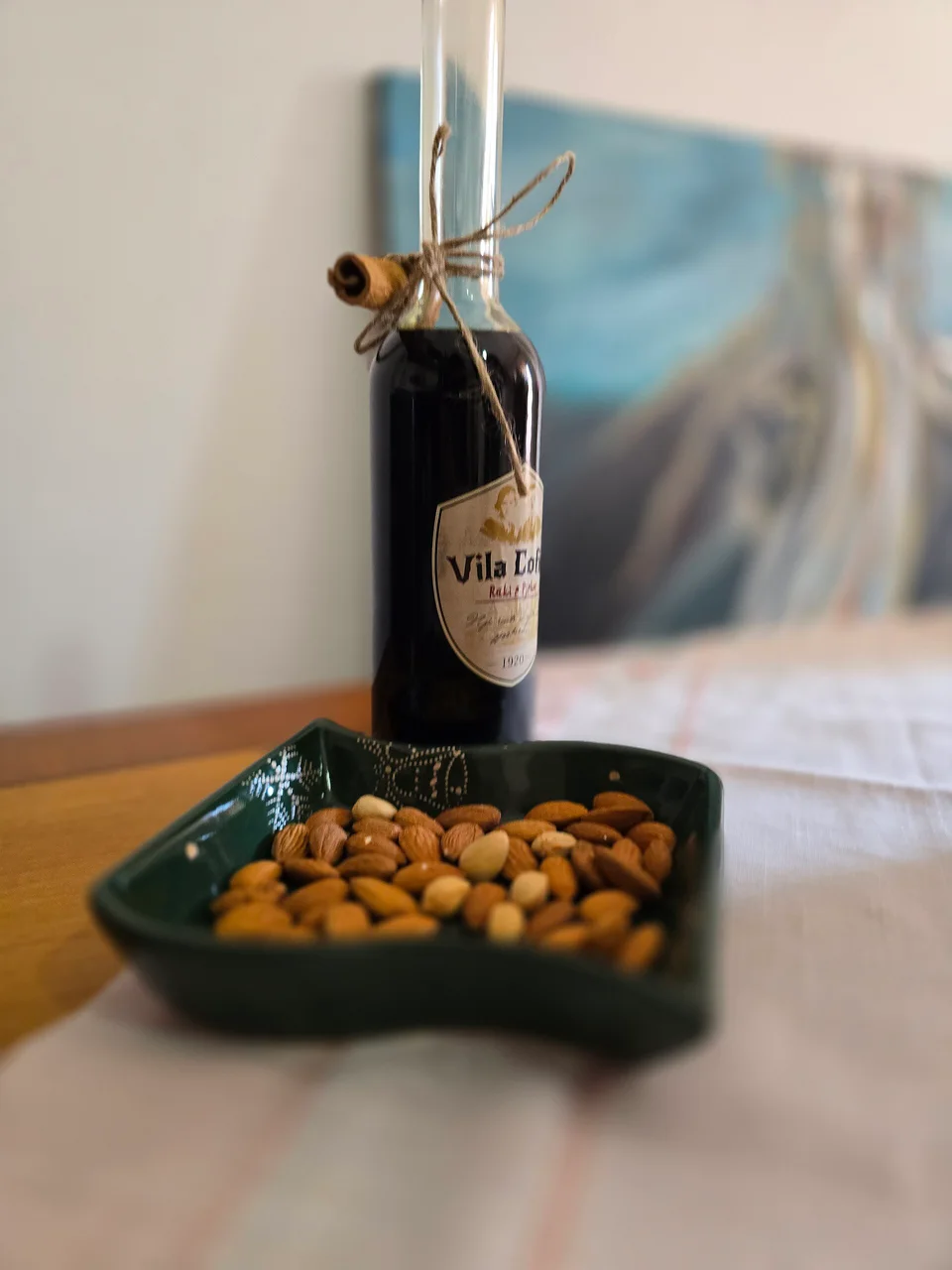
A raki bar in Tirana. The capital has bars built around the drink, where you can try a few side by side with no host and no booking. Our Tirana nightlife guide explains where to look, and our Tirana restaurant picks include Komiteti, the café-bar behind the Pyramid known for its long raki list.
A town known for it. Përmet pairs raki with its famous gliko preserve, and our Përmet guide covers the town. Skrapar is the other name to look for: Çorovodë is its town, and our Osumi Canyon guide covers the bus from Berat and the canyon on its doorstep.
One rule for all of them: try before you buy. If a producer is pouring from the barrel, ask for a taste first; the gap between a smooth one and a harsh one shows on the first sip.
Bringing a bottle home
This is where trips go wrong, because the limit depends on where you land and is often smaller than people expect. Raki counts as a spirit, and every allowance below counts litres of liquid, not bottles.
| Where you’re landing | Duty-free spirits allowance | Source |
|---|---|---|
| Great Britain (England, Scotland, Wales) | 4 litres of spirits over 22% ABV | GOV.UK |
| Northern Ireland, arriving from outside the EU | 1 litre of spirits over 22% ABV | GOV.UK |
| EU country, arriving from outside the EU | 1 litre of spirits over 22% vol. | Your Europe |
| US, returning resident aged 21 or over | 1 litre of alcoholic drinks duty-free; CBP’s example is two litres of liquor, one free and one dutiable | CBP |
All four figures were read on 14 Nov 2026. They apply only from age 17 for the UK and the EU, and from age 21 for the US. Both GOV.UK pages let you split the allowance with fortified wine: 2 litres of spirits plus 4.5 litres of fortified wine in Great Britain, or half a litre of spirits plus a litre of fortified wine in Northern Ireland. Raki is typically stronger than 22%, so it sits in the spirits line. A US state can add its own alcohol rules, so check your state as well as the federal figure. If you’re flying to Canada, Australia or elsewhere, look up your own customs authority, because we haven’t checked those.
Some practical points follow from the table:
- Buy sealed and labelled if you’re flying with it. Homemade raki in a reused plastic bottle is a lovely gift and a poor thing to explain at a border. A sealed, labelled bottle from a producer or shop is easy to declare.
- It goes in the checked bag. Carry-on liquid limits sit far below a bottle’s size, so wrap it in clothes in the middle of your case.
- Count litres, not bottles. Landing in the EU, Northern Ireland or the US, two 500 ml bottles use the 1-litre allowance exactly, and a 700 ml raki plus a 700 ml gin doesn’t fit; Great Britain allows 4 litres of spirits.
- Declare what’s over. Above the allowance, duty is due: in the US on the extra litre, and on a UK arrival on all the alcohol in that category, not just the extra bottle. Undeclared goods can be seized.
If you connect through another country on the way home, check the rules of wherever you first land in the EU or UK before you pack.
A plan that fits a normal trip
Don’t build a day around raki. Let it arrive at a lunch in Voskopojë or a guesthouse dinner in Përmet, take one cooking class or cellar visit as the planned tasting, and buy a single sealed bottle of a litre or less on the last day. That fits every allowance in the table, and by then you’ll know which style you actually like.
Read also

Food · 7 min read
Where to Eat in Gjirokaster: Qifqi and Bazaar Tables
Verified · November 15, 2026Where to eat in Gjirokastër: qifqi and its rival recipes, terrace tables above the old town, bazaar rooms and what to order. Checked 15 Nov 2026.

Food · 8 min read
Where to Eat in Berat: Mangalem Tables, Berat Dishes, Wine
Verified · November 15, 2026Where to eat in Berat: which tables book out, the dishes the Berat area claims, a kitchen outside town, wine and cooking classes. Checked 15 Nov 2026.

Food · 7 min read
Byrek in Albania: Fillings, Lakror, How to Order, Cost
Verified · November 15, 2026Byrek is Albania's everyday pastry pie. Learn the menu words, how lakror differs, how to order and what one costs on a 2026 menu. Checked 15 Nov 2026.

Food · 11 min read
Albania Cooking Classes & Food Tours: What to Book
Updated · October 31, 2026Tirana cooking classes from €40, a food walk at €80 a head, a food tour at €75 for one or €125 for two, Berat classes at €35 and €59 and a Fier farm class.