Balkan Road Trip Itinerary: Albania to Croatia Loop
A Balkan road trip from Albania: a 10-day self-drive loop through Ohrid, Kotor, Dubrovnik and Split, with borders, the Green Card and drive times.
This is the big one: a single self-drive loop out of Albania that strings together four countries, three currencies and four land borders, and still gets the car back to where you rented it. You start in Tirana, swing east to Lake Ohrid in North Macedonia, cut back north through Albania to Shkodra, cross into Montenegro for Budva and the Bay of Kotor, then follow the Adriatic into Croatia for Dubrovnik and Split before turning for home. Ten days is the tight version; twelve to fourteen lets you breathe. The whole loop is roughly 1,400 km, and the one thing that’ll end the trip before it starts is the paperwork on the car, so you’ll want the next section before you book anything.
Most people fly into one Balkan capital, do a country or two, and fly out of another. Doing it as a loop from Tirana is cheaper (one rental, no one-way drop fee) and it lets Albania carry the practical load: the cheapest fuel and food, the easiest place to sort a rental, and the two borders that trip up first-timers. The distances and border times below are 2026 estimates checked against rental agencies, crossing guides and distance tools listed at the end - don’t skip the padding, and reconfirm the car paperwork in writing.
Before you drive: four borders, three currencies, one Green Card
You’ll want to sort this at booking, not at the pickup desk. A car hired in Tirana can legally do this whole loop, but only if three things are agreed before you pay:
- Written cross-border permission for every country. Tell the agency you’re driving into North Macedonia, Montenegro and Croatia. Not every cheap airport desk allows all three, and Albania itself is often excluded from standard cross-border policies at other agencies, so don’t leave without the country list confirmed in writing.
- A Green Card that covers the lot. This is the international motor-insurance certificate (the “IMIC”) that proves the car is insured across each border. Buy it before you leave Albania - a Green Card bought later at a crossing doesn’t cover the segment you already drove, and North Macedonia and Montenegro can ask to see it.
- The cross-border fee. Budget roughly EUR 70-110 for the pack (permission plus Green Card). Some agencies charge per country, some a flat multi-country rate, and the split between the two varies - you’ll want the exact figure pinned down before you commit.
Deposits, insurance excess and the pickup checklist are covered in full in our car rental guide - worth reading before you commit to any of the four borders below. One more reason the loop finishes back in Tirana rather than anywhere else: drop the car in Croatia or Montenegro and the one-way fee wipes out whatever you saved on the rental, which is the whole logic behind driving home instead of flying out.
You’ll change money twice. Albania runs on the lek, North Macedonia on the denar, and both Montenegro and Croatia on the euro (Croatia switched in 2023). Cards work fine in Croatian and Montenegrin hotels and bigger restaurants, but you’ll want some lek and denar cash for fuel, parking and small cafes on the Albanian and Macedonian legs.
Day 1-2: Tirana and the Durres coast
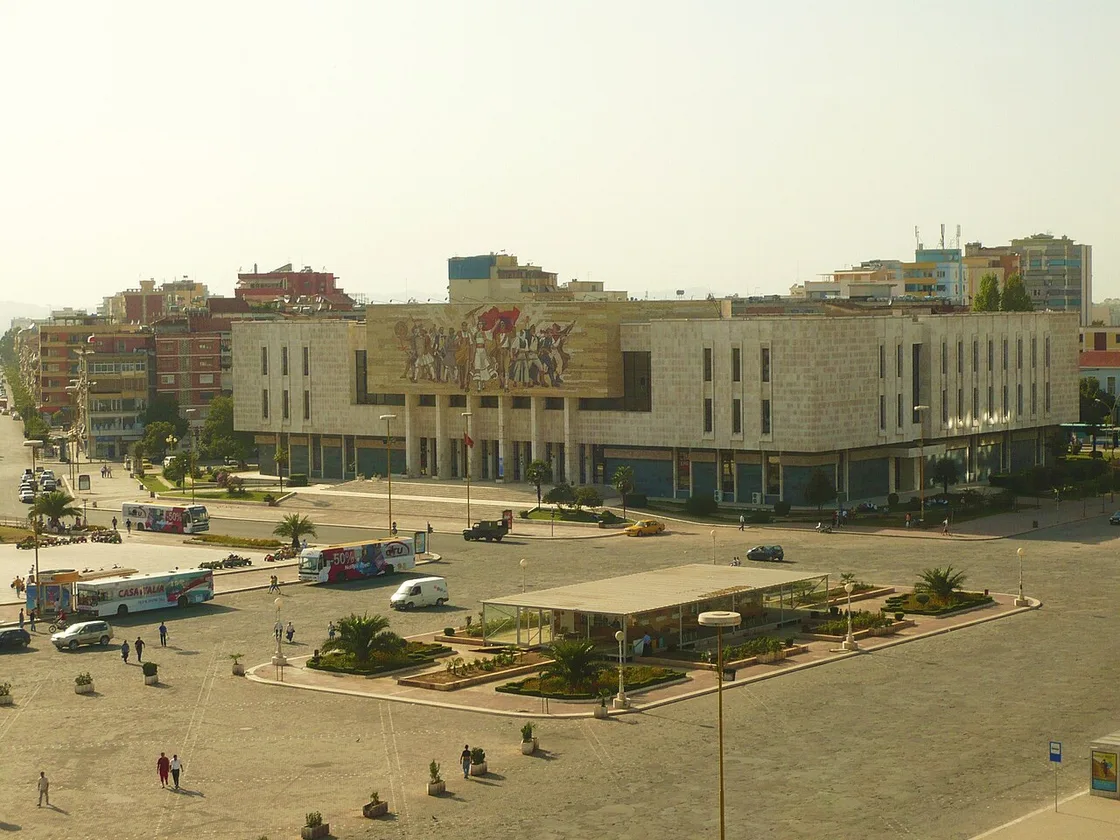
Land in Tirana and give it two days before you touch the car. Skanderbeg Square, the reborn Pyramid, the cable car up Mount Dajti and a night in the Blloku bars are plenty, and it’s cheaper to collect the airport rental on your way out than to park it in the centre for two days. If you want sand before the mountains, Durres is 40 minutes west with a long beach and a Roman amphitheatre in the middle of town.
Collect the car on the morning you leave, check the Green Card is physically in the glovebox, photograph every scratch, and point east.
Day 3: East to Ohrid, North Macedonia
The first leg is short and pretty: about 130 km, 2.5 to 3.5 hours from Tirana to Ohrid, climbing through Elbasan and over the Qafe Thane pass at around 1,270 m to the border. The crossing here is usually quick off-season and Ohrid town is only 30 to 40 minutes past it. This is your first passport check of the trip - denar country now, so grab some cash at an ATM on the far side.
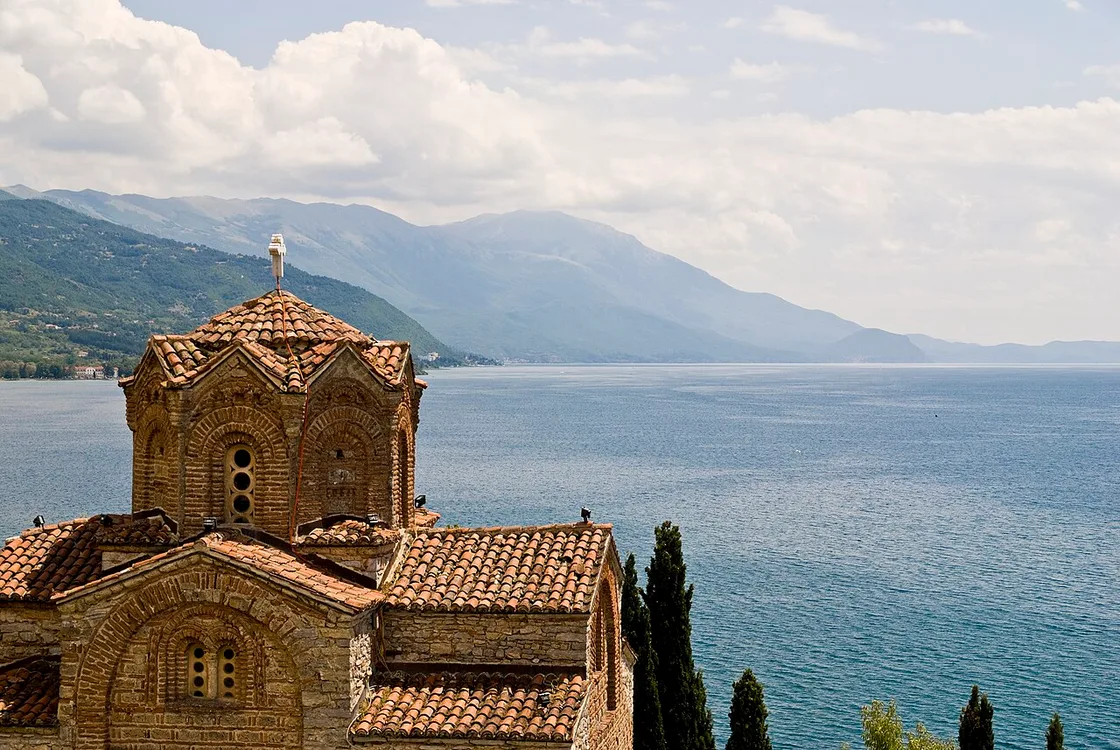
Ohrid’s earned its UNESCO listing twice over, for the town and for the lake. You’ll want to wander the old quarter up to Samuel’s Fortress, and walk the boardwalk under the cliffs to Sveti Jovan at Kaneo, the little church on the headland that ends up on every postcard. Our sister site’s guide to things to do in Ohrid has the detail if you want to give the lake a second night.
Day 4: The long haul north to Shkodra
This is the transit day nobody warns you about. Ohrid to Shkodra is around 230 km and 3.5 to 4 hours back through Albania via Elbasan, and it’s the least scenic stretch of the loop - a necessary reposition rather than a highlight. Fuel up, load a podcast, and treat it as the price of doing all four countries in one clean circle instead of an expensive one-way rental.
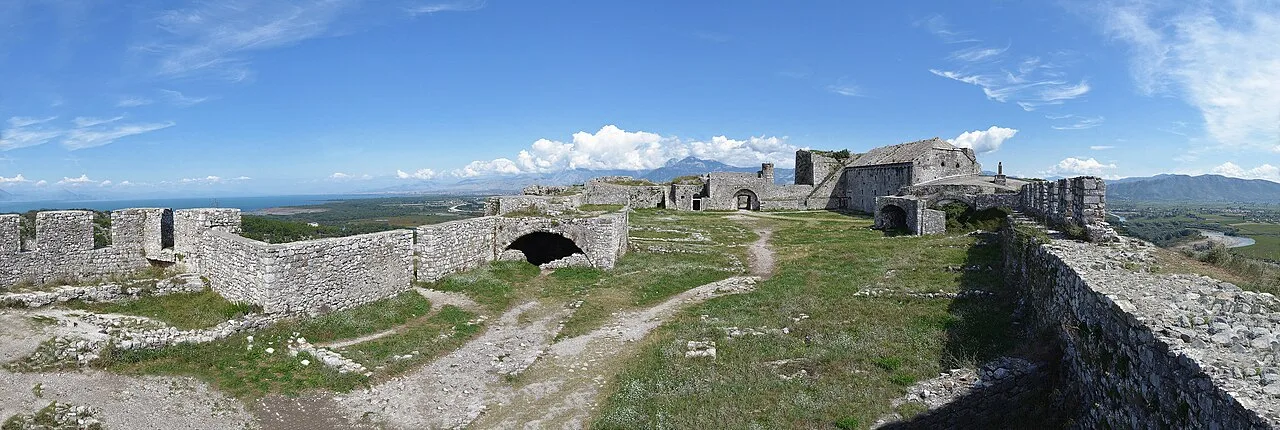
Shkodra earns the overnight after a grinding transit day, and it’s worth resisting the urge to just collapse. Even tired, the short climb up to Rozafa Castle pays off before the light goes - it’s the best orientation point on the whole loop, with the Shkodra plain, the lake and the first ridges of the Albanian Alps laid out below. Save the bike hire and the pedestrian old town for the morning if daylight’s already gone, and treat dinner as your last properly cheap night out in lek: from here it’s euros all the way to Split, across two more borders. Our Shkodra travel guide covers the sights and where to sleep, and this is also the last realistic place to double-check the Green Card before Albania hands off to Montenegro.
Day 5: Into Montenegro - Lake Skadar and Budva
From Shkodra the crossing is Hani i Hotit (Bozaj), about 35 km toward Podgorica. Queues swing with the season - minutes off-season, up to an hour or more on peak summer Friday and Sunday afternoons - so have passports and the Green Card ready on the dash. Over the line you’re on the Montenegro shore of Lake Skadar, shared with Albania and the largest lake in southern Europe; the horseshoe bend at Pavlova Strana is worth the short detour.
Then drop to the sea and the mood flips - though on this loop Budva is an afternoon call, not a destination. Budget about five hours: long enough for a walk through the walled peninsula and a swim, before pushing on to Kotor while there’s still light. The old town is dense with restaurant tables and loud after dark with the busiest bars on the coast; if that sounds like somewhere you’d rather give a full day and a night instead of an afternoon, the shorter Albania and Montenegro road trip is built around this stretch of coast rather than passing through it.
Day 6: Kotor and the pivot toward Croatia
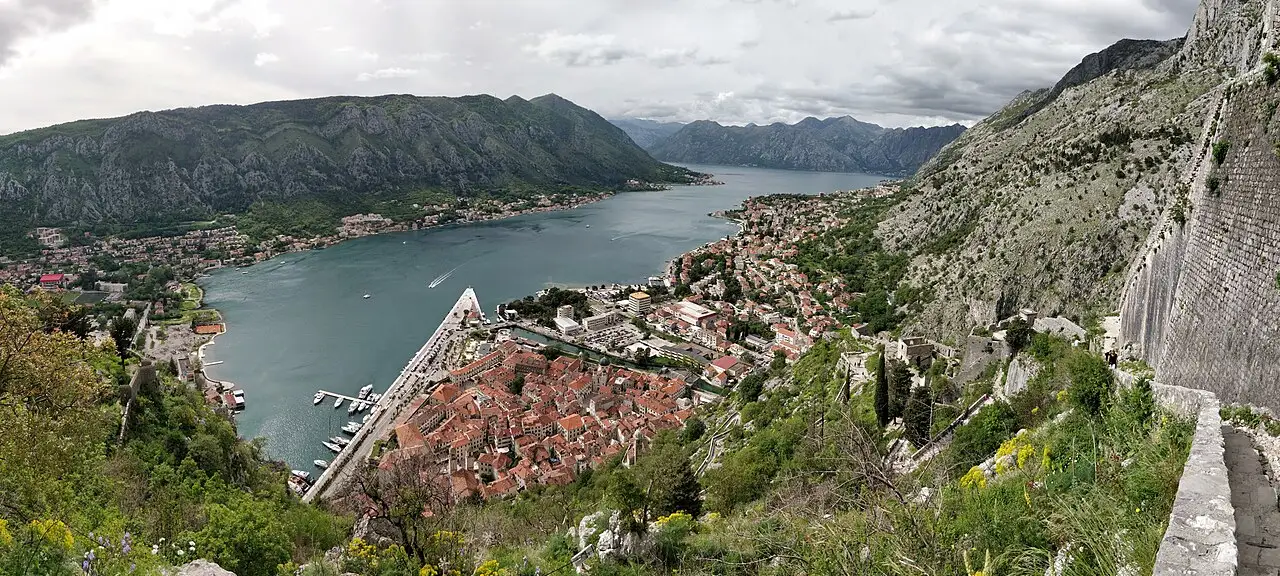
The short hop from Budva to Kotor is the prettiest 25 km of the whole loop, curling round the shoreline of the Bay of Kotor, a mountain-ringed inlet everyone calls a fjord although it technically isn’t one. This is the loop’s pivot point - one more country ahead (Croatia), but more than half the driving still to come - so Kotor earns a full day, and it’s not a place to rush through. Base yourself in the UNESCO-listed old town, squares and churches under medieval walls that climb the cliff behind the rooftops, and put the roughly 1,350 steps up to the San Giovanni fortress first on the list: go at first light, ahead of the heat and the cruise-ship crowds, for one of the best panoramas on the coast. Perast, just up the bay road, is worth the detour for the short crossing to Our Lady of the Rocks - skip it only if Budva already ate your afternoon and you’re short on daylight. Our sister Kotor guide has the walls, the bay and where to stay in more depth than a one-night stop needs.
Day 7: Across to Dubrovnik - the Schengen line
The Kotor to Dubrovnik run is about 92 km and 2.5 to 3.5 hours, and it crosses the loop’s most serious border at Debeli Brijeg (Karasovici) on the Adriatic highway. This is where you enter the EU and the Schengen area, so the check is stricter than the others. In shoulder season reckon 15 to 20 minutes; in July and August 30 to 45 is normal, and at midday it can stretch to two or three hours, so it’s worth crossing before 8am or after 7pm.
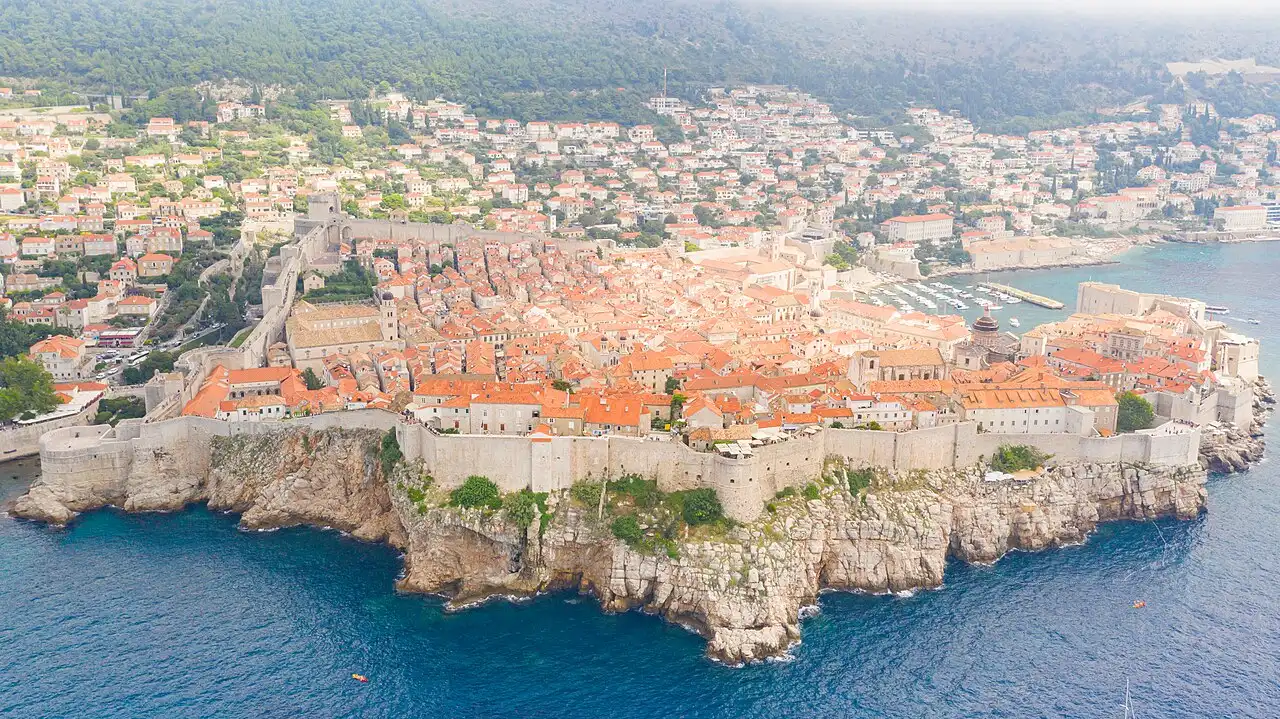
Two things changed here recently and both matter. EES, the EU’s biometric Entry/Exit System, has been running at Croatia’s land borders since April 2026, so non-EU passengers are fingerprinted and photographed on the first Croatian entry - it adds a few minutes the first time. ETIAS, the separate travel authorisation, is not yet required as of mid-2026 (its launch has slipped beyond 2026 and is now expected in 2027 at the earliest), but check the current status before you travel, because that’s the kind of date that moves. Then park outside the walls and walk the ramparts of Dubrovnik at opening time, before the day boats land.
Day 8: Dubrovnik to Split over the Peljesac Bridge
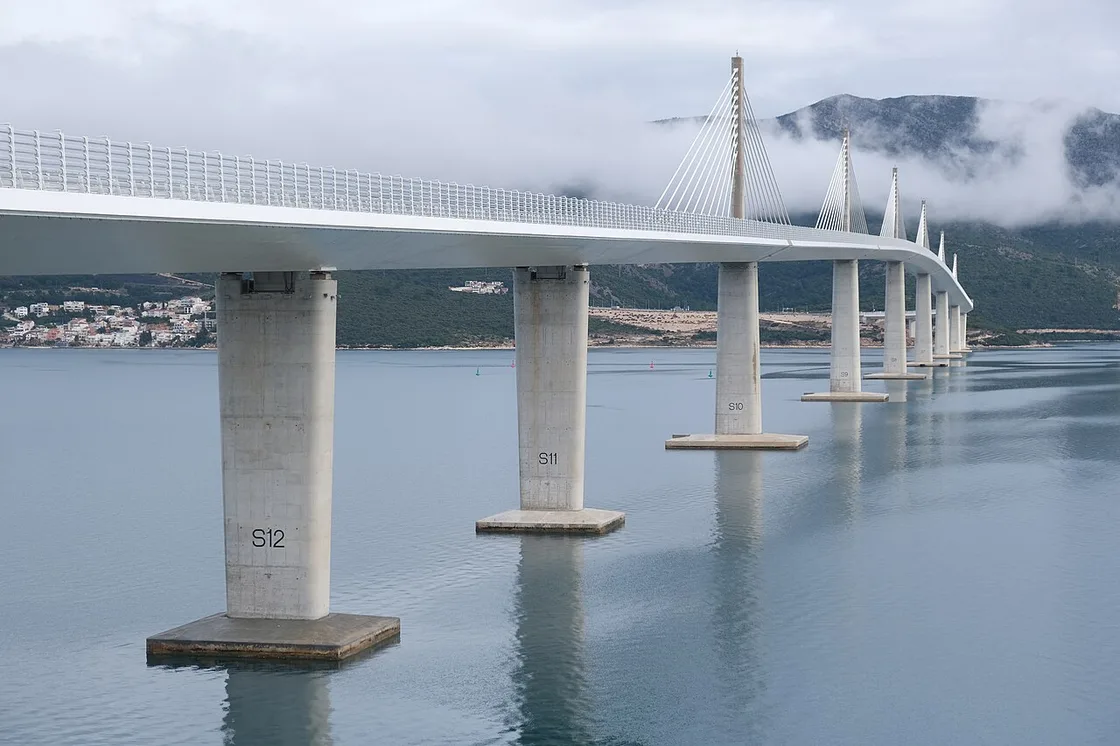
For years the drive north from Dubrovnik meant two extra border stops through the short Neum strip of Bosnia. Since the Peljesac Bridge opened in July 2022 you don’t touch Bosnia at all and stay inside Croatia the whole way - the 2.4 km span carries you across to the peninsula and shaves the old detour off the trip. It’s about 230 km and 3 to 3.5 hours to Split, so break it with a swim or a Peljesac wine stop.
Split is the turnaround. Its centre is Diocletian’s Palace, a Roman emperor’s retirement complex that never stopped being lived in - you walk off the harbour straight into a warren of lanes, bars and apartments built into 1,700-year-old walls. Give it an evening and a morning.
Days 9-10: The drive home
Split is as far as you go; now you’re unwinding the loop. Retrace the Adriatic through Dubrovnik and back across Debeli Brijeg into Montenegro, then over Hani i Hotit into Albania and down to Tirana to drop the car - roughly 570 km spread over two easy days. Budget the same border buffers on the way back, and if the last day runs long, stop for lunch on the water at Shiroka, back on Albanian ground and Albanian prices after two borders’ worth of euros. If ten days felt rushed, this is the half to slow down: add a night in Kotor or Budva and the return isn’t a transfer any more, it’s a holiday.
Distances at a glance
| Leg | Roughly | Drive time |
|---|---|---|
| Tirana - Ohrid | ~130 km | 2.5-3.5 h + border |
| Ohrid - Shkodra | ~230 km | 3.5-4 h |
| Shkodra - Budva | ~130 km | 2.5-3 h + border |
| Budva - Kotor | ~25 km | 40 min |
| Kotor - Dubrovnik | ~92 km | 2.5-3.5 h + border |
| Dubrovnik - Split | ~230 km | 3-3.5 h |
| Split - Tirana (return) | ~570 km | 2 days + borders |
All in, the loop covers roughly 1,400 km - big on paper, but spread across ten to fourteen days with real stops built in, it settles into three or four hours behind the wheel on the driving days and nothing at all on the rest.
Practical tips for the loop
- Paperwork first. No written permission and Green Card for all four countries means no loop - sort it at booking, in writing, and don’t leave it to the pickup desk.
- Beat the border queues. Cross on a weekday, mid-morning, at all four checkpoints if you can arrange it, and steer clear of Saturday mornings and the Friday-to-Sunday weekend crush in peak summer.
- Three currencies. Lek in Albania, denar in North Macedonia, euro in Montenegro and Croatia. Carry cash for fuel, parking and small cafes; cards cover hotels and bigger restaurants.
- Croatia is the EU border. Expect the strictest check and first-time EES biometrics at Debeli Brijeg; keep an eye on the current ETIAS status before you go.
- Best months. May, June, September and October bring warm seas and open mountain passes, and you’ll skip the peak-season queues that stack up at every checkpoint.
- Save the mountain roads for daylight. The Qafe Thane pass and the coastal switchbacks around the Bay of Kotor are narrow and twisty after dark, with slow trucks, the odd stray animal and drivers who know the bends better than you do.
Scaling the loop up or down
Ten days works only if Budva and Ohrid stay brief calls rather than stopovers, the way this itinerary keeps them. Twelve to fourteen turns it into more of a holiday: a night each in Ohrid and Kotor, and the long transit day to Shkodra stops feeling like a chore. Short on time even at ten days? Turn around at Kotor instead of continuing into Croatia and you’re effectively driving the shorter Albania and Montenegro road trip - six days, with Sveti Stefan added along the way.
Going bigger has a harder ceiling: Split is the practical turnaround for a one-rental loop, since the Peljesac Bridge keeps you inside Croatia and clear of Bosnian paperwork, and further still means a one-way fee or a fifth border. Prefer to stay inside Albania for the same ten days? Our Albania road trip itinerary covers the Riviera and the south just as deep. No car for the Ohrid leg? Tirana to Lake Ohrid has the bus option - and the car rental guide plus our other Albania road trips and itineraries are worth a look before you settle on a version of this loop.
Route day by day
- Days on the road
- 10
- Distance
- ≈1400 km
- Budget from
- 500 EUR
- Best season
- May, June, September, October
The route at a glance
-
Tirana (Albania)
Route startstop ≈2880 min
Fly in, give the capital and the Durres coast a couple of days, and collect the rental car - then sort the cross-border pack before you drive a metre.
Photo: Gertjan R. / Wikimedia Commons, CC BY-SA 3.0 ( source) -
Ohrid (North Macedonia)
130 km from the startstop ≈1440 min
The first border and the first UNESCO town: a lakeside old quarter under the Kaneo church, reached over the Qafe Thane pass past Elbasan.
Photo: Geoff / Wikimedia Commons, CC BY 2.0 ( source) -
Shkodra (Albania)
360 km from the startstop ≈1440 min
The overnight after the long transit day - Rozafa Castle above the lake, the last lek prices you will see until the drive home, and a final check of the paperwork before the next border.
Photo: revolution540 / Wikimedia Commons, CC BY 2.0 ( source) -
Budva (Montenegro)
490 km from the startstop ≈300 min
A brief call on this longer loop rather than an overnight - the walled peninsula and a swim fit into an afternoon before you push on to Kotor while there is still light.
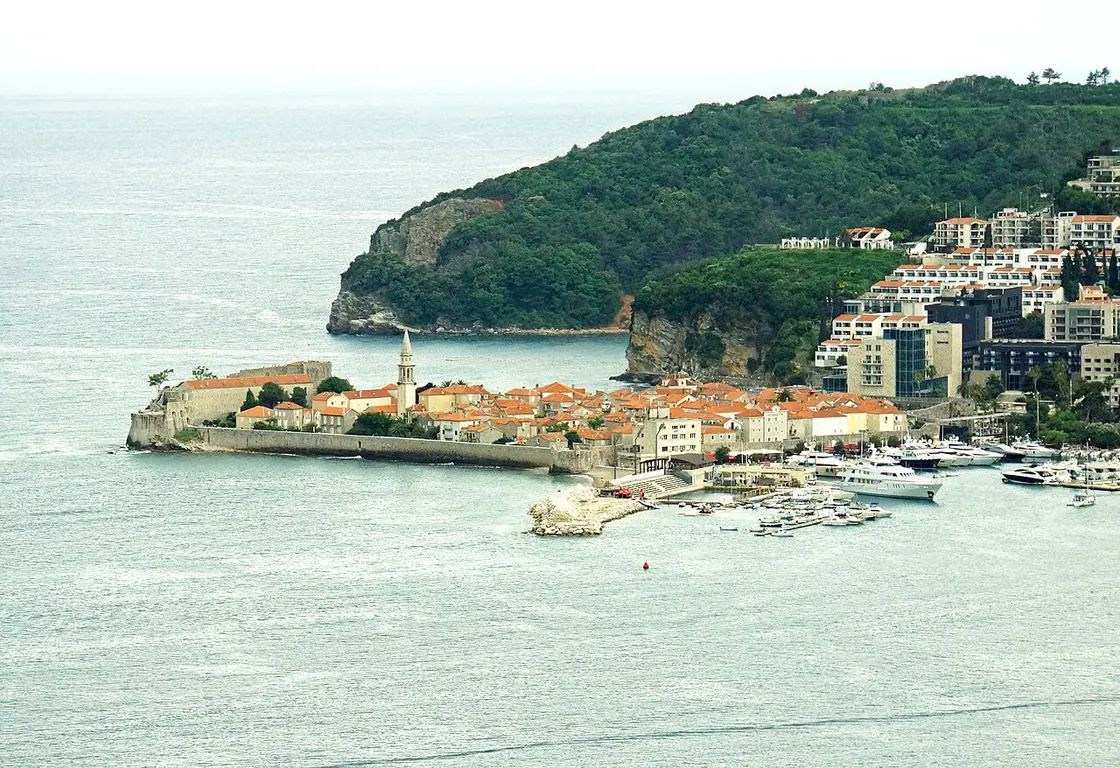
Photo: Dennis G. Jarvis / Wikimedia Commons, CC BY-SA 2.0 ( source) -
Kotor (Montenegro)
515 km from the startstop ≈1440 min
Where the loop turns from the Adriatic toward Croatia - more than half the driving is still ahead, so this stop earns a full day rather than a rushed pass-through.
Photo: Jaakko Luttinen / Wikimedia Commons, CC BY-SA 4.0 ( source) -
Dubrovnik (Croatia)
607 km from the startstop ≈1440 min
Over the Debeli Brijeg border into Croatia and the EU - the walled city on the Adriatic, and the point where the Schengen and EES checks kick in.
Photo: dronepicr / Wikimedia Commons, CC BY 2.0 ( source) -
Split (Croatia)
837 km from the startstop ≈1440 min
The turnaround, reached over the Peljesac Bridge without touching Bosnia - a living Roman palace you walk straight into off the harbour.
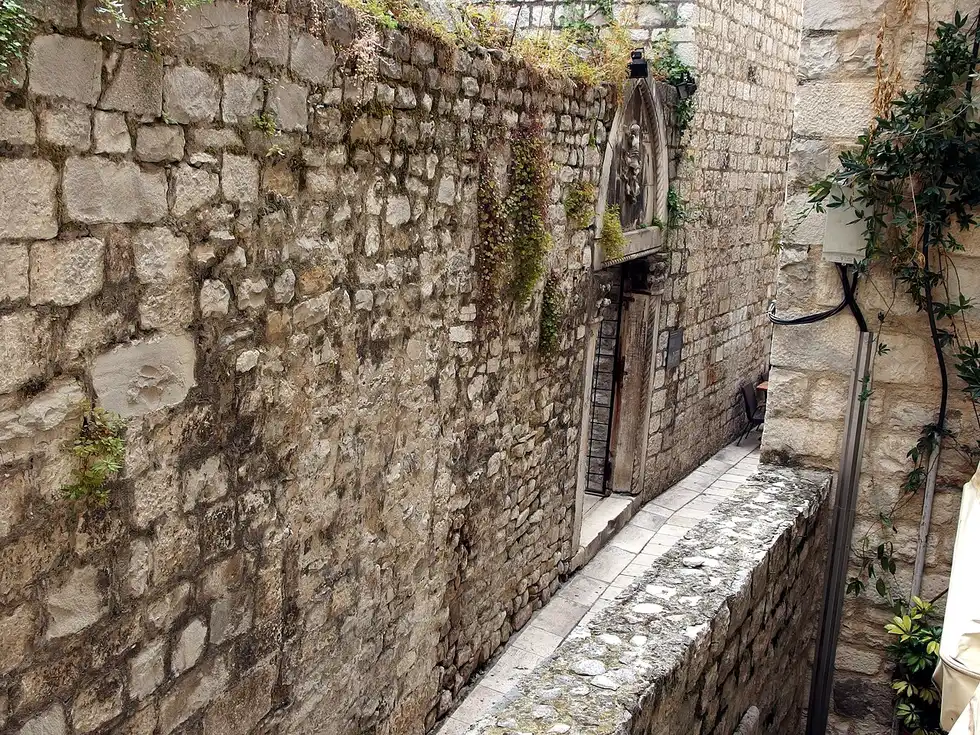
Photo: Mark Ahsmann / Wikimedia Commons, CC BY-SA 3.0 ( source)
Route map
The map with stops loads on click - to keep the page lightweight.
The map didn’t load. Check your connection and refresh the page.