Albania & Greece Road Trip: Saranda to Meteora
A 5-day drive from Saranda via Gjirokaster and Kakavia into Ioannina and Meteora - with honest Green Card and rental limits for Albania to Greece.
You can hop from Saranda to Corfu by ferry in half an hour, and that island combo is a trip of its own. This route is the other Greece: mainland, overland, through the Kakavia border into Epirus and on to the rock monasteries of Meteora. From the Albanian Riviera to Kalambaka it’s about 278 km of driving if you go Saranda - Gjirokaster - Kakavia - Ioannina - Meteora, plus whatever the frontier queue adds. Five days is enough if you don’t dawdle; six leaves room for a full day in Ioannina.
The hard part isn’t the road. It’s the car. Many Albanian rental fleets simply won’t let their plates into Greece. Sort that first - or plan to drop the Albanian car and continue by bus and a Greek hire - or the itinerary collapses at the barrier.
Who this corridor is for (and who should stay on the ferry)
Pick this drive for stone towns, a real EU border day, and Meteora without flying into Athens. It’s a linear run, not a loop: you end in Thessaly, so budget a flight, long bus, or a return drive back into Albania. If your Greece craving is Venetian alleys and a beach day, stick with the Saranda to Corfu combo and save the Green Card headache.
It’s also a poor match if you refuse to deal with paperwork. Kosovo and Montenegro are easier neighbours for Albanian rentals. Greece is the picky one.
The car question: most agencies say no to Greece
If you’re hiring in Albania, treat Greece as a special request, not a default. Our how to rent a car in Albania guide covers deposits and pickup; the border detail lives in Albania rental car insurance. The short version for this route:
- Written authorisation naming Greece - not a vague “cross-border allowed” line.
- Green Card (international motor insurance certificate) that actually lists Greece among valid countries.
- Registration papers and your rental contract in the glovebox.
Albania’s national insurance bureau is blunt: a Green Card is mandatory for vehicles leaving Albania (Kosovo is the bilateral exception), and Greece sits on the list of countries where that certificate is meant to work. Since 1 January 2025, government authorities must accept the card in paper or electronic PDF form. Whether the Greek booth at Kakavia is happy with a PDF on your phone is still something to confirm with your insurer or rental desk before you roll up - print a copy anyway.
Greek customs rules for private foreign vehicles also require valid plates, a registration document from the country of issue, and insurance. Tourists can usually bring a private car in under temporary importation for up to six months in a twelve-month period, but rental contracts sit on top of that: if the agency forbids Greece, border police won’t overrule the contract.
What we won’t do here is invent a fee. For scale, our rental insurance guide puts a Montenegro or North Macedonia crossing at roughly 40 to 110 euro; Greece sits above that band and varies far more, which is exactly why we won’t print a single number. Cross-border add-ons for Greece vary wildly by supplier, and some desks refuse the country at any price because recovery and liability get messy once you’re in the EU. If Greece matters, ask by email before you book, get the total in writing, and keep the thread. If they say no, don’t gamble on a different story at the counter.
Practical Plan B: keep the Albanian hire for Saranda and Gjirokaster only. Drop it, take a scheduled coach - they run Gjirokaster to Ioannina through Kakavia - roughly two a day, about two hours, leaving from the stadium area - then rent again on the Greek side. Slower, but it beats a refused barrier after a three-hour wait.
Day by day: a five-day shape that fits
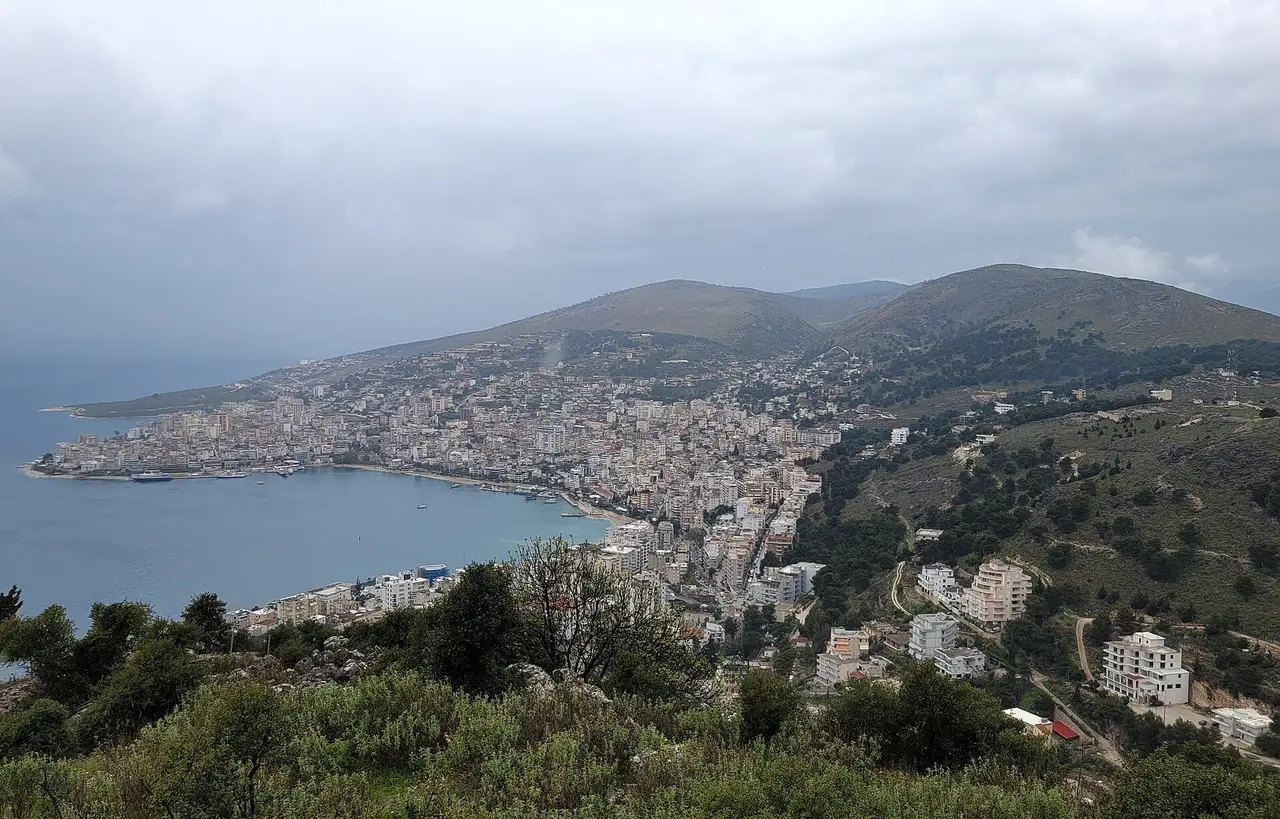
Day 1 - Saranda. Base on the Riviera. Swim, eat, and use the afternoon to confirm the car paperwork if you haven’t already. Butrint or the Blue Eye fit if you’re restless; otherwise rest. Saranda is also where lek still rules for small payments - once you’re through Kakavia you’re in euros.
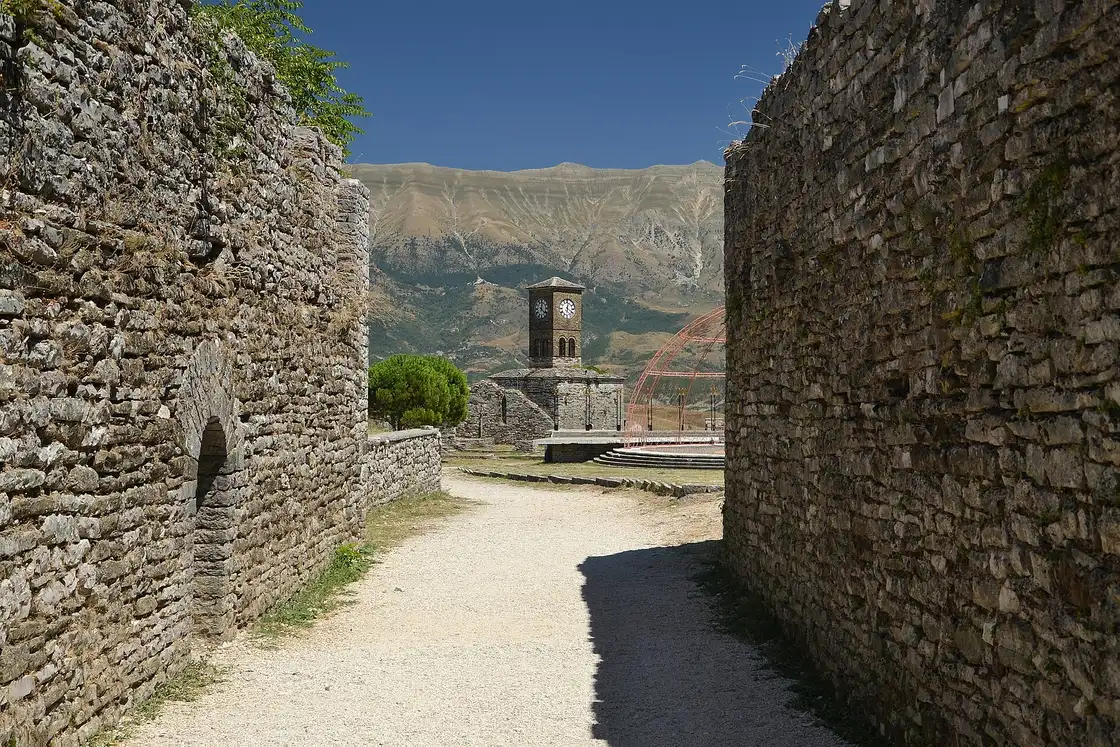
Day 2 - Saranda to Gjirokaster (about 53 km, about an hour of driving). Leave early. The inland road climbs away from the coast toward the Drino valley and the UNESCO stone city. Overnight here: castle, bazaar alleys, and slate roofs. Our Gjirokaster guide has the castle hours and neighbourhood detail - don’t try to “do” the town in a ninety-minute stop on the way to the border.
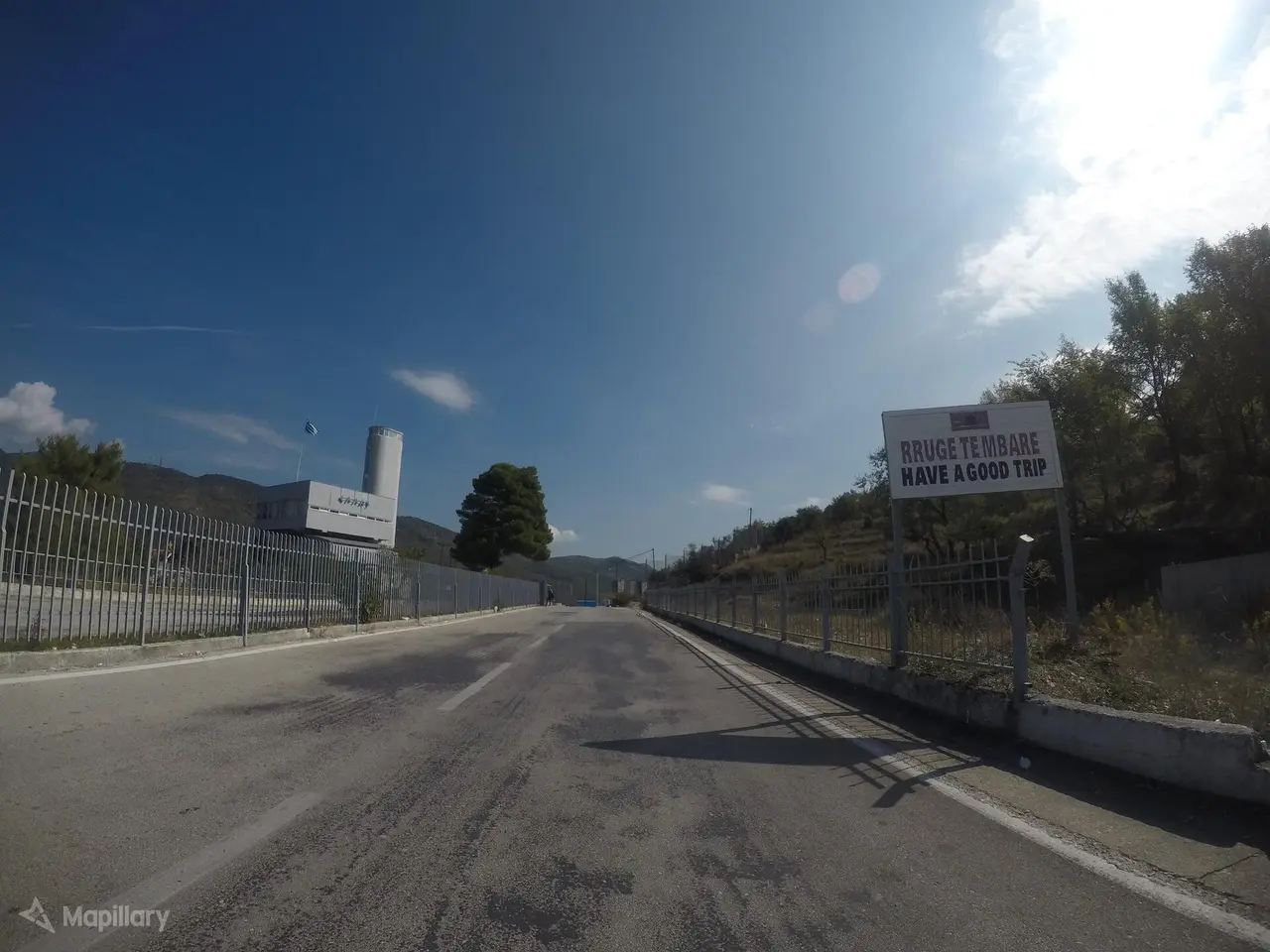
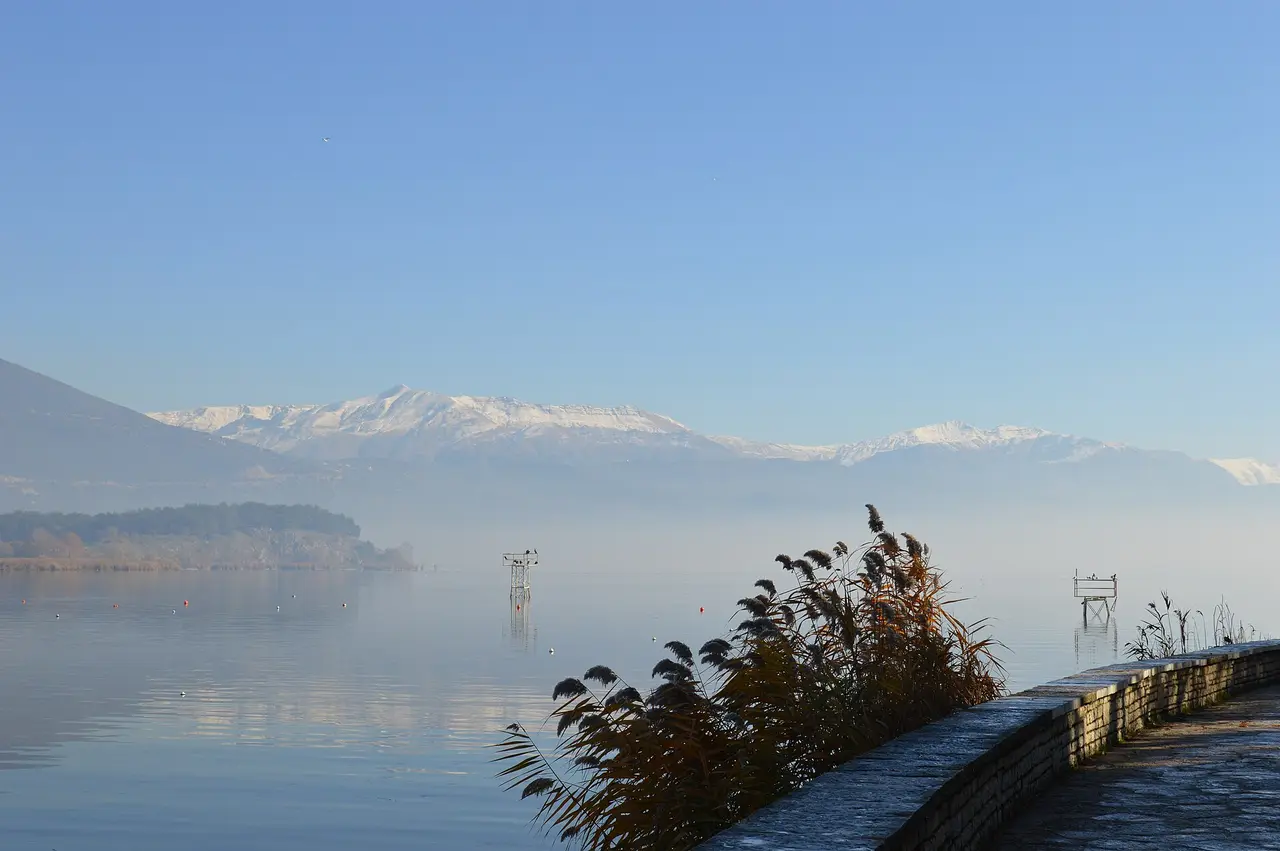
Day 3 - Gjirokaster to Ioannina via Kakavia (about 91 km driving, plus queue). From Gjirokaster to the Albanian post at Kakavijë is about 30 km. After Greek control at Ktismata you’re on the E853 toward Kalpaki and Ioannina - roughly another 61 km. Pure driving time is close to two hours; summer holiday queues can double or triple the day. Aim for a morning crossing. Sleep in Ioannina: lake promenade, the castle (Its Kale), and a boat to the island if you’ve still got legs.
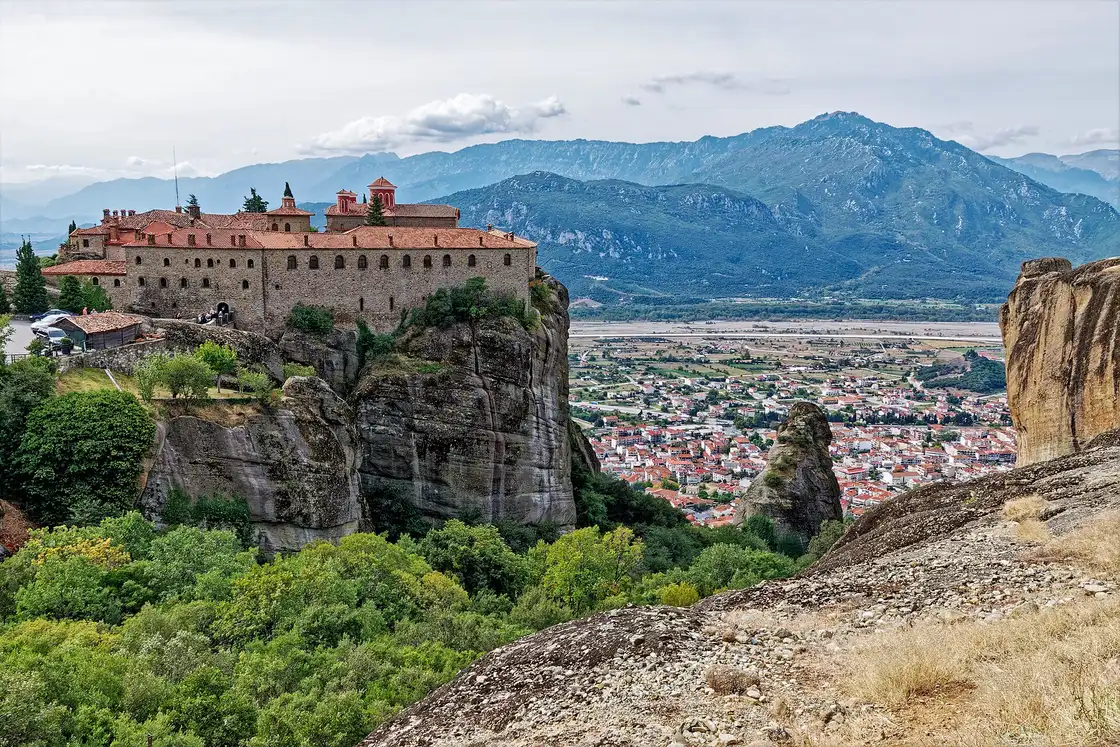
Days 4-5 - Ioannina to Meteora (about 134 km, roughly two hours) and monastery time. This is the one leg with Greek motorway tolls: the A2 Egnatia booths at Pamvotida and Malakasi plus the E65 booth at Oxynia come to about 8.80 euro for a car one way, and the Kalambaka slip road adds about a euro on top. That is the price of the new E65 section that makes the run fast at all - the old road was slower and free. Kalambaka and Kastraki sit under the pillars. Six monasteries remain active; each keeps its own hours and weekly closed day, and those change by season. Entry is commonly a few euros cash at each gate - local visitor sites quoted around €5 per monastery in 2026, but treat that as a check-on-arrival figure, not a frozen tariff. Dress codes are enforced. Two nights beat one: the light on the rocks at dusk is half the reason you came.
Border day without the folklore
Kakavia is the main southern highway crossing between Albania and Greece - Albanian Kakavijë, Greek Ktismata - and it’s an external EU / Schengen entry point on the Greek side. Traveller hubs often call it open around the clock for cars. The EU customs office register lists the Kakavia post (GR002203) as working 07:00-22:00, seven days a week, all year - that is the customs desk rather than the police passport booth, so it doesn’t settle the 24-hour question, but it is the only official record we found. Verify close to your date and don’t schedule a midnight arrival for fun. Passports are non-negotiable. Since 10 April 2026 the EU Entry/Exit System runs at every external crossing, Kakavia included: instead of a stamp you give fingerprints and a facial image on first entry, and the machine counts your days in the 90-in-180 window for you. Build in extra time for that on a summer afternoon. Three of these five nights are inside Schengen, so they come out of the same 90-in-180 allowance as any other EU trip - our Saranda to Corfu hop explains how the counter behaves at this border, and if you’re American, Albania’s one-year visa-free rule is what lets you park the Albanian half outside that clock entirely. If you’re not visa-exempt for the Schengen Area, sort it before you leave home - the border won’t invent an exception for a road trip. The other three road crossings into Greece, with the hours Albania’s customs posts keep at each, are listed on our Albanian border crossings page.
Carry:
- Passport (and visa if required)
- Driving licence, plus an International Driving Permit if you hold a non-European licence. Two things worth knowing rather than guessing: the UK Foreign Office says Albania no longer accepts the 1949 permit and you want the 1968 one, while the permit issued in the United States is the 1949 type. Greek hire desks commonly ask for an IDP regardless, and the US embassy in Athens notes it can matter after an accident. Check which convention your issuer uses before you pay for one
- Vehicle registration
- Green Card covering Greece
- Rental authorisation letter (if hired)
Fuel up on the Albanian side if your tank is low; don’t assume every kiosk takes card. Keep valuables obvious and tempers cool - slow lanes happen, and arguing with either booth rarely helps.
Where to sleep along the corridor
Saranda: seafront or hillside - book ahead in July-August. Gjirokaster: old-town guesthouses save the uphill walk after dinner. Ioannina: lakeside or near the castle for a short stroll. Meteora: Kastraki is closer to the rocks; Kalambaka has more services and the coach links out. Budget the two halves separately, because they don’t cost the same: our own comparison puts Greece well above Albania on the same standard of room and meal. Sharing a room and not chasing luxury, the Albanian nights run lower and the Greek ones higher, and a rough all-in day sits near 60 euro per person in Albania and 85 in Greece. On top of that: the hire itself, about 8.80 euro of Greek tolls on the Meteora leg, and 5 euro per monastery - six of them, so budget the ones you actually intend to climb rather than all six.
If you’re stitching Albania nights only before a Plan B bus, Saranda and Gjirokaster still book the same way; Greek nights then follow the Greek hire.
After Meteora: how you get out
This isn’t a tidy circle back to Tirana. From Kalambaka the exit is by road, not rail: the Palaiofarsalos - Kalambaka line has been out since Storm Daniel flooded Thessaly in September 2023, and Hellenic Train runs a replacement coach from Palaiofarsalos instead. Restoration is aimed at late 2026, so check before you plan around a train. What does run is the KTEL coach network via Trikala and the direct Athens service, or you drive west again if your rental allows a return through Kakavia (same paperwork both ways). Flying out of Athens is the cleanest end for many visitors. Whatever you choose, don’t leave the exit plan as a vague “we’ll figure it out at the rocks” - Meteora is remote enough that a missed bus costs a night.
For a stay-in-Albania southern loop instead, the southern Albania road trip never leaves the country. For the Riviera without a border, start from Saranda’s city guide and day-trip locally.
Packing the trip in one line
Saranda softens you up, Gjirokaster gives you stone, Kakavia tests the folder of documents, Ioannina resets your nerves, and Meteora is why you bothered. Nail the car rules early - or skip the Albanian hire for Greece entirely - and the rest is just kilometres and good light.
Route day by day
- Days on the road
- 5
- Distance
- ≈278 km
- Budget from
- 60 EUR
- Best season
- May, June, September, October
The route at a glance
-
Saranda (Albania)
Route startstop ≈1440 min
Riviera start - swim, stock lek, and settle the Greece paperwork before you leave the coast.
Photo: Mojnsen / Wikimedia Commons, CC BY 4.0 ( source) -
Gjirokaster (Albania)
53 km from the startstop ≈1440 min
UNESCO stone city and castle - the last overnight in Albania before Kakavia.
Photo: Pudelek / Wikimedia Commons, CC BY-SA 4.0 ( source) -
Kakavia border (AL/GR)
84 km from the startstop ≈90 min
Main southern crossing into Greece - Green Card, rental letter and passports ready.
Photo: kobykarin / Mapillary / Wikimedia Commons, CC BY-SA 4.0 ( source) -
Ioannina (Greece)
144 km from the startstop ≈1440 min
Lakeside Epirus capital - castle, island boat and a soft landing after the frontier.
Photo: EAMorton / Wikimedia Commons, CC BY-SA 4.0 ( source) -
Meteora (Greece)
278 km from the startstop ≈2880 min
UNESCO monasteries on rock pillars above Kalambaka and Kastraki - give them two nights.
Photo: Holger Uwe Schmitt / Wikimedia Commons, CC BY-SA 4.0 ( source)
Route map
The map with stops loads on click - to keep the page lightweight.
The map didn’t load. Check your connection and refresh the page.