Saranda Travel Guide: Beaches, Butrint & Blue Eye
Saranda travel guide: beaches and the promenade, Lëkurësi Castle, and day trips to Butrint, the Blue Eye and Ksamil - plus where to stay and eat.
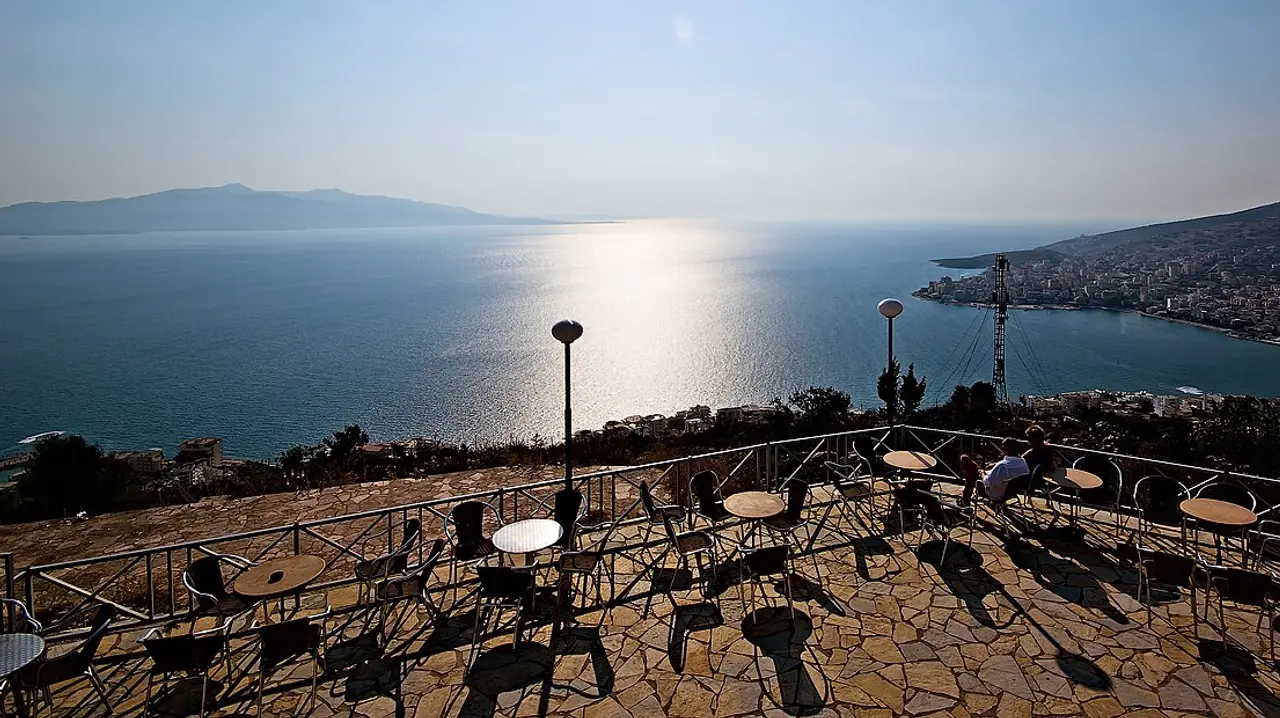
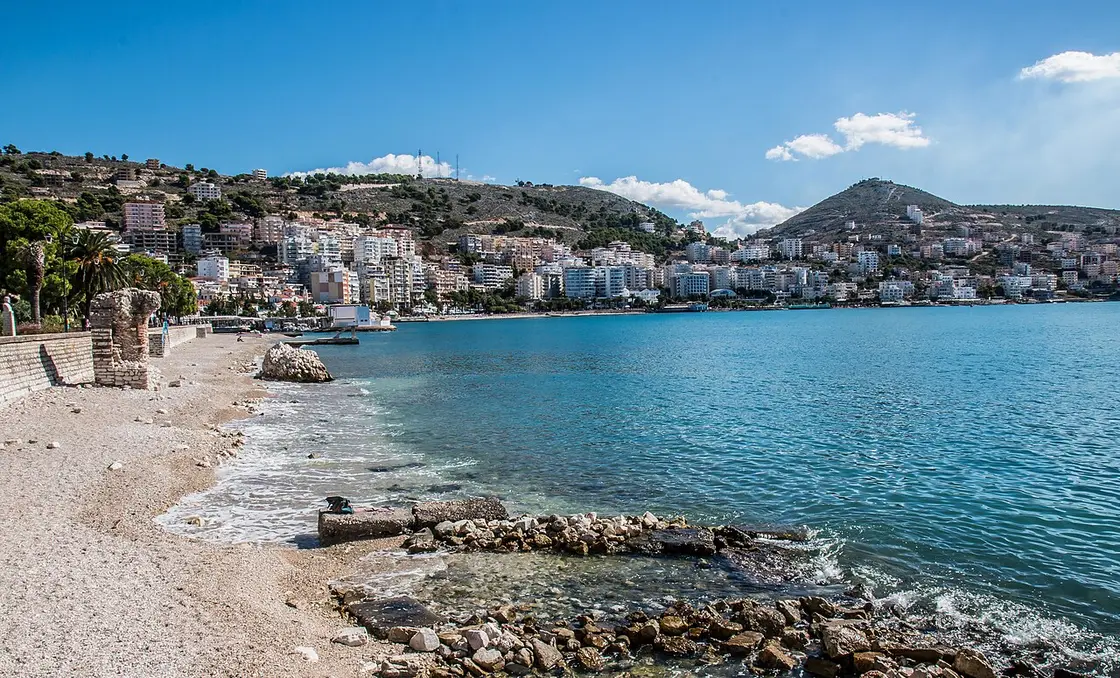
Saranda is southern Albania’s beach capital - a sun-bleached resort town wrapped around a horseshoe bay on the Ionian Sea, looking straight across the water to the Greek island of Corfu. The headline draws cluster within an easy day: swim and stroll the long seafront promenade, climb to Lëkurësi Castle for the sunset view over the bay, and use the town as a base for three of Albania’s best day trips - the UNESCO ruins of Butrint, the impossibly blue spring called the Blue Eye, and the island-studded beaches of Ksamil.
Saranda’s real value is as a base: the town is light on must-see sights, but few places put Butrint, the Blue Eye and Ksamil within such easy reach, and the fast ferry from Corfu makes it a natural first stop in the Albanian south. If you are still weighing it up, see whether Albania is worth visiting overall and whether Saranda itself earns a spot on your trip.
What to see in Saranda
The town itself is more about the rhythm of a seaside resort than big-ticket sights - the pleasure is in the swimming, the evening xhiro (the ritual stroll), and the views. A morning is plenty to take in the centre before you head out to the day trips.
The seafront promenade and town beaches
Saranda’s spine is its waterfront promenade, a wide palm-lined boulevard that runs the length of the bay. By day it’s the access strip for the town beaches - a mix of pebble and imported sand, lined with loungers, beach bars and ladders into clear water; by evening it fills with families and visitors out for the xhiro, the slow up-and-down walk that’s the social heart of every Albanian coastal town. Café tables spill across the pavement and the whole front glows at golden hour.
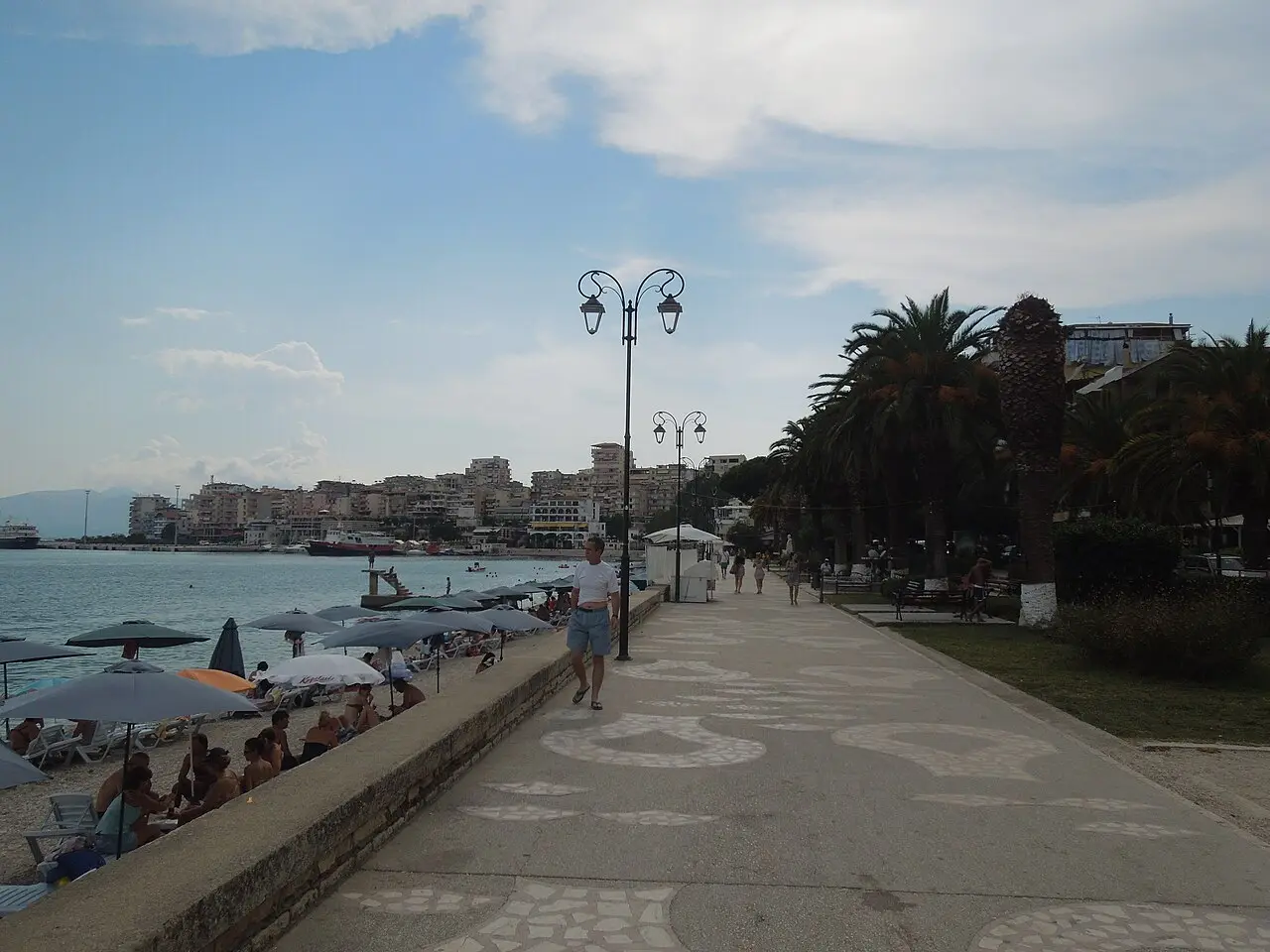
The bigger, better swimming is at the edges: the beaches thin out and the water clears as you move away from the busy centre, and the real turquoise is a short hop south at Ksamil (see day trips below). In town, the appeal is convenience - you can roll out of your hotel, swim, and be back at a café table in minutes.
Lëkurësi Castle and the sunset view
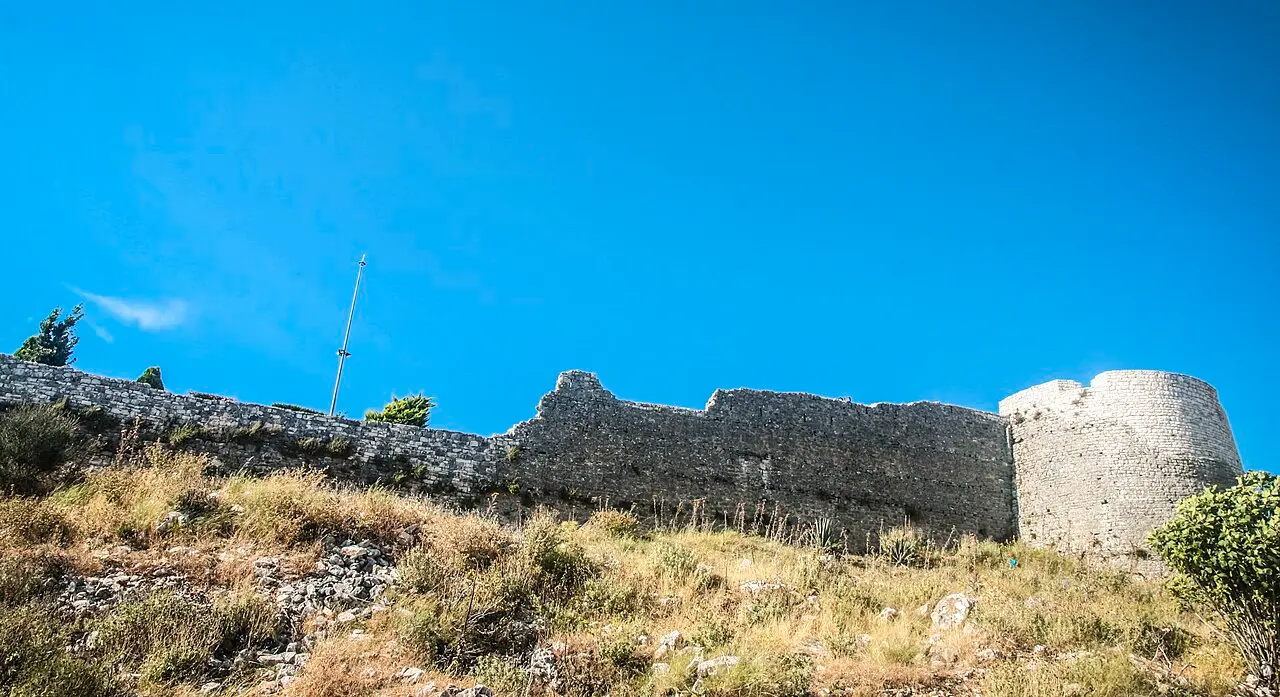
The single best thing to do in Saranda once the heat eases is climb to Lëkurësi Castle, the 16th-century Ottoman fort on the hill directly above town. The walls themselves are modest ruins, but nobody comes for the masonry - they come for the panorama: the whole bay, the Ksamil peninsula, the Butrint lagoon and Corfu spread out below, best of all at sunset. There’s a restaurant inside the castle grounds, so the standard move is to time dinner or a drink for golden hour. It’s a short taxi ride up (or a stiff uphill walk); the cover photo of this guide was taken from exactly this terrace.
Best day trips from Saranda
Saranda’s real value is as a base. Three of southern Albania’s top sights are all within about an hour, and you can string two of them together in a single day if you start early. The three below are the classics; for the full menu of six, including Gjirokaster, Corfu and the run north to Porto Palermo, with distances, bus fares and which trips pair up, see our guide to the best day trips from Saranda.
Butrint: the UNESCO ruins
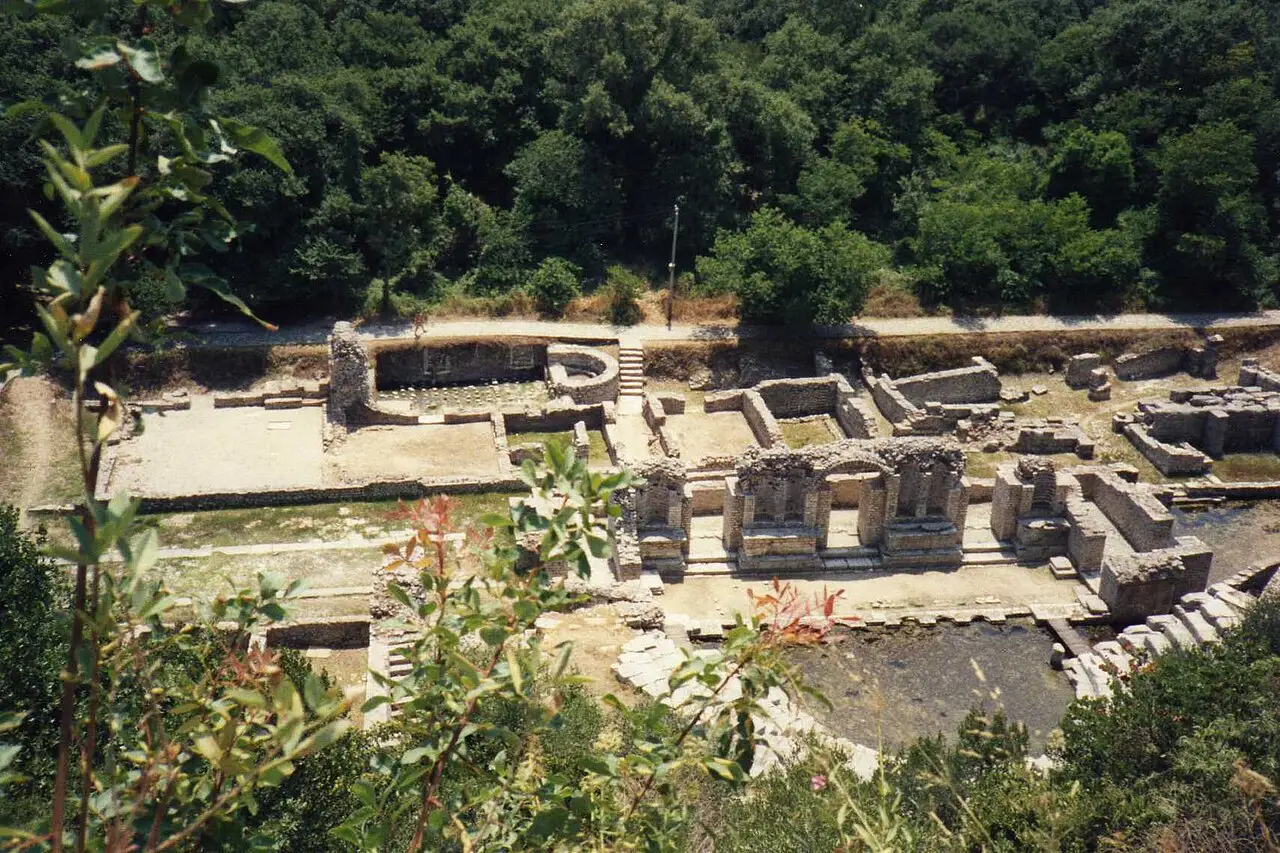
About 18 km south of Saranda, Butrint is one of the Mediterranean’s great archaeological sites and a UNESCO World Heritage Site. Set on a wooded peninsula between a lagoon and the Vivari Channel, it layers Greek, Roman, Byzantine, Venetian and Ottoman remains in one walkable park - an ancient theatre, Roman baths and mosaics, a baptistery, and a later fortress, all threaded by a shaded loop trail through the trees. Allow two to three hours, bring water and go early in summer for the cooler light. A local bus runs from Saranda’s seafront, or it’s a quick taxi. See our full guide to Butrint National Park for the monuments, tickets and how to combine it with Ksamil.
Entry fees and opening hours change with the season - check the current rate and times before you go, as they’re set by the national park rather than fixed (confirm on arrival).
The Blue Eye (Syri i Kaltër)
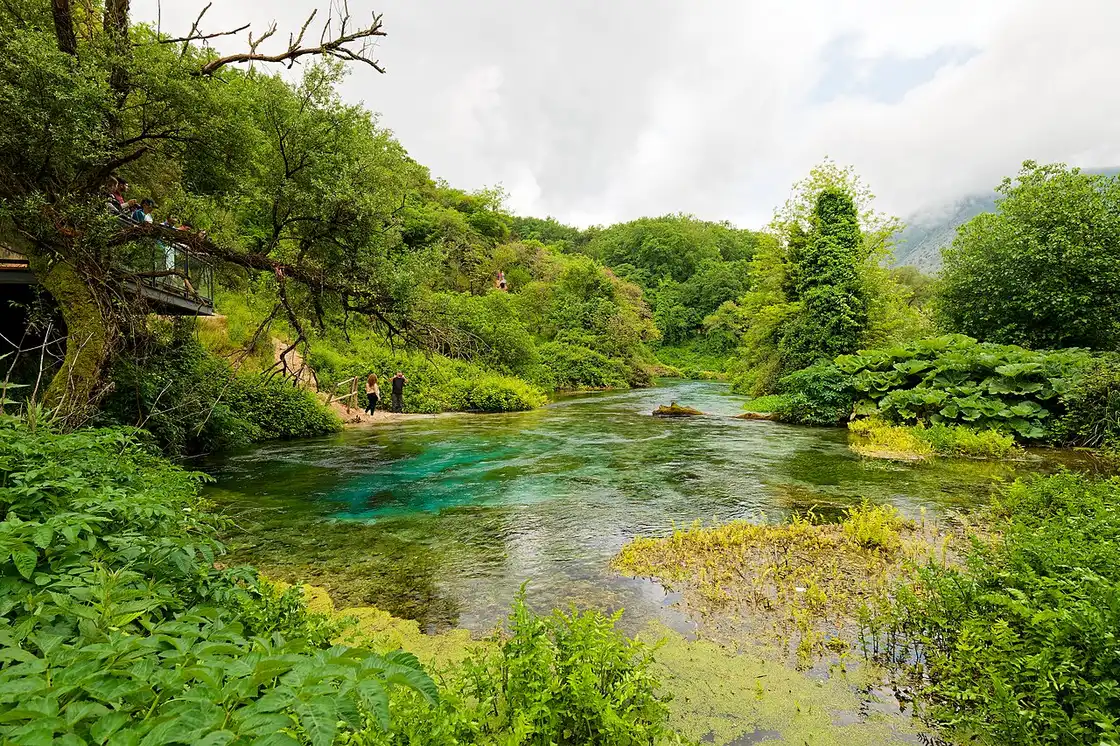
Inland from Saranda, the Blue Eye (Syri i Kaltër) is a karst spring where water wells up from a pool so deep and clear it shades from pale turquoise at the edges to a near-black blue at the centre, ringed by green forest. It’s a popular stop on the road between Saranda and Gjirokastër, roughly an hour from town, usually reached by car, taxi or an organised tour; the final stretch from the car park is a short walk or shuttle. Swimming in the spring itself is banned to protect it, and the rangers enforce it, so the viewing platforms over the pool are the draw; the shallower river downstream is where people actually cool off. Our full Blue Eye guide has the entry fee, the swim rules and how to get there.
Ksamil and the Riviera beaches
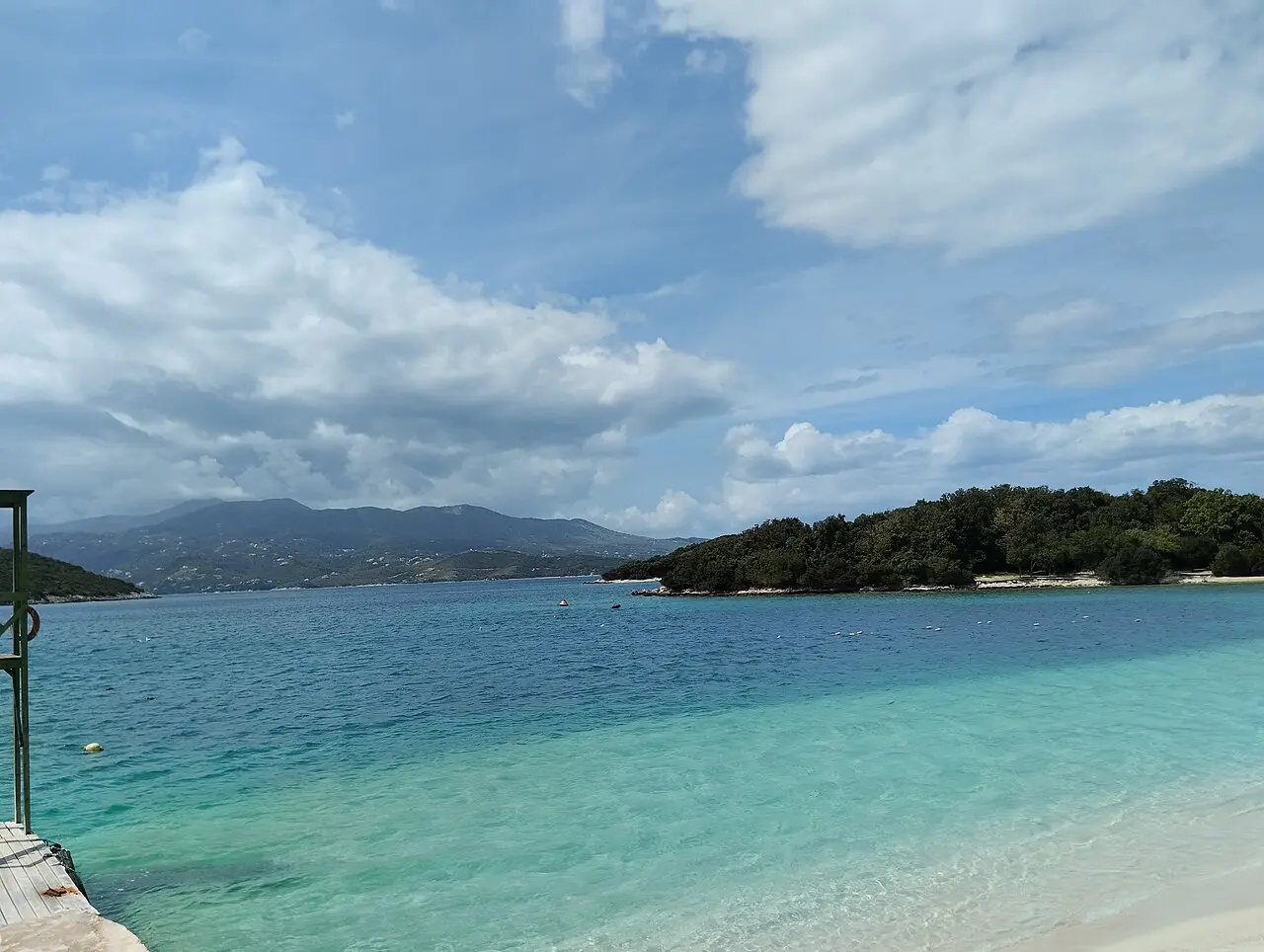
The beaches everyone pictures when they imagine Albania are at Ksamil, a village about 15 km south of Saranda where a cluster of tiny offshore islets sits in shallow, Caribbean-clear water. You can swim or paddle out to the nearest islands, and the white-sand coves get genuinely busy in July and August - go early or out of peak hours for the best of it. Ksamil sits at the southern tip of the Albanian Riviera, the stretch of Ionian coast running north toward Himarë and Dhërmi, so it’s also the natural launch point for exploring more of the coastline.
Where to stay in Saranda
Most visitors base themselves along or just behind the seafront, and for a short stay that’s the sensible call - you’re walking distance from the swimming, the restaurants and the bus stops for day trips.
- The seafront and centre. Closest to the promenade, beaches and nightlife, with the widest range of hotels and apartments. Lively in summer, and a little noisy right on the front.
- The upper town and hillside. A short climb back from the water buys quieter nights and bigger views over the bay - good if you have a car or don’t mind the slopes.
- Ksamil. If beaches are your whole reason for coming, staying in Ksamil itself puts you on the best sand, with Saranda a short bus ride away for supplies and dinner.
Rates swing hard with the season - high summer is far dearer than spring or autumn - so it pays to compare a few options for your exact dates rather than booking the first result. Our area-by-area guide to where to stay in Saranda goes deeper on the seafront, the hillside and Ksamil, and if Saranda is one stop on a longer trip, the where to stay in Albania guide shows how it fits against Tirana, Ksamil and the inland towns.
How to get to Saranda
Saranda has two main approaches: overland from the rest of Albania, or by ferry across the strait from Corfu.
| Route | Roughly | Notes |
|---|---|---|
| Tirana → Saranda (bus/furgon) | ~4-5 h | Direct daily departures; allow extra in peak-summer traffic and on the winding coast road. |
| Tirana → Saranda (car) | ~280 km / 4-5 h | Via the inland route through Gjirokastër; the coastal Riviera road is slower but spectacular. |
| Corfu → Saranda (ferry) | ~30-90 min | Passenger ferries cross the strait daily; fast hydrofoils are quickest, conventional ferries slower and cheaper. |
| Gjirokastër → Saranda | ~1.5 h | Common pairing - combine with a Blue Eye stop on the way. |
From the rest of Albania, the usual approach is the road down from Tirana through Gjirokastër, served by direct buses and furgons (shared minibuses) as well as your own car; the drive is long but scenic, and pairing it with the Blue Eye and Gjirokastër breaks it up. For getting around once you’re here, see our guide to renting a car in Albania - handy for the inland day trips that buses reach awkwardly.
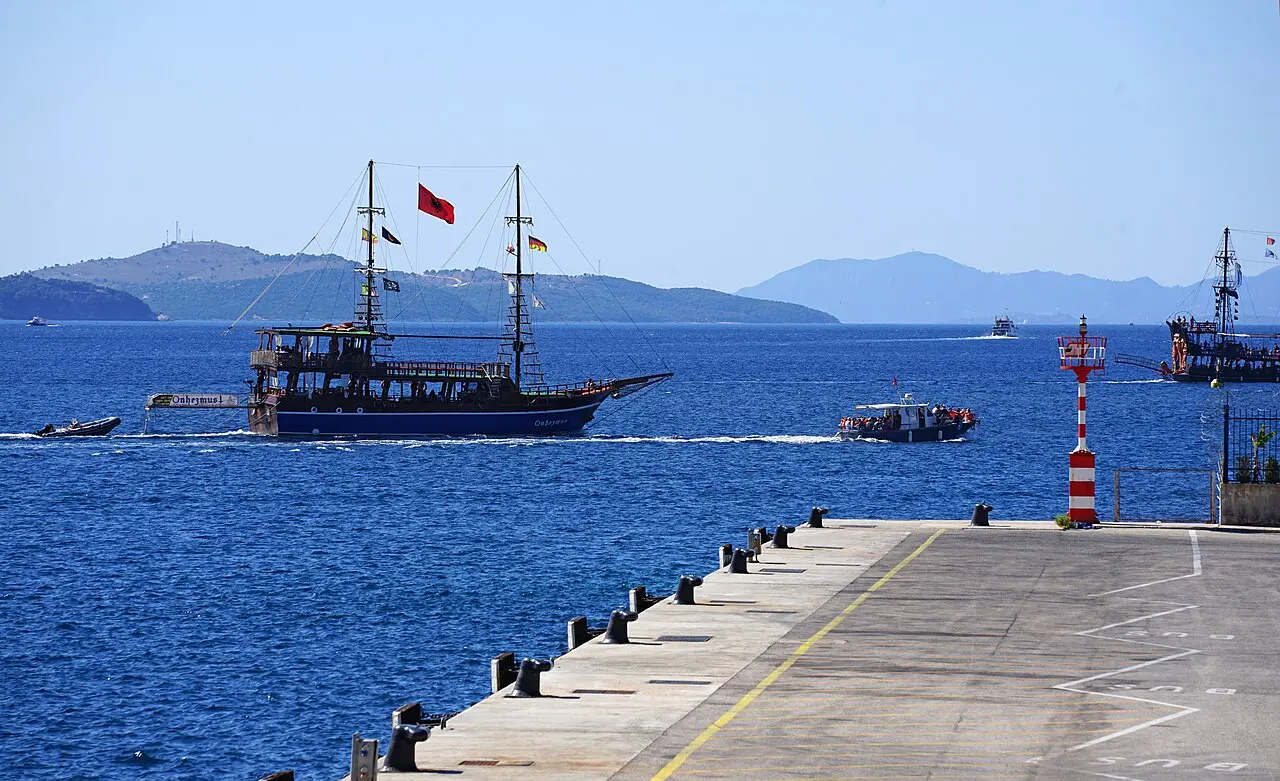
The ferry from Corfu
For many visitors Saranda is the gateway in from Greece. Passenger ferries cross the strait from Corfu Town to Saranda’s port daily, with the fast hydrofoil taking around half an hour and the slower conventional ferry up to an hour and a half. It’s a popular way to add Albania to a Greek-islands trip, even as a day visit - but bring your passport, check the current timetable in advance (sailings thin out outside summer), and remember that crossing the border means you’re leaving the EU. Book ahead in peak season, when the fast boats sell out. Our Saranda to Corfu ferry guide has the season timetable, the operator fares and the 30-minute boarding cutoff; to turn the crossing into a proper trip rather than a day visit, our Saranda to Corfu itinerary pairs the Riviera with a night or two on the island over five days.
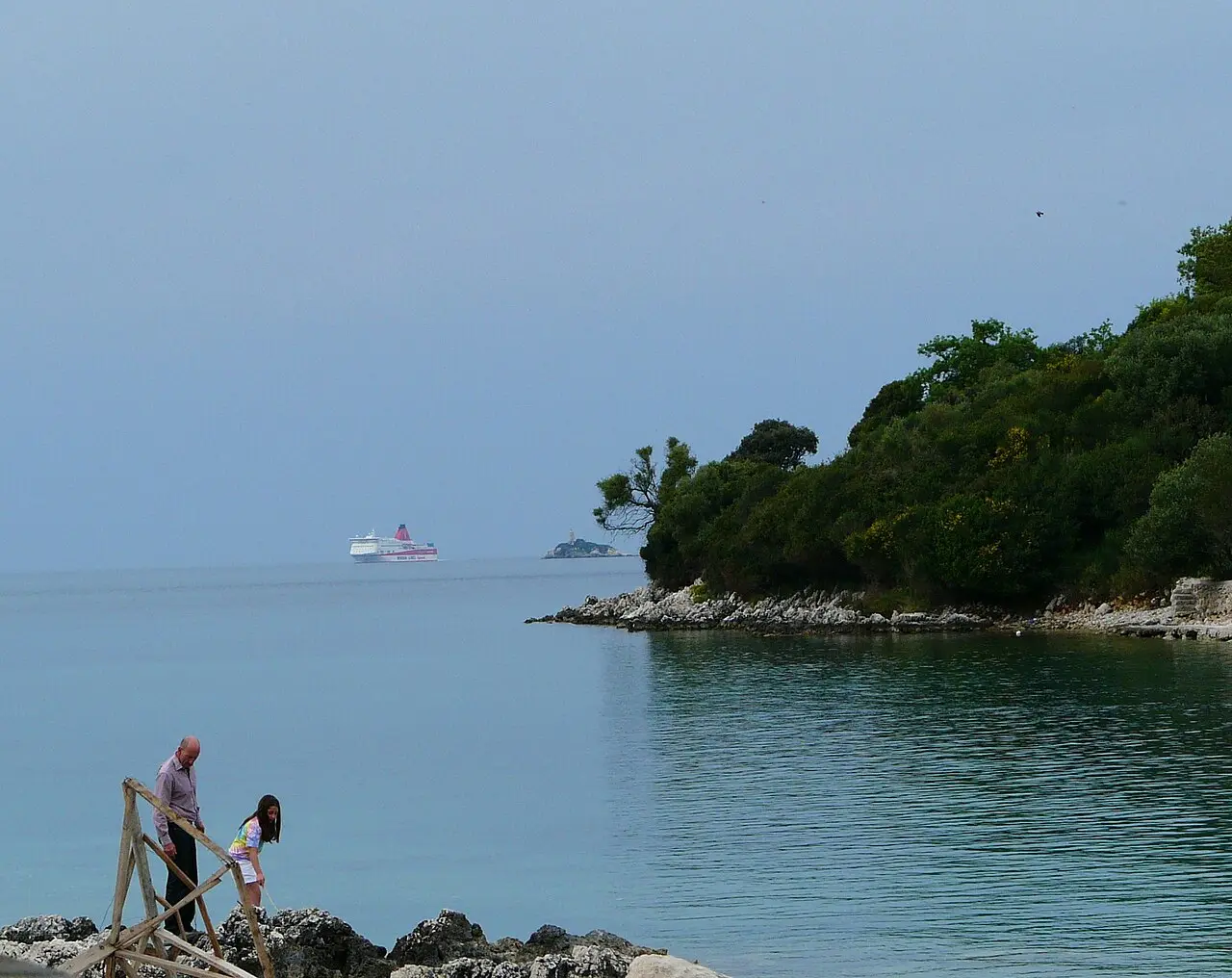
Where to eat
Saranda eats the way a Greek-facing Albanian beach town should: lots of grilled fish and seafood, Mediterranean staples and pizza, and the seafront cafés that the whole town gravitates to in the evening. The promenade and the streets just behind it are thick with restaurants - fresh fish by the kilo, byrek and grills for a cheap lunch, and gelato for the xhiro. Prices are gentle by Western-European standards, though the prime seafront tables charge for the view. For named tables, kilo prices and the mussel detour to Lake Butrint, see where to eat on the Albanian Riviera - menus shift through the season, so still check current boards when you go.
Practical tips for visiting Saranda
A few things worth knowing before you go:
- Currency. The Albanian lek (ALL) is the currency; euros are sometimes accepted near the port and at hotels, but you’ll usually get better value paying in lek. Cards work in most hotels and bigger restaurants - carry some cash for buses, beach bars and small cafés.
- When to go. July and August are hot, busy and the most expensive; June and September give you warm sea, thinner crowds and better rates. See our guide to the best time to visit Albania for the month-by-month picture.
- Getting around. The centre is walkable; for Butrint, the Blue Eye and Ksamil, use the local buses from the seafront, a taxi, or an organised tour - a rental car gives you the most freedom for the inland trips.
- How long to stay. Two or three nights lets you swim, do Butrint and Ksamil, and fit in the Blue Eye without rushing. Beach-focused travellers happily stay longer.
- Saranda as a base. It’s the obvious hub for the southern coast and the gateway from Corfu, with easy links north along the Riviera and inland to Gjirokastër.
Saranda won’t win you over with old-town charm - it’s a working resort that has grown fast and a little haphazardly. But base yourself here for a few unhurried days, mix the town beaches with the big three day trips, and catch a Lëkurësi sunset, and it earns its place as the anchor of any southern-Albania trip.
What’s nearby and read also
- Browse more Albanian city guides for your next stop.
- Starting in the capital? See our guide to the best things to do in Tirana.
- Driving the day trips? Read how to rent a car in Albania.
- Timing your trip - check the best time to visit Albania before you book.
Photos
On the map
The map loads on click - to keep the page lightweight.
The map didn’t load. Check your connection and refresh the page.
Distance ≈280 km · ~4-5 h by road
- Tirana ≈280 km · ~4-5 h by road Direct buses and furgons run daily; allow longer in peak summer traffic.
Read also

Cities · 10 min read
Korca Travel Guide: Bazaar, Beer & Southeast Albania
Updated · August 14, 2026Korca (Korce) guide: walk the Old Bazaar, see medieval icons, taste Birra Korca, then day-trip to Voskopoje or Lake Ohrid.

Cities · 10 min read
Permet, Albania: the Vjosa, Rafting & Gliko
Updated · August 8, 2026Permet travel guide: rafting the Vjosa (EUR 35), gliko and raki, the 1944 Congress, Leusa church, the Benja baths, where to stay and how to get there.

Cities · 13 min read
Dhermi, Albania: Beaches, Drymades & the Old Village
Updated · August 29, 2026Dhermi and Drymades guide: which beach is which, what a sunbed costs, boat trips to Gjipe, the old Greek village above the coast and the bus-stop catch.

Cities · 11 min read
Pogradec & Lake Ohrid: The Albanian Side
Updated · July 21, 2026Pogradec on the Albanian shore of Lake Ohrid: pebble beaches, the promenade, the Drilon springs, koran trout and Lin's mosaics, without Ohrid's crowds.