Best Day Trips from Durres: Ruins, Kruja & Cape Rodon
Day trips from Durrës: Apollonia (600 ALL), Kruja castle museums, Cape Rodon. Drive times, tickets and how to pick each day.
From Durrës you don’t need a week-long itinerary to earn a proper Albania day. Three directions leave the port city and come back the same evening: south to the hillside ruins of Apollonia, inland to the fortress town of Kruja, and north to the wild tip of Cape Rodon. Add a morning in Durrës itself - the Roman amphitheatre that once held about 15,000 to 20,000 spectators - and you’ve got a menu, not a forced loop.
Pick one outing per free day. Apollonia and Cape Rodon reward a rental car; Kruja works by car or with patience on shared vans; the amphitheatre sits a short walk from most seafront hotels. Distances below are one-way from central Durrës. The ticket figures below come from three different kinds of source, and it’s worth knowing which is which: Apollonia’s are straight off the park operator’s own site (checked 4 September 2026); Kruja’s are the museum’s own board captured in an archived snapshot from January 2026, because that museum no longer runs a live website; and the Durrës museum’s are from Albanian press reporting the announcement by Qendra Muzeore Durrës on 8 August 2026. The amphitheatre is a fourth case: nobody official publishes a price for it at all. Confirm at the gate when you arrive - Albanian cultural sites do change boards without updating every website.
In town first: amphitheatre and museum
Start where you already sleep. The Amphitheatre of Durrës sits in the old core a few streets back from the water, still half-wrapped in modern houses because the arena wasn’t rediscovered until 1966. Albania’s national tourism agency calls it the largest Roman amphitheatre built on the Balkan Peninsula, with a capacity of about 15,000 to 20,000 - a number that tells you how important ancient Dyrrhachium was on the Adriatic. Early Christian chapels with mosaic scraps sit inside the structure; you climb the surviving tiers and look straight into apartment windows.
No operator or ministry page publishes a fixed tariff for the arena, so the only figure in circulation is what recent visitors report - around 300 lek - and that’s a guide, not a price. Confirm at the gate and carry cash in lek. The fuller city write-up is the Durrës travel guide - beaches, Venetian tower, ferry logistics - this page only borrows the amphitheatre as the in-town half day.
On the seafront, the Durrës Archaeological Museum reopened after a full restoration and, from 10 August 2026, charges for entry again. According to the announcement from Qendra Muzeore Durrës, adults pay 800 lek, groups of 12+ pay 700, pensioners, disabled visitors and orphans 400, students and children over 12 240. Hours run 09:00-15:00 Monday to Saturday and 09:00-14:00 on Sunday. It’s a strong pairing with the amphitheatre for a rainy morning or a day when you don’t want the motorway.
Apollonia: the ruin day south
Apollonia is the long trip on this list - about 89 km and roughly 1 hour 20 minutes by car via Fier and the village of Pojan. You’re aiming for a Greek colony founded around the 6th century BC that later sat on the western end of the Via Egnatia. Today it’s a quiet archaeological park on a hill above farmland: the landmark column facade of the Monument of the Agonothetes, an odeon, stretches of wall, and a medieval monastery museum among olives and sheep.
The park operator publishes clear numbers. An individual adult ticket is 600 ALL; groups of 12+ pay 500; students and ages 12-18 pay 180; under-12s are free; disabled visitors and pensioners pay 300. Online booking drops the individual rate to 500 ALL, but that channel runs through e-Albania, the government services portal, and opening an account there needs an Albanian national ID number - as a foreign visitor you pay the 600 at the gate. The operator also lists free-entry days: the last Sunday of the month from October to May, plus 18 April, 18 May, 21 May, 29 September and 28-29 November. From 1 May to 31 October the site opens every day 09:00-19:00 (last ticket 18:45). Shoulder months are shorter; from November through February Mondays are closed. Arrive early in summer heat - there’s little shade on the excavated slopes.
There’s no direct bus to the gate. The workable patterns are self-drive from Durrës, or a bus/furgon to Fier plus a short taxi to Pojan (agree the fare before you sit down). For how Albanian shared vans and coaches actually work - cash, loose departures, GjirafaTravel on some corridors - use how to get around Albania. The dedicated ruin page is Apollonia Archaeological Park; this day-trip cut is just the Durrës-out-and-back version.
Two honest caveats. First, don’t try to bolt Apollonia onto Kruja or Cape Rodon the same day - the drive south eats the morning. Second, bring water and small lek; the cafe scene at the gate is thin compared with a Riviera stop.
Kruja: fortress town and bazaar
Kruja (Krujë) sits about 45 km inland from Durrës, up on the flank of Mount Krujë - roughly 50 to 65 minutes by car depending on traffic around Fushë-Krujë. This is Skanderbeg country: the rocky spur he held against Ottoman sieges in the 15th century, with castle walls, a 1982 national museum styled like a medieval tower, an Ottoman bazaar lane, and an ethnographic house museum packed into one steep climb.
Castle grounds are free to wander, though a small castle ticket of around 200 ALL is sometimes charged at the entrance. The National Museum “Gjergj Kastrioti Skënderbeu” posts 500 lekë for local and foreign adults at the ticket office, 400 for groups of 12+, 250 for the reduced rate, 150 for ages 12-18 and students, and free under 12. Hours on the official board run 09:00-18:00, Monday to Sunday. One caveat covers all of that: the museum has had no live website since around February 2026 - the old address now serves unrelated content - so these figures come from an archived copy of the official board taken 17 January 2026, before the domain changed hands. It’s the last tariff the operator published, not a board you can check online today, so read the desk when you arrive. The Ethnographic Museum in the 18th-century Ottoman house below the walls charges 400 lekë for adults (300 group, 200 reduced, 120 for 12-18/students, free under 12).
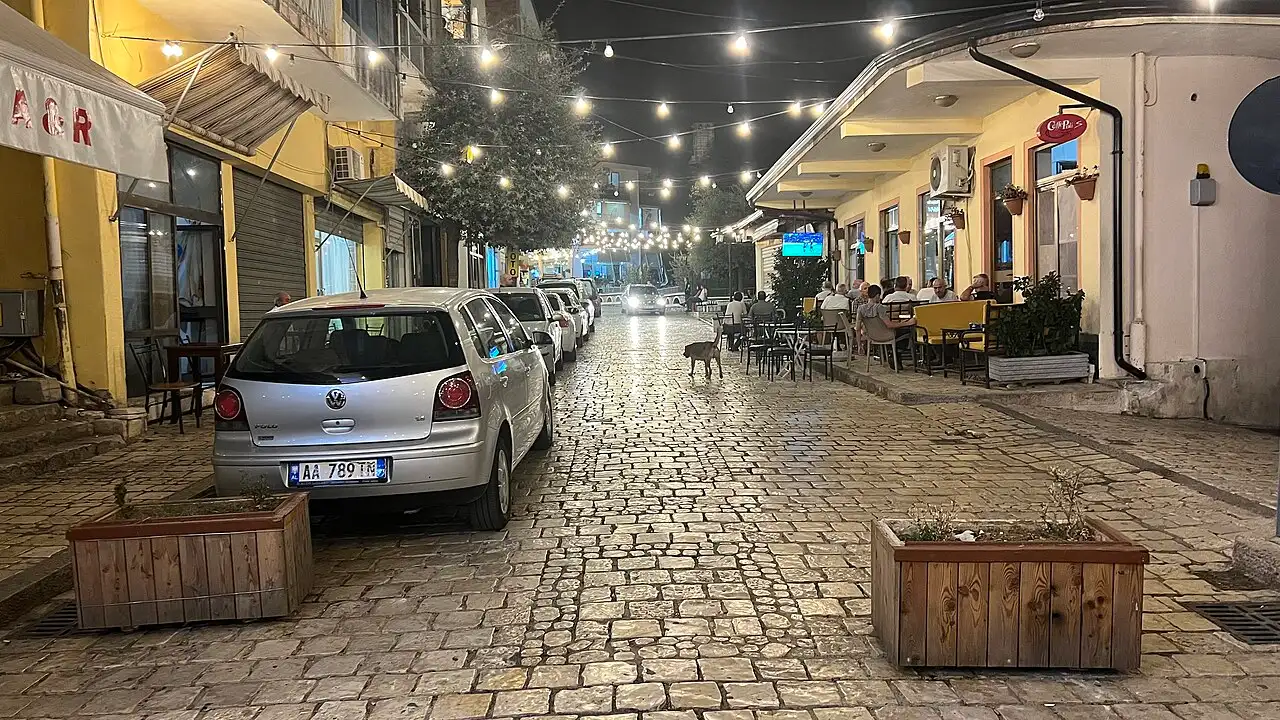
From Durrës a rental car is the cleanest move. Shared furgons are better documented on the Tirana-Kruja corridor (often in the 150-200 lek band each way) than as a published Durres schedule, so ask at your hotel which vans still run and when the last one returns - those last vans go early. Organised half-day tours from Tirana are everywhere; from Durrës you’re more likely looking at a private driver or a self-drive. Fuller town detail - bazaar shopping, Sari Salltik shrine, airport pairing - lives in the Kruja guide.
Wear real shoes. The climb is cobbled and steeper than the tourist photos suggest, and you’ll do it twice if you leave the car at the bottom.
Cape Rodon: wild coast and Skanderbeg’s fort
Cape Rodon (Kepi i Rodonit / Kepi i Skënderbeut) is the wild card - about 50 km north of Durrës, 75 to 100 minutes on roads that narrow through olive country before you reach the tip. Wikipedia places the cape at roughly 41.58583° N, 19.44972° E. On it stand Rodoni Castle, built by Skanderbeg in 1463 as a coastal lookout, and the restored Church of St Anthony, with a pilgrim tradition that still draws Albanians on 13 June.
There’s no scheduled public bus to the tip. You need a car, a taxi deal for the day, or an organised boat/tour leaving Durrës harbour. The final stretch can be rutted; drive slowly. Castle ruins don’t run a modern ticket desk the way Apollonia does - expect open access in daylight and bring your own water, because services thin out fast once you leave the Lalzi Bay resorts. Older local reporting mentions informal barrier fees on the approach road; back in 2019 the director of the Durrës mayor’s cabinet told local media those charges were unauthorised, so don’t treat a random demand as an official tariff.
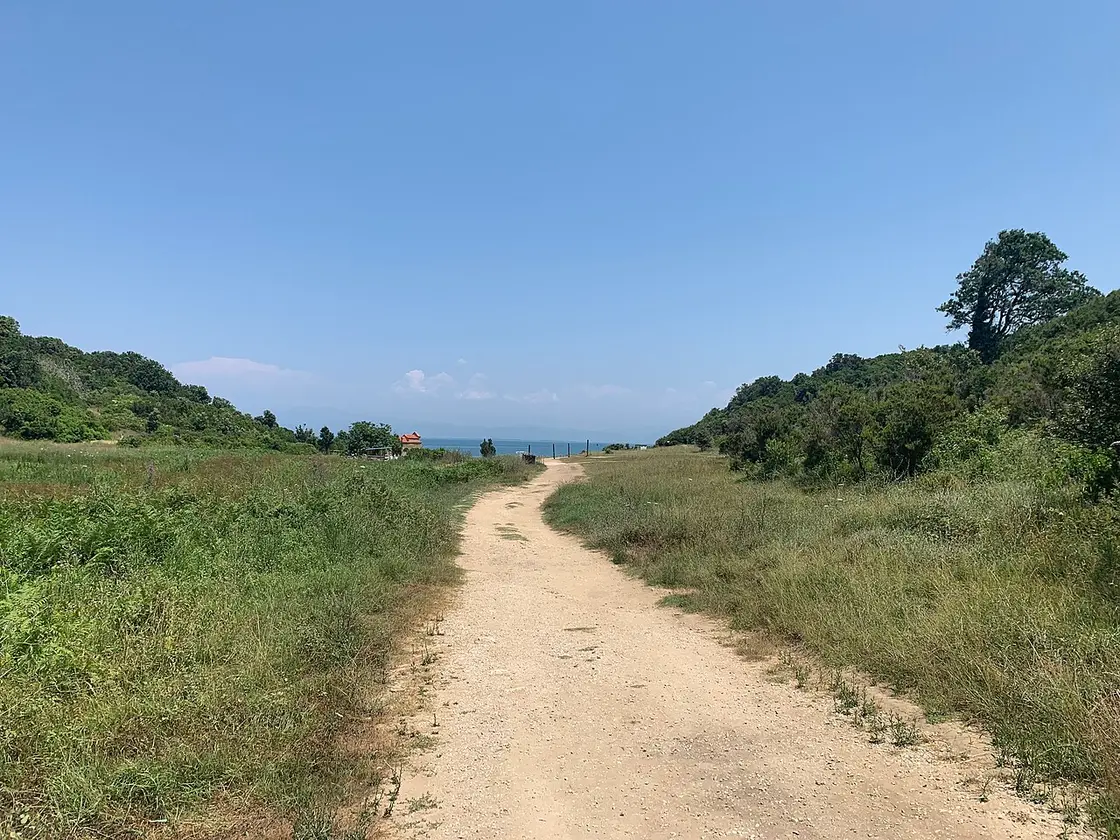
Give the cape a half day minimum: church, short walk to the fort, a swim if the wind allows. July crowds thin out here compared with Durrës city beach, though you’ll still share the headland with local picnic groups on weekends. Pack out what you pack in - the shoreline collects river debris after storms, and the place looks better when visitors don’t add to it.
How to choose, and what it costs
| Day | Best for | Rough drive | Ticket floor (adult) |
|---|---|---|---|
| Amphitheatre + museum | Zero logistics, rainy mornings | Walk | Museum 800 lek from 10 Aug 2026; amphitheatre ~300 lek reported, confirm at gate |
| Apollonia | Big ancient city, quiet hills | about 89 km / 1h20 | 600 ALL (park operator) |
| Kruja | Fortress views, bazaar, museums | about 45 km / 50-65 min | 500 + 400 lek if you enter both museums |
| Cape Rodon | Sea, ruins, empty horizon | about 50 km / 75-100 min | No operator castle ticket; budget fuel/lunch |
BudgetFrom on this page is EUR 7 - roughly the Apollonia adult ticket alone (600 ALL). Real days cost more once you add fuel or a taxi, lunch, and museum entries. Car days for Apollonia or Rodon are where a short rental earns its keep; Kruja and the in-town ruins don’t require one.
Season tip: April-June and September-October keep the drives pleasant and the sites open without August beach traffic on the SH roads. Midsummer works, but start early and carry water - Apollonia’s hill and Rodon’s tip both bake.
If you’re sleeping in Durrës after an Italy ferry, do the amphitheatre the same afternoon you arrive, save Apollonia for a full free day, and keep Cape Rodon for when you want empty sea air instead of more columns. Three different Albanias, same hotel bed each night - that’s the point of basing here.
Route day by day
- Days on the road
- 1
- Distance
- ≈89 km
- Budget from
- 7 EUR
- Best season
- April, May, June, September, October
The route at a glance
-
Durrës (base)
Route startYour base. The amphitheatre and archaeological museum sit in the old core; Apollonia, Kruja and Cape Rodon are separate out-and-back days - distances below are one-way.
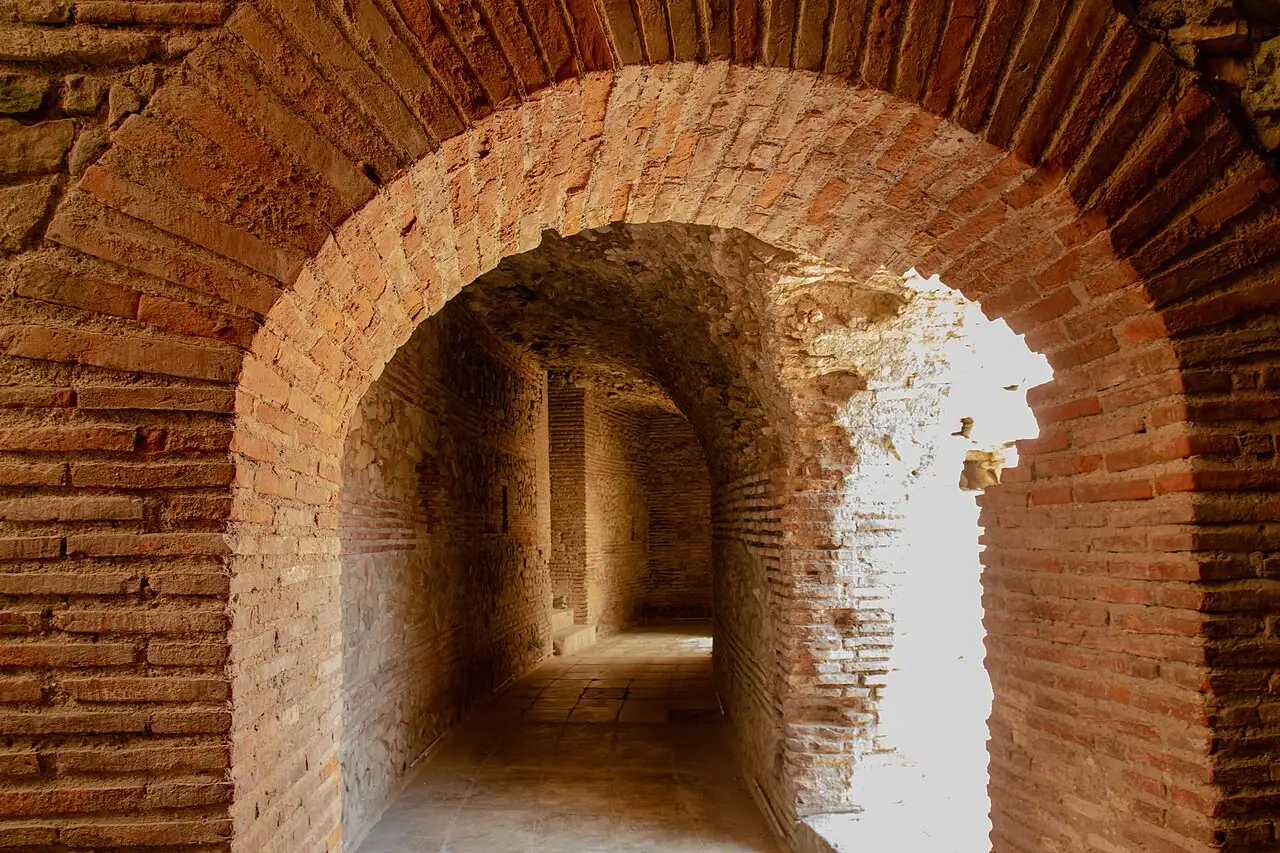
Photo: Fluisa Ismailati / Wikimedia Commons, CC BY-SA 4.0 ( source) -
Apollonia
89 km from the startstop ≈150 min
Greek-Roman city near Pojan west of Fier. Official adult ticket 600 ALL in 2026; no direct bus to the gate - self-drive or Fier taxi.
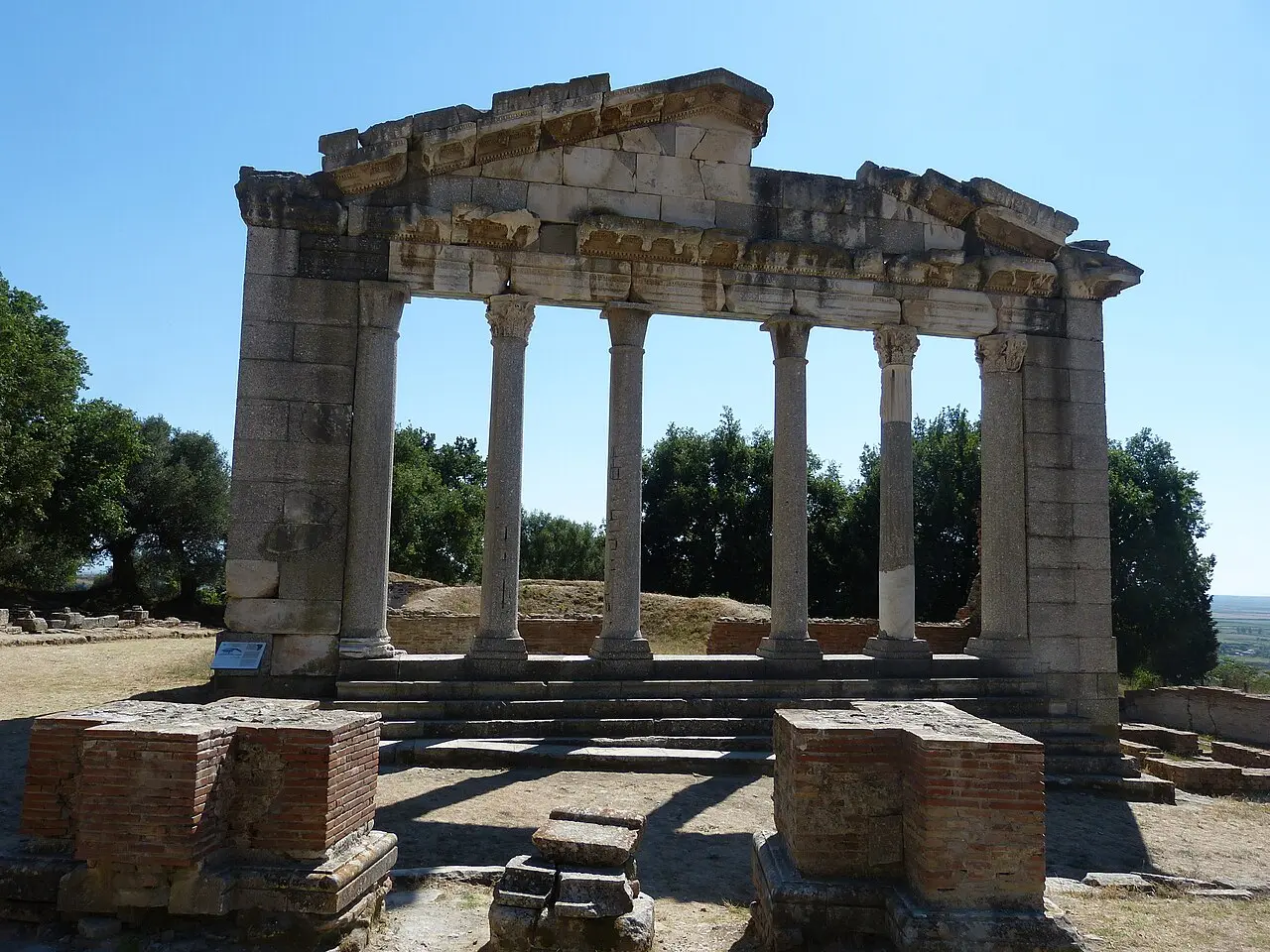
Photo: Wolfgang Sauber / Wikimedia Commons, CC BY-SA 4.0 ( source) -
Kruja
45 km from the startstop ≈240 min
Hill fortress town whose castle grounds are usually free to walk (a small gate ticket of about 200 ALL is sometimes charged), Skanderbeg Museum (500 lek) and Ethnographic Museum (400 lek). About 50-65 minutes by car from Durrës.
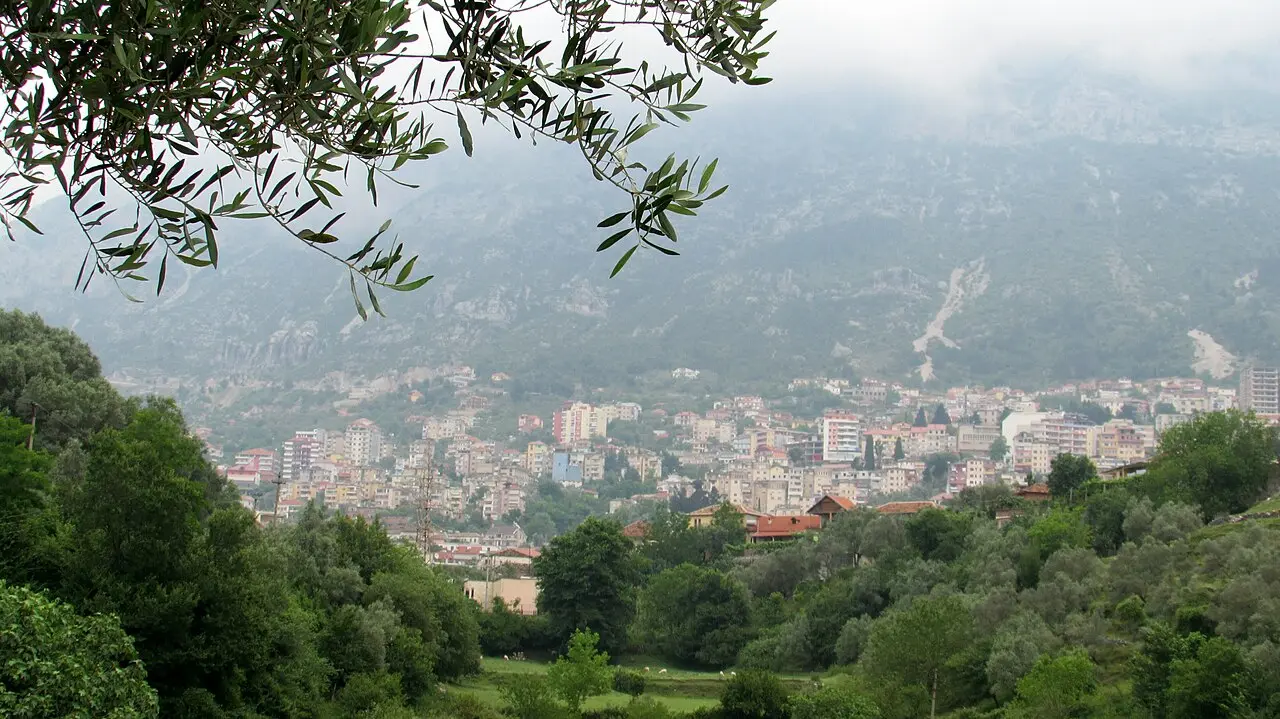
Photo: Joergsam / Wikimedia Commons, CC BY-SA 4.0 ( source) -
Cape Rodon
50 km from the startstop ≈180 min
Wild Adriatic cape with Rodoni Castle (1463) and St Anthony church. No public bus to the tip - rental car or organised boat/tour from Durrës.
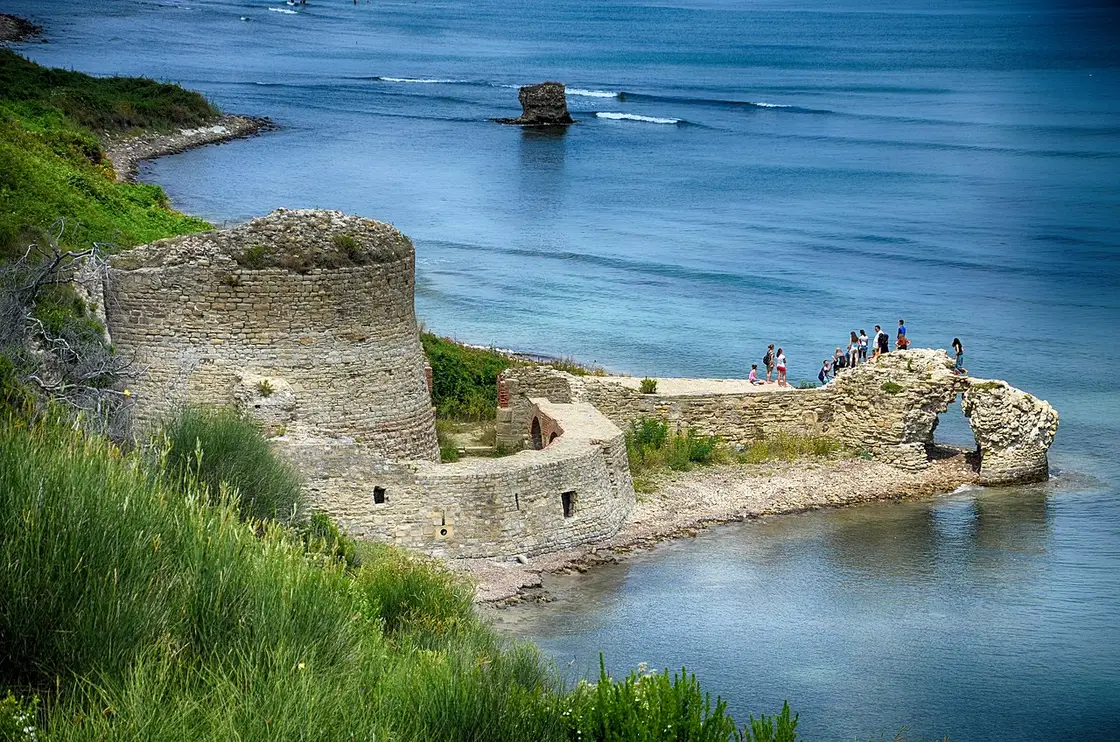
Photo: Pasztilla aka Attila Terbócs / Wikimedia Commons, CC BY-SA 4.0 ( source)
Route map
The map with stops loads on click - to keep the page lightweight.
The map didn’t load. Check your connection and refresh the page.