Kruja, Albania: Skanderbeg Castle & Old Bazaar Guide
Kruja day-trip guide: Skanderbeg's castle and museum, the Ottoman Old Bazaar and Ethnographic Museum, how to get there from Tirana and how long to stay.
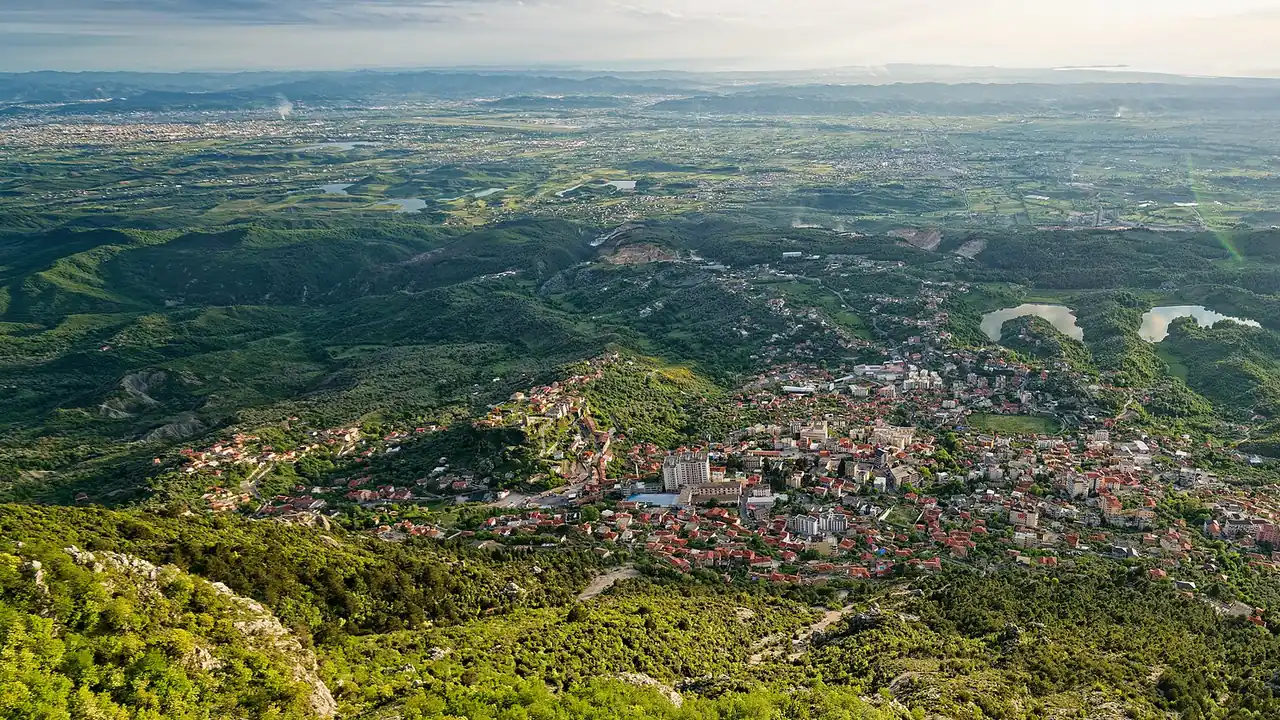
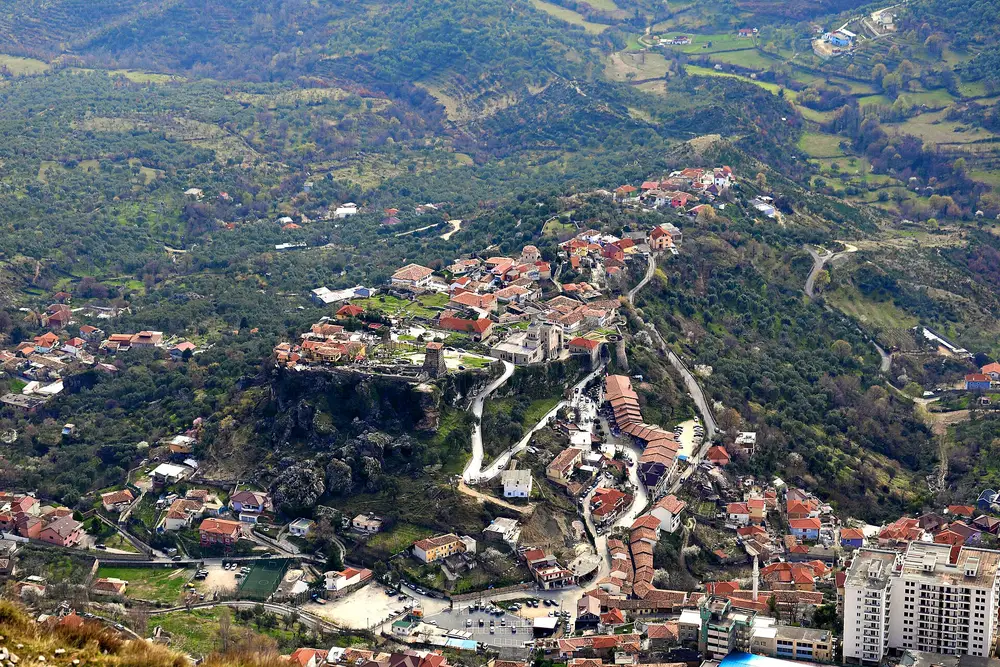
Kruja is the fortress town where Albania’s national hero, Gjergj Kastrioti “Skanderbeg”, held off the Ottoman army in the 15th century, and it’s the easiest big slice of history you can reach from Tirana - about 39 km and 45 to 60 minutes north of the capital, up on the flank of Mount Krujë. The reason to come is a tight cluster of three things: the castle with its Skanderbeg Museum, the restored Ottoman-era Old Bazaar, and a genuinely good Ethnographic Museum. Give it half a day; roughly three to four hours covers everything at a proper pace, plus coffee.
Here’s the honest framing before you go. The Skanderbeg Museum isn’t a medieval building - it’s a stern 1982 Communist-era monument, designed under Enver Hoxha, that tells the Skanderbeg story more as national myth than as a collection of old objects. The thing most people actually remember from Kruja is the bazaar: a cobbled lane of wooden shops selling carpets, felt caps and antiques on the climb up to the walls. Come for the view and the legend, stay for the shopping and the mountain air.
What to see in Kruja
Everything worth seeing sits on one steep spine - you park or get dropped at the bottom, walk up through the bazaar, and come out at the castle gate. It’s compact but genuinely uphill and cobbled, so wear real shoes.
Kruja Castle and the Skanderbeg Museum
The castle (Kalaja e Krujës) crowns a rocky spur, and its outer grounds are free to wander, though a small castle ticket of around 200 ALL is sometimes collected at the entrance - ruined walls, a few surviving houses, an old cistern and wide views over the plain to the Adriatic on a clear day. This is the ground Skanderbeg defended: he seized Kruja in 1443, and the fortress famously withstood the great Ottoman siege of 1450 and later assaults, only falling in 1478, a decade after his death.
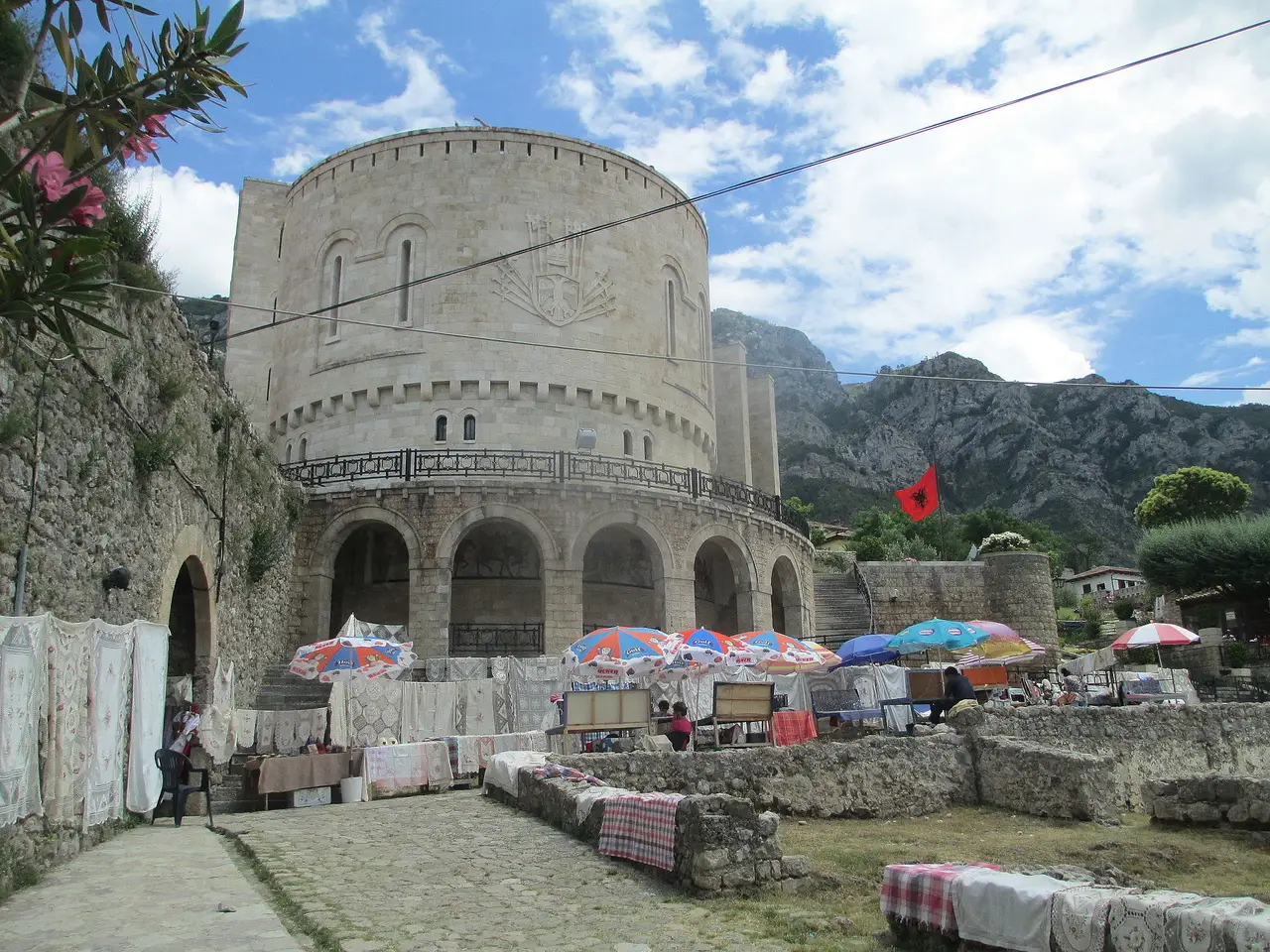
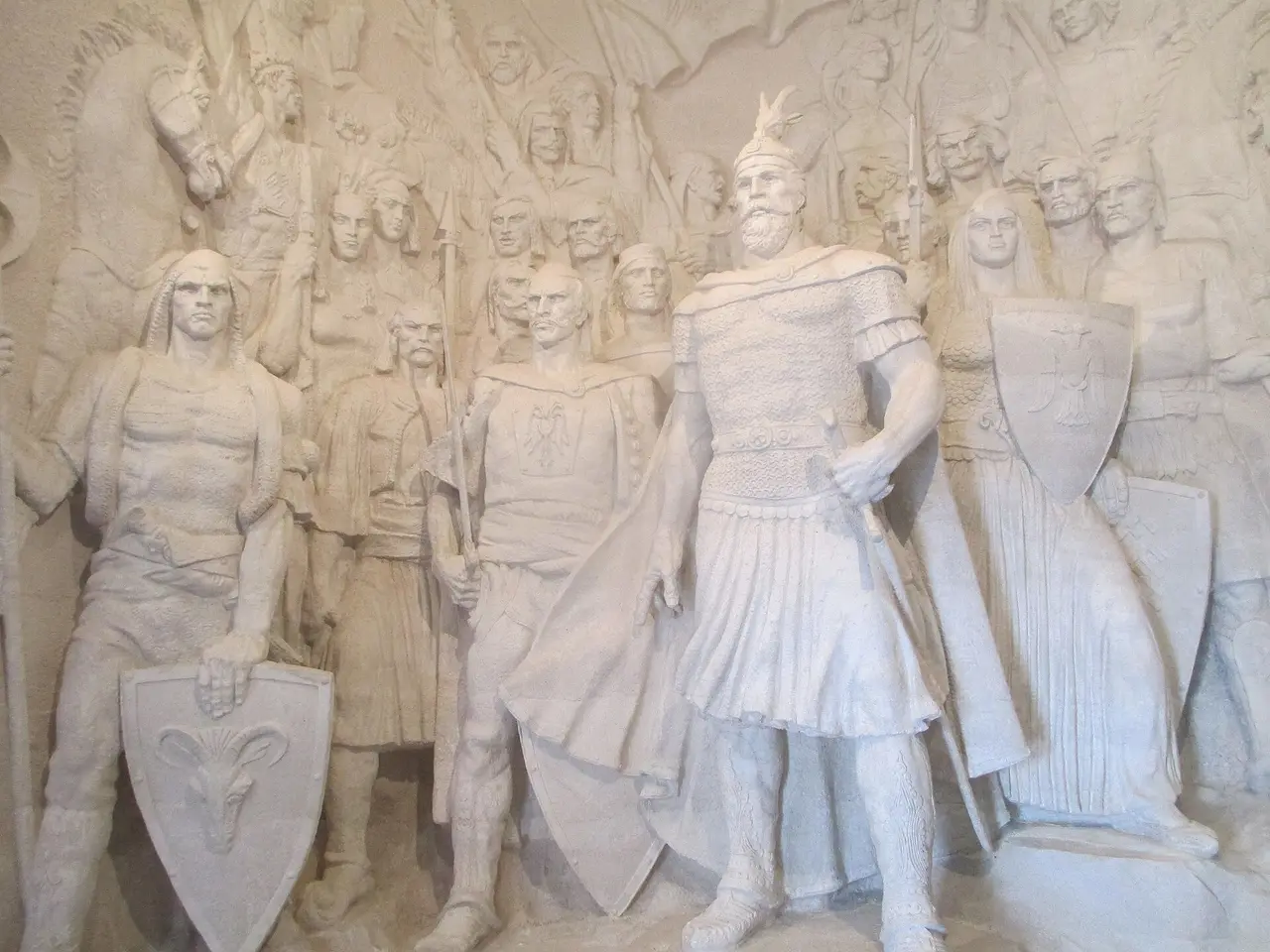
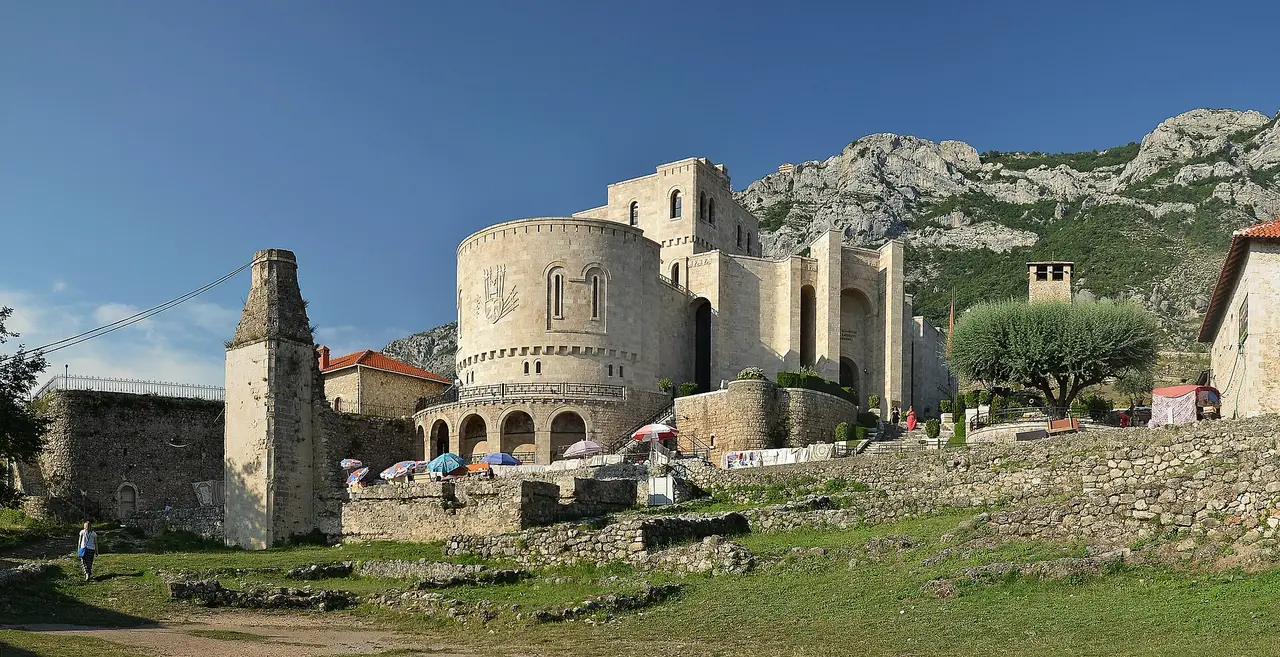
The Skanderbeg Museum (Muzeu Kombëtar “Gjergj Kastrioti Skënderbeu”) is the tall pale tower inside the walls. It was inaugurated in 1982 and designed by the architects Pirro Vaso and Pranvera Hoxha - the dictator’s daughter - which is why it reads like a memorial rather than an old keep. Inside are replicas of Skanderbeg’s helmet and sword, weapons, maps and dramatic reliefs of his campaigns; the star piece is the sculpted wall of Skanderbeg and his warriors. Entry runs around 500 lek, and the last board the museum published - archived in January 2026, before its website went dark - posts 09:00-18:00, Monday to Sunday. There’s no live site to check against now, so confirm at the desk when you arrive.
The Old Bazaar (Pazari i Vjetër)
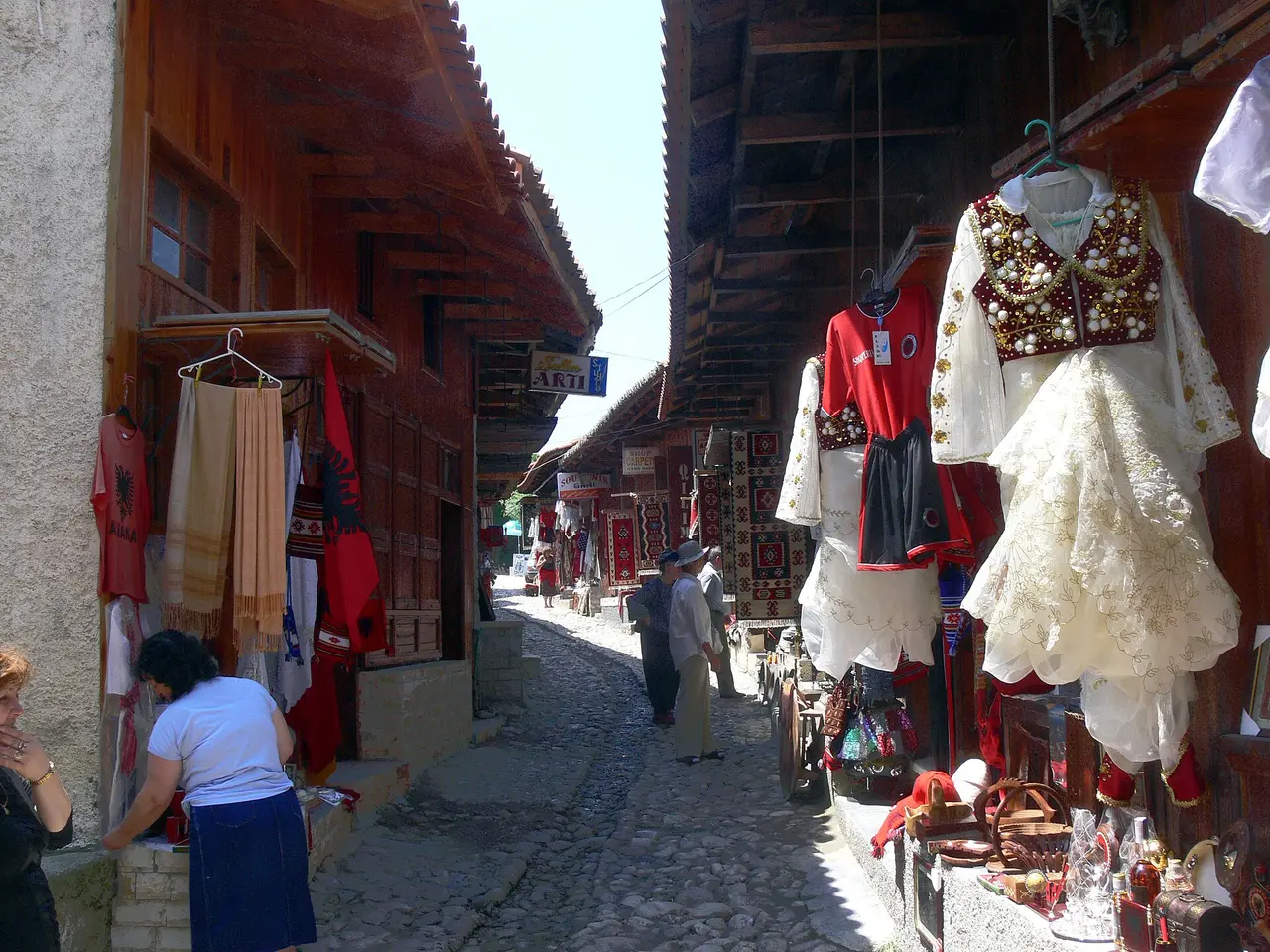
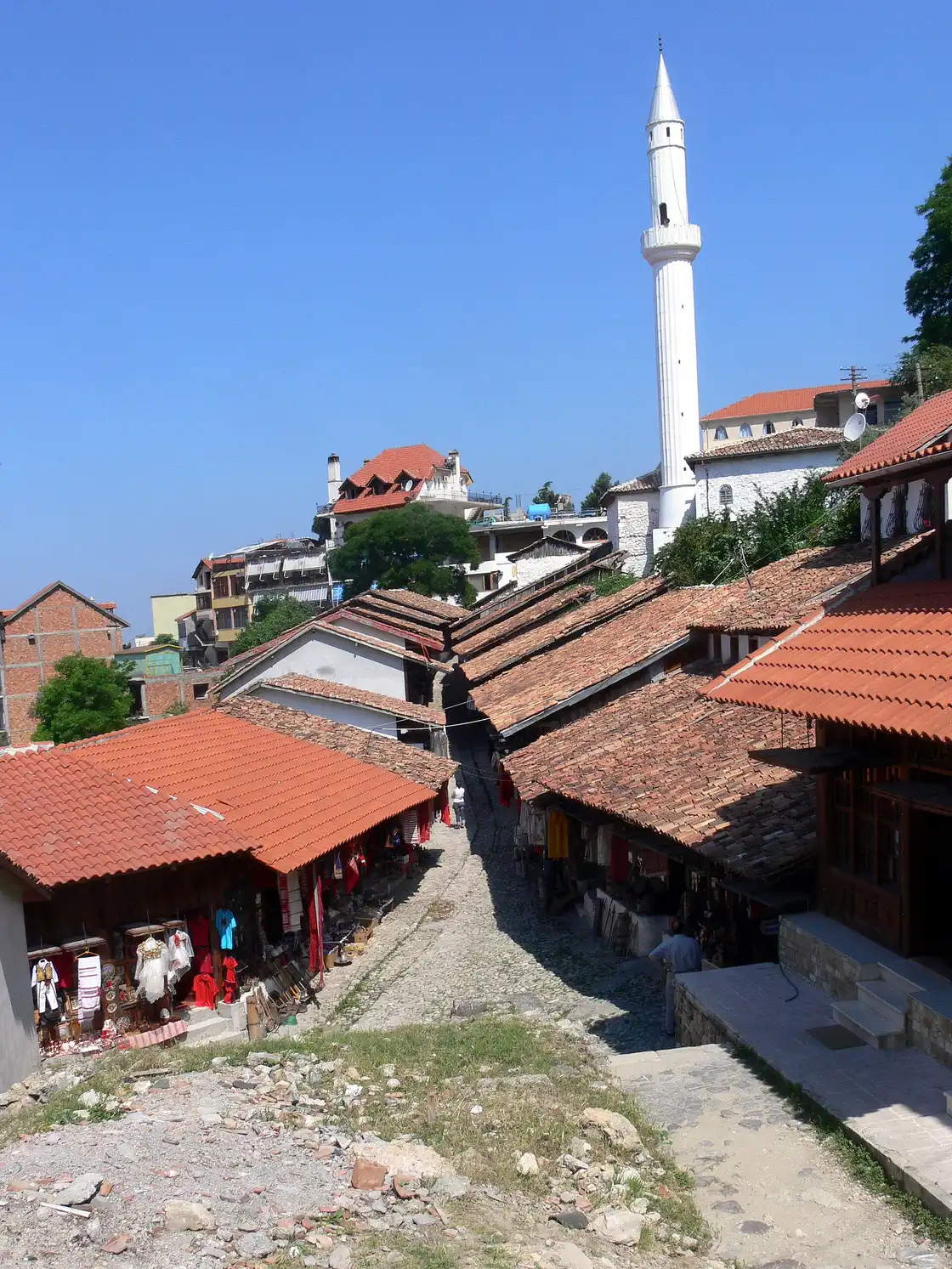
For most visitors this is the highlight. The Old Bazaar is a restored Ottoman-era market street - two facing rows of low wooden shops under overhanging roofs, running down the cobbles just below the castle. It’s one of the oldest bazaars in Albania, and unlike a purpose-built tourist arcade it still has genuine character: worn stone, dark timber, and goods spilling out onto the lane.
What’s actually worth buying here, rather than the mass-produced tat: hand-woven carpets and kilims, the traditional white felt cap (the qeleshe), copper and filigree, old antiques and Ottoman bric-a-brac, and hand-crocheted lace. Haggling is normal and expected - settle in, have the coffee you’ll inevitably be offered, and take your time. This is a better souvenir stop than anywhere in Tirana.
The Ethnographic Museum
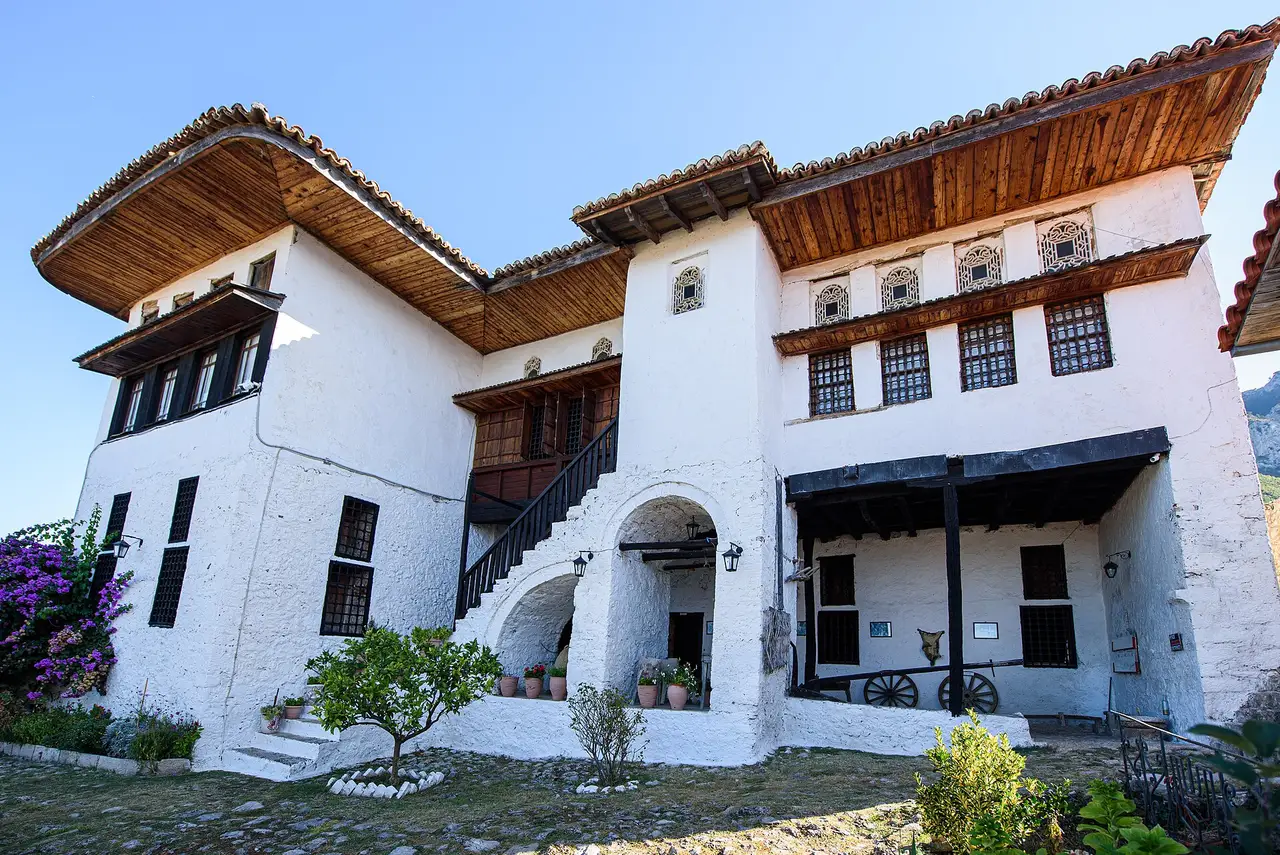
Often skipped, and it shouldn’t be. The Ethnographic Museum occupies a real 18th-century Ottoman house just below the castle - the restored home of a well-off Kruja family - and it’s one of the best places in the country to see how people actually lived: the wooden rooms and carved ceilings, the loom and the olive press, the kitchen, the guest quarters, the household tools. Entry is around 400 lek and it usually keeps daytime hours (roughly 09:00-16:00); a guide often walks you through the rooms. If you only add one thing to the castle and bazaar, make it this.
The mountain and the Sari Salltik shrine
Looming straight over the town is Mount Krujë, a bare grey wall of limestone that gives the place its drama. Higher up the slope is the Sari Salltik cave shrine, a Bektashi pilgrimage site tied to a dervish legend; it draws Albanian pilgrims rather than day-trippers, and reaching it means a rough drive or a hike, so treat it as an add-on for a longer visit rather than part of the standard half-day. Even if you don’t go up, the mountain backdrop is why every photo of Kruja looks the way it does.
How to get to Kruja from Tirana
Kruja sits about 39 km north of Tirana, and the town lies just above Tirana International Airport (Rinas), which makes it a natural first or last stop if you’re flying in or out. You have three ways to do it.
| Option | Roughly | Notes |
|---|---|---|
| Furgon (minibus) | ~1 h, ~150-200 lek | Hourly-ish from Tirana’s northern regional terminal; last bus back around 16:00. Some drop at Fushë-Krujë at the base, then a local shuttle up. |
| Self-drive / rental car | ~39 km / 45-60 min | Easiest and most flexible; parking near the bazaar entrance. |
| Organised day tour | half day | Door-to-door from your Tirana hotel, usually with a guide; often paired with another stop. |
The furgon is cheap but the schedule is loose and the last return is early (around 4pm), so go in the morning and don’t dawdle. A car is the relaxed option - it’s a short, straightforward drive, and having your own wheels lets you go on to Berat or the coast afterwards; see our guide to renting a car in Albania. If you would rather not deal with the terminal or driving, an organised day trip or a private driver is the low-stress choice, and because Kruja is so close to the airport it slots neatly onto arrival or departure day - our Tirana airport transfers guide covers that leg.
Is Kruja worth it, and how long to stay?
Yes, with one caveat: manage your expectations about the museum. If you arrive expecting a real medieval castle stuffed with authentic relics, the concrete-and-legend Skanderbeg Museum can feel thin. If you come for the whole package - the bazaar, the Ethnographic Museum, the free castle grounds and the view - it’s one of the most rewarding half-days near Tirana, and by far the most convenient way to fold Skanderbeg and Ottoman Albania into a short trip.
Budget three to four hours on the ground: an hour or so for the bazaar and coffee, half an hour to forty-five minutes each for the two museums, and time to wander the free castle grounds and look out over the plain. That makes it a comfortable morning-or-afternoon trip, back in Tirana for dinner. It also pairs neatly with the capital itself - see the best things to do in Tirana - and it’s one of the classic day trips from Tirana. From the coast the same fortress town is a staple of day trips from Durres.
Practical tips for visiting Kruja
- Go in the morning. The light is better on the mountain, the bazaar is quieter, and if you’re on the furgon the last bus back leaves early (around 4pm).
- Carry cash in lek. Museum tickets, parking and most bazaar shops are cash-only; the currency is the Albanian lek (ALL).
- Wear proper shoes. The bazaar and the climb to the castle are steep and cobbled - not the place for flip-flops.
- Haggle in the bazaar. Prices are negotiable; a friendly back-and-forth over coffee is part of the experience, not rudeness.
- Combine it cleverly. Because Kruja is minutes from the airport, it’s an ideal arrival-day or departure-day stop if you have a few hours to spare.
- Check museum hours. Both museums run shorter winter hours and the Skanderbeg Museum tends to close on Mondays out of season - confirm the day before if it’s the whole point of your trip.
What’s nearby and read also
- Browse more Albanian city guides for your next stop.
- Base yourself in the capital first: the best things to do in Tirana.
- More ideas from the capital: day trips from Tirana.
- Another Ottoman-era old town further north: the Shkodra travel guide.
- Driving on afterwards? See how to rent a car in Albania.
Photos
On the map
The map loads on click - to keep the page lightweight.
The map didn’t load. Check your connection and refresh the page.
Distance ≈35 km · ~1 h by road
- Tirana ≈35 km · ~1 h by road Hourly furgons from the northern regional terminal, or an easy self-drive/day tour; Kruja is near Tirana airport.
Read also

Cities · 10 min read
Korca Travel Guide: Bazaar, Beer & Southeast Albania
Updated · August 14, 2026Korca (Korce) guide: walk the Old Bazaar, see medieval icons, taste Birra Korca, then day-trip to Voskopoje or Lake Ohrid.

Cities · 10 min read
Permet, Albania: the Vjosa, Rafting & Gliko
Updated · August 8, 2026Permet travel guide: rafting the Vjosa (EUR 35), gliko and raki, the 1944 Congress, Leusa church, the Benja baths, where to stay and how to get there.

Cities · 13 min read
Dhermi, Albania: Beaches, Drymades & the Old Village
Updated · August 29, 2026Dhermi and Drymades guide: which beach is which, what a sunbed costs, boat trips to Gjipe, the old Greek village above the coast and the bus-stop catch.

Cities · 11 min read
Pogradec & Lake Ohrid: The Albanian Side
Updated · July 21, 2026Pogradec on the Albanian shore of Lake Ohrid: pebble beaches, the promenade, the Drilon springs, koran trout and Lin's mosaics, without Ohrid's crowds.