Driving in Albania: Road Safety & Rules for Tourists
Driving in Albania in 2026: the road rules, speed and alcohol limits, tolls, the hazards that catch tourists out, and what to do if you crash.
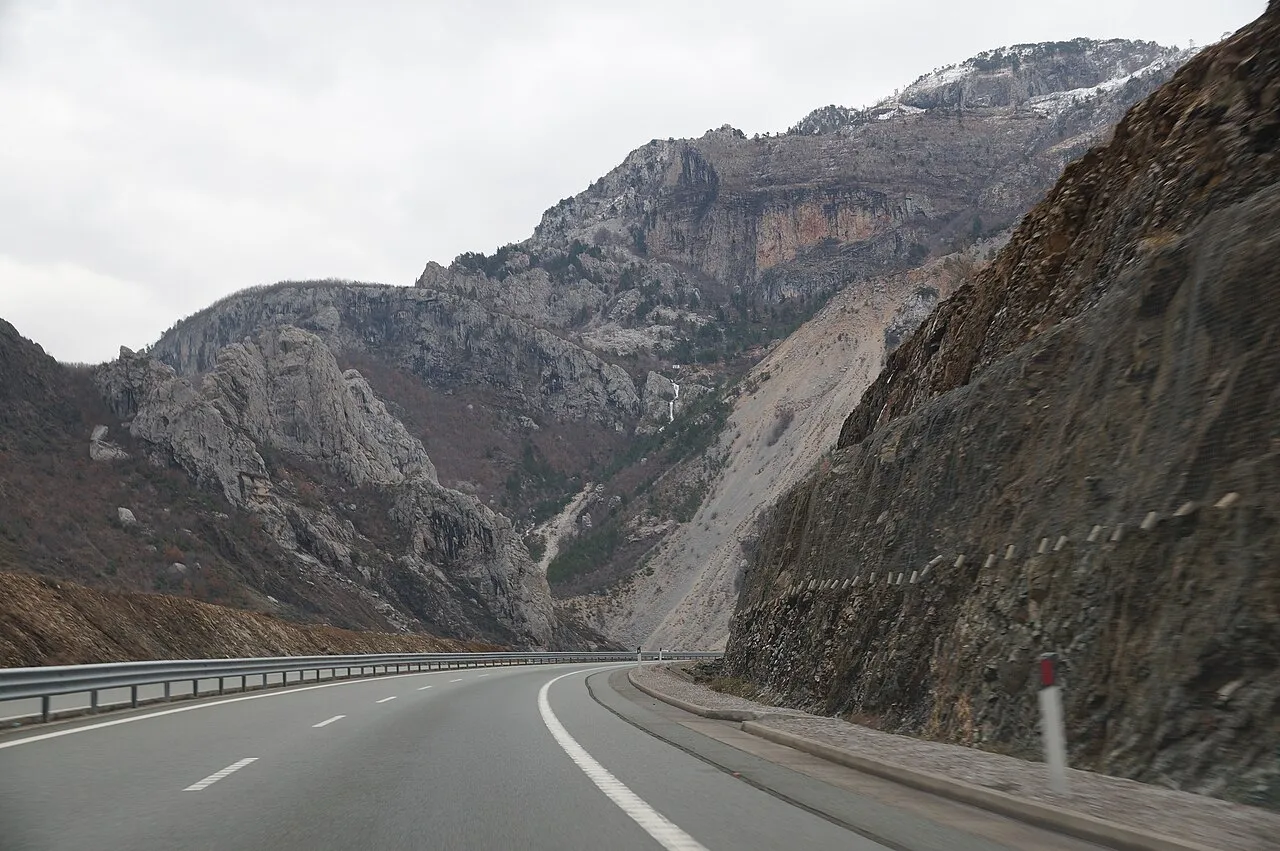
A car is the best way to see Albania, and the roads are also the most dangerous thing you’ll meet here. That is the honest headline. Crime barely touches tourists; traffic is a real risk, because Albania’s road-death rate is among the highest in Europe and local driving is fast and improvised. None of that should stop you renting, and most trips go without a scrape. It just means the smart move is to know the rules, read the road, and drive with more margin than you would at home. This guide covers the legal bits (speed, alcohol, documents), what the roads are actually like, the hazards that catch visitors out, the tolls and fuel, and what to do if it goes wrong.
If you are still at the booking stage, our guide to renting a car in Albania handles prices, deposits and insurance, our car rental at Tirana Airport guide covers picking up on arrival, and car rental in Saranda is the south-coast pickup layer; this one starts once you’re behind the wheel. For the wider safety picture beyond the road, see is Albania safe, and if you’ll be driving solo as a woman, our guide to solo female travel safety in Albania covers the extra planning points.
How risky is it, really?
Worth being straight about. Albania recorded around 59 road deaths per million people in 2022, against a European Union average nearer 46, which puts it among the most dangerous handful of countries in Europe for road fatalities. The UK’s Foreign Office flags the same thing, warning that deaths from road accidents here are among the highest on the continent. The trend is slowly improving, but the numbers are what they are.
The reasons aren’t mysterious: assertive overtaking, big speed differences between vehicles, mixed traffic that includes livestock and pedestrians, and mountain roads with no barriers and no lighting. The good news is that almost all of this is manageable by a careful visitor. You are not fighting bad luck so much as a driving culture, and defensive habits, plus staying off the rural roads after dark, remove most of the danger.
The rules you have to know
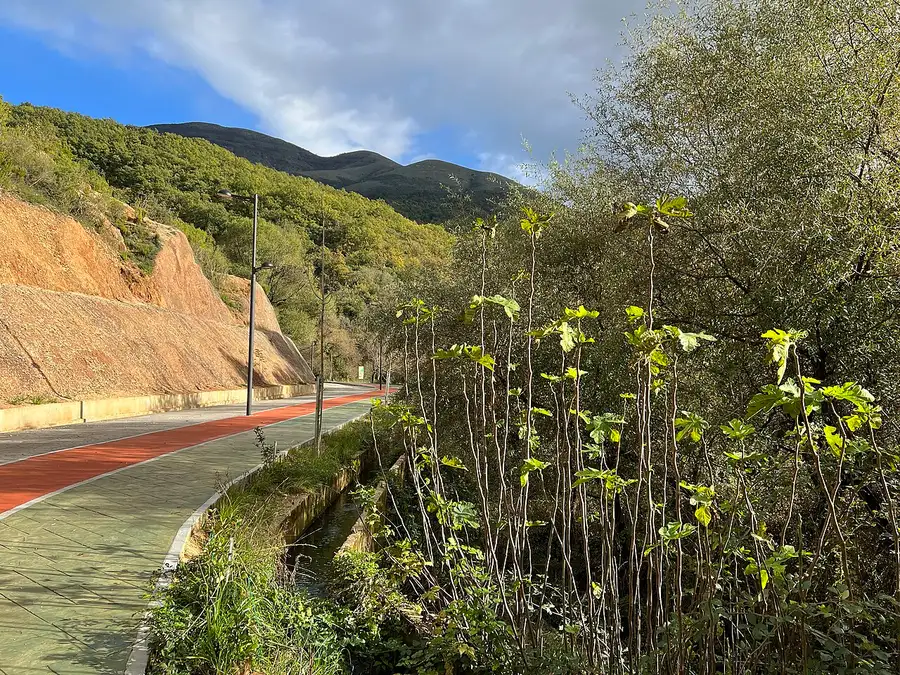
Albania drives on the right. The core limits and rules are straightforward, and the police do enforce them, increasingly with cameras.
| Rule | The number |
|---|---|
| Speed, built-up areas | 40 km/h |
| Speed, open roads | 80 km/h |
| Speed, motorways | 110 km/h |
| Blood alcohol | effectively 0.01% - treat it as zero |
| Seatbelts | compulsory, front and rear |
| Phone | handheld banned; hands-free allowed |
A few of these deserve a word. The alcohol limit is one of the strictest in Europe: at roughly 0.01 percent, a single beer or a shot of raki can put you over, so the only safe rule isn’t to drink and drive at all. Seatbelts are for everyone in the car, and children need proper restraints. Keep your dipped headlights on in tunnels, rain and poor light, and many drivers simply leave them on all day to be safe. Fines are real money: in 2026 a minor speeding offence starts around 5,000 lek (about 53 euros), handheld phone use runs 5,000 to 10,000, and jumping a red light can reach 20,000. These figures move, so treat them as the order of magnitude, not gospel.
Documents, and the IDP catch
Carry your passport, your national driving licence, the rental contract and the car’s insurance papers whenever you drive. Here’s the technical trap: Article 133 of the Road Code accepts a foreign licence only while you haven’t been resident in Albania for more than a year, and a licence that doesn’t match the models in the international agreements Albania has joined must come with an official Albanian translation or an equivalent document. In practice, most rental desks and most officers wave through a plain EU, UK or US licence without asking. The same article fines a driver whose licence needed that translation and didn’t have it ALL 10,000 to 40,000, and the UK government calls an International Driving Permit the better choice, so if there’s any doubt, get one at home before you fly, since they’re issued in your own country and never on arrival. It’s cheap insurance against an awkward roadside conversation.
Your rental should also carry the kit Albanian law requires, and the fine for it missing falls on you, the driver, not the agency: a warning triangle, a reflective vest kept reachable inside the cabin, a first-aid kit and a fire extinguisher. Check they’re there before you drive off.
What the roads are actually like
There’s no single answer, because Albania’s roads range from smooth new motorway to goat track. The main corridors are genuinely good: the A1 Nation’s Highway (the Rruga e Kombit) that climbs northeast toward Kosovo, and the Tirana-Durres motorway, are modern dual carriageways. Primary national roads between the big towns are mostly fine.
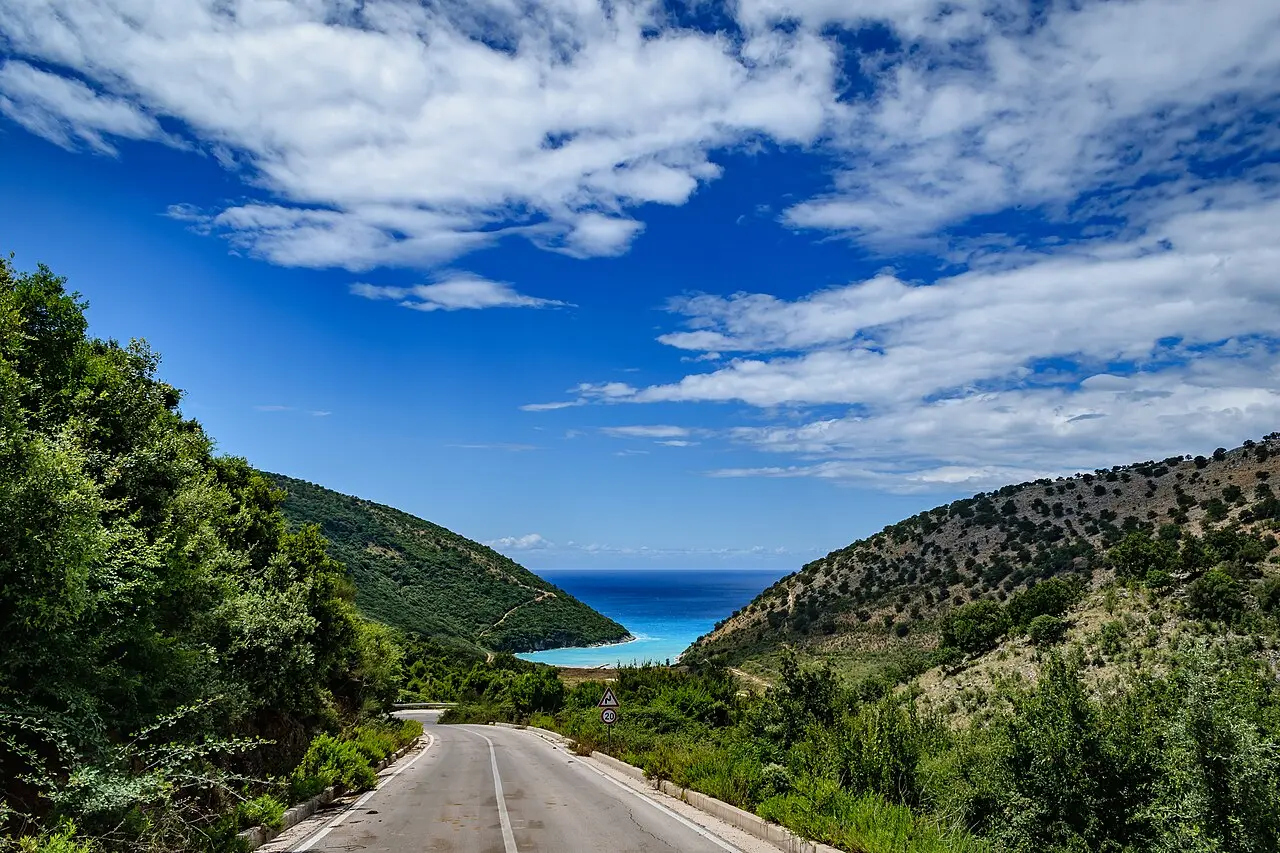
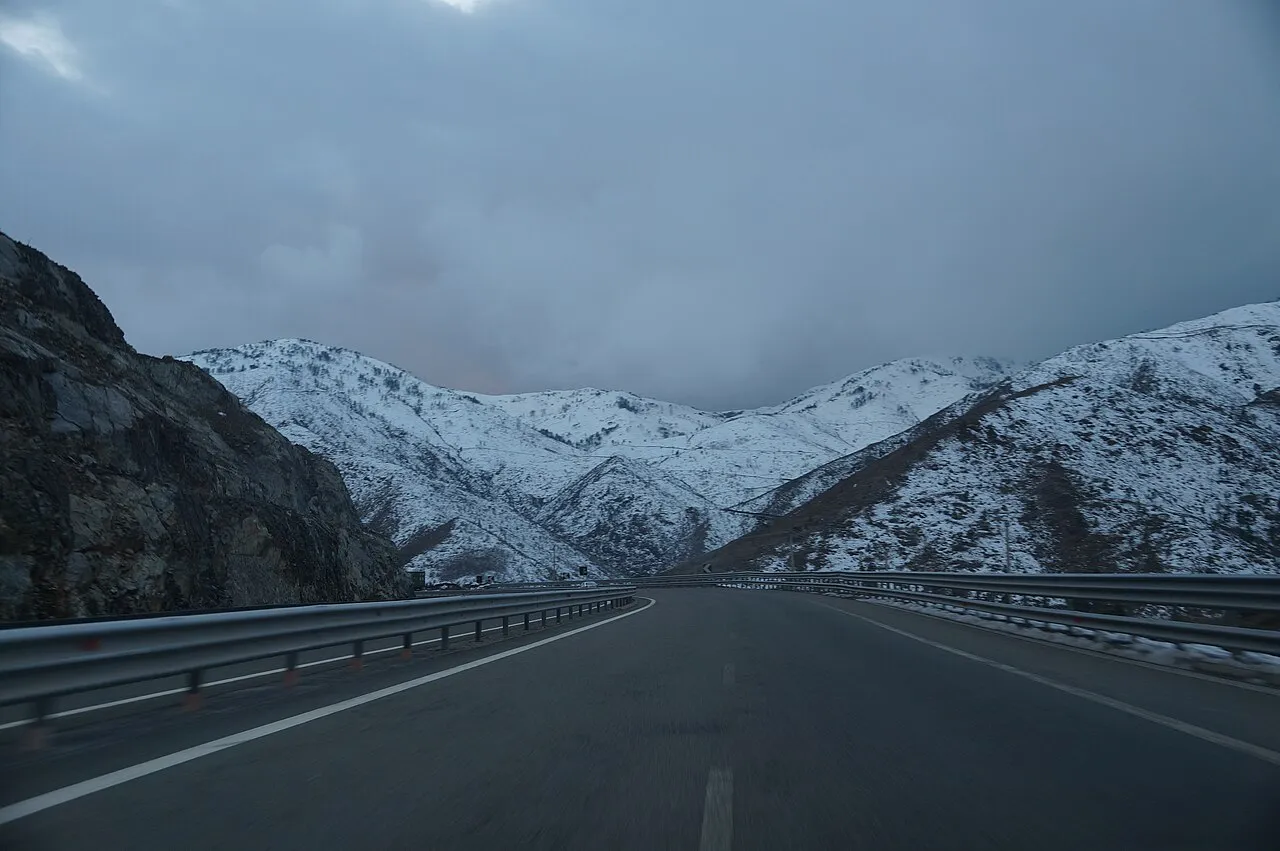
It’s the secondary and mountain roads that demand respect. Surfaces change without warning, a smooth stretch turning to potholes or gravel around a bend; there are often no crash barriers on drops, no lighting after dark, and the odd washed-out section in the hills. The Riviera coast road and the passes into the northern Alps, the routes people most want to drive, are exactly the ones that are narrowest and slowest. Don’t judge a journey by the map distance: our Albania road trip itinerary is deliberately built around short daily hops for this reason, and the number that matters is driving hours, not kilometres.
The hazards that catch tourists out
Most incidents involving visitors come down to a short list of surprises rather than anything exotic.
- Overtaking on blind bends. The single most unnerving habit. Expect oncoming cars to pull out to pass on hills and corners, and leave yourself room to brake or move over.
- Livestock on the road. Cattle, goats and sheep genuinely use the tarmac, especially at dawn and dusk and during seasonal moves in the hills. Round a mountain bend at speed and a herd can fill the whole road.
- Pedestrians and no verges. On roads without pavements, people walk in the carriageway; villages appear suddenly with pedestrians, parked cars and cafe chairs spilling out.
- Unmarked everything. Speed bumps with no paint or sign, missing manhole covers, and potholes that appear mid-lane are all normal. Watch the surface, not just the traffic.
- The dark. Unlit roads plus animals, pedestrians and no reflective markings make night driving outside towns the biggest avoidable risk on this list.
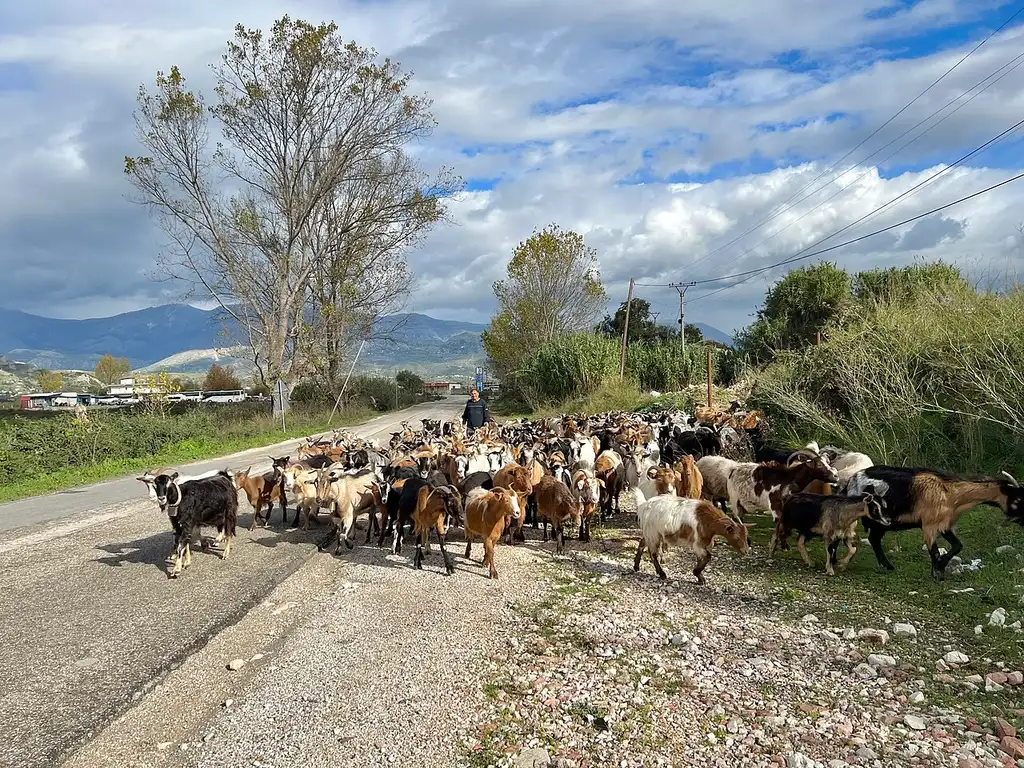
The winning strategy is dull and effective: keep your speed down, hang well back, anticipate the daft overtake before it happens, and plan the remote and mountain legs for daylight. If you would not do it at home in fog, don’t do it here in the dark.
Police checkpoints and fines
Roadside checks are common, often just a wave-through document check at a fixed point on a main road. Stop when signalled, be polite, and have your licence and papers ready. Genuine fines come with paperwork; ask for the official ticket rather than settling anything informally, and keep the receipt. Speed cameras and radar are increasingly used on the main roads, and a rental company will pass any camera fine on to your card later, usually with an admin fee, so the ticket you never saw can still find you.
Tolls, fuel and parking
Albania charges tolls on just two roads, and both are in the north. The big one is the A1 Rruga e Kombit heading northeast toward Kosovo: cars pay about 5 euros (around 470 to 500 lek) at the Kalimash tunnel booth, payable in cash, by card or with an electronic pass. The other is a small toll of around 170 to 250 lek on the newer Thumane-Kashar section near Tirana. Carry some lek for both.
Down south, the Llogara Tunnel under the Riviera pass is the one people ask about, and it’s still free. A tariff was approved in April 2026 at 250 lek one way for a car, but Albanian reporters at the plaza on 18 July 2026 found traffic passing without paying, cameras reading plates and no start date announced. Either way, the old pass road over the top stays open, free, and far better looking.
Fuel is easy to find on main routes and along the coast, and many stations also sell LPG autogas. Prices at the pump follow a government ceiling whenever the Transparency Board is sitting: its decision of 22 September 2026 capped retail unleaded petrol at 193 lek a litre and diesel at 213 lek, VAT included, until the Board’s next meeting, and stations are free to sell below it. The cap moves meeting by meeting, and the Board itself comes and goes with the oil market (it set prices from March to June 2026 and again from 19 September), so the figure on the pump is the one you’ll pay; Albanian Customs posts the Board’s decisions on its notices page. The catch is the mountains and the quieter back roads, where stations thin out fast, so fill up before a remote stretch rather than gambling on the next village. Pay cash or card at staffed stations. For parking, central Tirana and the busy coastal towns use paid blue-line zones in the day; look for the signs and the machine or the attendant, and in high summer expect a real hunt for a space near the popular beaches. If a car starts to feel like more hassle than help, our guide to getting around Albania by bus and furgon is the alternative.
If you have an accident
Save one number before you drive: 112, which reaches police, ambulance and fire across the country. In a crash, get yourself and others safe first, then call 112 if anyone is hurt or the vehicles are badly damaged. For anything you will claim on insurance, you need a police report, so wait for the police rather than sorting it privately, and photograph the scene, the vehicles and the other car’s plate and papers. Don’t move the cars before the police see them unless they are dangerously blocking traffic. This is also where good cover earns its keep: Albania has no reciprocal healthcare deal with the UK, US, EU or Australia, so hospital treatment is out of your pocket, and a policy with proper medical and evacuation cover matters most exactly when you’re on a remote road. Our Albania travel insurance guide covers what a good policy should include.
The bottom line
Driving in Albania is worth it, because the car reaches the coves, canyons and mountain villages the buses never will, but it asks for respect. Keep to the limits, treat the alcohol rule as absolute zero, carry your documents and ideally an IDP, and read the road for livestock, blind-bend overtakes and unmarked hazards. Above all, keep off the rural roads after dark and plan the mountain legs for daylight. Line the trip up with the best time to visit, when roads are open and clear, do those few things, and the drive becomes the best part of the holiday rather than the scary one. For live navigation and offline maps on those remote roads, sort a local data plan before you go with our best eSIM for Albania guide.
Read also

Transport · 12 min read
Tirana to Athens: Bus, Flights & the Overland Option
Updated · October 5, 2026Tirana to Athens by bus: 04:00, 15:00 and 17:00 daily, €45 one way and 12-14 hours via Kakavia, or four direct flights a day. Checked 6 Oct 2026.

Transport · 9 min read
Tirana to Podgorica: Bus, Border & Onward to Kotor
Updated · October 5, 2026Tirana to Podgorica: about 160 km and 3.5-4 hours by direct bus via the Hani i Hotit border, two daily lines, then on to Kotor. Times checked 3 Oct 2026.

Transport · 10 min read
Butrint Day Trip from Corfu: Ferry + Site in One Day
Updated · October 16, 2026Butrint from Corfu in a day: a 30-45 min boat to Saranda, 18 km by road, a 1,000-lek ticket. Which boats work in October, November and winter.

Transport · 14 min read
Albania Border Crossings by Car: Queues, Docs & Green Card
Verified · October 2, 2026Albania's 13 customs road crossings: which stay open all night, when queues build, Green Card rules by plate, Kosovo's €15 insurance and EES into Greece.