Albania Visa & Entry Requirements 2026: Who Needs One
Who needs a visa for Albania in 2026? Entry rules by nationality: 90 days for most, up to 1 year for US citizens, plus e-Visa and passport rules.

Albania is one of the easiest countries in Europe to enter, and for some travellers the rules are surprisingly generous: U.S. citizens can stay visa-free for up to one full year - 365 days - with no residence permit at all (per travel.state.gov). Most other Western travellers get a familiar 90 days in any 180. And if your nationality does normally need a visa, there’s a rule further down that may get you in without one, based on documents you already carry.
Who can enter Albania visa-free
| Nationality | Visa-free entry | Max stay |
|---|---|---|
| United States | Yes | Up to 1 year (365 days) |
| United Kingdom | Yes | 90 days in any 180 |
| EU / Schengen / EEA | Yes (national ID card accepted) | 90 days in any 180 |
| Canada | Yes | 90 days in any 180 |
| Australia | Yes | 90 days in any 180 |
On any of these five passports you still need at least three months’ validity after the date you leave Albania, a passport issued within the last ten years, and at least two blank pages in it; EU, EEA and Swiss nationals can cross on a national ID card instead. A border officer can ask for proof of onward travel, a booking and enough funds, though Western holidaymakers are rarely stopped for it - both points are explained under “What you need to enter Albania” below.
Albania also grants 90 days visa-free to a longer list of other countries - Japan, South Korea, Turkey and Israel among them - and Ukraine and Russia have their own rules, covered in dedicated sections further down. The ministry publishes the full country-by-country table. If your passport isn’t visa-free on it, a used multiple-entry Schengen, US or UK visa, or a residence permit from one of those, lets you in without an Albanian one (Iranian citizens excepted) - conditions under “Visa-free on a visa you already hold” below.
General information, not legal or immigration advice. Entry and visa rules change and depend on your nationality and circumstances. Everything here was rechecked on 22 September 2026 against the ministry’s visa-regime page and its country-by-country table (archived copies of 16 September and 9 August 2026), the text of Law No. 79/2021, the UK, Canadian and Australian travel advice, and the U.S. State Department’s Albania page. Always confirm the current position with the official source - your nearest Albanian embassy or the Ministry for Europe and Foreign Affairs (punetejashtme.gov.al) - before you travel.
The whole regime runs on Law No. 79/2021 “On foreigners” and Council of Ministers Decision No. 858 of 29 December 2021; the core rules on this page trace back to those two, and the ministry keeps the working version on its visa-regime page.
Albania belongs to neither the EU nor the Schengen Area, so it sets these entry rules itself rather than inheriting Schengen’s - which is part of why the US terms above are so much more generous than what the same passport gets inside the EU next door.
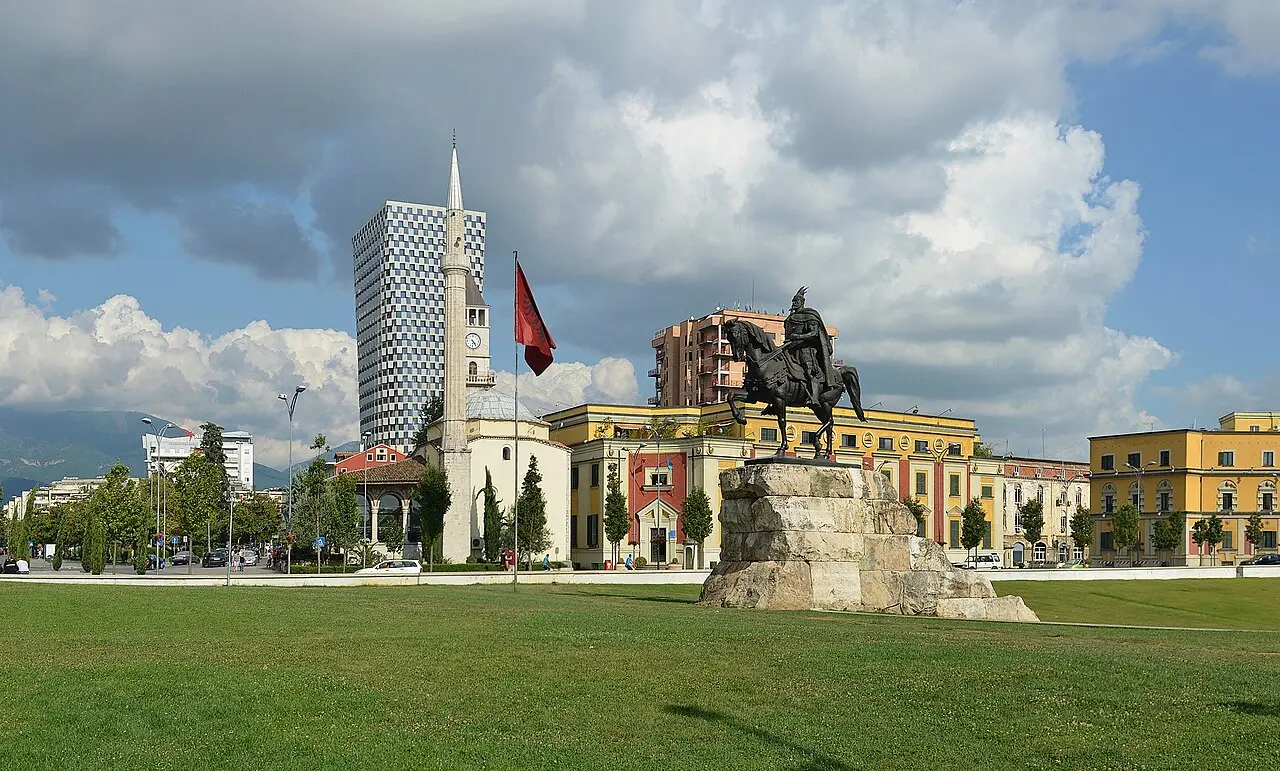
That American year is why the country fills up with long-stay travellers and remote workers; the mechanics, including why a weekend in Corfu doesn’t reset the clock, are in our one-year visa-free guide for US citizens. It is a stay, not a status: it doesn’t grant the right to work locally, which is what the digital nomad visa overview and the relocation guide are for.
Visa-free on a visa you already hold
This is the rule that saves the most money and almost nobody finds, because it depends on your documents, not your passport. If your nationality normally needs an Albanian visa, the ministry lets you skip it when you already carry certain foreign permissions:
- a valid multiple-entry Schengen visa that you’ve already used to enter a Schengen state, or a valid residence permit from a Schengen country;
- a valid multiple-entry visa or residence permit issued by an EU country, the United States or the United Kingdom, electronic formats included, again already used in the country that issued it;
- a 10-year UAE residence permit, valid for at least a year from the day you enter;
- the right to enter and stay in the Schengen area without a visa at all;
- EU-issued travel documents for refugees (1951 Convention), stateless persons (1954 Convention), subsidiary protection holders and aliens.
Two conditions do the work here. “Previously used” is literal: an unused Schengen sticker in your passport doesn’t qualify, so the border officer is looking for an entry stamp or equivalent proof from the issuing bloc. And your stay in Albania is tied to that document’s life: you must leave Albania no later than three days after it expires. Not three months, three days. If your Schengen visa runs out in the middle of an Albanian holiday, the holiday ends with it.
For an Indian or Egyptian traveller already carrying a used multiple-entry Schengen visa, that turns an Albanian side trip into a bus ticket. The ministry’s table carves out one nationality: Iranian citizens need a visa regardless of any US, UK or Schengen visa they hold. Check your own passport before you pay anyone anything.
Ukraine: visa-free with an extended-stay scheme
Ukrainian citizens enter visa-free, and beyond the standard short-stay allowance a Council of Ministers decision taken in April 2026 lets them stay without a residence permit until 30 March 2027, replacing the 2022 act that covered them before. Per the text of that decision, the extension applies automatically to Ukrainians already in the country, not only to new arrivals. Measures like this are renewed by government decision and carry a fixed end date, so confirm the current terms with the ministry before you count on the long version.
Russia: an e-Visa is usually required
This is the point most often misreported online. Russian citizens don’t get blanket 90-day visa-free entry to Albania - that widely repeated claim is wrong. As a rule, Russian passport holders need an e-Visa. The exception is the document rule above: a valid, already-used multiple-entry U.S., UK or Schengen visa, or a residence permit from one of those, gets you in without one. If you don’t hold that, apply for the e-Visa in advance rather than trusting the myth.
Type C and Type D: which visa you actually need
Two types matter to travellers, and the difference is length of stay, not purpose.
Type C is the short stay: the right to enter and stay 90 days within any 180, counted from first entry, issued for single, double or multiple entry. The sticker itself can be valid for up to five years even though the allowance stays at 90 in 180, which is why a multiple-entry C is worth asking for if you expect to come back.
Type D is the long stay, and it isn’t a longer holiday. It goes to someone intending to reside more than 90 days in 180 who needs a visa in order to be granted a residence permit. A D is valid for one year and allows 90 days of stay; its real job is to get you into the country so you can apply for the permit once you’re there. If you plan to live and work here, D is the door and the permit that follows is in our digital nomad visa and residence guide.
Where to apply, and the sites you should ignore
The application is handled online through e-visa.al, the portal run by the Ministry for Europe and Foreign Affairs, and the ministry’s visa-regime page points at that address and no other. Online doesn’t mean embassy-free, though: for each nationality on the ministry’s country table that needs a visa, the table also names the Albanian embassy or embassies to apply through (Cairo for Egyptians, for example). An electronic visa arrives by email, but if you choose a stamped visa instead, you collect it in person from the embassy you applied through. Search “Albania e-visa” and you’ll get a screen of confident-looking sites offering to file the application for you for well over the consular fee, plus an express surcharge. Those are commercial agents putting a margin on a government form: legitimate businesses, perhaps, but none is the issuing authority and the number they quote isn’t the state fee. If your country isn’t in the ministry’s table, the instruction is to apply at the Albanian embassy geographically closest to your country of origin or residence.
The form itself is unremarkable: passport data and travel dates, a scan of your passport, a recent passport-style photo, a travel health insurance policy covering the stay, a payment, and a decision by email. Time it to the actual trip - the intended travel date is expected to fall within 90 days of the application - and allow working days that can run into a few weeks. We don’t quote a fee or a processing time on purpose: both are set by government decision, both have moved, and the live figures are in the portal.
What you need to enter Albania: passport, funds and onward travel
The ministry sets two different passport rules, and the one most travel pages repeat is the wrong one. If you don’t need a visa, your passport must be valid for at least three months after the date you leave Albania (not after you arrive, which is the version you’ll see quoted everywhere - even the U.S. State Department states the softer from-arrival wording, so go by the ministry’s stricter one) and it must have been issued within the last ten years and carry at least two blank pages - the ministry spells the page rule out only for visa applicants, but Article 10(1) of Law No. 79/2021 asks it of any foreign travel document. That ten-year condition catches people with old ten-year passports that were extended: an issue date more than a decade back is a problem even if the expiry date looks fine.
If you do need a visa, the document has to be valid for at least three months longer than the term of the visa you’re asking for, carry at least two blank pages for the stamp, and come with a photocopy of the relevant pages. Check this early: airlines enforce validity rules at check-in regardless of Albania’s border policy.
Beyond the travel document the requirements are light. What actually triggers questions at the desk is a one-way ticket, and airlines occasionally check the same at the gate, so if you’re flying in one-way for a long stay, keep an onward ticket and a booking on your phone. Law No. 39/2025 on state border control sets out what an officer may ask for at entry - your purpose of travel, where you are staying, your funds and an onward ticket - and gives EU, EEA and Swiss nationals a minimum check instead. On insurance the split matters: visa-free travellers aren’t asked for a policy at the border, but if your nationality needs a visa, travel health insurance covering the stay is part of the application - Article 25(4) of Law No. 79/2021 waives that obligation only for a visa issued at the border itself.
Staying beyond 90 days: registration and the one-year limit
Registration is not actually tied to the 90-day mark at all. Under Article 29 of Law No. 79/2021, foreigners are, as a rule, required to register with the local authority responsible for border and migration within 10 days of entering Albania - the clock starts at entry, not at day 90 - and the Council of Ministers keeps a list of nationalities exempt from that duty, so check whether yours is on it. After a full year the expectation is that you leave and stay out for around 90 days, or move onto a proper residence permit; that reset is reported practice rather than something we can state as settled. Confirm your own case with the U.S. Embassy in Tirana (al.usembassy.gov) or the Ministry for Europe and Foreign Affairs (punetejashtme.gov.al).
Seasonal visa-liberalisation schemes change every year
Albania regularly opens temporary visa-free windows for additional countries through decisions of the Council of Ministers, and they carry hard dates. The live example as this page was checked: citizens of Saudi Arabia and Qatar may enter on a passport with no visa for tourism only, on a window the Council of Ministers set for 15 April to 31 December 2026. Tourism only, and the window shuts on the last day of the year unless it’s renewed.
That’s exactly why a country list you find on a blog is worth nothing: this window is set year by year, may look different in 2027, and the one covering your nationality may already have lapsed. Check the current entry on the ministry’s visa-regime page for your nationality and your travel dates, and if you’re unsure, a short email to the nearest Albanian embassy is the safest confirmation you can get.
Crossing the border: land, sea and air
Most visitors fly into Tirana International Airport (Nënë Tereza), where the check is quick. Albania also has four land borders and busy ferry links to Italy, and the same rules apply whichever way you come.
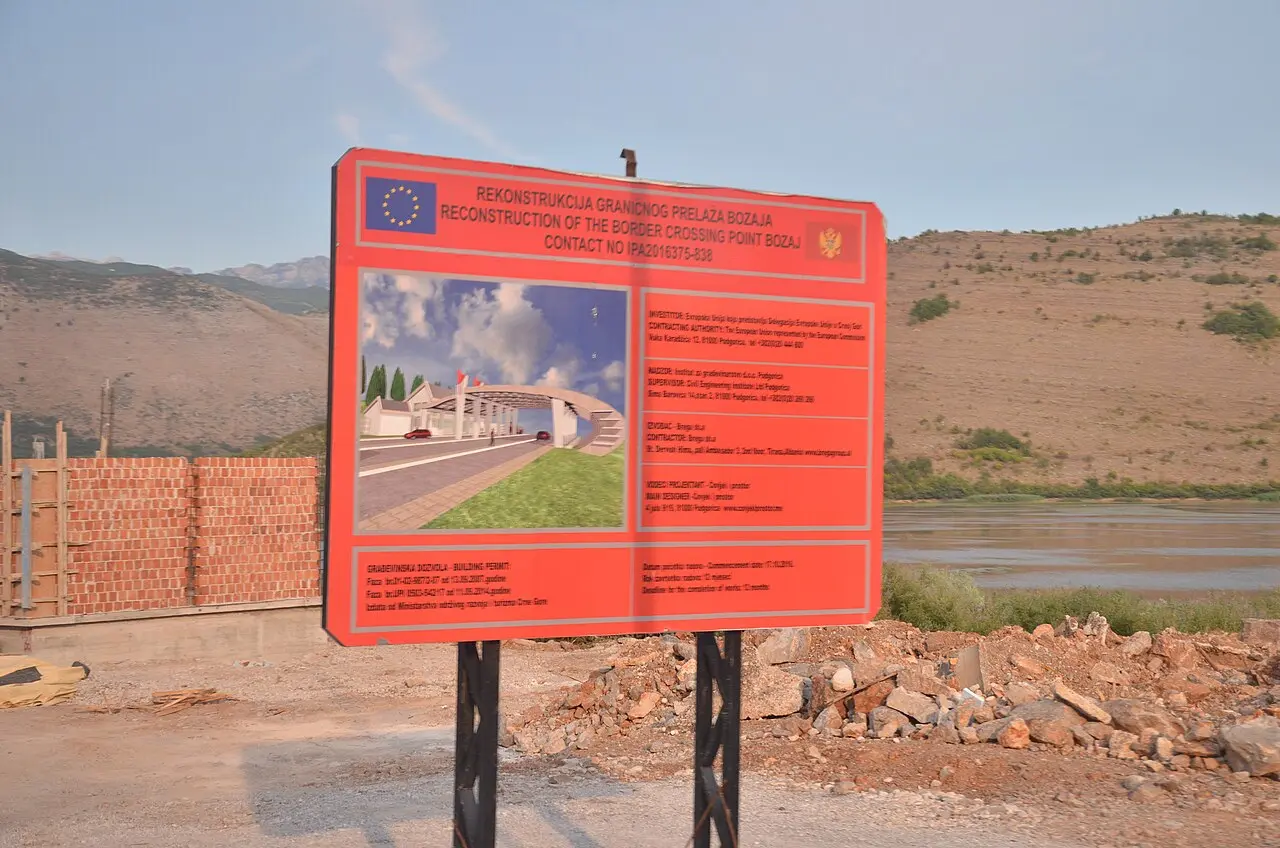
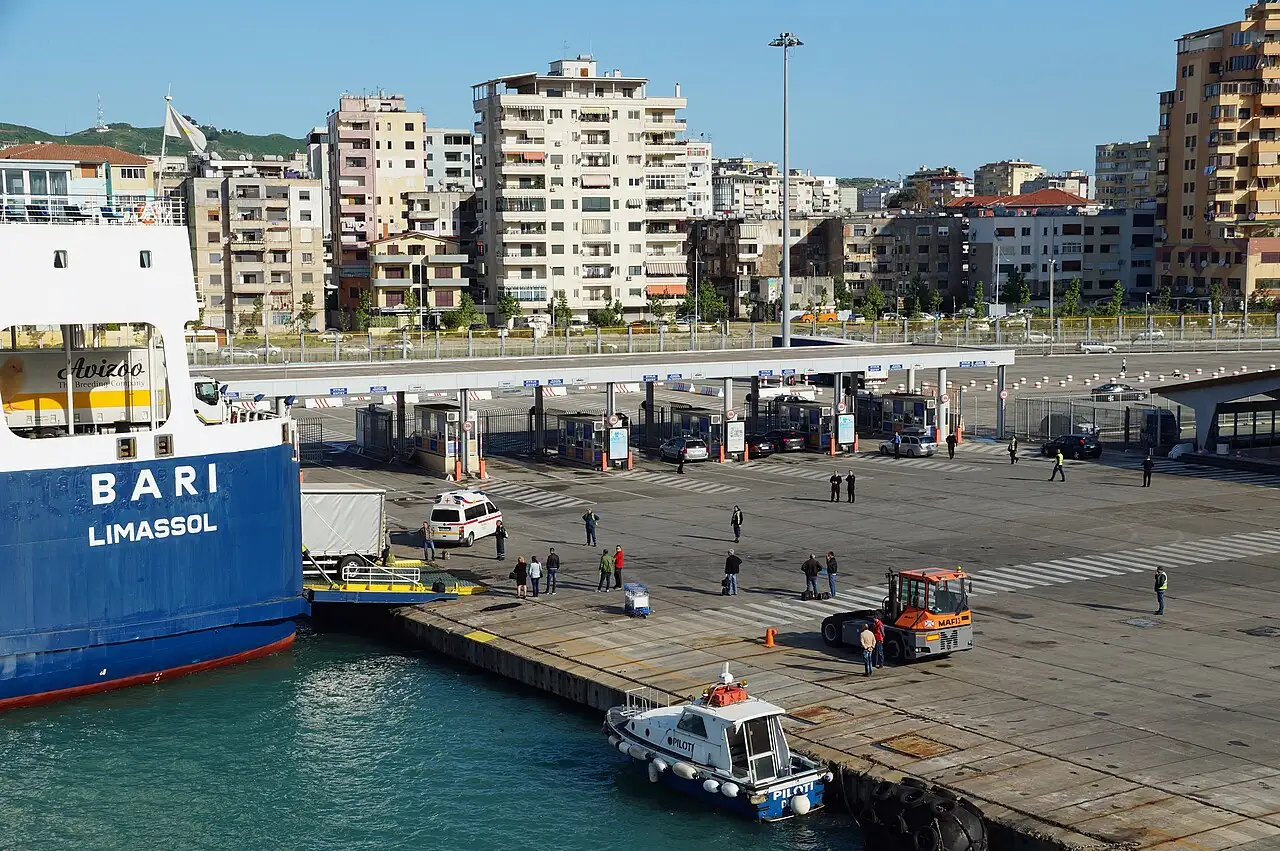
The four main land crossings are Kakavia from Greece, Hani i Hotit from Montenegro, Morina from Kosovo and Qafa e Thanës from North Macedonia. By sea, ferries run from Bari, Ancona and Brindisi into Durrës and Vlorë; routes and timings are in our Italy to Albania ferry guide, and the whole arrival picture is in how to get to Albania. Whichever way you come, carry the document your nationality needs and the e-Visa if you needed one.
Before you go: a short checklist
With the entry route settled, pick your dates with best time to visit Albania and decide whether travel insurance is worth it for a stay this long. Every pre-trip guide sits in the trip planning hub.
Then work down this list before you fly:
- Check your passport’s issue date as well as its expiry: issued within ten years, valid three months past the day you leave, two blank pages inside.
- Keep an onward ticket and your first booking on your phone, above all if you’re flying in one-way.
- Relying on a Schengen, US or UK visa instead of an Albanian one? Make sure it’s multiple-entry and already carries an entry stamp.
- Applying for an e-Visa? Use e-visa.al only, budget for a travel health policy, and keep the emailed visa on your phone.
- Staying a while? Note the 10-day registration deadline unless your nationality is exempt.
Read also

Before you go · 13 min read
Theth vs Valbona: Where to Base in the Albanian Alps
Updated · September 13, 2026Theth vs Valbona in 2026: which Alps valley to base in without the full crossing - access from Tirana, guesthouse costs and crowds compared.

Before you go · 8 min read
Where to Stay in Gjirokaster: Old Town Stone Hotels
Updated · September 3, 2026Where to stay in Gjirokaster: Old Town stone boutiques and guesthouses versus the flat new town - cobbles, parking and what each lodging type really costs.

Before you go · 10 min read
Berat vs Gjirokaster: Which Ottoman Town to Visit?
Updated · September 3, 2026Berat vs Gjirokaster in 2026: white-window Berat is closer from Tirana; stone Gjirokaster fits the south. Compare sights, travel times and who each suits.

Before you go · 11 min read
Where to Stay in Shkodra: Old Town, Lake or Alps Base
Updated · August 22, 2026Where to stay in Shkodra: the Old Town, quiet Zdrale, lakeside Shiroka, or a hiker hostel that runs its own transfer to Theth and the Koman ferry.