Benja Thermal Baths: Permet's Free Hot Springs Guide
Benja (Bënjë) thermal baths near Permet: free entry, lukewarm 22-32 C pools by an Ottoman bridge, and why basins were found dry in mid-2026.
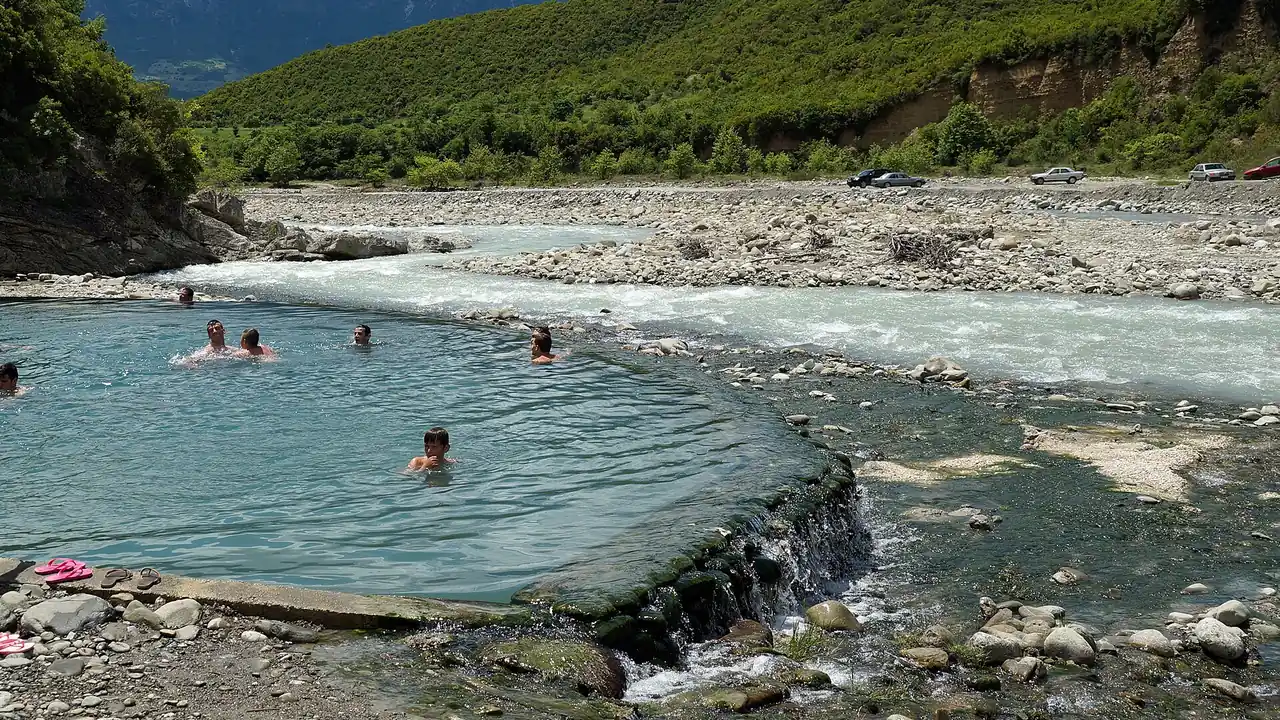
The Benja thermal baths (Banjat e Bënjës) are a set of open-air mineral pools on the Lengarica river, 14 km from Përmet in southern Albania, sitting right under an 18th-century Ottoman stone bridge at the mouth of a canyon. Bathing is free, there’s no ticket office, and published figures for the water run from 22 to 32 degrees depending on the pool, the season and which source you read. Two things decide whether you enjoy it: your expectations about the word “hot”, and the fact that through 2026 the site is a building project, one that has repeatedly left basins standing empty in the middle of the season.
Nobody warns you about the temperature, so here it is plainly. This is not a steaming Icelandic lagoon. Whichever end of that 22 to 32 range a given basin sits at, visitors describe the same thing: on a warm afternoon the pools feel lukewarm, close to a tepid bath, and the sulphur gives the water a distinct eggy smell that clings to swimwear. Go in October with cold air on your shoulders and the same water feels wonderful. Go at 2pm in July and you’ll wonder what the fuss was about. The setting does the heavy lifting: an Ottoman stone arch, a pale blue river running past your elbow and the Nemërçka range standing over the valley.
What Bënjë actually is
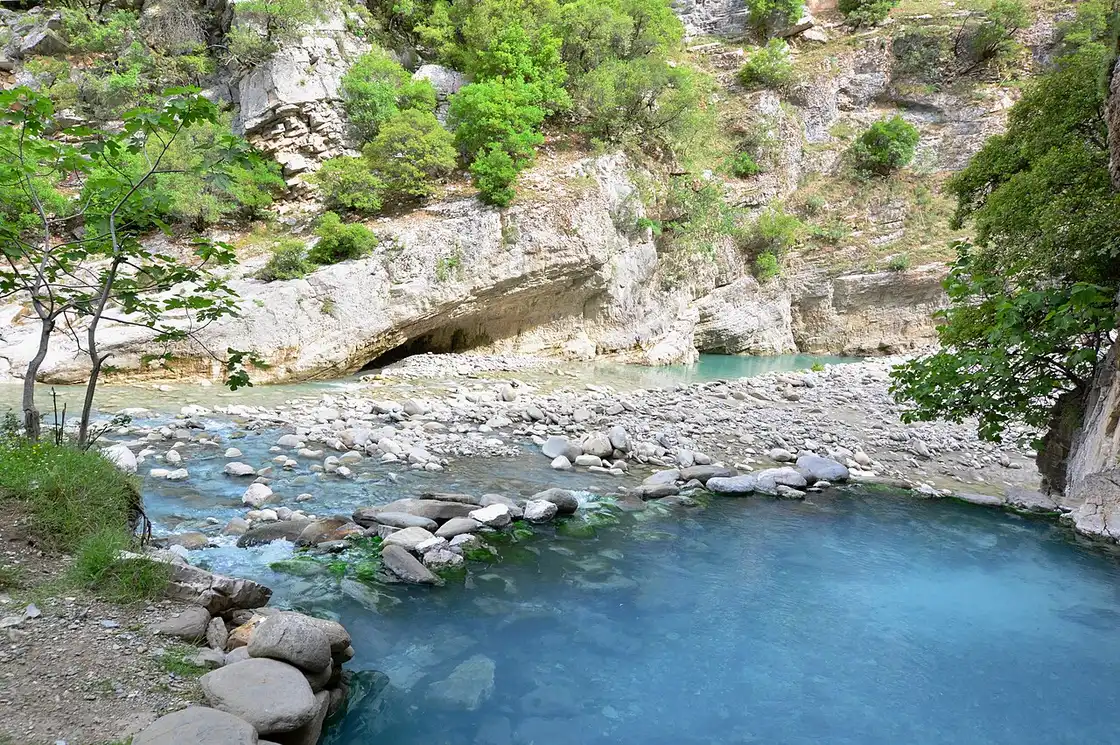
The springs rise from a deep tectonic fissure that runs along both sides of the Lengarica canyon, which is why the pools are scattered on both banks rather than clustered in one spot. Përmet municipality describes them as small basins where you can also scoop up thermal mud; travellers usually report six usable pools, with the two by the bridge easiest to reach and the rest strung along the river into the gorge. The water is chloro-sodium-calcium with enough sulphur to announce itself before you see it.
Local tradition credits the different springs with helping different complaints, and the municipality still lists skin, stomach, kidney and rheumatic conditions on its own page. Treat that as folk reputation rather than medicine, and if you have a heart condition or are pregnant, the usual thermal-bathing cautions apply.
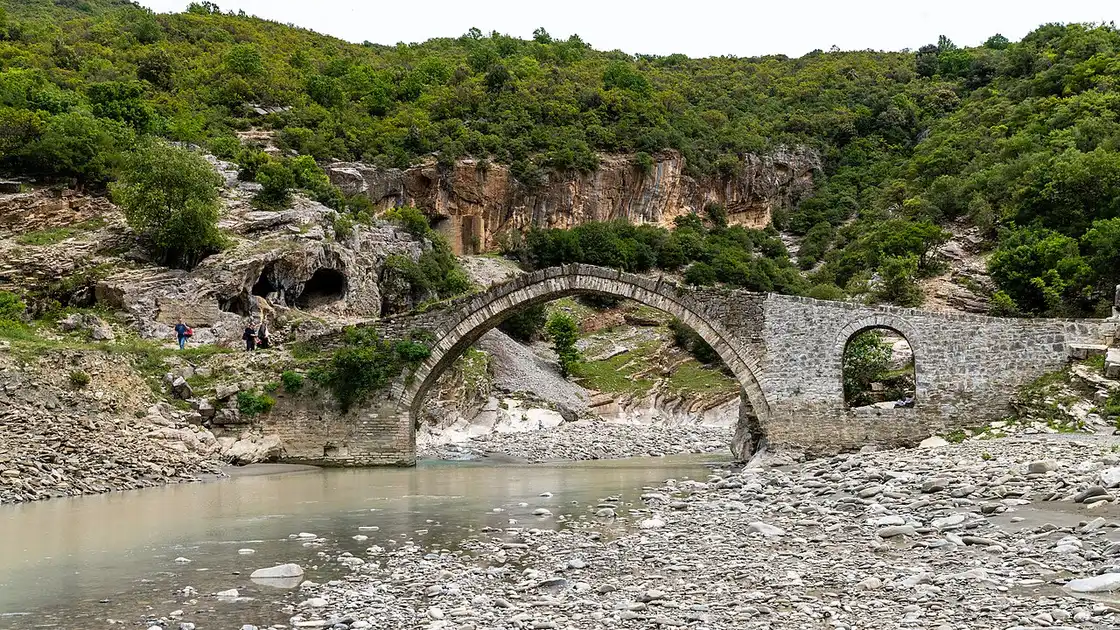
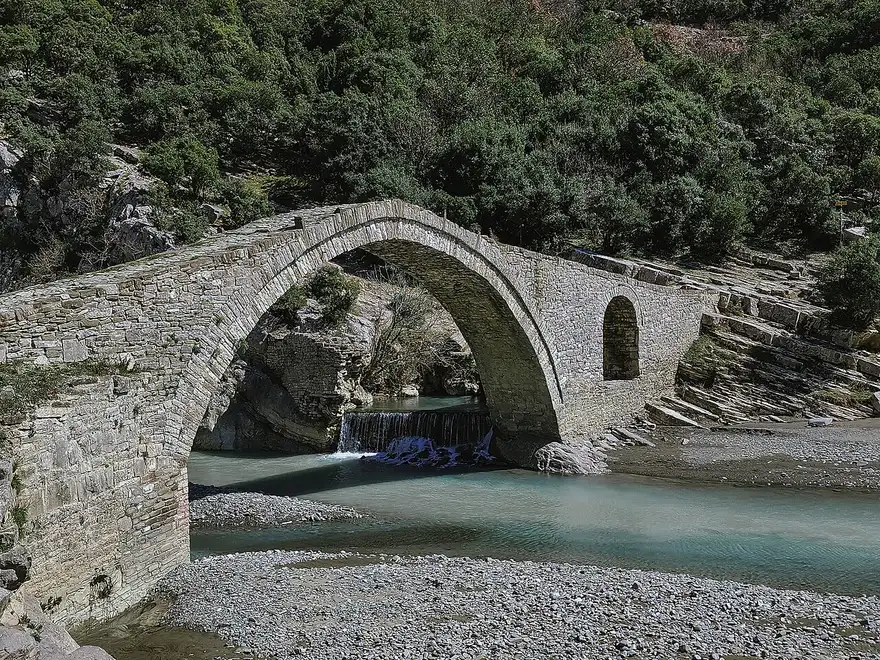
The bridge is the other half of the picture. Ura e Kadiut, the Judge’s Bridge, is a single-arch Ottoman span built in the 18th century, with a main arch of 15.5 m rising about 6 m above the water according to the municipality. It carried the old route across the Lengarica towards the villages upstream, and today it frames every photograph anyone takes of the place.
Behind it, the Lengarica canyon runs about 4 km with rock walls over 100 m high, and the whole area is a declared Natural Monument for its geomorphological, thermal and touristic value. In low water you can wade a short way into the gorge from the pools; after rain, or in spring, that becomes a bad idea.
2026: check before you drive out
This is the part most guides haven’t caught up with. Bënjë is being rebuilt under a requalification project funded by the Albanian Development Fund, with new walkways, rest areas, service buildings and a reorganisation of the basins themselves; Albanian media have put the value at roughly EUR 2 million. Visitors through 2025 and 2026 have described concrete forms around some basins, steel and pallets around others, a new car park under construction and new accommodation going up close to the springs. A specialist working on the site told Albanian media on 27 June 2026 that the works are due to close in September 2026, which is the only completion date anyone has put on the record.
It has also produced a running argument that is still unresolved, and the dates matter. On 25 June local outlets reported four of the curative basins standing without water at the very start of the summer season. The next day the pools’ emptying was defended publicly by Mirela Kumbaro - since September 2025 the education minister, before that the tourism and environment minister, and throughout a sitting MP for Gjirokastër county, which includes Përmet - who said the basins had been drained temporarily as part of technical testing of the inflows and levels, that they were being refilled in a controlled way, and that the works weren’t finished. Note what that’s and isn’t: a comment from the constituency’s MP, who used to hold the portfolio, not a statement from the ministries that now hold tourism or the environment, neither of which has published a position on the site.
Residents kept filming. Video circulated the same week showing only one basin with any flow, and on 19 July 2026, five days before this page was written, a local resident’s video published through a Përmet-area channel showed pools dry again, stagnant and, residents alleged, fouled. So the honest picture is a dispute in progress: officials say controlled testing, visitors keep photographing empty concrete.
Practically, that means the site is open and people do still bathe, but what you find on the day is genuinely variable, and “there will be water” isn’t a safe assumption in 2026. Before committing to the 14 km detour, look at photos posted in the last week or two, in recent reviews or on the Google Maps listing, rather than the polished shots on tour listings, which are often years old. Whether the rebuild will eventually bring a ticket price is an open question; nobody has announced one.
Cost, parking and facilities
Entry is free, and every source we checked in July 2026 agrees on that. Parking is where reports diverge. Some visitors park free and walk five to ten minutes down; others describe an informal charge of about 200 lek at the car park closest to the bridge; and during the works the parking has at times been pushed back with a walk of a couple of hundred metres. Carry small notes in lek and treat whichever arrangement you meet as the current one.
Facilities are the real gap. As of the most recent visitor reports there are no permanent toilets, showers or changing rooms, with at best a temporary drinks and snack stand in high summer. People change behind a towel or in the car. Bring a towel, water, something to sit on and water shoes, because the pool bottoms are loose stone and the mineral water will stain a pale swimsuit. If you want to stay longer, a campsite by the river was quoted in 2025 at around 1500 lek a night with electricity.
How to get there
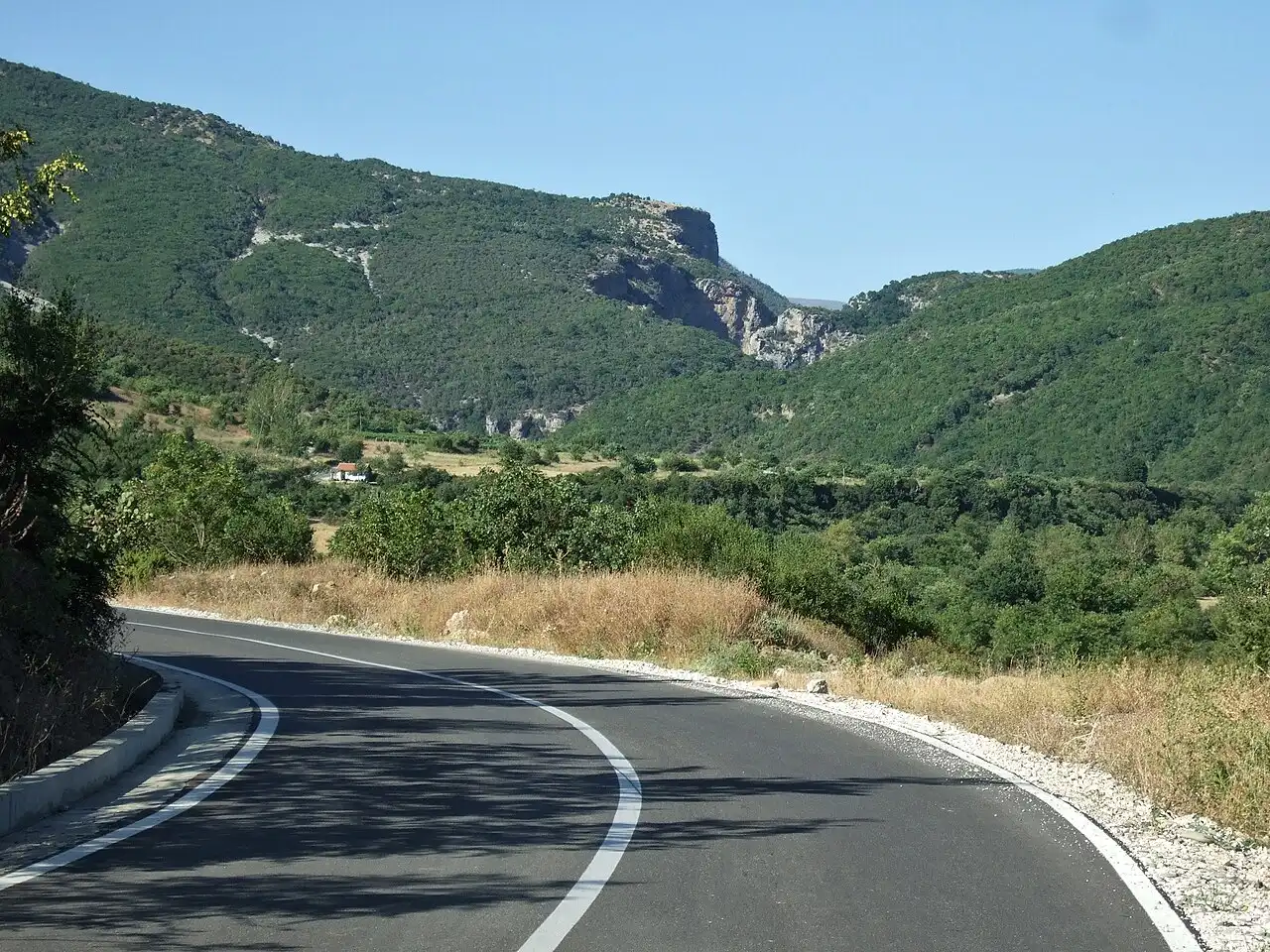
From Përmet it’s 14 km and about 25 minutes by car. Head south-east out of town and take the turn just before the village of Petran, signposted Benjë, onto a narrow road down the Lengarica valley. It is paved for most of the way with a fair share of potholes and a short gravel stretch at the end. A normal hire car handles it fine; the rough track that continues past the car park into the canyon doesn’t, and that one is genuinely 4x4 territory.
From Gjirokastër it’s the Përmet road plus the valley: about 65 km and an hour and a half on the SH75 to Përmet, then the 14 km in, so realistically close to two hours each way. You’ll see shorter figures quoted, including by businesses in Përmet, but they don’t survive contact with our own timings on the Gjirokastër-Përmet leg. Four hours in the car for a soak is a full day out of the old town, not a half day, and it is the strongest argument for giving Përmet a night instead. From Tirana there’s a direct run south on the SH4 through Fier and Tepelena, no detour via Gjirokastër needed, but it’s still around 230 km and four hours or so, which makes it part of a southern loop rather than a day trip from the capital.
Without a car, local minibuses run out from Përmet, with departures reported roughly between 08:00 and 12:00, returns until about 16:00, and a fare around 200 lek. Those are traveller reports rather than a published timetable, so ask at your guesthouse the evening before, and have a plan if the last one back does not appear. A taxi from Përmet with an agreed wait is the safer version of the same day.
When to go
Spring and autumn are the sweet spot, and it’s not a close call. Lukewarm water is a pleasure when the air is 12 degrees and steam is coming off the surface; it’s unremarkable when the air is 34. October and April also give you the canyon looking green rather than scorched, and far fewer cars at the turn.
Time of day matters as much as the month. Summer crowds concentrate between roughly 11:00 and 15:00, and the pools are small enough that a couple of tour vans change the experience completely. First thing in the morning you may get a basin to yourself with mist rising off it. Winter visits are possible and the water does not care about the season, but the road and the riverbed get slippery and the higher pools can be cut off when the Lengarica is up. If you’re still fixing dates for the wider trip, our guide to the best time to visit Albania sets the inland south against the coast.
Bënjë against the other southern water sights
Albania’s south has a lot of famous water, and the sensible way to choose is by what you actually get to do. The Blue Eye near Saranda is spectacular and strictly look-only: swimming is banned and the spring runs at 10 to 13 degrees anyway. Bënjë is the opposite proposition, a place with no drama in the photographs beyond the bridge, where the entire point is that you climb in and stay for an hour.
That’s also why it works as part of a driving day rather than a destination on its own. Përmet itself is a green, easygoing town on the Vjosa and a good overnight; from there the road carries on to Gjirokastër and its stone bazaar, or north-west towards the coast. The whole inland string is laid out in our southern Albania road trip, and if you’re sorting the car for it, the excess and road-condition clauses in how to rent a car in Albania matter more on these roads than the headline daily rate.
Set your expectations right and Bënjë is one of the best-value stops in the country: an hour in mineral water under an Ottoman bridge, with a wild river running past, for the price of the fuel to get there. Just go in the cool half of the year, go early, and check what state the building works and the water are in the week before you turn up - and after that until the water is reliably back. See the rest of our Albanian attractions for the stops that fit around it.
Photos
On the map
The map loads on click - to keep the page lightweight.
The map didn’t load. Check your connection and refresh the page.
Admission and opening hours
- Admission price
- Free
Bathing is free and no ticket is sold. Parking reports differ: some visitors park free and walk 5-10 minutes, others pay around 200 lek at the closer car park, and a new car park was under construction in 2026 - carry small lek. No permanent toilets, showers or changing rooms. Rebuilding works run to September 2026 and some pools have been found drained mid-season, most recently on 19 July 2026 - check visitors' latest photos before making the 14 km detour.
Details checked: July 24, 2026
Distance ≈230 km · ~4-4.5 h
- Tirana ≈230 km · ~4-4.5 h There is a direct route: SH4 south through Fier and Tepelena, then the river road to Permet (a Permet operator puts that leg at about 215 km / 3.5 h), plus 14 km to Benje. No need to detour via Gjirokaster - though most people arrive from there anyway, about 1 h 15.
Read also

What to see · 9 min read
Bovilla Lake Tirana: Gamti Viewpoint & Road Tips
Updated · September 1, 2026Bovilla Lake near Tirana: 20 km by road, gravel last stretch, Gamti balcony hike, drinking-water rules, and when a guided tour beats self-drive.

What to see · 11 min read
Valbona Valley: Guesthouses, Walks & Alpine Road
Updated · August 30, 2026Valbona Valley in the Albanian Alps: arrival via Fierza and Bajram Curri, guesthouses, short walks, and the paved Alpine road.

What to see · 9 min read
Shala River Day Trip: Albania's Alpine 'Thailand'
Updated · August 27, 2026Shala River day trip in 2026: turquoise water in the Albanian Alps, boat times from Koman Lake, prices, what to pack, and how it differs from the ferry.

What to see · 10 min read
Saranda Boat Trips 2026: Kakome, Krorez & Mirror Beach
Updated · September 17, 2026Saranda boat trips to Kakome, Krorez and Mirror Beach: EUR 25-35 north and from EUR 100 south at the operators we checked, plus where boats leave.