Pogradec & Lake Ohrid: The Albanian Side
Pogradec on the Albanian shore of Lake Ohrid: pebble beaches, the promenade, the Drilon springs, koran trout and Lin's mosaics, without Ohrid's crowds.
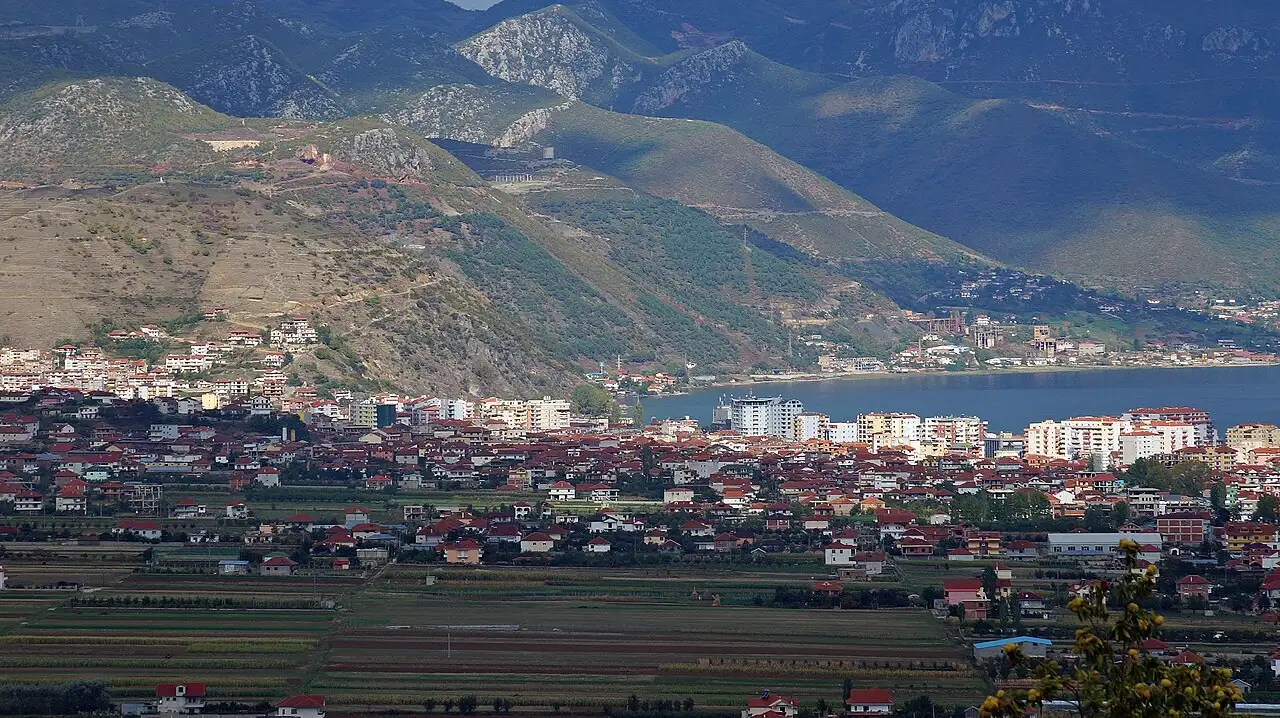
Pogradec is Albania’s quiet answer to Ohrid: a low-key lakeside town on the south-west shore of Lake Ohrid, where the water is the same UNESCO-listed blue you get across the border but the prices, the crowds and the pace are a fraction of what you find in the Macedonian old town. People come here to swim off pebble beaches, walk the long promenade at dusk, eat koran trout by the water, and use the town as a cheap base for the springs at Drilon and the mosaic village of Lin. It rarely makes anyone’s headline Albania itinerary, and that’s a good part of the appeal.
The move most travellers miss is to sleep here rather than in Ohrid. A room and a plate of fish in Pogradec cost noticeably less than the equivalent an hour around the lake, and Ohrid town is an easy day trip from this side. If you’re pairing the two, the logistics, the border and the bus fares are all in our guide to getting from Tirana to Lake Ohrid; this page is about what to actually do once the lake is your view.
Is Pogradec worth visiting?
Yes, if you know what it is. Pogradec is not a museum-town of stone lanes like Berat or Gjirokastër, and it’s not a polished resort. It’s a working Albanian lake town at about 695 m, strung along a waterfront, that Albanians themselves have holidayed in for generations. Enver Hoxha kept a villa here; poets wrote about the lake; and in July and August the domestic tourist crowd descends on the beaches. What it offers a foreign visitor is a genuinely beautiful stretch of one of the oldest lakes on Earth, gentle swimming, very good freshwater fish, and two or three worthwhile trips out of town, all for less money and less fuss than the far shore.
Give it a day if you’re passing through and just want the promenade and a swim. Give it two or three if you want to fold in Lin, the Drilon springs and a lazy beach afternoon, or if you’re using it to reach Ohrid without paying Ohrid prices. Where it fits a bigger trip is as the eastern corner of Albania, an easy hop from Korçë (see our Korça travel guide) and a natural bridge on into North Macedonia.
The lake you are actually looking at
It helps to know what makes Lake Ohrid special, because from a Pogradec café it just looks like a big, pretty lake. It’s one of the oldest lakes in the world, formed by tectonics somewhere between two and three million years ago, and the deepest in the Balkans at around 288 m. That age and depth have produced a closed world of more than 200 species found nowhere else, which is why UNESCO protects it: the Macedonian side was inscribed back in 1979, and the listing was extended to take in the Albanian shore, Pogradec included, in 2019.
The most delicious expression of all that endemic life is koran, the Ohrid trout (Salmo letnica), a fish that exists only in this lake. It is the thing to order in the waterfront restaurants, grilled simply, and it is worth trying once. One honest caveat: koran has been fished hard and is protected, so it’s not always cheap or on every menu, and prices swing with the season, so ask the day’s rate rather than assuming. If koran is off, the guilt-free pick is krap (carp): it’s cheaper, not endemic, and common right across the Balkans, so ordering it puts no pressure on the lake’s rare fish. The lake also yields belushka, a smaller trout, but it’s endemic to Ohrid just like koran, so give it the same treatment and ask whether it’s in season before you order. For the wider picture of what to eat in the country, see our guide to Albanian food.
The promenade, the beaches and the evening stroll
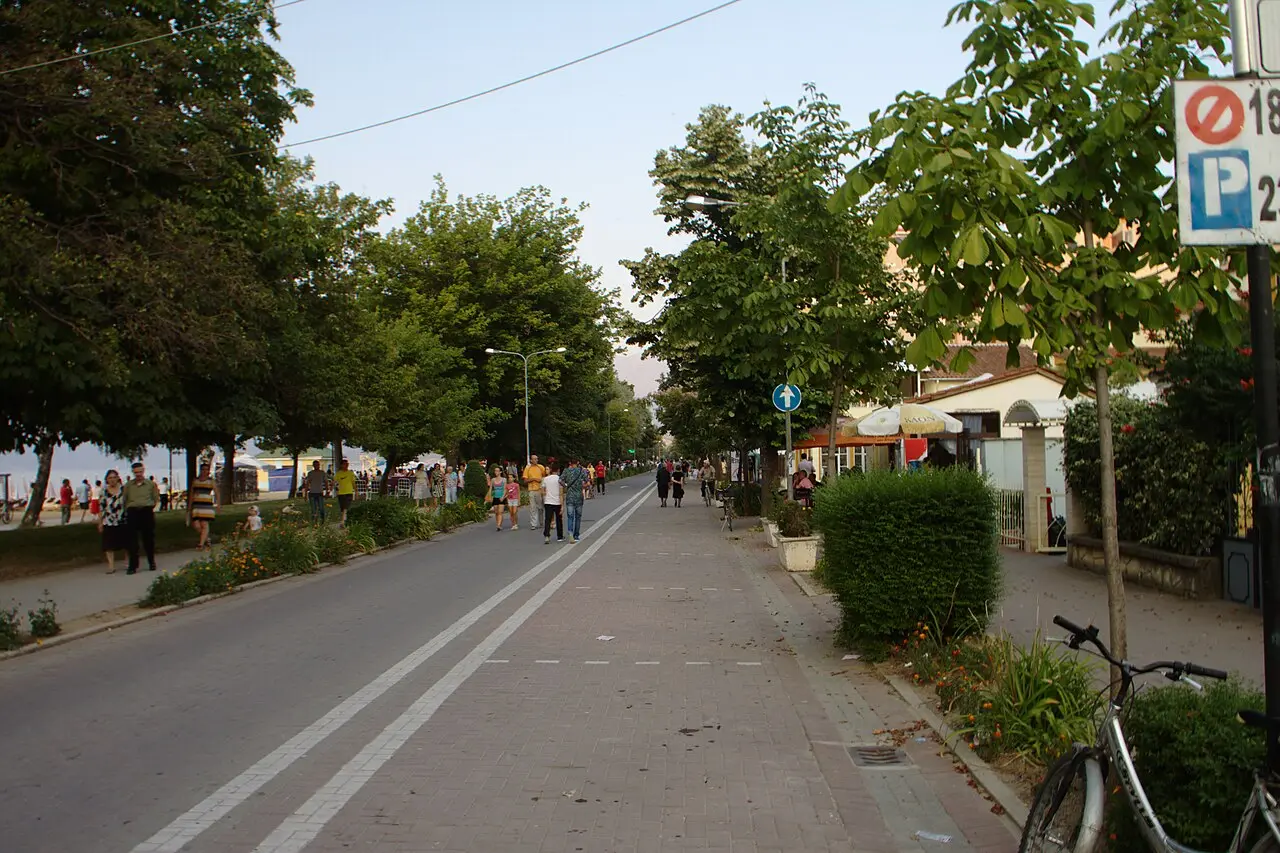
The spine of Pogradec is its lakeside promenade, a pedestrianised waterfront that runs for a couple of kilometres past cafés, ice-cream stands and small hotels. Its real life happens in the early evening, when the town comes out for the xhiro, the ritual up-and-down stroll, and the sun drops behind the mountains across the water. Grab a coffee, join the drift, and you’ll read the town in twenty minutes.
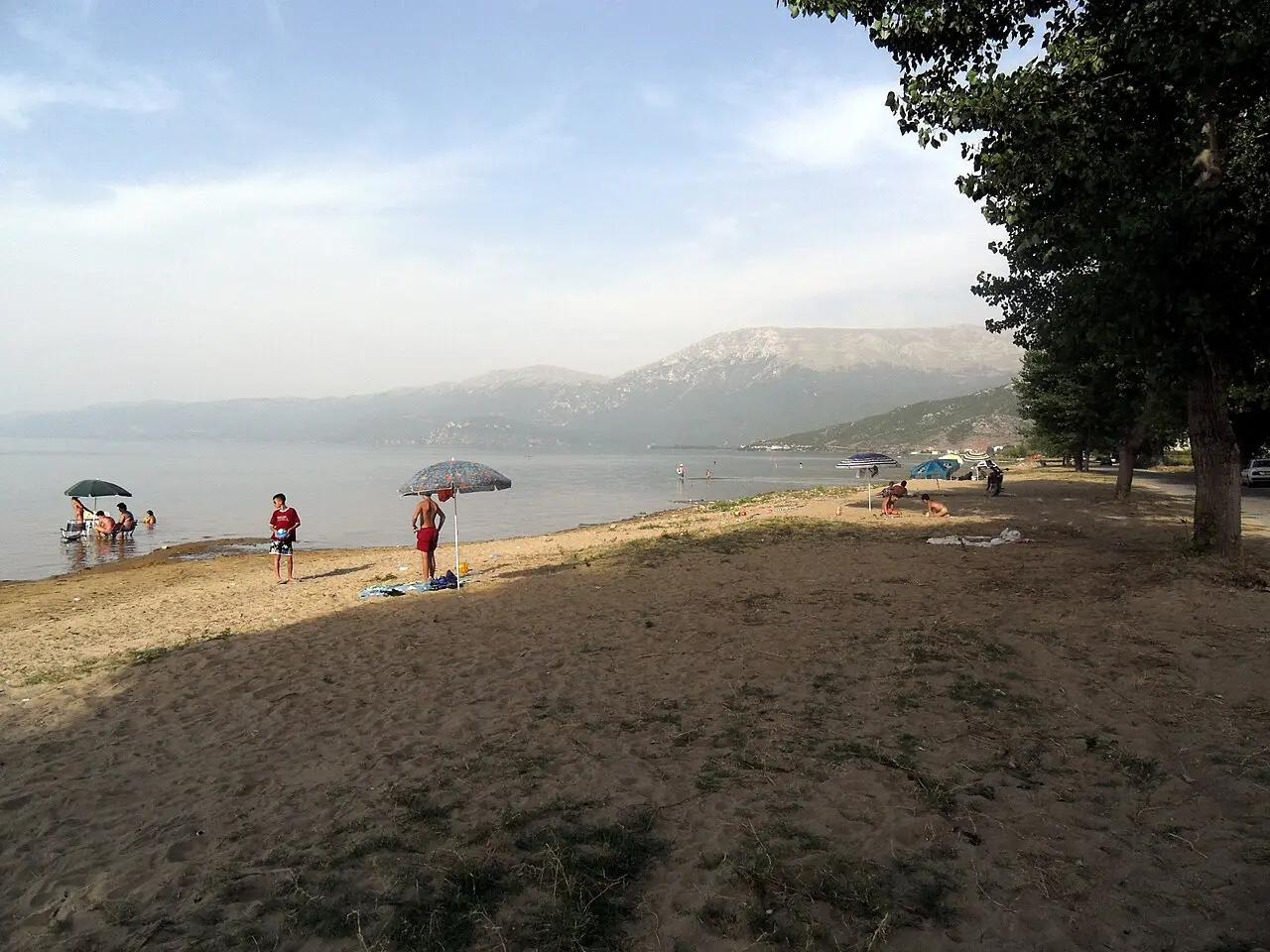
The beaches are pebble and coarse sand rather than powder, and they run along the shore between the town centre and the village of Tushemisht to the south. The water is shallow, calm and clear, which makes it easy for families and weak swimmers, and in summer beach bars set out sun-loungers and umbrellas for a small fee. It’s warm-lake swimming, not sea swimming, so expect a gentler, softer feel than the Ionian coast. Come on an August weekend and the central beaches fill with Albanian holidaymakers; come in June or September, or simply walk ten minutes further out, and you can have a stretch of shoreline almost to yourself.
Drilon and Tushemisht: the springs
The single best half-day out of Pogradec is Drilon, a small national park about 5 km south-east of the centre where cold karst springs bubble up and feed a network of glass-clear channels shaded by willows. Wooden footbridges cross the water, rowboats and pedal boats are for hire, and more than 4 km of easy paths link the springs with the neighbouring village of Tushemisht and the lakeshore. It’s flat, green and unhurried, the kind of place Albanian families spend a Sunday, and you can walk or cycle out to it along the shore. The park is designated a natural monument for those spring-fed pools alone.
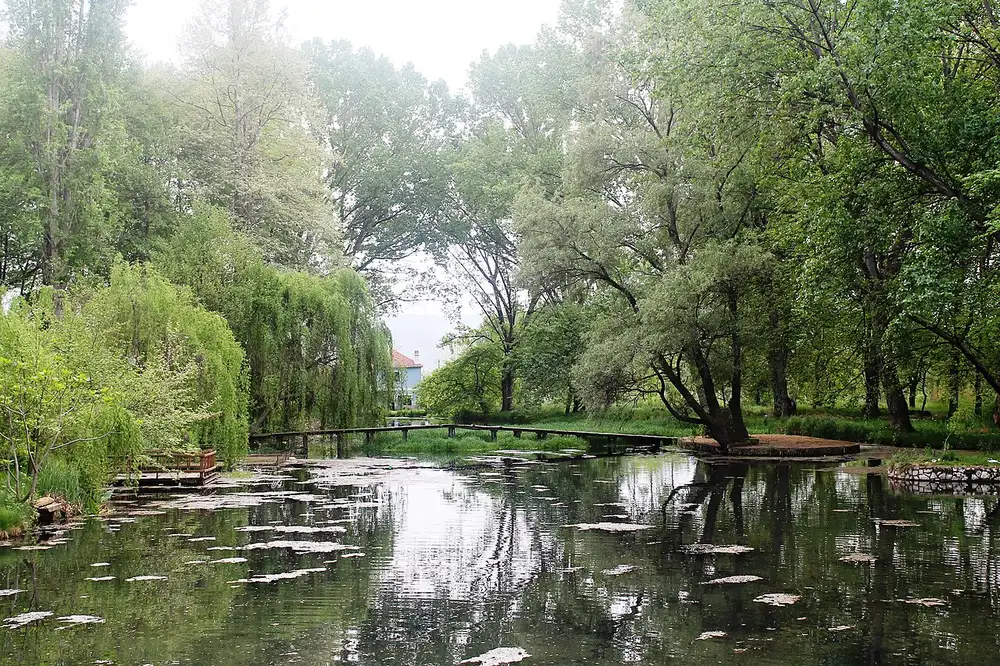
Right beside it, Tushemisht is a tidy lakeside village of stone lanes and restaurants whose terraces sit almost on the water. This is where locals send you for the best koran, and it’s a fine spot for a long lunch. Tushemisht also happens to be the last Albanian village before the quiet Sveti Naum border with North Macedonia, which is why it is the natural launch point if you decide to cross to Ohrid from this southern end of the lake rather than driving round the top.
Lin and its 6th-century mosaics
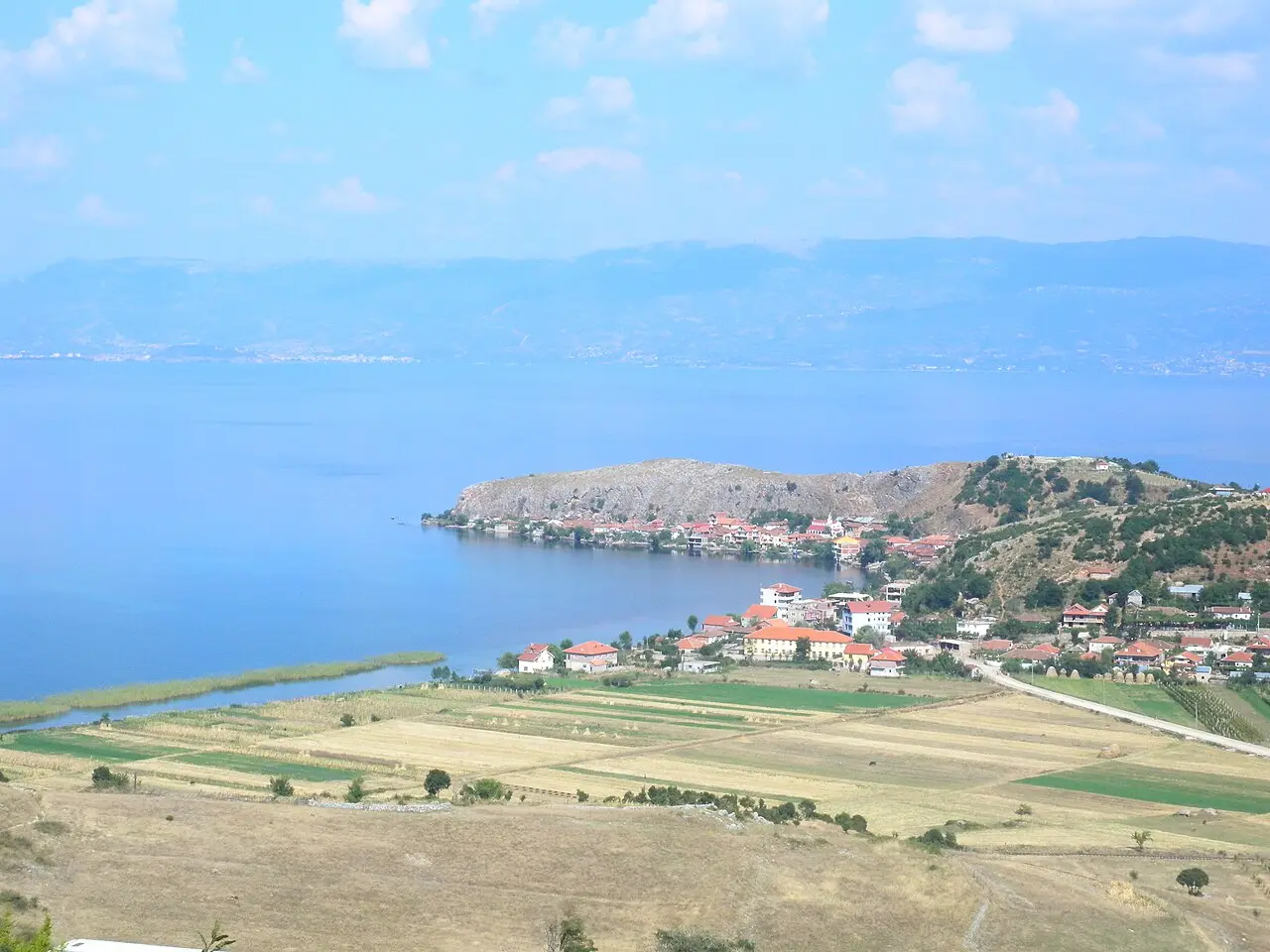
The other trip worth making is north, to Lin, a village on a narrow peninsula poking out into the lake about half an hour’s drive from Pogradec on the road toward the Qafë Thanë border. Lin is postcard-pretty in its own right, red roofs tumbling down to the water on both sides, but the reason to climb the hill above it is the ruin of an Early Christian church founded in the middle of the 6th century, whose floor is laid with well-preserved mosaics of birds and geometric patterns. It’s an atmospheric, low-key site, usually quiet, with one of the best lake views in the country as your reward for the short walk up. Check locally for opening times before you set off, as access is informal.
If you’ve wheels and a spare morning, the hike up to Guri i Kamjes, a huge ship-shaped rock on a hill west of town at about 1,461 m, adds a bit of history to a walk: local people raised the Albanian flag here on 28 July 1912, four months before the country declared independence. It’s a stiffer outing than the lakeside strolls, best in spring or autumn.
Where to stay in Pogradec
Almost everyone stays along or just back from the waterfront, which is the sensible call: you want the lake on your doorstep and the promenade for the evening. The town runs on small hotels, guesthouses and self-catering apartments rather than big resorts, and rates are among the gentler ones in Albania, rising in July and August when the domestic crowd arrives. The stretch toward Tushemisht and Drilon is quieter and greener if you want calm; the central promenade is livelier and closer to the cafés and buses.
Book ahead for the peak summer weekends, when Albanian families fill the best-value rooms early. If Pogradec is one stop on a longer loop, our guide to where to stay in Albania shows how it slots in against Tirana, the coast and the south.
How to get to Pogradec
Pogradec sits in Albania’s far south-east, an easy run from Tirana and a short hop from Korçë.
| Route | Roughly | Notes |
|---|---|---|
| Tirana → Pogradec (bus/furgon) | ~2.25-2.5 h | Around nine a day from the East Terminal, roughly 08:00-18:30; about EUR 4-7. |
| Korçë → Pogradec | ~40 min | Frequent minibuses; Korçë is the region’s hub. |
| Pogradec → Ohrid (N. Macedonia) | ~1 h | Around the south shore via the Tushemisht-Sveti Naum border; taxi about EUR 35. |
The workhorse is the Tirana-Pogradec bus, which climbs east through Elbasan and Librazhd and takes about two and a half hours; there’s no train worth using. For the full breakdown of routes, borders and shore-to-shore transfers, see our guide to Tirana to Lake Ohrid, and for the wider picture of buses and furgons, how to get around Albania. If you want the freedom to reach Lin, Drilon and the border on your own clock, renting a car makes the eastern lakes much easier, though be warned that most Albanian hire cars need written permission and a Green Card to cross into North Macedonia.
When to go and how long to stay
- June and September are the sweet spot: warm enough to swim, long days, and far fewer people than the August peak.
- July-August are hot and busy, the water at its warmest, and the town at its liveliest, but beaches and rooms fill with Albanian holidaymakers, so book ahead.
- Late autumn to spring is quiet and often grey; many beach bars shut, but the promenade, the fish restaurants and Drilon stay open, and the lake takes on a moody, misty beauty.
- How long: a day for the promenade and a swim; two or three to add Lin, Drilon and Tushemisht, or to day-trip across to Ohrid. For the month-by-month picture, see the best time to visit Albania.
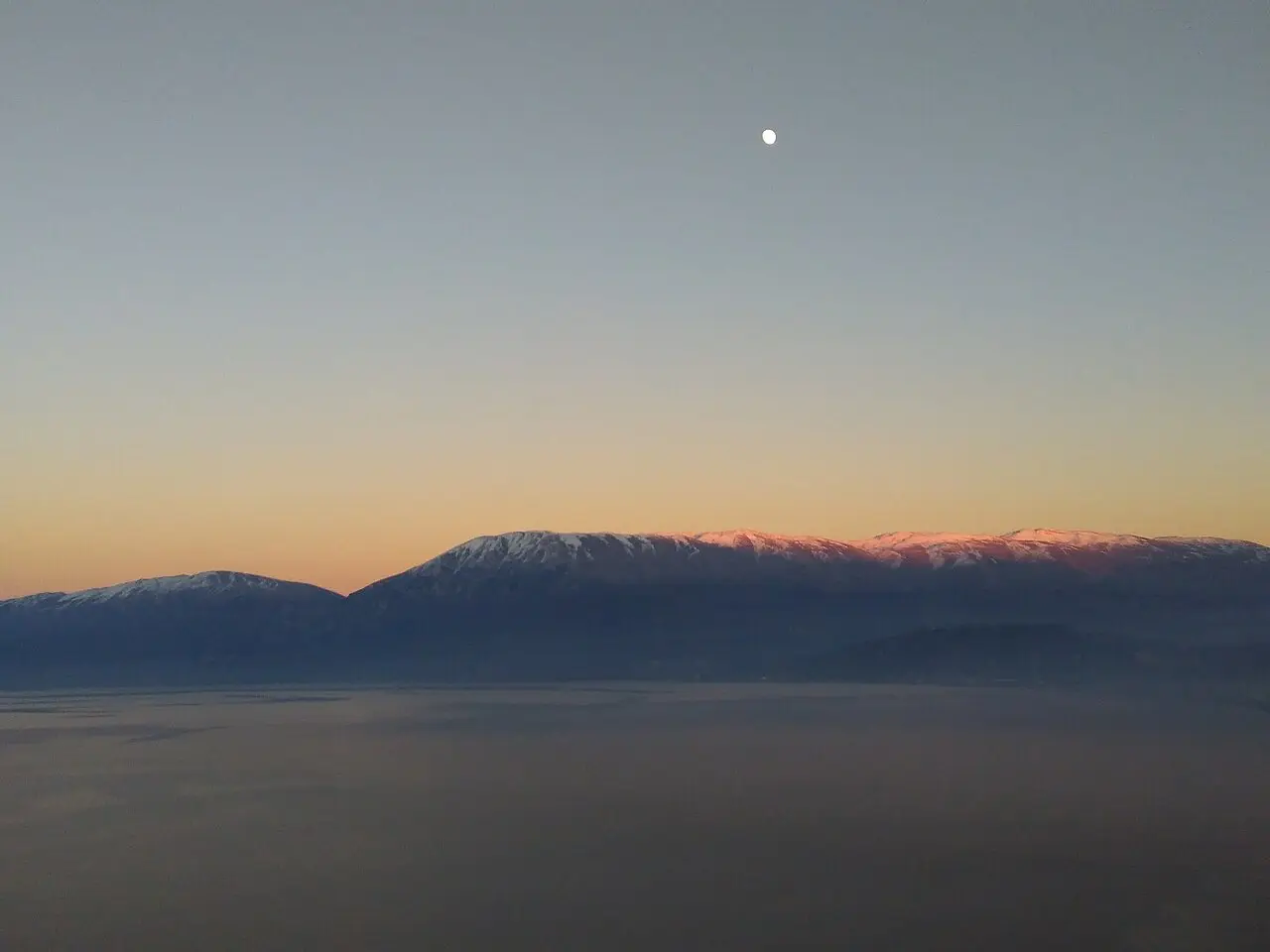
Pogradec rewards travellers who slow down. Swim in the morning, spend the middle of the day at Drilon or over in Lin, eat koran by the water at Tushemisht, and be back on the promenade for the evening stroll. Then, if you want the famous old town and the churches on the far shore, cross to Ohrid for a day and come back to your cheaper bed on the Albanian side.
What’s nearby and read also
- The inland base an hour north: our Korça travel guide covers the Old Bazaar, beer and day trips.
- Crossing the lake? See Tirana to Lake Ohrid for buses, borders and the Pogradec-to-Ohrid hop.
- Want both shores properly, with a night in each? Our Lake Ohrid two-country loop is a 4-day route through Drilon, Tushemisht and Sveti Naum to Ohrid and back.
- The famous far shore, in detail: our sister guide to Lake Ohrid in North Macedonia.
- Eat well: what to eat and drink in Albania, koran included.
- Planning the trip - check the best time to visit Albania and browse more Albanian city guides.
Photos
On the map
The map loads on click - to keep the page lightweight.
The map didn’t load. Check your connection and refresh the page.
Distance ≈122 km · ~2.5 h by road
- Tirana ≈122 km · ~2.5 h by road Frequent buses and furgons from the East Terminal (Terminali Lindor); roughly EUR 4-7. No useful train.
Read also

Cities · 10 min read
Korca Travel Guide: Bazaar, Beer & Southeast Albania
Updated · August 14, 2026Korca (Korce) guide: walk the Old Bazaar, see medieval icons, taste Birra Korca, then day-trip to Voskopoje or Lake Ohrid.

Cities · 10 min read
Permet, Albania: the Vjosa, Rafting & Gliko
Updated · August 8, 2026Permet travel guide: rafting the Vjosa (EUR 35), gliko and raki, the 1944 Congress, Leusa church, the Benja baths, where to stay and how to get there.

Cities · 13 min read
Dhermi, Albania: Beaches, Drymades & the Old Village
Updated · August 29, 2026Dhermi and Drymades guide: which beach is which, what a sunbed costs, boat trips to Gjipe, the old Greek village above the coast and the bus-stop catch.

Cities · 10 min read
Kruja, Albania: Skanderbeg Castle & Old Bazaar Guide
Updated · August 24, 2026Kruja day-trip guide: Skanderbeg's castle and museum, the Ottoman Old Bazaar and Ethnographic Museum, how to get there from Tirana and how long to stay.