Dhermi, Albania: Beaches, Drymades & the Old Village
Dhermi and Drymades guide: which beach is which, what a sunbed costs, boat trips to Gjipe, the old Greek village above the coast and the bus-stop catch.
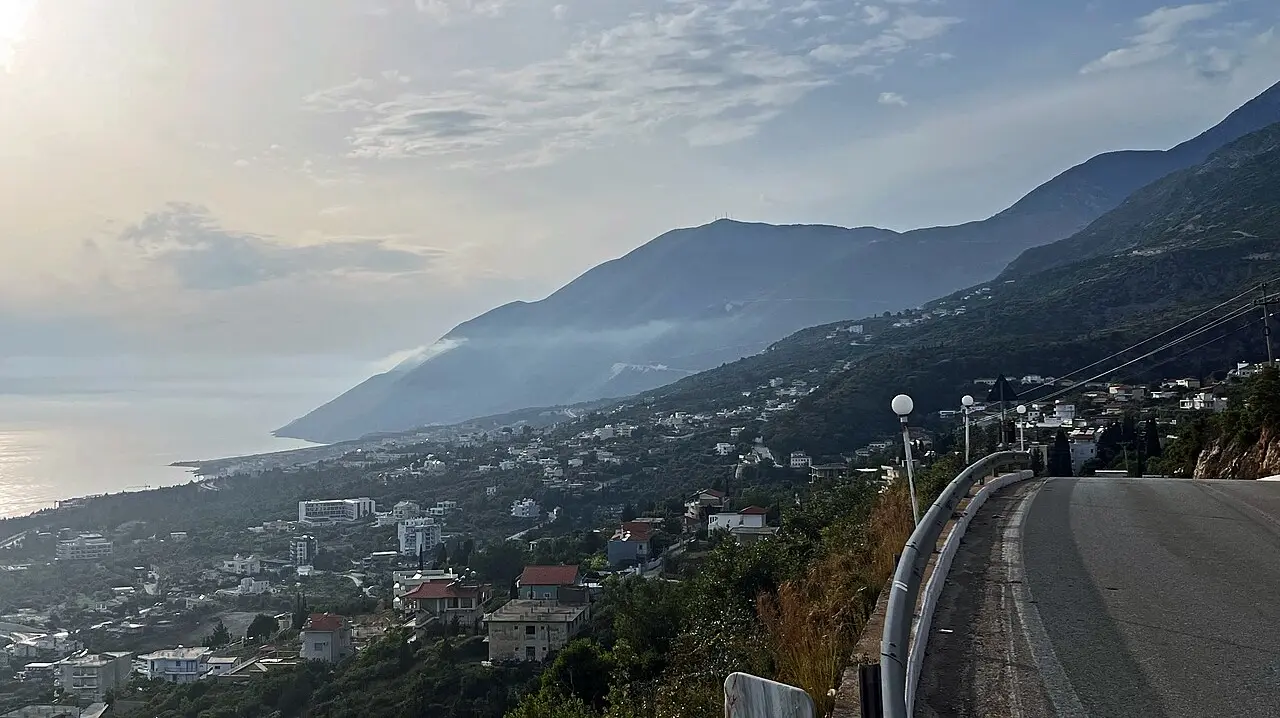
Dhermi is the loudest, glossiest stretch of the Albanian Riviera: about 42 km south of Vlora, a few kilometres of pale pebble under the Ceraunian Mountains, and the highest concentration of beach clubs, DJ sets and summer traffic on the Ionian coast. It’s where Albanians go to be seen and where most first-time Riviera trips end up. Come for the scene and the water, not for solitude, and know that the sand and the village of the same name are two different places, 200 vertical metres apart.
That gap catches people out constantly. Booking sites list rooms in “Dhermi”, “Dhermi Beach” and “Drymades” as if they were interchangeable, and they’re not: one is a working Greek-speaking hill village on the highway, one is the main beach below it, and one is the cove and club strip a headland further north. Get the wrong one and you’re looking at a 30-minute climb in 33-degree heat with your luggage.
Dhermi, Drymades or the village: sorting out the names
The village itself, Dhermi (Dhërmi in Albanian), sits at about 200 m on a slope of the Ceraunian Mountains, with roughly 1,800 residents spread across the neighbourhoods of Gjilek, Kondraq and Kallam. The village is historically ethnic Greek, and older residents still speak the Himariote Greek dialect alongside Albanian, which is why you’ll hear two languages in the same shop.
The Greek name of the village is Drimades, and that’s the root of the confusion. Tourism has quietly split the name in two: Dhermi beach now means the long strip directly below the village, and Drymades means the pine-backed cove immediately north of it, reached by its own access road. They’re neighbours, not synonyms, and there’s a small headland and a couple of kilometres between them. When you book, look at the pin on the map rather than the name in the listing.
The beaches
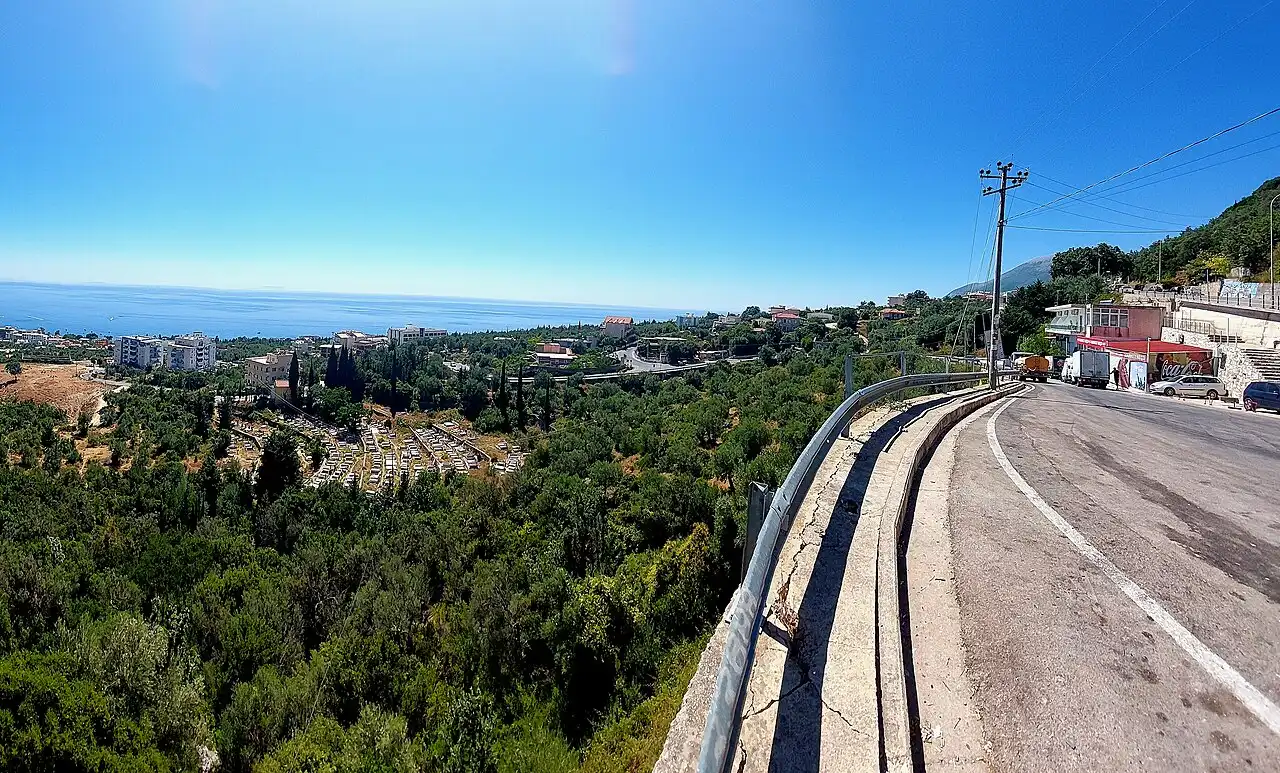
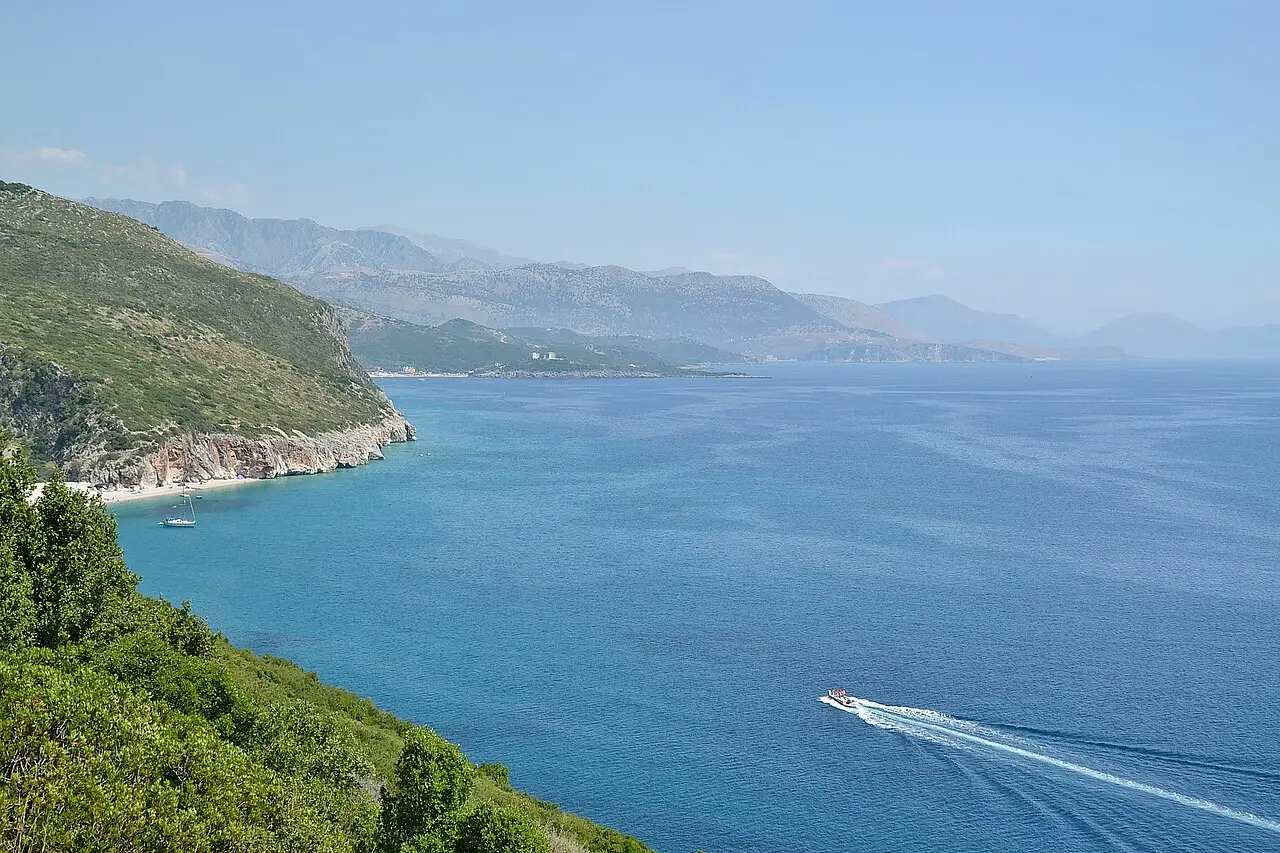
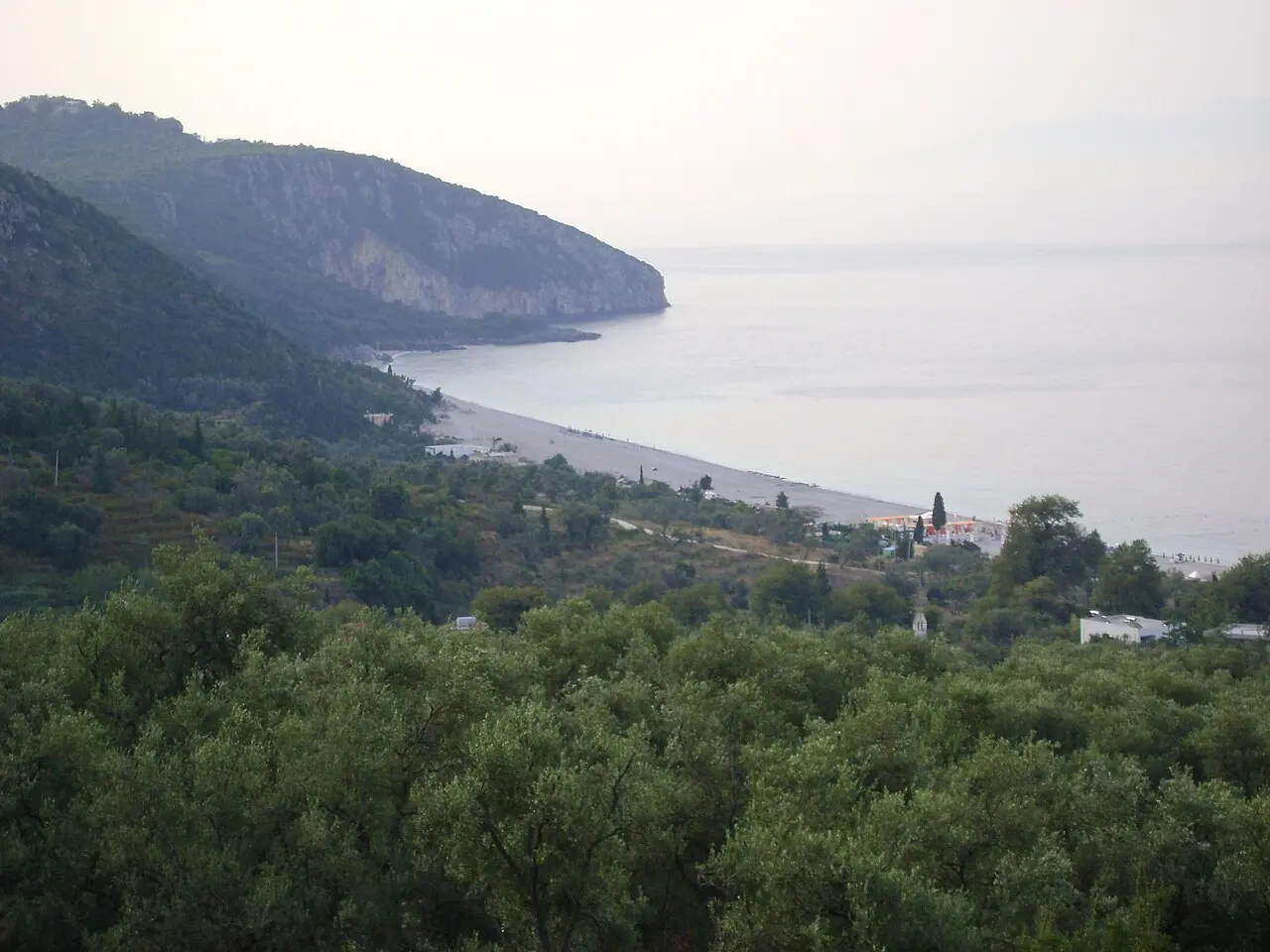
Dhermi beach is the main event: white pebble, water that goes from glass-clear to deep blue within a few metres of shore, and a near-continuous line of bars, restaurants and lounger fields. The shoreline strings out over some 5 km in all, though the main beach you’ll actually walk is closer to 1.5 km, ending at the hill with the monastery. In July and August it’s busy from about 10:00, and the music starts before lunch.
Drymades, north over the headland, is the same water with a slightly different personality: pines and olives right behind the pebble, a sea arch at the far end, and a strip of clubs that runs from barefoot-and-cheap to properly expensive. There are a few small coves at its northern end too, reachable by a stairway and a bit of scrambling, which stay quiet even in August because most people can’t be bothered.
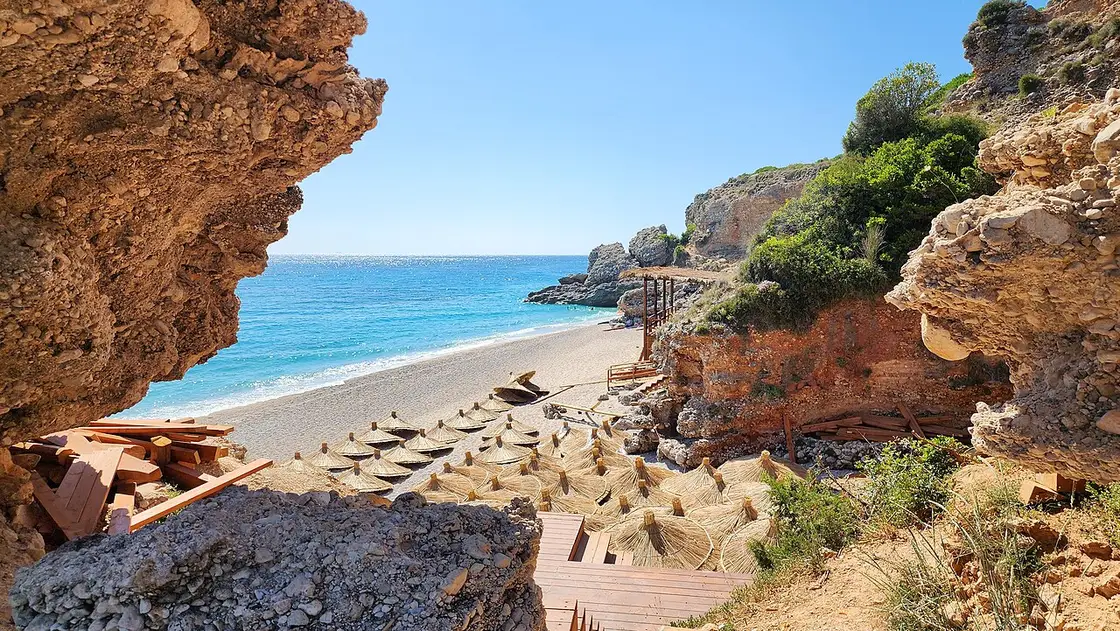
Palasa is the next bay north, the first beach you meet coming down from Llogara, and the smart move for anyone who wants the Dhermi water without the Dhermi prices. Gjipe, 4.5 km south, is the opposite of both: a beach at the mouth of a canyon with no road to it, reached by a rough track and a 25-minute walk down the gorge, or by boat taxi from Dhermi beach. There are a couple of basic bars, free camping and no loungers worth the name.
Worth being honest here: in our own scoring of Albania’s best beaches, which weighs water clarity against crowds and cost, Dhermi finishes near the bottom and Drymades in the upper half. The water is a straight 5 out of 5 at both. It’s the crowds and the bill that drag the famous name down.
What a day on the sand actually costs
Since 2026 municipalities may set a ceiling on sunbed and umbrella prices by zone, and Vlora has published one; for Himara we couldn’t find an approved figure, so in practice every club here still sets its own board. On the calmer stretches a sunbed-and-umbrella set costs 1,000 to 2,000 lek (about EUR 10-20) a day. At the flagship clubs on Dhermi beach itself, two loungers under an umbrella run 2,000 to 4,000 lek (EUR 20-40), which is exactly why Dhermi lands at the expensive end of our beach ranking. One Drymades operator quotes 2,500 lek for a thatched umbrella with two loungers; further along the same sand you can pay half that.
Two things save money and almost nobody uses them. First, several clubs give the loungers away against a minimum spend of roughly 1,000-2,000 lek on food and drink, which you were going to spend on lunch anyway, so ask before you pay a rental fee. Second, the public sections between the club plots are free: your own towel on the pebble costs nothing, at Dhermi as anywhere else in Albania.
All of these numbers move with the season and the operator, so treat them as the shape of the market rather than a price list, and read the board before you sit down.
The old village, which most visitors never see
Up on the slope, the village is a different country: stone houses with heavy shutters, cobbled lanes too narrow for cars, and old men on plastic chairs who have watched the coast below turn into a resort. The parish churches are the reason to come up. The Monastery of St Mary stands on the hill above the coast, and the village keeps a scatter of small Orthodox churches including St Haralambi, St Stephen and the blue-domed St Spyridon near the school. Some are locked; ask around and someone usually finds a key.
The best short walk is the Mills Trail (Shtegu i Mullinjve), a marked path of about 1.5 km that drops from the old village past ruined watermills and a small waterfall towards the sea. Reckon on 30 minutes to an hour one way. The signage has gone patchy in places, so just keep heading downhill toward the sea, and don’t start it at midday in August.
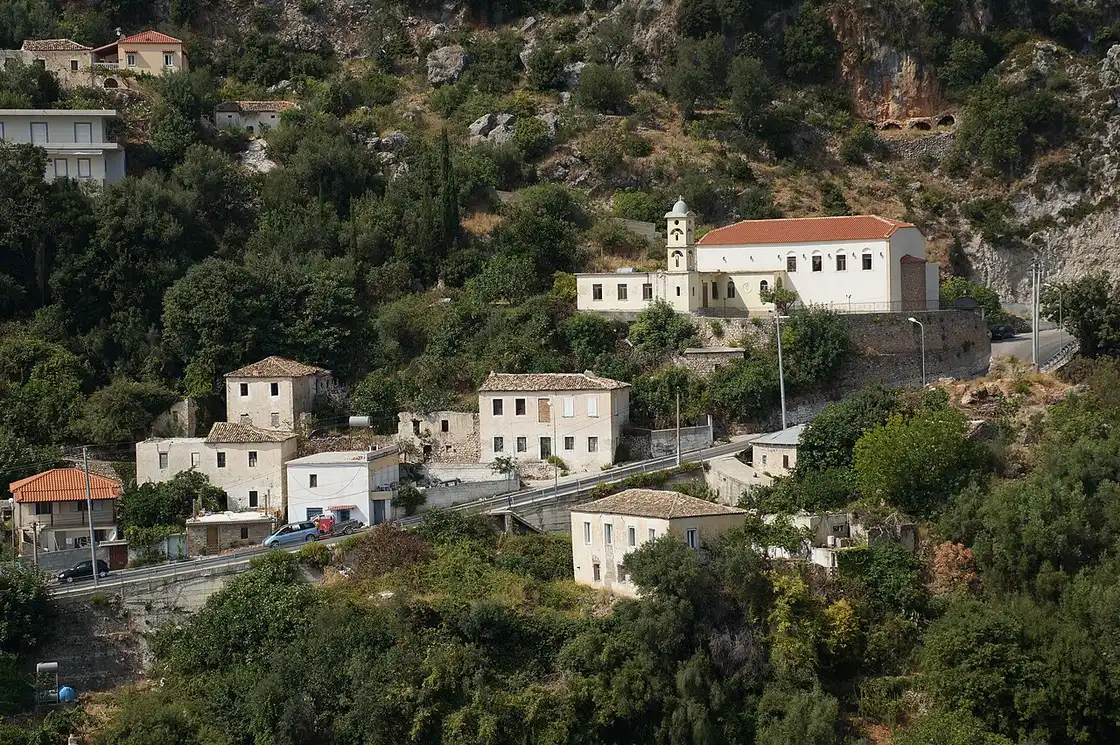
The village also carries a raw recent story: the church of St Athanasius was demolished by state authorities in 2015, which set off a public row between the Orthodox Church and the government before it was rebuilt. Petro Marko, one of Albania’s best-known 20th-century writers, was born here and has a square and a statue in his name.
Boats, caves and the coves you can’t drive to
The coastline either side of Dhermi is broken into bays with no road access, and the local answer is a boat. Water taxis and small tour boats leave from Dhermi beach through the season for Pirate’s Cave, the sea caves, Grama Bay with its ancient inscriptions carved into the rock, St Andrew’s Bay and the beaches around Himara. A one-way or return hop to Gjipe is the cheapest and most useful of them, quoted at roughly EUR 10-15 per person return, though prices are seasonal and negotiable early or late in the day.
If you’d rather stay on land, the marked coast path out of the village is the first stage of the Albanian Coastal Trail, which runs Dhermi - Gjipe - Jal - Livadh: 12.6 km and about four hours end to end, though most walkers do the Gjipe section and turn back. From Vuno, the loop down through the canyon and up to the Ilias viewpoints is 10.4 km with 405 m of climb, near enough four hours again. Check the state of the path before you commit: the route page currently warns that the entry from Dhermi beach is blocked by construction, and walkers are being sent round to start at Gjipe.
Nightlife, and the festival question
Dhermi built its reputation on summer parties, and in high season the beach bars at both Dhermi and Drymades run music into the small hours. Turtle Fest, the longest-running Albanian-run electronic festival, takes over Dhermi Beach from 28 to 31 July 2026 for its tenth edition - the organisers put the main site at Fishop At Alevra, next to Havana Beach, not up at Drymades. It’s over-18s only, and it’s the week the whole coast is at its tightest for beds.
One correction worth making, because a lot of older articles still say otherwise: ION Festival, the big international week that ran at Dhermi through September 2024, is gone. The organisers cancelled the 2025 edition over rising costs and have since said the Albanian chapter is finished while they scout a new location abroad. Don’t plan a September trip around it.
Where to stay
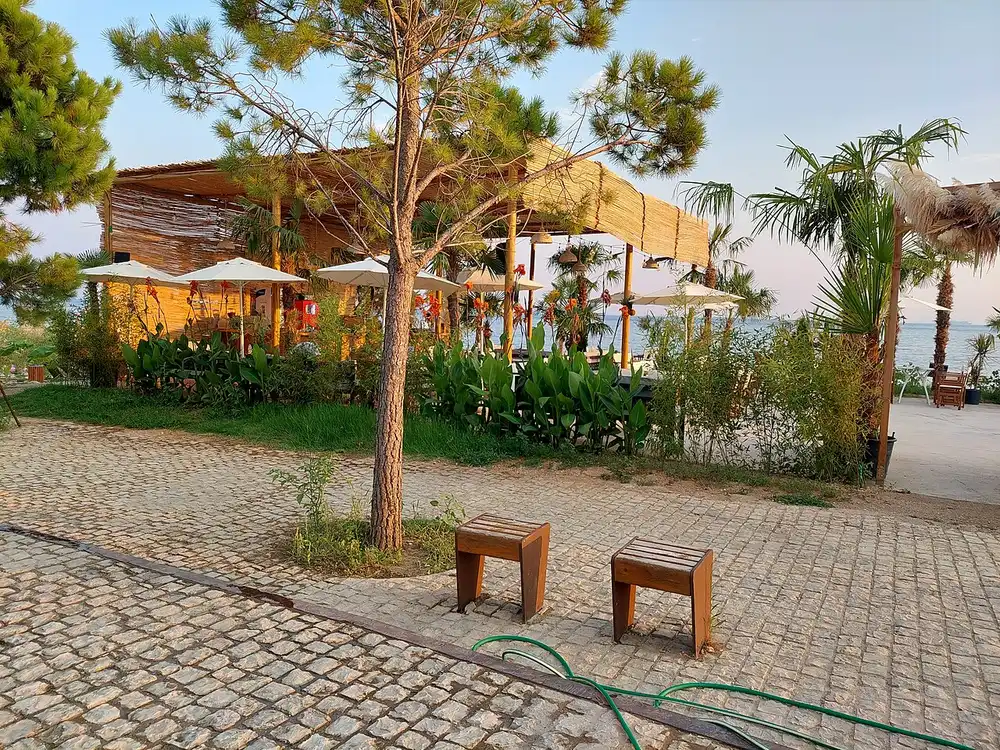
Three zones, three different holidays. Beachfront at Dhermi puts you in the middle of the noise with everything walkable and rates that peak hard in late July and August. Drymades is the same distance from the sea but calmer by day and pricier at the top end, with bungalow-style places under the pines. Up in the village you get stone-house guesthouses, cool nights, real quiet and views over the whole coast, but you need a car or a taxi habit to reach the sand.
Peak-season beachfront rooms are commonly quoted at EUR 60-120 a night, hillside guesthouses nearer EUR 30-60, though anything in the last week of July moves toward the top of those bands. Book early for that week.
For the coast-wide comparison of which town to base yourself in, see where to stay on the Albanian Riviera; if Dhermi looks too loud, Himara down the road is the calmer, cheaper alternative with the same water. If you’re weighing the southern beach towns specifically rather than Dhermi, our Himara vs Saranda vs Ksamil comparison lays out beaches, crowds and getting around for each.
How to get to Dhermi
Dhermi sits on the SH8 coastal highway, 42 km south of Vlora and 69 km north of Saranda.
| Route | Roughly | Notes |
|---|---|---|
| Tirana → Dhermi (bus) | ~3h-3h30 | Six direct buses a day, 07:30 to 18:00, a flat EUR 16 booked online. Confirm the day before. |
| Vlora → Dhermi | ~1-1.5 h | Over the Llogara Pass or through the tunnel; furgons run in summer. |
| Saranda → Dhermi | ~2 h | Northbound coastal buses via Himara; Saranda-Himara runs 700 to 900 lek, with no fixed published fare - confirm locally. |
| Himara → Dhermi | ~30 min | Short hop, frequent in July and August, thin in May and October. |
The catch nobody tells you: buses don’t go down to the beach. They stop up on the highway above the village, and from there it’s about 2.5 km and 30 minutes downhill on Rruga Perivolo to Dhermi beach, more to Drymades. Downhill with a bag is annoying; uphill in August heat is genuinely unpleasant. Message your guesthouse before you travel and ask for a pickup, or budget for a taxi at the stop.
Driving is the sane option here, and the coast road is the reason half of Albania’s rental fleet exists. Coming from the north you cross the Llogara Pass at 1,027 m, which is worth the switchbacks at least once for the view; the parallel 6 km Llogara Tunnel has an approved tariff of 250 lek one way for a car from April 2026, but it was still not being collected when Albanian media checked the plaza on 18 July 2026 - cameras register plates, nobody takes payment, and no start date has been set. Note that, as of summer 2026, Vlora airport still has no commercial flights, so arrivals come through Tirana whatever the map suggests. Our guides to renting a car and getting around Albania cover the practicalities, and the Llogara Pass page covers the drive itself.
Parking near the beach access roads is informal and fills by mid-morning in peak season. Come early or park up top and walk.
If you’re travelling the whole coast rather than just visiting Dhermi, our Vlora to Saranda bus guide lays out the through-ticket price and schedule alongside the case for hopping off here instead.
When to go, and how long to stay
June and September are the sweet spot: sea around 22-25°C, clubs open, rooms and loungers noticeably cheaper, and space on the pebble. July and August are the full experience with the full price tag and the full traffic jam on the SH8. From late October the beach businesses shut and Dhermi reverts to a quiet hill village with a very good view.
Two nights is enough to swim both beaches, walk the Mills Trail and take a boat to Gjipe. Three or four if you plan to use Dhermi as a Riviera base and want day trips to Himara, Porto Palermo or the Llogara pines. For the month-by-month picture, see the best time to visit Albania.
What’s nearby and read also
- The whole coast in one page: the Albanian Riviera, from Vlora to Saranda.
- Driving it end to end: our Albanian Riviera road trip with stops and timings.
- The scoreboard: Albania’s best beaches ranked by water, crowds and cost.
- Neighbours worth a night: Himara south of here and Vlora at the top of the coast.
Photos
On the map
The map loads on click - to keep the page lightweight.
The map didn’t load. Check your connection and refresh the page.
Distance
- Tirana ≈202 km · ~3h-3h30 by direct bus Six direct buses a day, 07:30 to 18:00, a flat EUR 16 booked online; they set down on the highway above the village.
- Saranda ≈69 km · ~2 h Coastal SH8 through Himara and Vuno; buses and furgons run through in summer.
Read also

Cities · 10 min read
Korca Travel Guide: Bazaar, Beer & Southeast Albania
Updated · August 14, 2026Korca (Korce) guide: walk the Old Bazaar, see medieval icons, taste Birra Korca, then day-trip to Voskopoje or Lake Ohrid.

Cities · 10 min read
Permet, Albania: the Vjosa, Rafting & Gliko
Updated · August 8, 2026Permet travel guide: rafting the Vjosa (EUR 35), gliko and raki, the 1944 Congress, Leusa church, the Benja baths, where to stay and how to get there.

Cities · 11 min read
Pogradec & Lake Ohrid: The Albanian Side
Updated · July 21, 2026Pogradec on the Albanian shore of Lake Ohrid: pebble beaches, the promenade, the Drilon springs, koran trout and Lin's mosaics, without Ohrid's crowds.

Cities · 10 min read
Kruja, Albania: Skanderbeg Castle & Old Bazaar Guide
Updated · August 24, 2026Kruja day-trip guide: Skanderbeg's castle and museum, the Ottoman Old Bazaar and Ethnographic Museum, how to get there from Tirana and how long to stay.