
Vlora to Saranda Bus 2026: Times, Price & Riviera Stops
Vlora to Saranda by bus in 2026: how you pay, real schedules, and whether your bus takes the coastal SH8 or the inland shortcut.
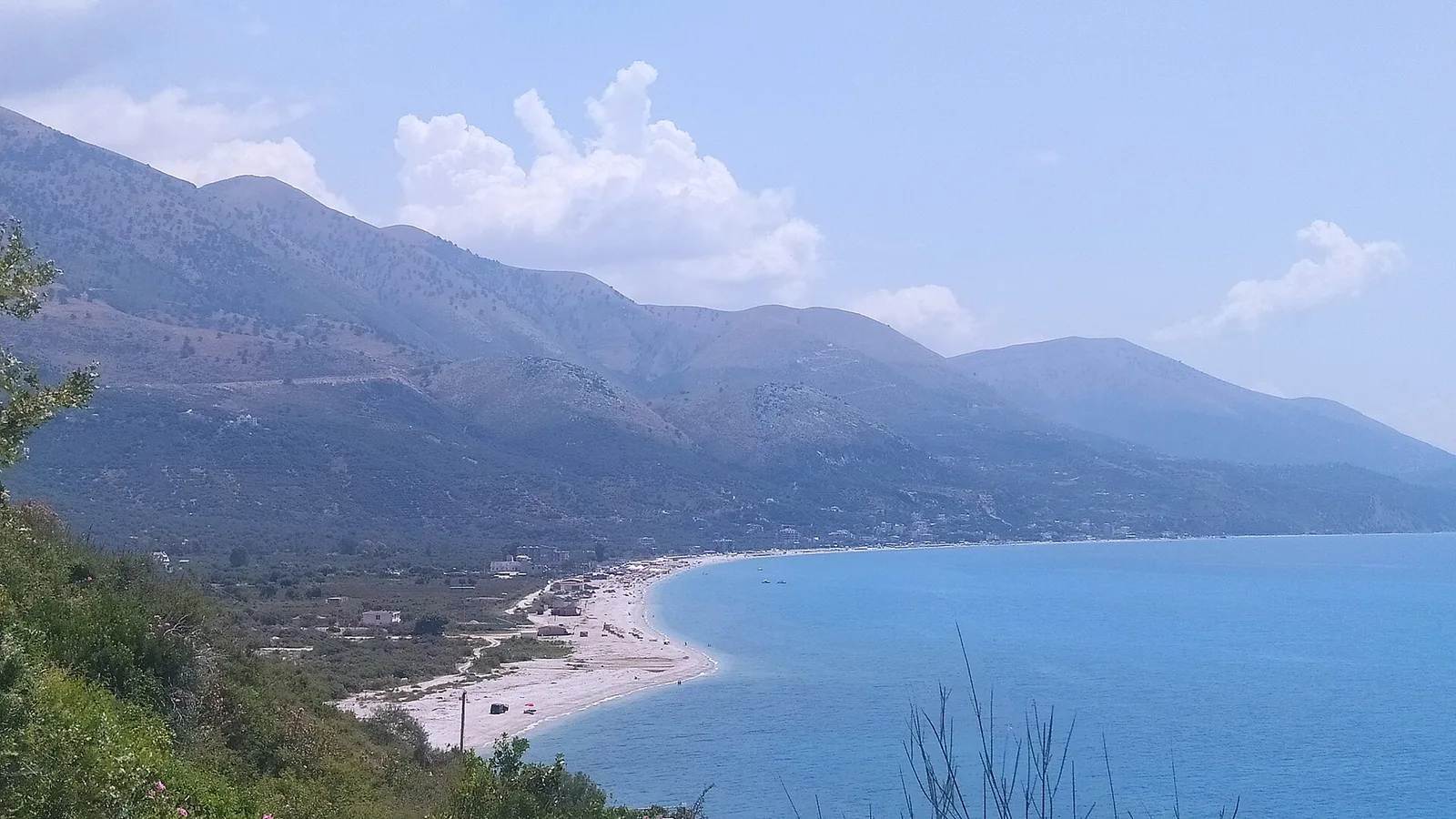
The bus from Vlora to Saranda runs about 115 km if it takes the coastal SH8 through Dhermi and Himara, or a longer 158 km if it cuts inland instead - and which one you get depends on the departure, not on you. You pay the conductor in lek, since no company on the leg prints a fare we could find. Skip the through-ticket and hop between towns on local furgons instead, and the same corridor turns into most of a day on the Riviera, rather than a transfer you just sit through.
This page answers the transport question, not the road-trip one. Our Albanian Riviera road trip plans the coast properly if you’ve got a car and want two or three days with stops at every cove worth a swim. Here the question is narrower: getting from Vlora to Saranda, or back. Maybe that’s the second half of a longer run down from the capital - our Tirana to Saranda guide covers that leg - but either way you’re choosing between the bus, furgon-hopping and driving yourself. Prices and times below were checked in August 2026, in high season; the picture changes off-season, and there’s more on that below.
The three ways down the coast
| Way | Time | Price | Best for |
|---|---|---|---|
| Bus, coastal SH8 | about 3 h | cash to the conductor, in lek | the Riviera view - if you get this one |
| Bus, inland shortcut | closer to 2 h | cash to the conductor, in lek | speed, not scenery |
| Furgon-hopping via Dhermi/Himara | most of a day | a separate cash fare for each leg | seeing the towns, summer only |
| Driving it yourself | about 3 h | rental + fuel, maybe a 250 lek toll | your own pace, guaranteed coastal road |
One term before the numbers: a furgon is Albania’s shared minibus, leaving once it fills rather than on a printed timetable - you flag one down or ask at the stop. Our getting around Albania guide covers the wider network; on this page, furgons are simply the tool for getting off at Dhermi or Himara instead of riding a through-bus straight to Saranda.
The direct bus: schedule, price and who runs it
GjirafaTravel’s own listings show three operators on this leg: Boraku, Transbus Saranda and Saranda Transport. Trans Dea and Trans Butrinti also work the route, though neither turns up on that particular booking site. Between the three listed operators there are seven departures a day each way. Southbound from Vlora: 07:00, 08:00, 09:00, 11:30, 13:00, 14:30 and 16:00. Northbound from Saranda: 05:30, 06:50, 07:00, 09:00, 11:30, 13:15 and 14:30.
Here’s the part that actually matters: not every departure takes the same road. Some buses cut inland on the faster highway through Tepelene, which is where the platform’s 158 km figure comes from. Others follow the coastal SH8 over the Llogara Pass and down through Himara and Dhermi - shorter at 115 km, but slower. The state register of licensed lines, which we read on 25 September 2026, sorts the companies by road more reliably than rumour does. It gives each one’s line length: Boraku’s and Transbus Saranda’s are 129 km, which fits the coast road, while Hamzaj’s and Saranda Transport’s are 174 km, which fits the inland highway. The booking platform’s running times agree - its Boraku and Transbus Saranda buses take three to four hours, Saranda Transport’s 13:00 two hours twenty. So Boraku’s morning buses and Transbus Saranda’s 11:30, 14:30 and 16:00 are your coastal runs, and Hamzaj’s 07:00 and 08:00 and Saranda Transport’s afternoon buses go inland; one passenger’s account of a 7:00 on the straight road and an 11:30 on the windy coast fits that. Times on the platform and the register don’t always match, though, so ask when you buy the ticket whether your bus goes via the coast. Whether a coastal bus takes the old pass or the newer tunnel isn’t something the platform specifies either; budget the same three hours either way, and see the driving section below for what each looks like.
On time: the platform’s fastest southbound trip runs about 2 hours, the average is closer to 2 hours 51, and the slowest currently listed is around 3 hours 45. Northbound the spread is a little wider, averaging near 3 hours 15 and topping out around 4 hours 15. Longer times lean coastal and shorter ones lean inland, but asking is still the only way to know for certain.
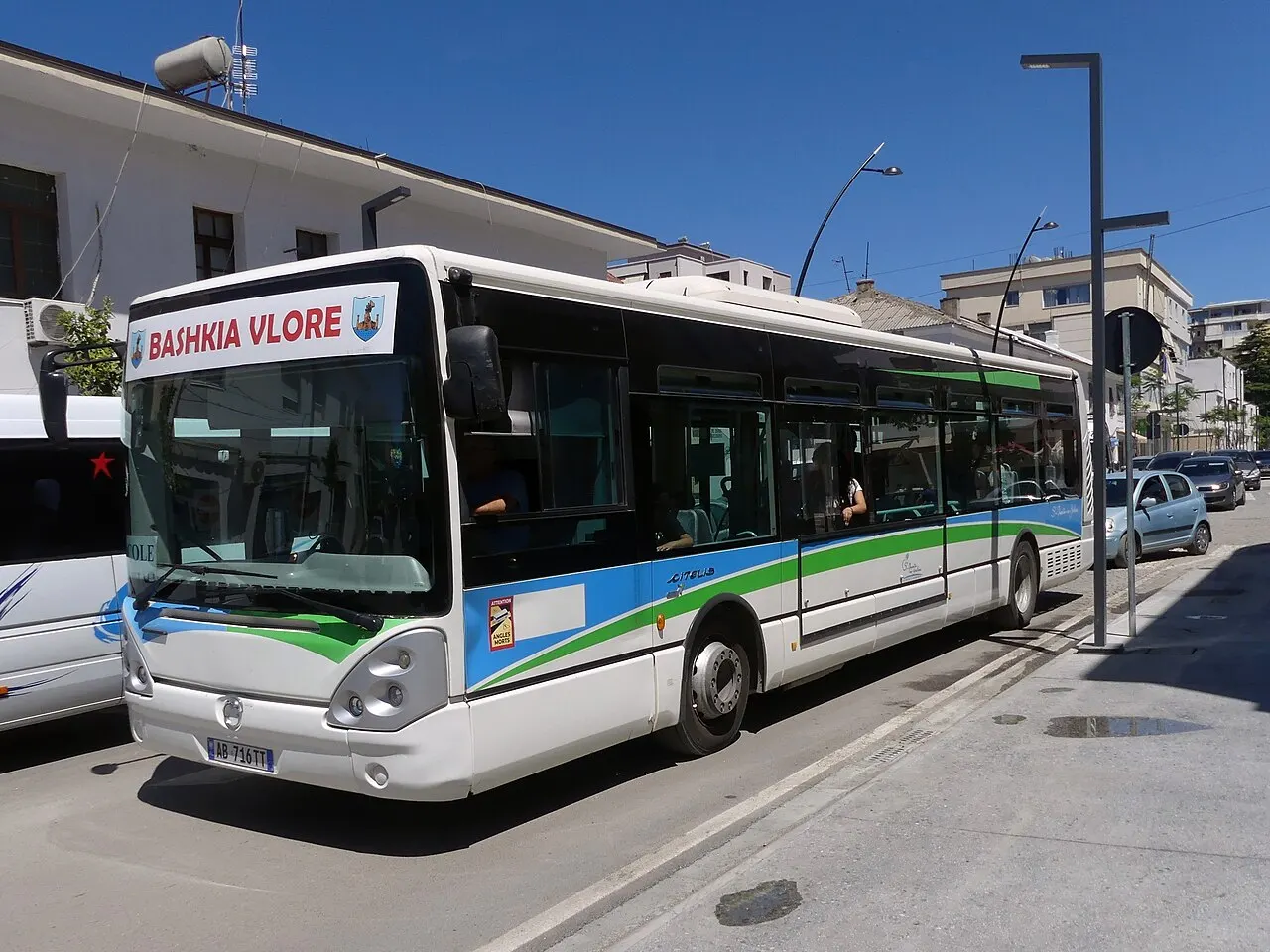
Where you catch it in Vlora depends on the operator - there’s no single terminal. GjirafaTravel lists Boraku’s morning departures from Saranda Lines Station, Transbus Saranda from Vlore Station, and Saranda Transport’s single 13:00 run from the Kastrati petrol station at the city entrance. Confirm the pickup point when you book rather than heading for whichever stop you assumed - a wasted taxi ride is a bad start to a beach day. Our Vlora guide covers the town itself if you’re basing here before heading south. At the other end, GjirafaTravel lists Saranda Station as the arrival point for all seven departures, a short walk from the promenade; our Saranda guide picks up from there.
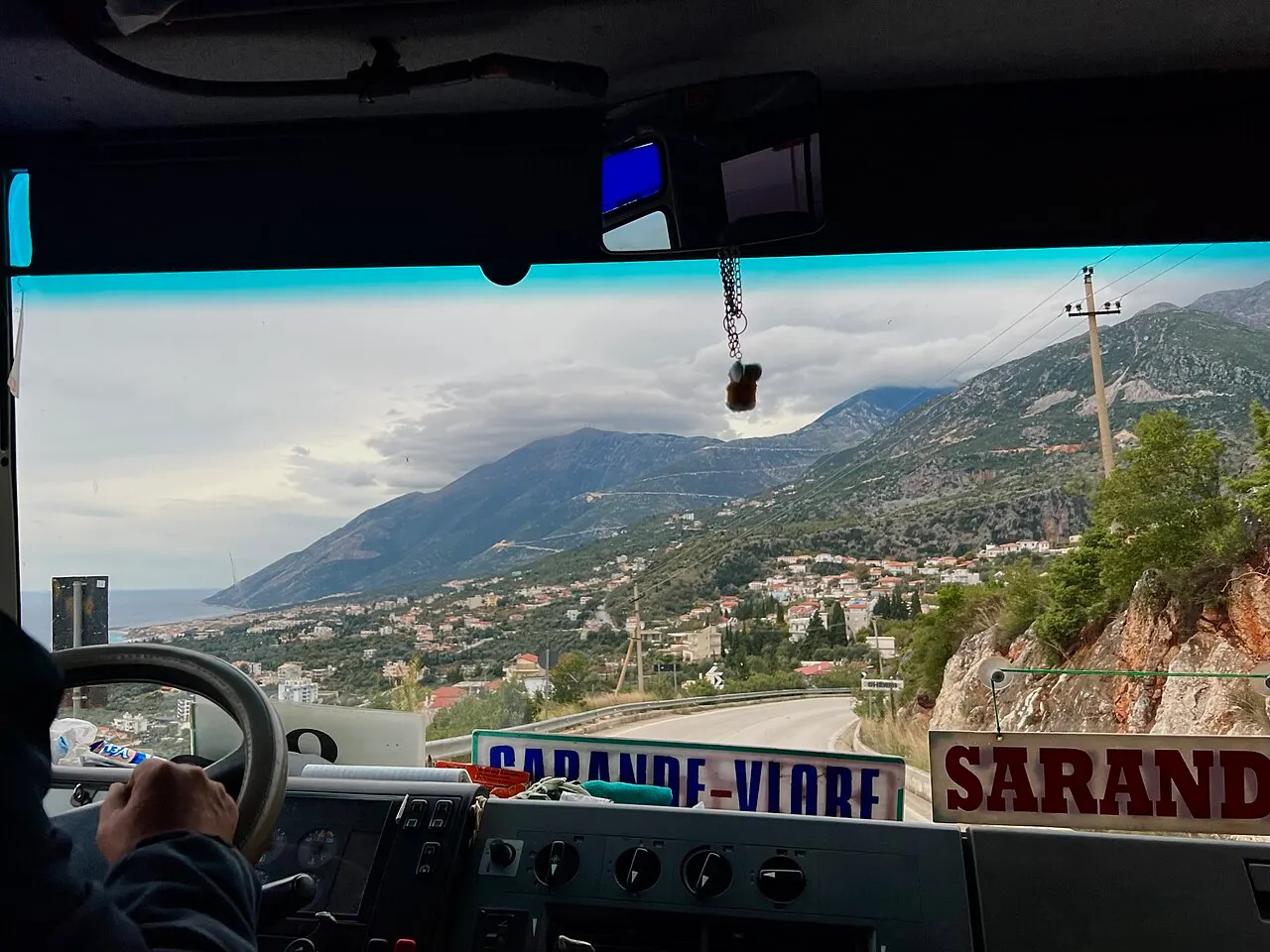
Fares are simplest paid in cash, to the conductor, in lek: the register lists no fare and we found none printed by the companies, so check the price as you get on. GjirafaTravel sells seats online at its own price. Book ahead if you want a guaranteed seat: July and August fill up, and turning up with no backup plan is a real risk on this route. If you do get shut out, the next departure is usually only an hour or two away, or a furgon covers the same ground in shorter hops.
Everything above is a high-season picture. Winter cuts the coastal run hard. One rider account put it at just two coastal departures a day once the season ends, with most services reverting to the faster inland road. Furgon-hopping between the villages barely exists outside roughly May to October, since the vans that make it possible are themselves a summer service. Travelling October to April, plan on the inland bus or a car instead of stringing furgons along the coast.
Getting off at Dhermi or Himara along the way
The through-bus will let you off before Saranda if you flag it in advance and you’re actually on a coastal run - ask, since the inland buses don’t pass through these villages at all. Dhermi doesn’t get a stop in the village itself: the highway runs above it, and getting down means a steep 20 to 30 minute walk or a taxi for around EUR 5-8. If you’re arriving with bags for the beach, budget for the taxi rather than the walk. Our Dhermi guide has the walk-down details and where to base once you’re there.
Himara is the easier stop: the town sits right on the road, and it’s the busiest link on this whole corridor. Local buses run between Himara and Saranda through the day: the state register licenses eight a day out of Himara, 05:30 to 16:00, shared by City Himara and Transbus Saranda, and the ride takes an hour and a half to just under two. You pay the conductor in lek. Stepping off the through-bus here covers about half the coastal run up from Vlora, and nobody publishes a reduced fare for the short version, so expect to pay the full through-fare and treat a discount as the driver’s goodwill. There’s also a dedicated service if Himara is your actual destination: the register licenses eight Vlora-Himara buses a day, Bregasi’s from 06:00 and Ruci Tours’ until 17:00, though the booking platform sells only Bregasi’s 10:00 and 12:30, listed at 73 km and about 2 hours 30 - well over the 62 km a car covers through the tunnel. Our Himara guide covers the town itself, from the old castle village to the satellite coves, and has the full breakdown of buses in from all three directions. Coming directly from the capital rather than via Vlora? Our Tirana to Himara guide covers that direct bus, which crosses the same Llogara stretch.
If you’re also weighing where to actually sleep along this stretch, where to stay on the Albanian Riviera compares the towns.
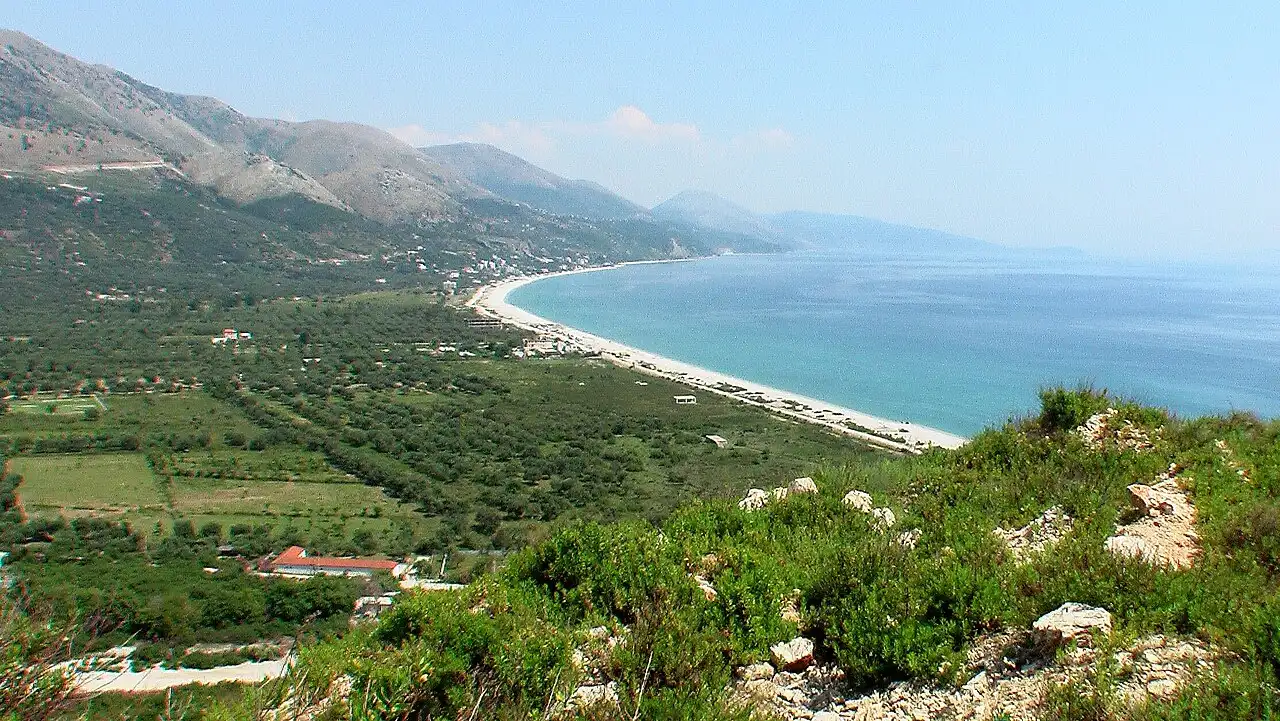
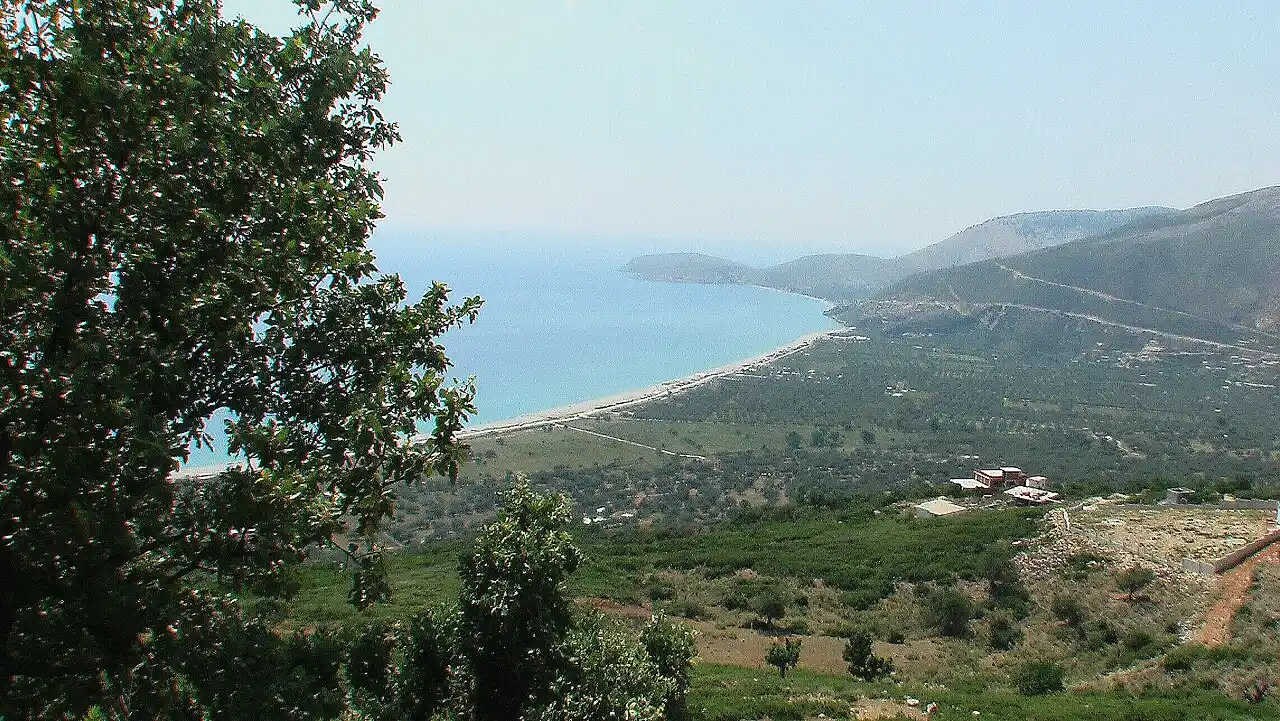
Hopping means two fares instead of one - Vlora-Himara, then Himara-Saranda, each paid to its own conductor in lek - and no company prints a split or through price to compare them against. What you’re buying with the second fare is the freedom to get off wherever you like, not a fixed schedule.
Driving it yourself: the pass or the tunnel
A rental car buys you the one thing the bus can’t: stopping wherever you want, and it’s the only way to guarantee the coastal road rather than hoping you booked the right departure. The full road-trip version of this corridor, with overnights and every cove, is in our Albanian Riviera road trip. As a straight transport option, driving the coastal SH8 yourself runs close to three hours of actual moving time - similar to a coastal bus, minus the wait at stops.
You’ll choose between the old Llogara Pass, which climbs to 1,027 m with a viewpoint most drivers say is worth the extra time, and the Llogara Tunnel, a 5.9 km bore that cuts the climb to about seven minutes. A toll was approved back in April 2026 - 250 ALL one way, 500 ALL round trip - but as of 18 July 2026 it still wasn’t being charged: the barriers read plates and wave cars through free, with no start date announced. Carry the 250 lek anyway in case that’s changed by the time you drive. Our Llogara Pass guide makes the case for driving the old road at least once rather than always taking the shortcut.
Private transfers: the other option
If you’d rather not manage a furgon timetable or a rental agreement, a pre-booked private transfer takes you door to door on your own schedule. Ask for the coastal road specifically; otherwise it’s left to chance. Expect roughly EUR 80-120 for the car - EUR 20-40 a head split three or four ways, still more than the bus, but a fixed departure time and a driver who takes you to the actual address. Book a day or two ahead in July and August, since the good drivers get snapped up during the busiest weeks of the season.
Bus, furgon or car: what actually makes sense
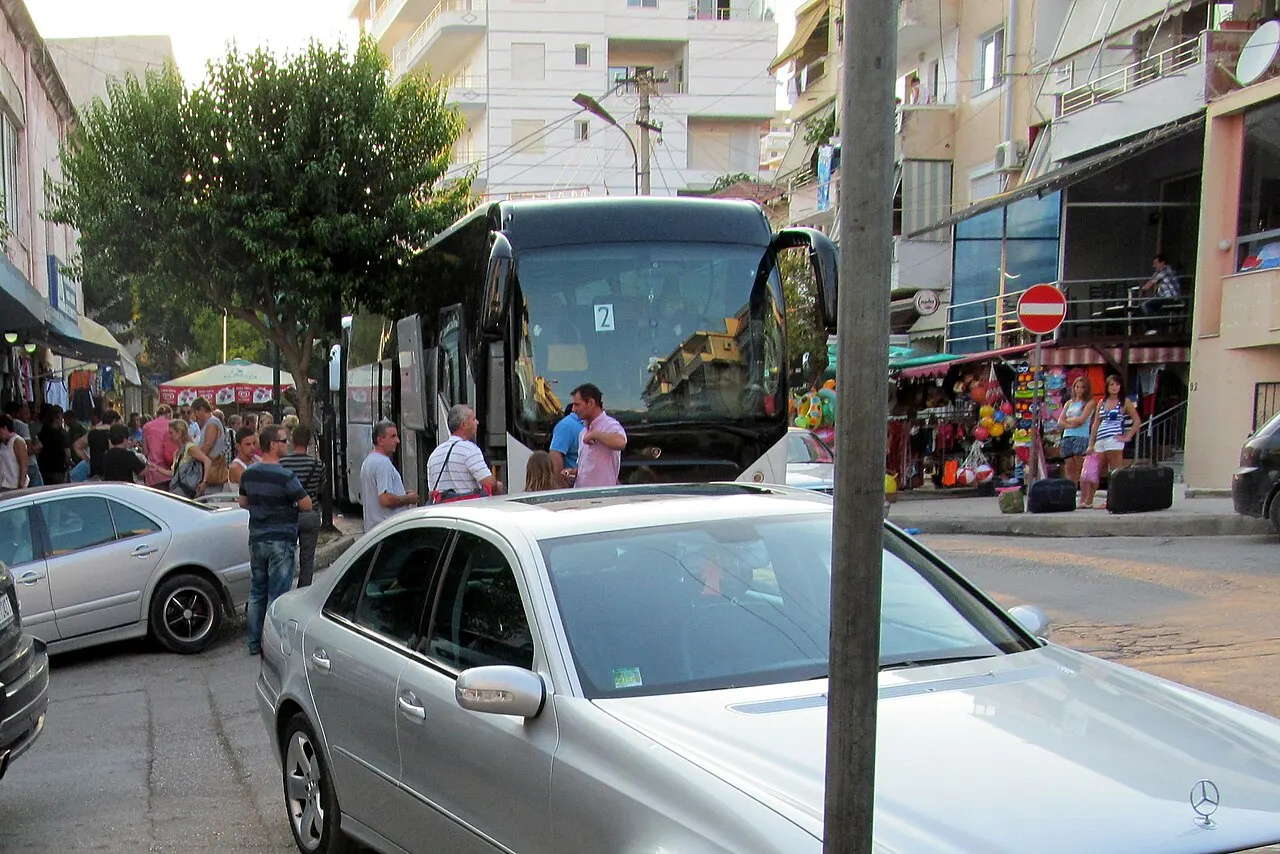
For a straight transfer with no interest in stopping, take the through bus and ask for a coastal departure - one cash fare to the conductor for a few hours with the Riviera outside the window. If Dhermi or Himara are actually on your itinerary, hop the segments on furgons instead: two fares instead of one, and you get the towns along the route. Only rent a car if you want the Llogara Pass on your own schedule, or you’re carrying on round the coast afterwards - for a single journey between two towns, driving is the expensive way to do a job the bus already does well. Still deciding which end of the coast to base yourself on, rather than just passing through? Saranda vs Vlora weighs the two head to head, and if it’s Saranda itself you’re not sold on yet, is Saranda worth visiting sets out the honest pros and cons.
Doing this as one stop in a longer bus-only loop rather than a single hop? Our one-week Albania by bus itinerary strings this leg together with Berat, Gjirokaster and the rest of the south.
Read also

Transport · 12 min read
Tirana to Athens: Bus, Flights & the Overland Option
Updated · October 5, 2026Tirana to Athens by bus: 04:00, 15:00 and 17:00 daily, €45 one way and 12-14 hours via Kakavia, or four direct flights a day. Checked 6 Oct 2026.

Transport · 9 min read
Tirana to Podgorica: Bus, Border & Onward to Kotor
Updated · October 5, 2026Tirana to Podgorica: about 160 km and 3.5-4 hours by direct bus via the Hani i Hotit border, two daily lines, then on to Kotor. Times checked 3 Oct 2026.

Transport · 10 min read
Butrint Day Trip from Corfu: Ferry + Site in One Day
Updated · October 16, 2026Butrint from Corfu in a day: a 30-45 min boat to Saranda, 18 km by road, a 1,000-lek ticket. Which boats work in October, November and winter.

Transport · 14 min read
Albania Border Crossings by Car: Queues, Docs & Green Card
Verified · October 2, 2026Albania's 13 customs road crossings: which stay open all night, when queues build, Green Card rules by plate, Kosovo's €15 insurance and EES into Greece.