Llogara Pass & National Park: Albania's Most Scenic Drive
The Llogara Pass climbs to 1,027 m then drops to the Ionian: Albania's best scenic drive, its national park, paragliding, hiking and how to do it.
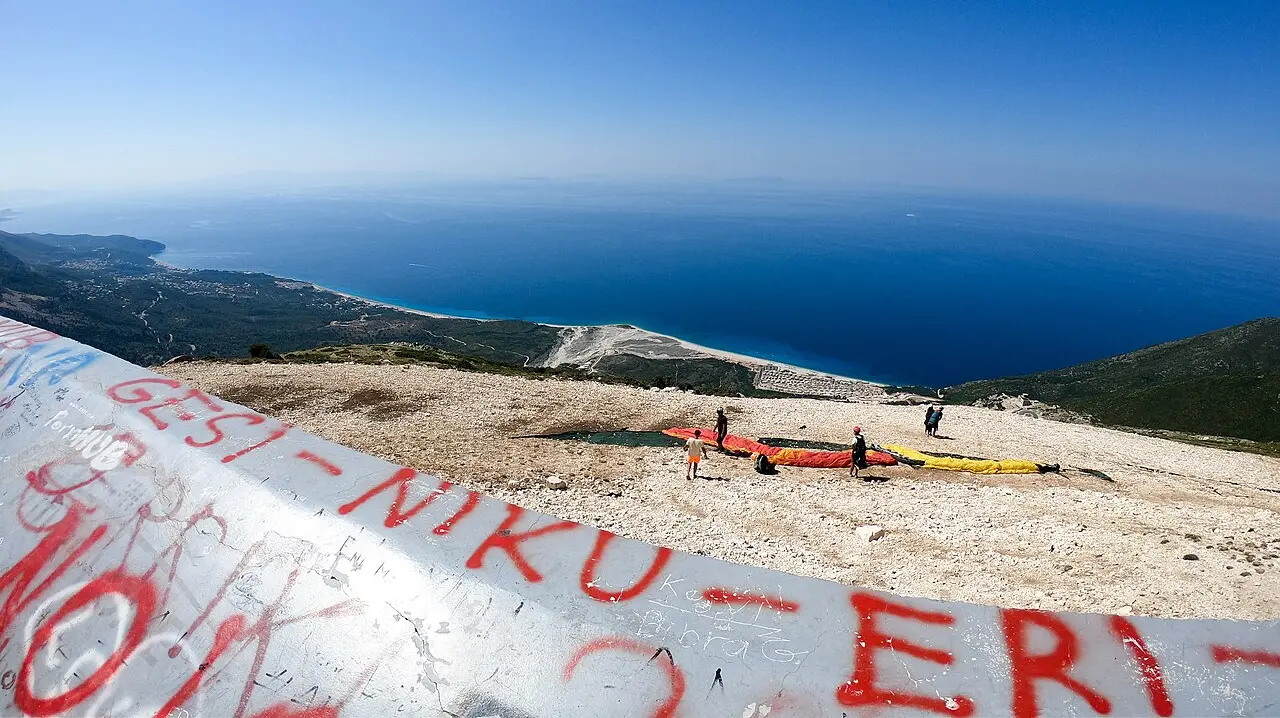
The Llogara Pass is the road where the mountains fall into the sea. Climbing to about 1,027 m over the Ceraunian range south of Vlora, the SH8 twists up through alpine pine forest and then, at the top, the whole Albanian Riviera drops away below you: turquoise water, a long pale beach at Palasa, and the Ionian running to the horizon. It’s regularly called one of the finest drives in Europe, and for once the hype is earned. The pass and the forest around it also make up Llogara National Park, a pocket of mountain wilderness that has been protected since 1966.
Most people know the pass from a single photo at the top, but there’s more to it than that. The old road and the new tunnel under it give you a real choice, and the view has two thousand years of history behind it: Caesar landed his legions on the beach below and marched them over this saddle. Around it lies a national park of wind-bent pines to hike, with paragliders dropping off the top toward the coast. Whether you drive it yourself or just ride over, it pays to know how the pieces fit together.
The drive: hairpins to the sky, then down to the sea
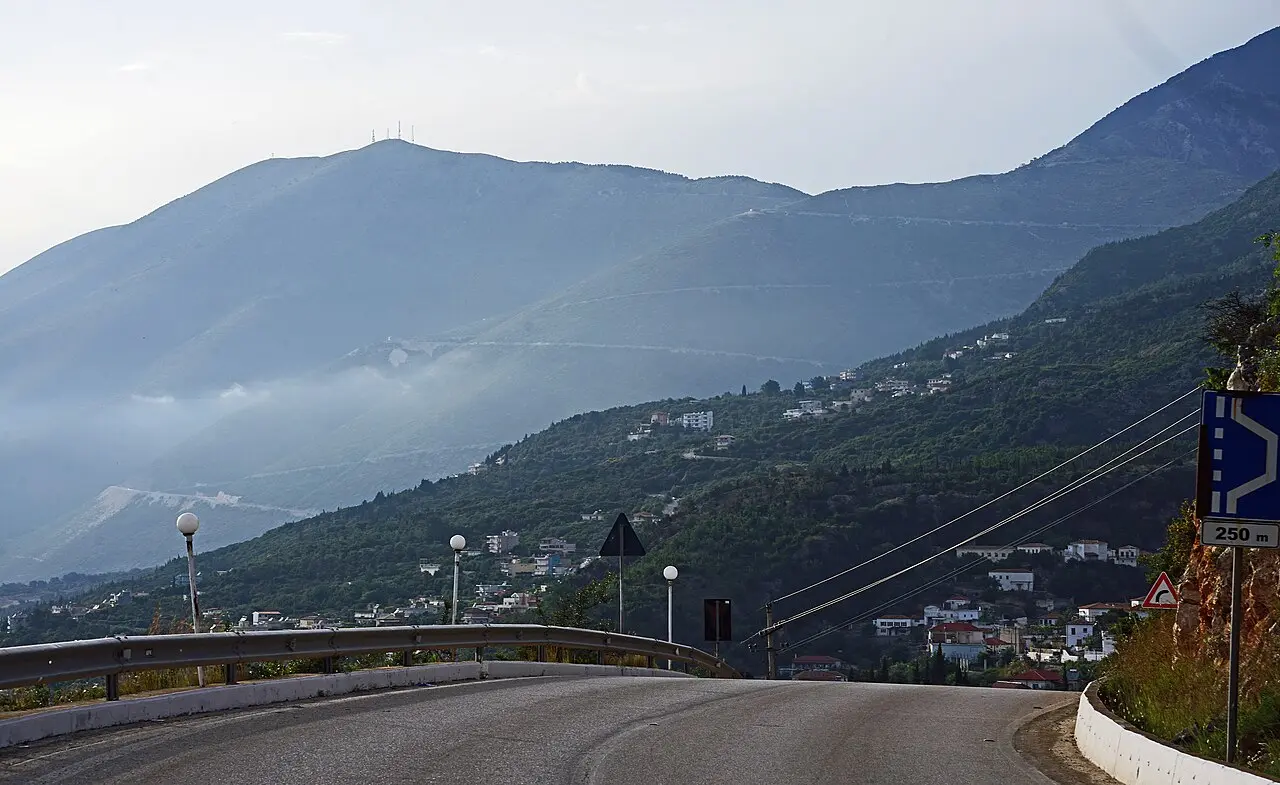
From the Vlora side the road leaves the coast near Orikum and Dukat and climbs hard, a series of tight switchbacks through thickening pine forest, gaining a thousand metres in a short distance. The air cools as you go up, the sea disappears behind the ridges, and then you crest the pass and it all comes back at once, this time a long way below. From roughly 1,000 m you look straight down onto the first Riviera beaches. Few roads anywhere flip so fast from mountain to Mediterranean.
Since July 2024 there has been a faster way through. The Llogara Tunnel, a 6 km bore that’s the longest road tunnel in Albania, now cuts under the pass and turns the old white-knuckle crossing into about seven minutes. A tariff was approved for it in April 2026 - 250 lek one way for a car, 500 lek return - but it’s not actually being charged. Albanian reporters checked the plaza on 18 July 2026 and found vehicles passing free: the cameras on the barrier read your plate, staff stand at the point, and no money changes hands. No official start date has been announced, so treat the 250 lek as a cost that may appear rather than one you’ll meet. Here’s the thing worth knowing: the old pass road over the top is still open and still free, and it’s the whole point of coming. The smart move is to take the tunnel one way and the pass the other, or simply drive up to the viewpoint and back. Keep the tunnel in reserve for fog, ice or a late-night run, when the top is no place to be feeling your way around hairpins.
Where the mountains meet the sea, and Caesar crossed
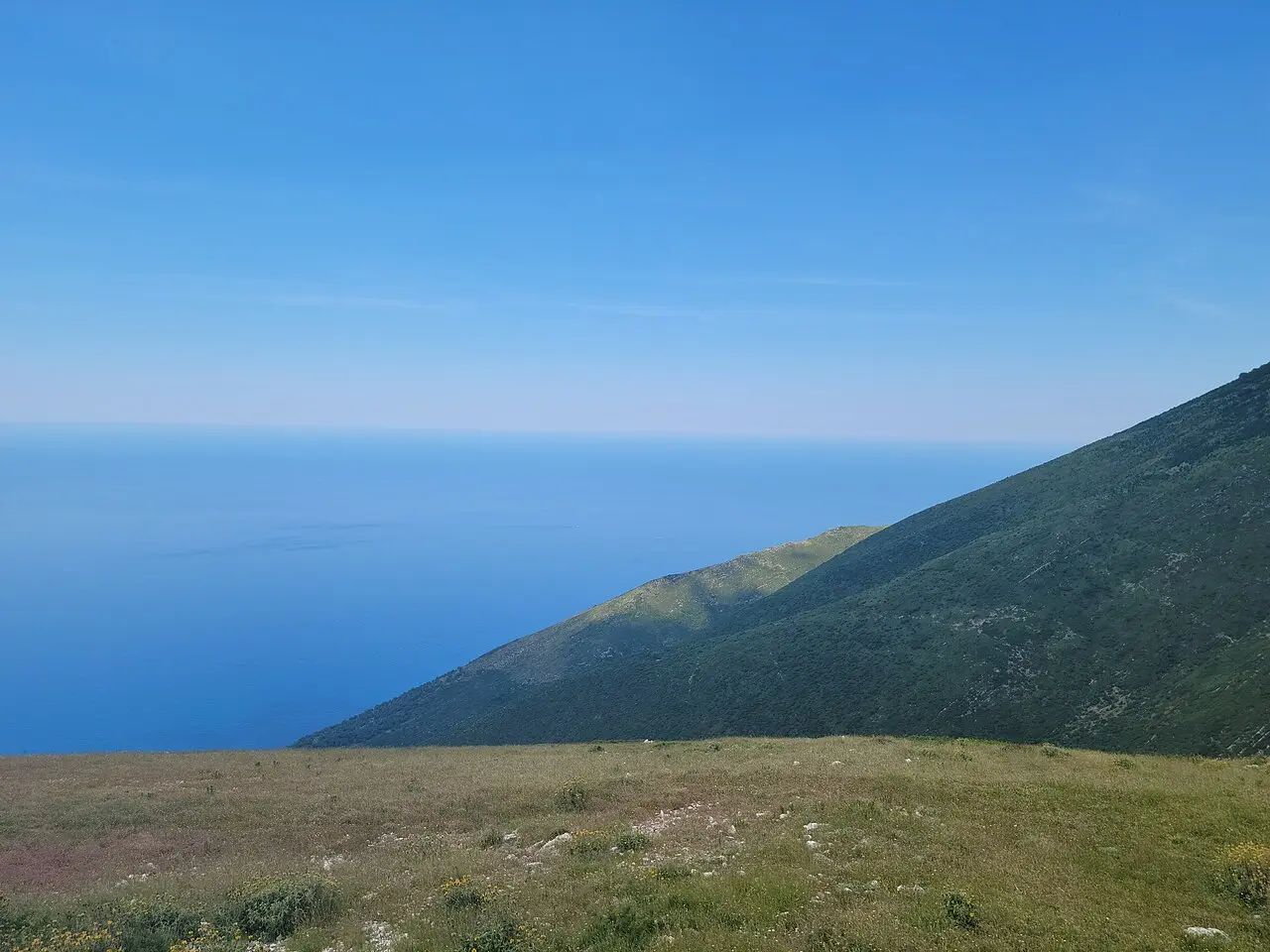
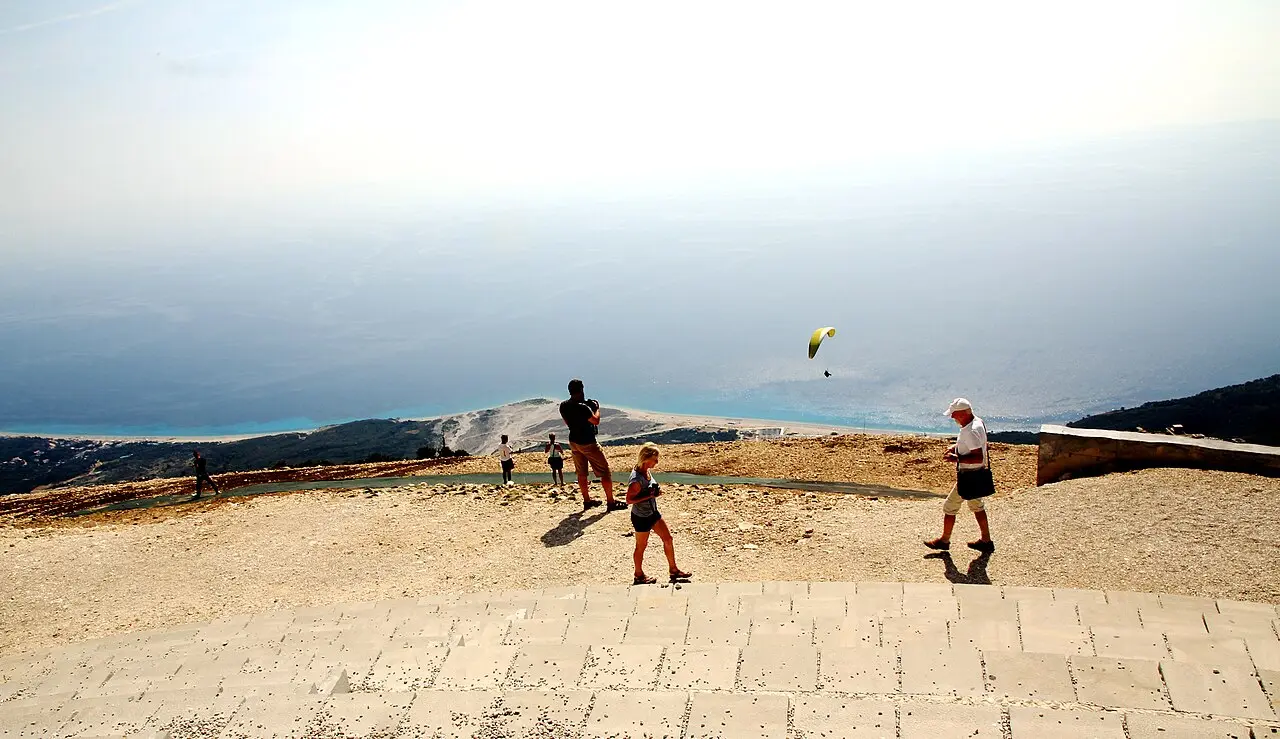
The payoff is the view from the top, and it is worth stopping the car for rather than snatching it over the wheel. From the meadows and the viewing platform near the pass, the green slopes drop almost sheer to a deep-blue sea, with the Riviera coastline curving south past Palasa and Dhermi. On a clear day you can see far down the coast to the south.
There’s history in that view too. This is Caesar’s Pass (Qafa e Cezarit): in 48 BC, during the Roman civil war, Julius Caesar landed his legions on the beach at Palasa below and marched them over this very saddle to surprise Pompey inland. The scenic drive you are enjoying with a coffee was, two thousand years ago, a military shortcut. It’s a good thing to think about at the viewpoint, where the beach he landed on is laid out directly beneath you.
Llogara National Park: pines, a flag-shaped tree and wildlife
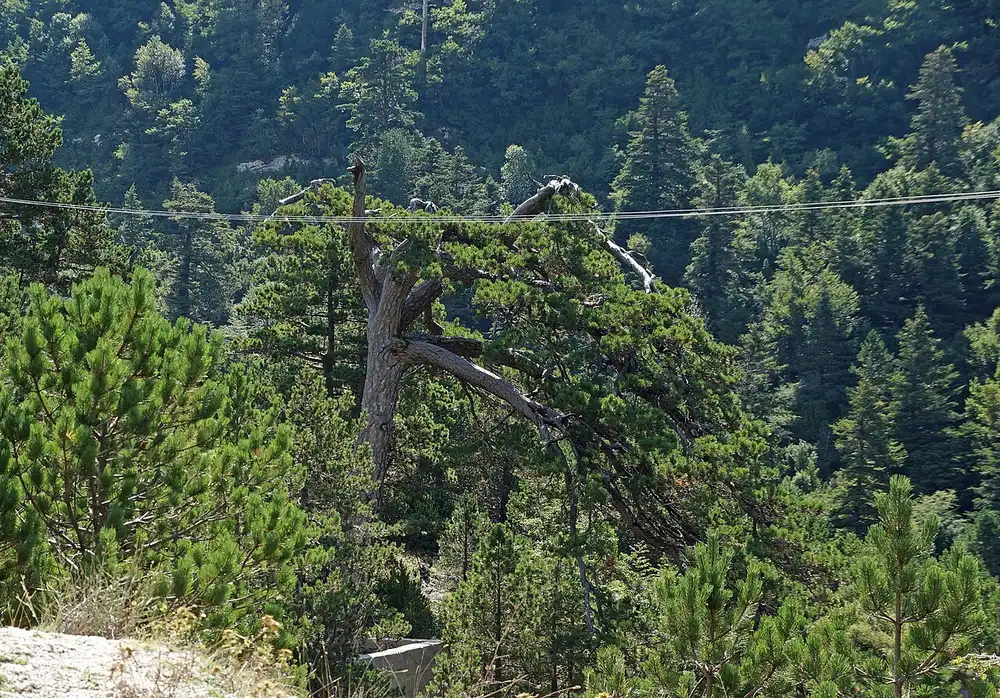
The forest you drive through is protected as Llogara National Park, set up in 1966 to guard the mountain woods and the wildlife in them. It’s a compact park, but a dramatic one, running from near sea level up to the Ceraunian summits; the highest, Maja e Çikës, tops out at 2,044 m. The slopes are covered in Bosnian and black pine and Bulgarian fir, many of them bent and flattened on one side by the constant sea wind.
The most famous of those wind-sculpted trees is the Flag Pine (Pisha e Flamurit), a lone pine that decades of wind have shaped so its branches all stream to one side like a flag caught in a gust. It has become the symbol of the park and sits on an easy loop trail, one of around eight marked paths that range from a gentle stroll to the hard slog up Çika. Higher and quieter than the coast, the woods shelter roe deer, wild boar, chamois and the European wildcat, with golden eagles and griffon vultures overhead; you’re unlikely to see the big animals from the road, but the forest is a genuine change of world from the beaches twenty minutes downhill.
Paragliding off the pass
That combination of a high launch and a warm sea directly below makes Llogara one of the best paragliding spots in Albania. Steady thermals rise off the pass, and tandem pilots run their passengers off the edge and spiral down toward the coast, landing near the beaches at Palasa. If you’ve ever wanted to try it, this is a spectacular place to do it, floating off a mountain with the whole Riviera underneath you. Even if you keep your feet on the ground, the launch area is one of the best viewpoints on the pass, usually with a canopy or two being laid out on the stony ground.
The stop at the top: bring a jacket
Near the pass sits the small Llogara tourist village, a cluster of hotels, guesthouses and mountain restaurants set among the pines. It’s the natural place to break the drive: the restaurants here are known for spit-roast lamb and mountain dairy, the standard hearty fare of the Albanian highlands, and there are cabins if you fancy a night in the cool forest before or after the coast.
One practical warning that catches people out every summer: it’s genuinely cold at the top. At around a thousand metres the air can be several degrees cooler than down on the beach, and the wind bites. Drivers roll up from a 32 C afternoon in Vlora in shorts and a T-shirt and find themselves shivering at the viewpoint. Keep a jacket or a jumper within reach, even in August.
How to drive the pass (or skip the wheel)
The pass is the set-piece of the whole southern coast, so most people meet it as part of a bigger trip rather than a destination in itself. Coming down from Tirana or Berat, it pairs naturally with the ancient ruins of Apollonia near Fier, an easy detour off the road south before you climb.
| From | Roughly | Notes |
|---|---|---|
| Vlora -> the pass | ~40 km / 45-60 min | The northern gateway; the climb starts past Orikum and Dukat. |
| The pass -> Dhermi | ~15-20 km / 30 min | Down the far side to the first Riviera beaches. |
| Tirana -> Llogara | ~180 km / 3 h | Via Vlora; usually the first leg of a Riviera trip. |
If you’re driving yourself, this is a road to respect: steep, slow and full of tight bends, best taken in daylight and not rushed, especially in a big or unfamiliar car. Our guide to driving in Albania safely is worth a read before you tackle it, and how to rent a car covers the hire side. If you would rather not drive the hairpins at all, buses and furgons between Vlora and Saranda cross the pass (the operators do not say which way any given service goes), and plenty of day tours from Vlora or the Riviera towns build the viewpoint into a Riviera loop. Coming straight from the capital, our Tirana to Himara guide covers the direct bus that crosses this same pass on its way to the coast.
The pass is also the dramatic high point of three of our routes: the Albanian Riviera road trip from Vlora to Saranda, the one-way Tirana to Saranda road trip down from the capital, and the longer Albania road trip. It’s also the gateway to the whole Albanian Riviera beyond. If you’re day-tripping from Vlora rather than driving through, our day trips from Vlora guide covers the pass as a there-and-back half day alongside the boat trips to Karaburun and Sazan.
When to go
The view is good in any season, but the pass changes character through the year. Summer is the classic time: warm, clear, and perfect for pairing the drive with the beaches below and the paragliding, though the road is busiest and hot lower down. Late spring and autumn are ideal for the hiking, with the forest at its greenest and the trails quiet. Winter brings snow, fog and the occasional closure up top, which is exactly when the tunnel earns its toll; if you cross in winter, check conditions and keep the underground option in your back pocket. Our month-by-month guide to the best time to visit Albania has the wider picture, and the Vlora and Himara guides cover the towns either side of the pass.
The short version
Drive the old pass road for the view and keep the tunnel in reserve for bad weather or a night crossing. Stop at the top, walk to the viewpoint, and give yourself a few minutes for the drop to the sea rather than snatching it through the windscreen. Bring a jacket for the cold, take the bends slowly, and if you have the nerve, throw yourself off it under a paraglider. However you do it, the Llogara Pass is the moment Albania’s mountains and its coast collide, and the best single stretch of road in the country.
Photos
On the map
The map loads on click - to keep the page lightweight.
The map didn’t load. Check your connection and refresh the page.
Distance ≈180 km · ~3 h by road
- Tirana ≈180 km · ~3 h by road South to Vlora, then up the SH8 to the pass. Most people reach it as part of the drive down to the Riviera.
Read also

What to see · 9 min read
Bovilla Lake Tirana: Gamti Viewpoint & Road Tips
Updated · September 1, 2026Bovilla Lake near Tirana: 20 km by road, gravel last stretch, Gamti balcony hike, drinking-water rules, and when a guided tour beats self-drive.

What to see · 11 min read
Valbona Valley: Guesthouses, Walks & Alpine Road
Updated · August 30, 2026Valbona Valley in the Albanian Alps: arrival via Fierza and Bajram Curri, guesthouses, short walks, and the paved Alpine road.

What to see · 9 min read
Shala River Day Trip: Albania's Alpine 'Thailand'
Updated · August 27, 2026Shala River day trip in 2026: turquoise water in the Albanian Alps, boat times from Koman Lake, prices, what to pack, and how it differs from the ferry.

What to see · 10 min read
Saranda Boat Trips 2026: Kakome, Krorez & Mirror Beach
Updated · September 17, 2026Saranda boat trips to Kakome, Krorez and Mirror Beach: EUR 25-35 north and from EUR 100 south at the operators we checked, plus where boats leave.