Best Day Trips from Saranda: Butrint, Blue Eye & Corfu
Six day trips from Saranda: Butrint, Ksamil, the Blue Eye, Gjirokaster, Corfu and Porto Palermo - distances, real costs, bus or tour, and which to pick.
Saranda is the best day-trip base in Albania, and nothing else comes close. A UNESCO ancient city sits 20 minutes down the road, a UNESCO stone town is an hour and twenty inland, the country’s most photographed spring is half an hour away, and a Greek island is thirty minutes across the water. Nowhere else in the country puts that much within a morning’s reach, which is why people who booked two nights here end up staying five.
The catch is that the good stuff pairs badly if you plan it wrong. Butrint and Ksamil sit on the same short road south, so they are one day. The Blue Eye and Gjirokaster sit on the same road inland, so they are another day. Mix them up and you’ll spend the afternoon driving back past a turning you already used. Corfu eats an entire day on its own, passport included.
How to do these without a car
Four of the six work fine on public transport. The Saranda-Ksamil-Butrint local bus does most of the work: every 20 to 30 minutes at the height of summer, roughly hourly the rest of the season, from about 07:30 until early evening. You pay the conductor in cash, and the 2026 sources genuinely disagree on how much - anything from 100 to 200 lek as far as Ksamil, 150 to 250 lek on to Butrint - so carry small notes and treat the higher end as your budget. For the Blue Eye, take any Gjirokaster-bound bus, tell the driver “Syri i Kaltër” (about 300 lek), and you’re dropped on the main road to walk in. Gjirokaster itself has minibuses from the stop on Rruga Flamurit near the synagogue ruins, roughly 400 lek and about an hour and twenty, with departures reported around 10:00, 11:00, 13:00, 14:00 and 17:00, the exact minutes shifting from one source to the next. No authority publishes or updates any of this, so confirm the day before with the driver or your guesthouse.
Porto Palermo is the one that really needs wheels, and the Blue Eye plus Gjirokaster combination is much easier with a car or a tour than by chaining buses. If you’re hiring locally, car rental in Saranda covers prices, scooters and Greece rules. Organised day trips that bundle Gjirokaster, the Blue Eye and a castle stop start around EUR 40 a head and run six to seven hours with hotel pickup, which is decent value if you’d rather not drive the SH99 switchbacks yourself.
Butrint: the ancient city, 25 minutes away
Go even if ruins usually bore you. Butrint is a whole Greek, Roman, Byzantine, Venetian and Ottoman city stacked on one wooded peninsula between a lagoon and the Vivari Channel, with a Greek theatre, a mosaic-floored baptistery and a hilltop acropolis linked by a shaded loop trail. It sits 18 to 20 km south of Saranda, 25 to 30 minutes by car or on the local bus.
The adult ticket is 1,000 lek on the official cultural-sites ticketing platform, with 800 lek a head for groups of ten or more, 500 lek for ages 12 to 18 and free entry under 12. A few 2026 blogs still print 700 lek, so carry a bit more cash than you think you need. Published hours for the summer season are 08:30 with last entry at 18:00, and the site is listed as free on a handful of national dates and the last Sunday of each month; treat all of that as indicative and check at the gate.
Allow two to three hours. The move that changes the day is arriving at opening: the excursion groups from Corfu and the coach tours from the Riviera land mid-morning, and until then you have a Roman theatre largely to yourself. Full detail on what you’re looking at is in our Butrint National Park guide.
Ksamil: the islet beaches on the same road
Seventeen kilometres south, on the same road, sits the swimming half of that day: Ksamil in the morning, Butrint in the softer afternoon light. The draw is the cluster of small wooded islets a short swim or paddle offshore, and water that genuinely looks like the brochure.
Be honest with yourself about timing, though. In our ranking of Albania’s beaches Ksamil finishes bottom of the pile once you score crowds and cost alongside the water, because in July and August the sand is rented out, the lounger prices are the highest on the coast and the village is a building site of new blocks. In June, or on a September weekday, it’s a different and much better place. The Ksamil guide has the beach-by-beach detail.
The Blue Eye: half a morning, not a day
The Blue Eye (Syri i Kaltër) is a karst spring where water forces up through limestone from a depth nobody has managed to measure, shading from near-black blue in the centre to turquoise at the rim. It sits off the SH99 about 22 km from Saranda, 30 to 40 minutes by road.
Entry is about 50 lek a person, plus 100 to 200 lek for a car at the barrier, and it’s generally open from around 07:00 to 19:00. From the car park it’s a 2 km, 20-minute walk in along a track, or roughly EUR 5 for an electric scooter or shuttle if you would rather not. Swimming in the spring is banned and the rangers enforce it, whatever you saw on Instagram three years ago.
Plan it as a stop rather than a destination. It’s a twenty-minute sight with a walk attached, and by late morning in August the platform is shoulder to shoulder. Either go first thing, or fold it into the drive to Gjirokaster, which is exactly what the tour buses do. Our Blue Eye guide has the access detail and the swimming rules.
Gjirokaster: the stone city inland
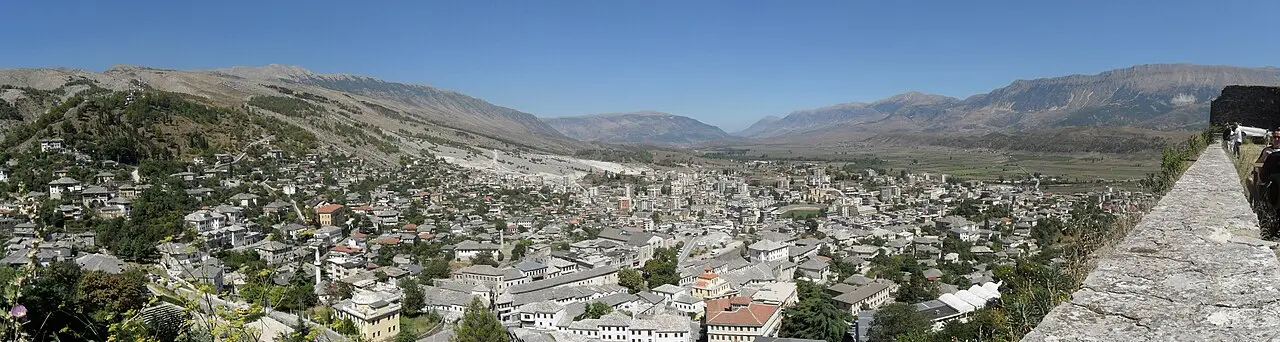
Give this one the whole day or leave it for another trip. Gjirokaster is a UNESCO-listed Ottoman town of slate-roofed houses climbing a hillside under one of the largest castles in the Balkans, 57 km and an hour and twenty inland on the same road that passes the Blue Eye.
Inside the fortress there’s a weapons museum, a Cold War tunnel and an American aircraft parked on the terrace that the old regime presented as a downed spy plane. Budget about 400 lek to get through the castle gate, plus roughly 200 lek more for the weapons museum inside it: they’re two separate tickets, and the second one surprises most visitors at the door. Children under 12 go free and summer opening runs roughly 09:00 to 19:00; both figures move, so check at the window. Below the walls, the Old Bazaar is cobbled, steep and full of stone-built shops, and a restored tower-house is worth the entry.
Give it six hours on the ground if you can, which means an early start from the coast. Doing Gjirokaster and the Blue Eye together in one day is the single most efficient pairing on this page. Our Gjirokaster guide covers the sights in order.
Corfu: a foreign country before lunch
Nobody expects the Corfu hop to be this easy. The fast boat takes 30 to 45 minutes across the strait, the conventional car ferry 55 to 70, and a high-season adult one-way is EUR 25 to 30 on the operators’ published tariff. From 1 June to 15 October there are 13 departures a day each way, so you can be in a Venetian old town by mid-morning and back on the Albanian Riviera for dinner.
What trips people up is paperwork and clocks, not the sailing. This is a real international border: Albania is outside the EU and Schengen, so passport control happens both ways and the crossing counts against your 90-days-in-180 Schengen allowance if you’re a non-EU visitor. The EU’s Entry/Exit System has been fully operational since 10 April 2026, so your arrival is logged digitally instead of stamped. Then the clock: Corfu runs an hour ahead of Albania and your return ticket is sold on Corfu time, so get that wrong and you’re sleeping in Greece. And rental cars normally can’t cross - most hire agreements forbid it - so go as a foot passenger and use buses or a taxi on the island.
Be at the international passenger terminal an hour before departure, which is what the operators ask: boarding opens an hour out and closes 30 minutes before the sailing. Timetables, fares and booking are all in our Saranda to Corfu ferry guide; if the island tempts you into staying, the Saranda-Corfu combo itinerary turns it into five days.
Porto Palermo and Himara: the Riviera run north
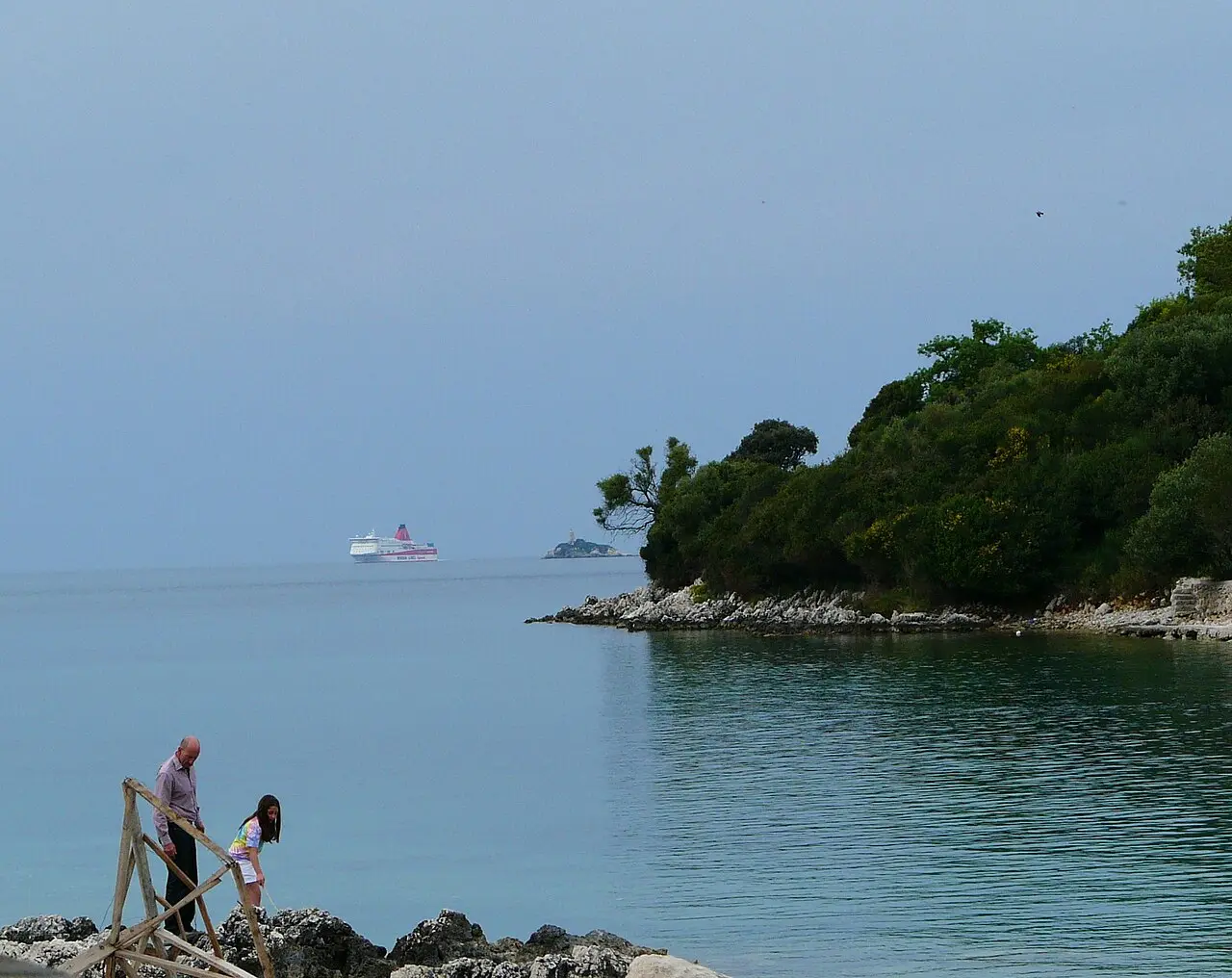
Everything else on this list points south or inland. Head north instead and the coast road unrolls past cove after cove to Porto Palermo, a near-enclosed bay about 45 km from Saranda where a triangular castle linked to Ali Pasha of Ioannina sits on its own small peninsula. The water there’s deep, calm and usually far emptier than anything around Ksamil, and the swim off the rocks beside the castle is the reason to come.
Twenty minutes further and you’re in Himara, a proper working town with cove beaches, a ruined castle village on the hill and better-value seafood than the resorts south of it. Buses run this way - Saranda to Himara is quoted anywhere from 700 to 900 lek, and no operator publishes a fixed fare, so confirm it locally - but they leave you on the highway rather than at the bay, so this day is much better with a car or as part of a boat trip. Our Himara guide and the wider Albanian Riviera page cover the coast in detail.
Which day trip should you pick?
- One free day and you want the highlight: Butrint in the morning, Ksamil or a Saranda beach in the afternoon. Cheap, easy by bus, and the ruins are genuinely world-class.
- Two free days: add Gjirokaster with the Blue Eye folded into the drive. That pairing gives you the mountains, the spring and a UNESCO town in one push.
- Three days and a passport: put Corfu in the middle. It breaks up the Albanian coast nicely and the boat is half the fun.
- Travelling with kids: Ksamil and the Blue Eye are the easy wins; Butrint involves a lot of walking in the heat and Gjirokaster is all stairs.
- No car, no tours: stick to Butrint, Ksamil, the Blue Eye and Gjirokaster. All four are doable on scheduled buses if you start early.
- Car for a day or two: do Porto Palermo and Himara, which is the trip the bus crowd can’t really have.
The same handful of habits applies whichever you choose. Start early: everything here’s better before 10:00, and the coach tours run on a later clock. Carry cash in lek, because tickets, parking, village tavernas and most buses want it, and the Blue Eye barrier certainly does - our cash or card in Albania guide covers where plastic works. Don’t trust a single printed timetable either, southern Albanian departures shift with the season and the driver, so ask locally the day before. And watch the heat: Butrint and Gjirokaster are open-air sites with limited shade, and July afternoons in the Drino valley are brutal.
What’s nearby and read also
- Get your base right first: the Saranda travel guide and where to stay in Saranda.
- Do it on wheels: how to rent a car in Albania.
- Longer plans: browse all our Albania routes and itineraries.
- Basing further up the coast instead? Our day trips from Vlora guide covers the same format for Llogara, the Riviera, Karaburun-Sazan and Apollonia.
Route day by day
- Days on the road
- 1
- Distance
- ≈190 km
- Budget from
- 20 EUR
- Best season
- April, May, June, September, October
The route at a glance
-
Saranda (base)
Route startYour base. Every trip below runs out and back in a day - the distances are one-way from Saranda, not a single loop.
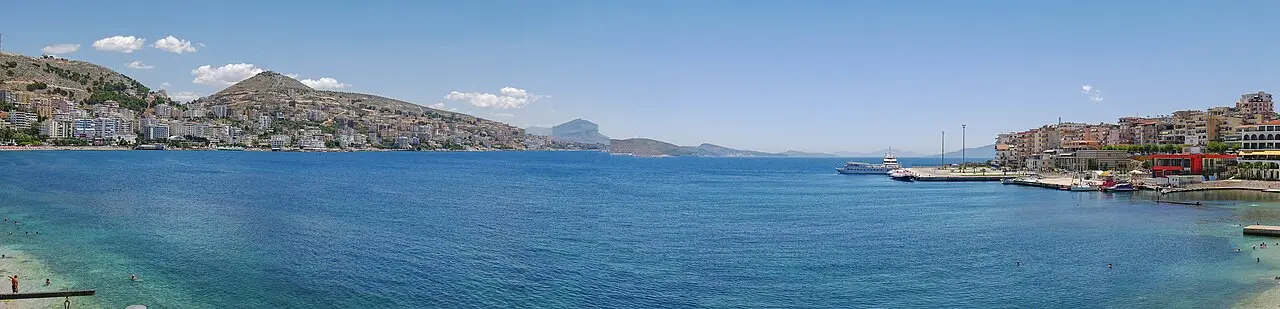
Photo: paisaman37 / Flickr via Wikimedia Commons, CC BY-SA 2.0 ( source) -
Butrint
20 km from the startstop ≈180 min
UNESCO ruins on a wooded peninsula, 25-30 min south. Adult ticket 1,000 lek; allow 2-3 hours for the loop. Arrive at opening to beat the coach groups.
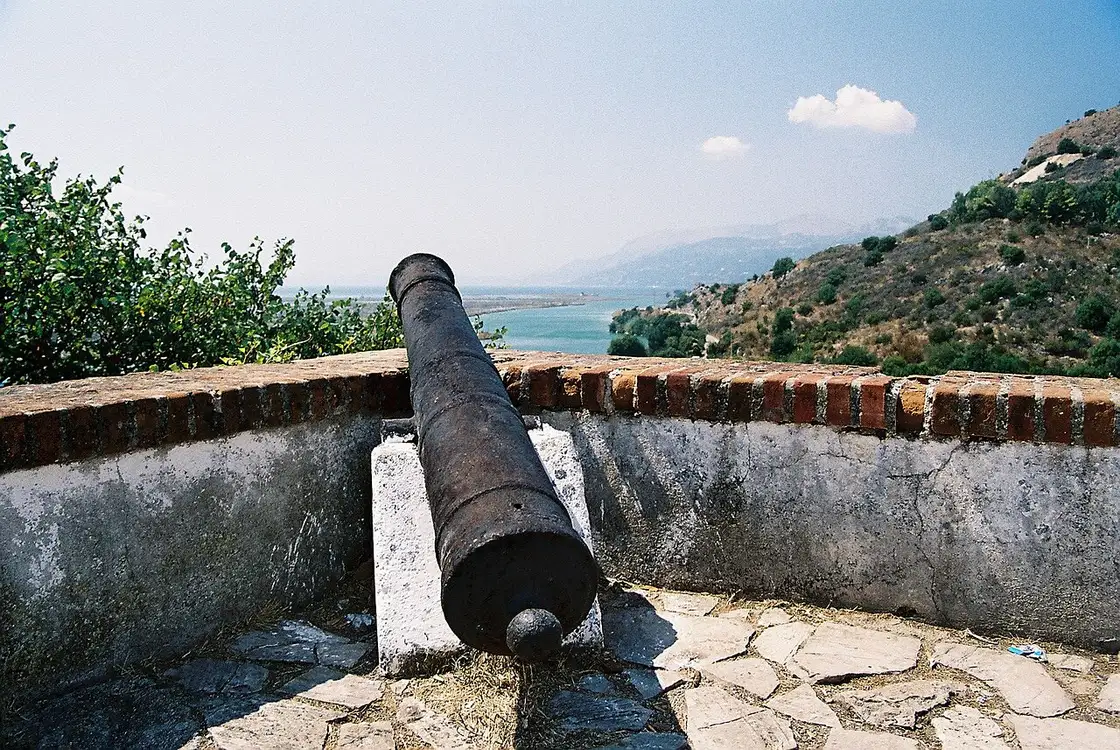
Photo: Bazie / Wikimedia Commons, CC BY-SA 4.0 ( source) -
Ksamil
17 km from the startstop ≈300 min
The islet beaches on the way to Butrint. Same local bus, 100-200 lek depending on which 2026 source you believe. Loudest and priciest sand in Albania in August, glorious in June.
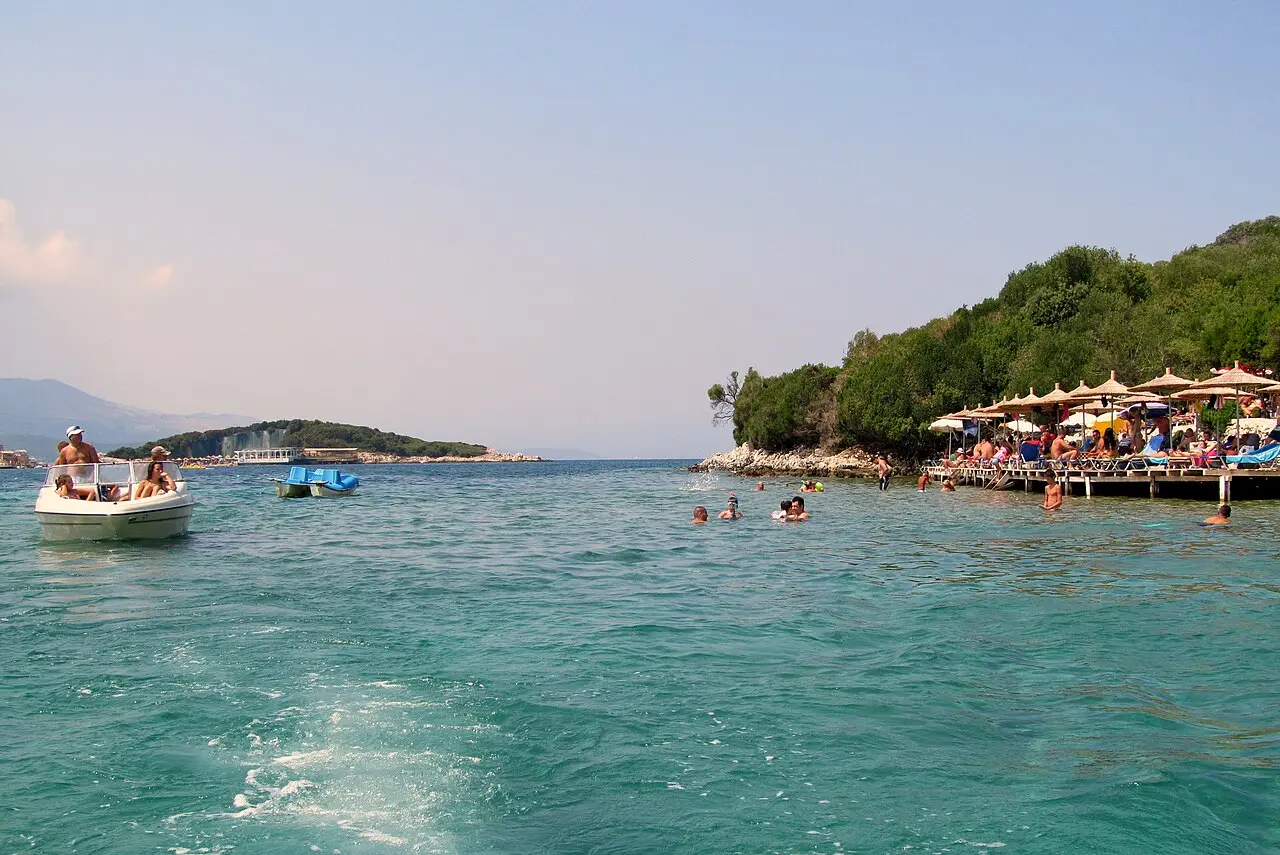
Photo: czernik.jerzy / Wikimedia Commons, CC BY 3.0 ( source) -
Blue Eye (Syri i Kaltër)
22 km from the startstop ≈120 min
Karst spring off the SH99, 30-40 min out. Entry about 50 lek plus 100-200 lek for the car, then a 2 km walk in from the car park. No swimming.
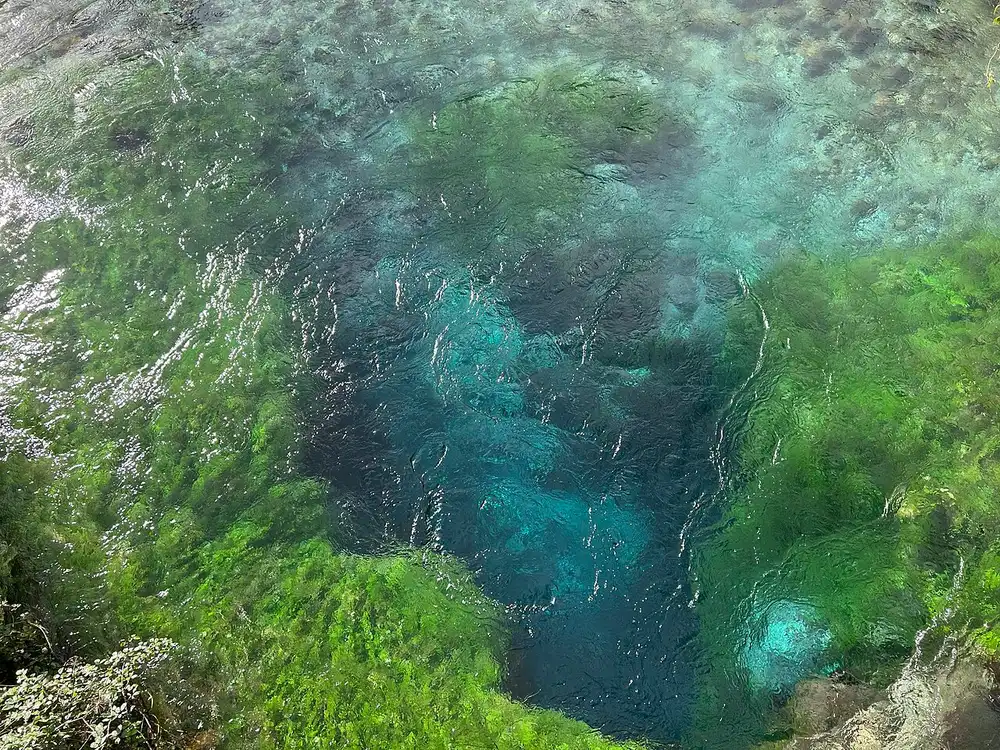
Photo: Sharon Hahn Darlin / Wikimedia Commons, CC BY 2.0 ( source) -
Gjirokaster
57 km from the startstop ≈360 min
The UNESCO stone city, about 1 h 20 inland on the same road as the Blue Eye. Bus around 400 lek. Castle, bazaar and a tower-house fill a full day.
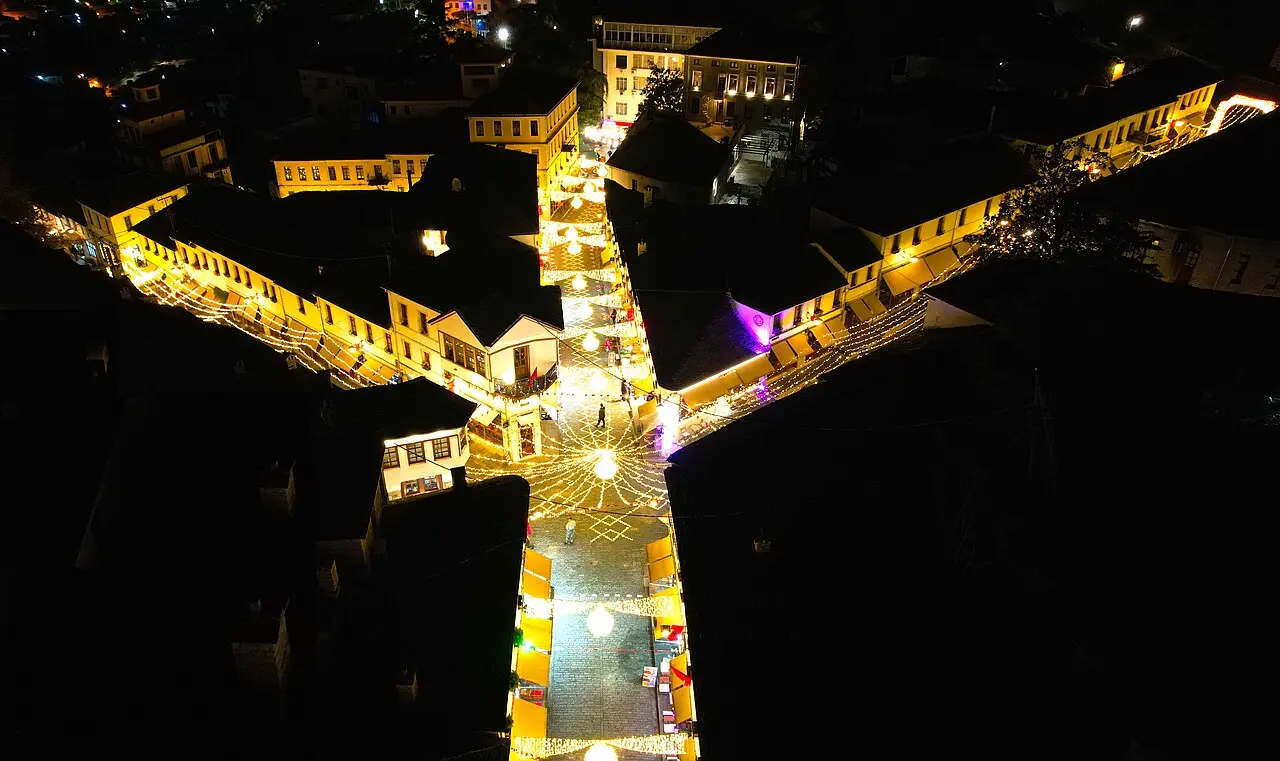
Photo: Gjirokastra1 / Wikimedia Commons, CC BY-SA 4.0 ( source) -
Porto Palermo & Himara
45 km from the startstop ≈300 min
The Riviera run north: a castle on its own peninsula in a near-enclosed bay, with Himara town and its beaches another 10 km up the coast. Realistically needs a car or a boat trip.
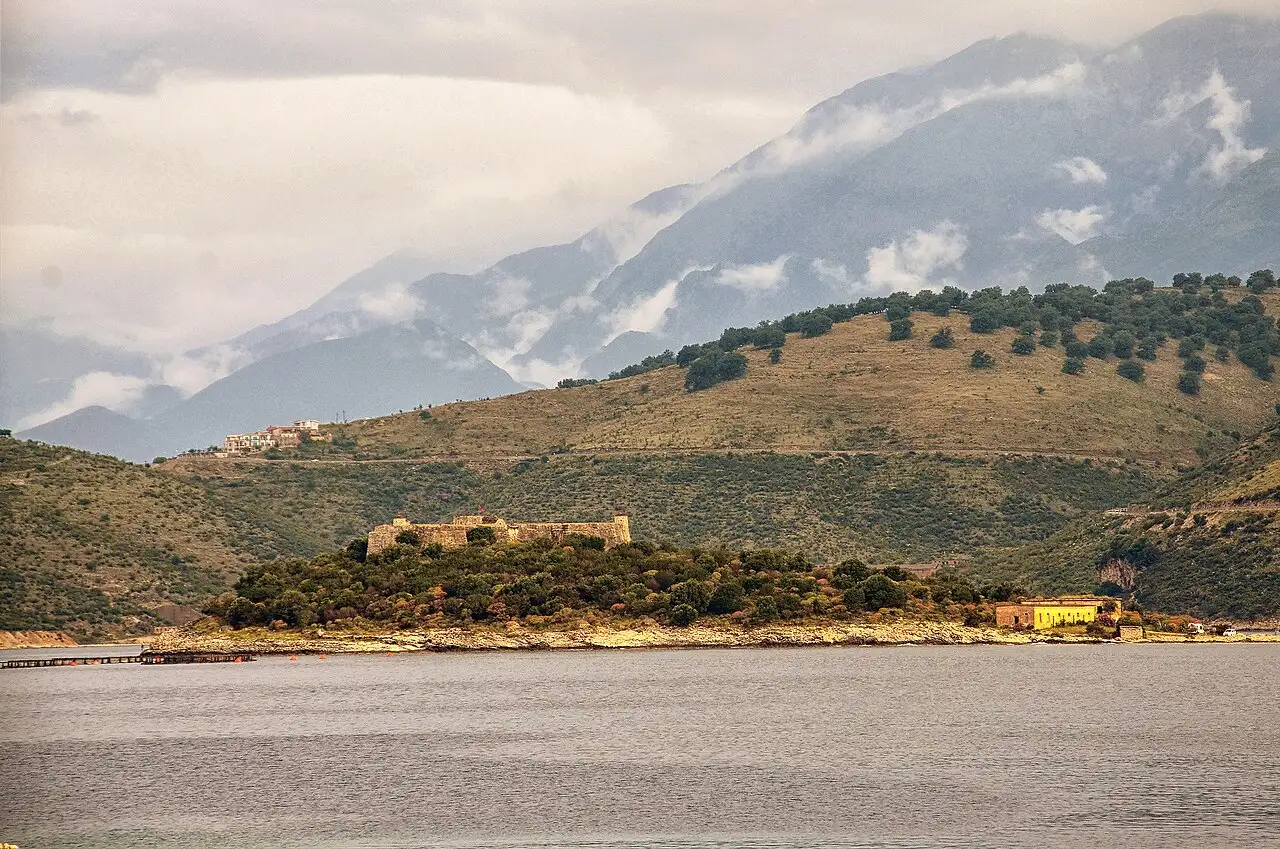
Photo: Pasztilla aka Attila Terbocs / Wikimedia Commons, CC BY-SA 4.0 ( source) -
Corfu (Greece)
20 km from the startstop ≈420 min
Thirty to forty-five minutes across the strait by fast boat, EUR 25-30 one way. Passport, and remember Corfu runs an hour ahead of Albania.
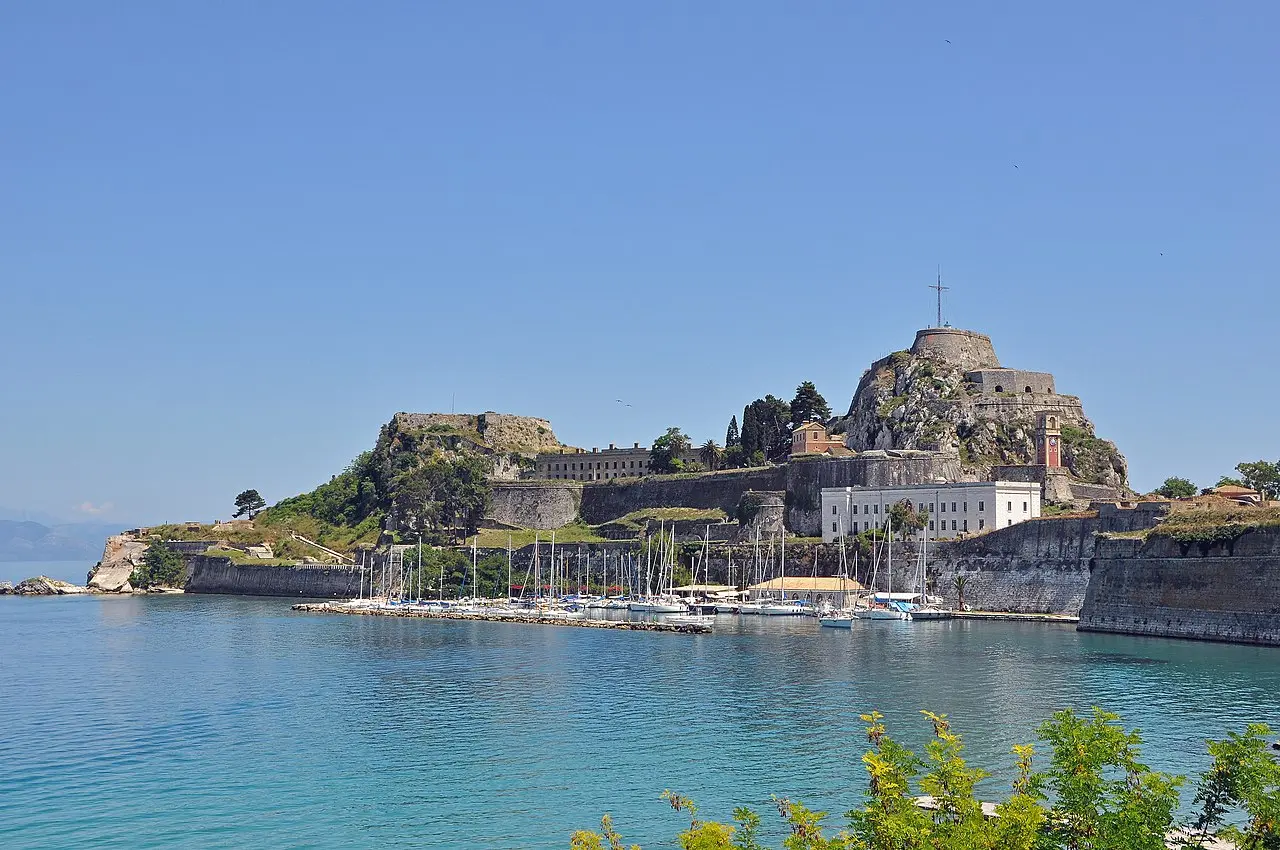
Photo: Marc Ryckaert (MJJR) / Wikimedia Commons, CC BY 3.0 ( source)
Route map
The map with stops loads on click - to keep the page lightweight.
The map didn’t load. Check your connection and refresh the page.