
Tirana to Saranda Road Trip: 3 Days, 330 km, Best Stops
Drive Tirana to Saranda in three days: 330 km, the Karavasta pelicans, Apollonia, Zvernec island and the Llogara Pass, with real times and costs.
Tirana to Saranda is about 280 km if you simply drive it, and closer to 330 km if you drive the version worth driving: three days, one way, down the flat Adriatic side and then along the Ionian coast road. Straight through it’s a five-hour haul with nothing to show for it. Broken into three days with five stops on the way, it turns into the drive people come to Albania for, and the detours that make it good cost only about 46 extra kilometres and an hour and a half of extra wheel time.
The catch nobody warns you about comes at the rental desk, not on the road. This is a one-way drive, and the car has to get back to Tirana somehow. Settle that before you book, because it decides which company you use and it can quietly add a hundred euros to a three-day trip.
The two ways south, and why the coast wins here
There are two roads to Saranda and they’re closer in length than people assume. Measured on road routing in August 2026, the inland route through Fier, the Vjosa valley and Gjirokaster runs about 270 km in 4 h 35 of moving time. The coastal route through Vlora and over the Llogara Pass runs about 280 km in 5 h 21. Ten kilometres apart, three quarters of an hour apart, and completely different days.
The inland road is the efficient one. It’s what the buses take, it’s the one to use if you’re driving back north later in the trip, and it puts Gjirokaster on your windscreen. If you only want to compare ways of getting there, including buses and transfers, that’s covered in Tirana to Saranda by bus, car or transfer.
The coast road is the reason to have a car at all. It also happens to pass three things the inland route doesn’t: a Ramsar lagoon full of pelicans, an ancient Greek city, and a monastery on an island. None of them takes more than 90 minutes, and all three sit within a few kilometres of the road you were driving anyway.
Can you drop the car in Saranda
Ask this first. Plenty of Albanian rental companies either don’t do one-way at all or price it painfully: one Tirana operator, Tic Rent Car, states on its own site that most firms charge EUR 50 to 120 or more as a drop-off fee, and advertises free one-way transfers between its Tirana city, Tirana airport, Vlora and Saranda desks. Treat the range as one company’s view of its competitors rather than market data, but the shape of it is right. Get the drop-off location and any fee written into the booking, not agreed at the counter.
The alternative is to accept it as a return trip: drive the coast south, spend your Saranda nights, then come back up the faster inland road through Gjirokaster. Two different roads, no drop-off fee, and it’s genuinely a better sightseeing plan than doing the coast twice.
On price, a small manual car out of Tirana airport runs roughly EUR 15 to 25 a day in the shoulder months and EUR 45 to 65 at the peak of July and August. The details that actually cost you money, the excess on the collision waiver and what the policy excludes, are in how to rent a car in Albania. Fuel is cheap by Western European standards: petrol was 189 lek a litre on 27 July 2026, so the whole 330 km costs somewhere near 3,700 lek, about EUR 40, in a small petrol car.
Day 1: the flat half nobody stops on
Everyone treats Tirana to Vlora as dead mileage. It’s 156 km in a little over two hours on good road, and it hides the three stops that make this route different from the coast-only Albanian Riviera road trip.
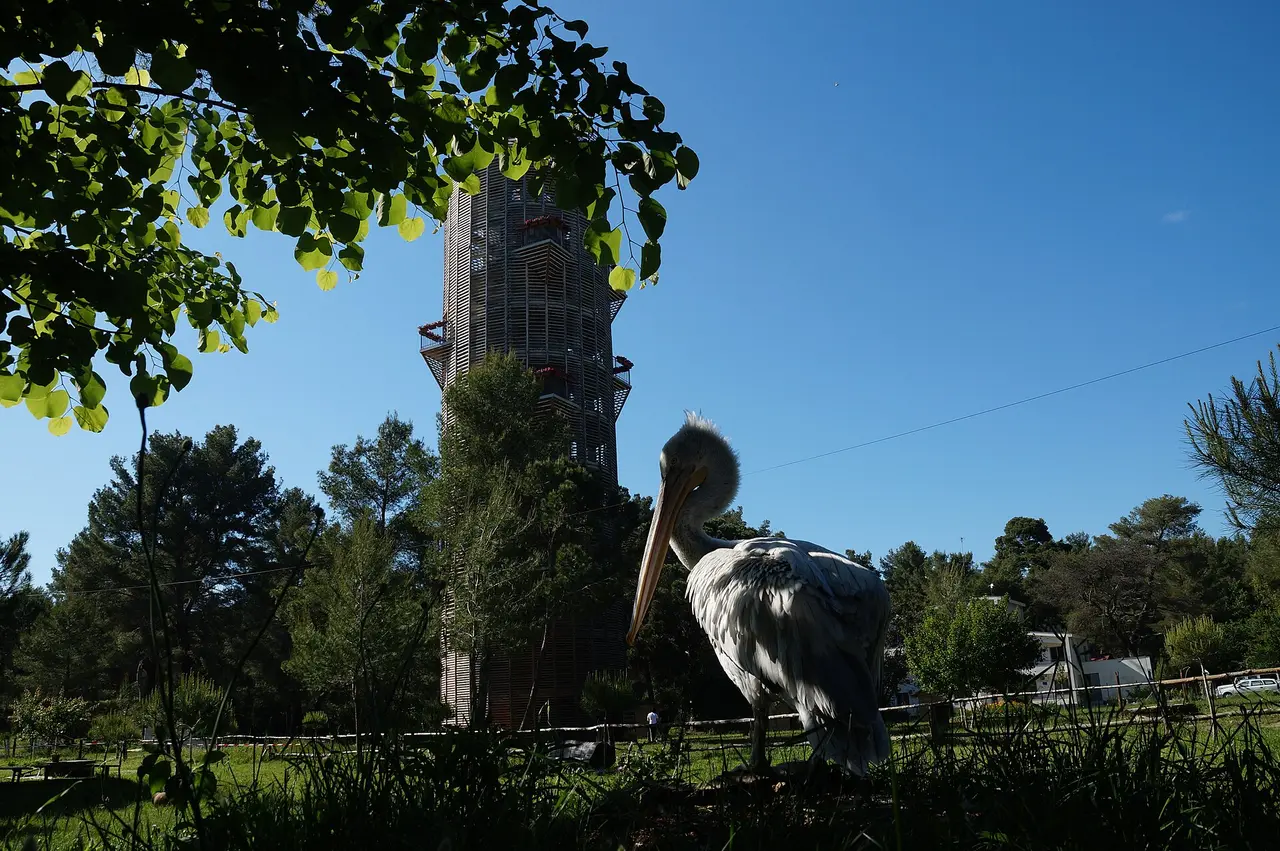
Divjake-Karavasta National Park is the first, about 92 km and 1 h 35 from central Tirana including the run in from the main road. The park covers 22,389 hectares around the Karavasta lagoon, at 41.8 sq km the largest in Albania, a Ramsar wetland since 1995 and, per the protected areas agency, Albania’s only coastal breeding site for the Dalmatian pelican. Wikipedia puts the colony at roughly 5% of the world population. There’s pine forest, a boardwalk out over the water and a tall wooden watchtower you can climb.
Now the part the brochures skip. Pelican numbers peak from late winter through the spring breeding season, so a July visitor can easily see none at all, and the lagoon in flat midday August light is hazy and unglamorous. Come early, or treat it as a leg-stretch under the pines rather than a wildlife guarantee. The agency publishes no tariff for the park, so carry small lek in case there’s a charge at the barrier.
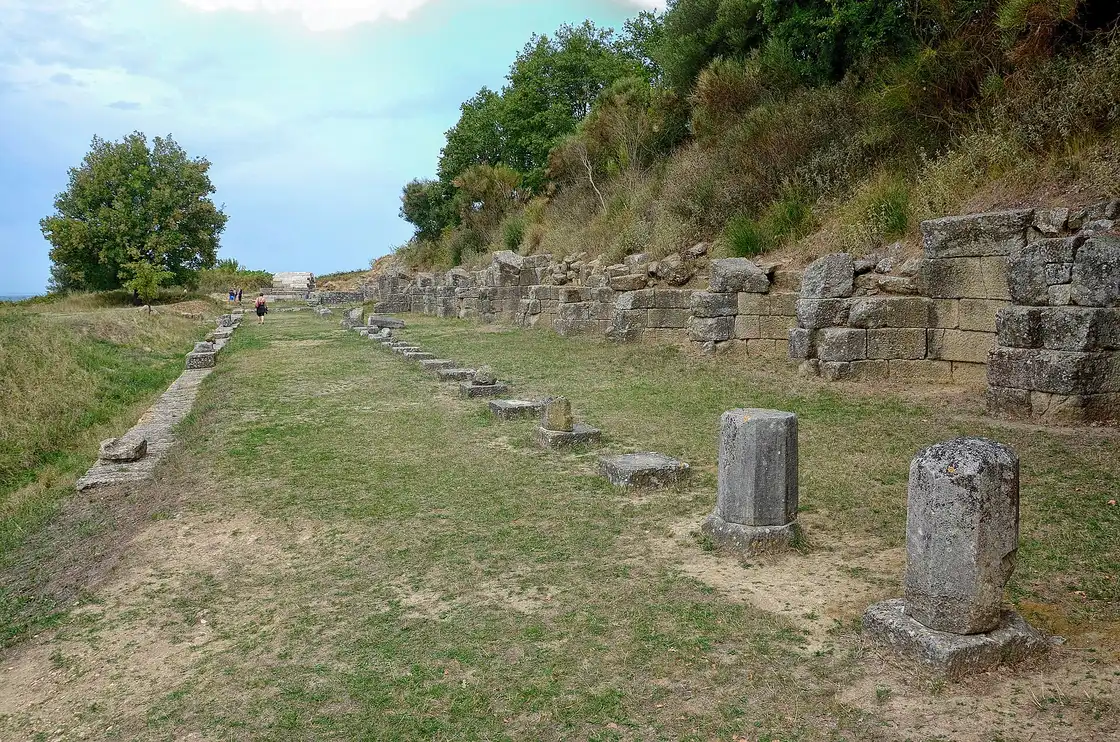
Apollonia comes next, 57 km on and 12 km west of Fier at Pojan. It’s an ancient Greek colony that became a serious Roman town, and it sits on a hill with the plain spread out below and almost nobody in it. Give it 90 minutes for the Great Stoa, the odeon, the re-erected facade of the Bouleuterion and the 13th-century monastery with its museum. Entry runs 600 lek for adults and 180 lek for students with a card (or anyone aged 12 to 18), with the park open 09:00 to 19:00 daily from May through October and last entry at 18:45. Our Apollonia guide has the full rate card, the winter hours, and the honest warning that much of the site is stumps and trenches.
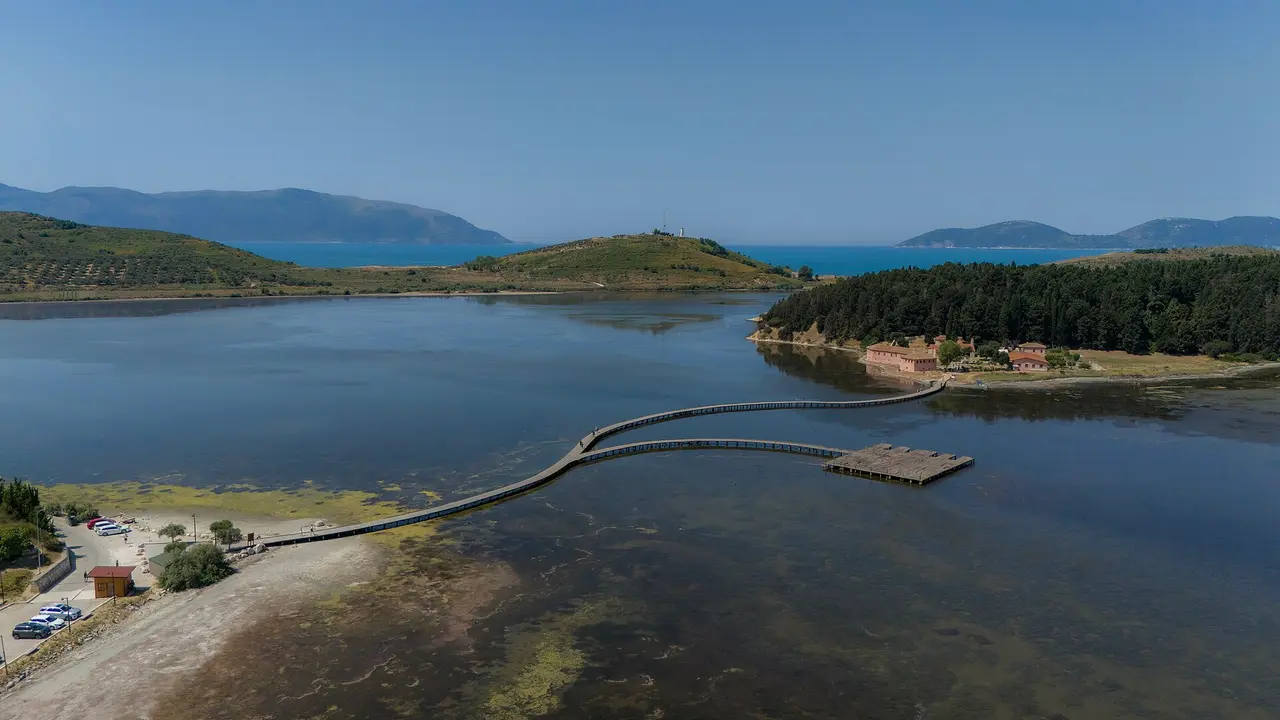
Zvernec is the one people remember. Twenty minutes north of Vlora, a wooden footbridge runs several hundred metres across the shallow Narta lagoon to a small pine-covered island holding a 13th-century monastery of Saint Mary: medieval Orthodox church architecture, partly surviving frescoes and old religious objects inside. The national tourism agency lists it as a cultural monument and publishes no hours or fee, so turn up, walk the bridge, and dress modestly if you want to go into the church. Sunset here is the right end to day one, and Vlora, twenty minutes back down the road, is where you sleep.
Day 2: over the Llogara Pass
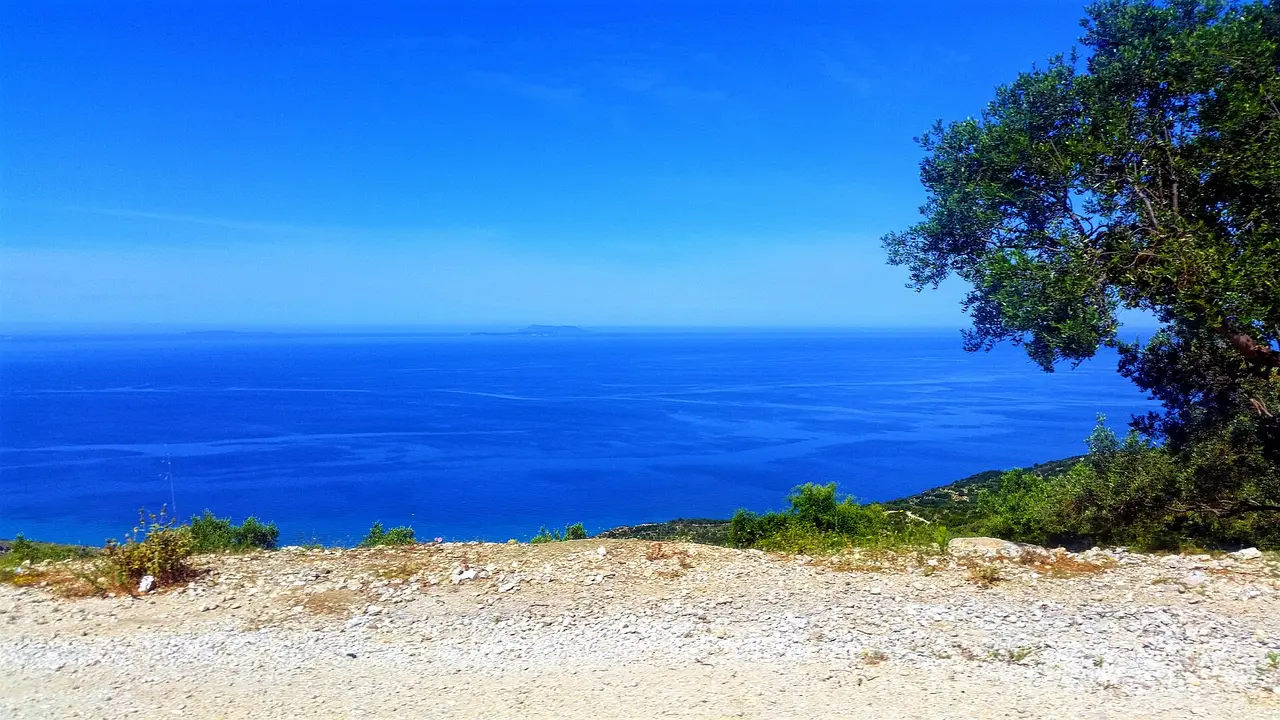
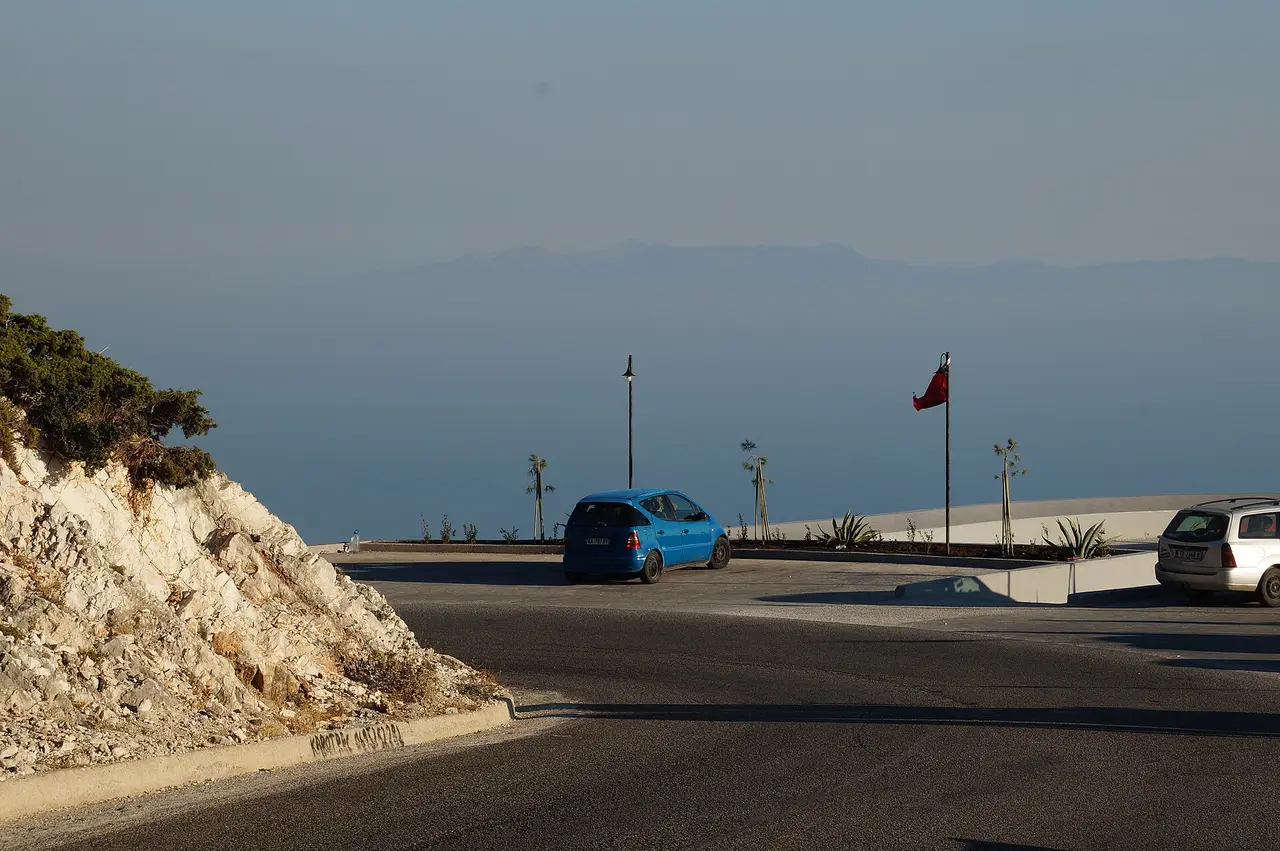
From Zvernec it’s 47 km and about an hour to the top of the Llogara Pass, and this is where the drive changes character. The road climbs through pine forest to roughly 1,027 m and then the entire Ionian coast opens up below in one go. There’s a proper car park at the viewpoint, and on a clear morning you can pick out Corfu on the horizon. Our Llogara Pass guide covers the national park and the paragliding.
The decision here is pass or tunnel. The Llogara Tunnel, 5.9 km on the SH8 between Dukat and Palase and the longest in Albania, opened in July 2024 and cuts the crossing from about 30 minutes over the top to roughly 7 minutes underneath.
The tunnel is still free, whatever you have read. A tariff was approved back in April 2026 - 100 lek for a motorcycle, 250 lek one way for a car and 500 lek return, up to 5,000 lek for heavy vehicles, collected by the state road-operating company. It has not started. Albanian reporters checked the plaza on the ground on 18 July 2026 and found cars driving through without paying: the cameras on the barrier register your plate, staff are standing there, and nobody takes any money. There is no official start date. English-language pages telling you the tunnel has been tolled since April are wrong, and there is no cash booth to queue at. Budget the 250 lek in case it goes live while you are there, and be pleased when it doesn’t.
Which to take on day 2 depends on when you get there. You have a beach afternoon at Dhermi and a bed booked in Himara, so the pass is the obvious choice: you’re crossing in daylight with time in hand, and it’s the single view this drive is built around. Keep the tunnel in your pocket for the morning you leave Himara late, or for the return north if you are looping back this way.
Below the pass the road threads Palase, Dhermi and Drymades. Dhermi is 23 km and half an hour down from the top; Himara another 16 km and about 30 minutes on, so budget a full hour from the viewpoint even though it looks like nothing on the map. Himara is the sensible night two: a real town with a harbour, restaurants that aren’t only beach bars, and a scatter of coves fifteen minutes away by car. The beaches themselves are the subject of the Riviera road trip, which picks up this stretch in detail.
Day 3: Porto Palermo and the run in
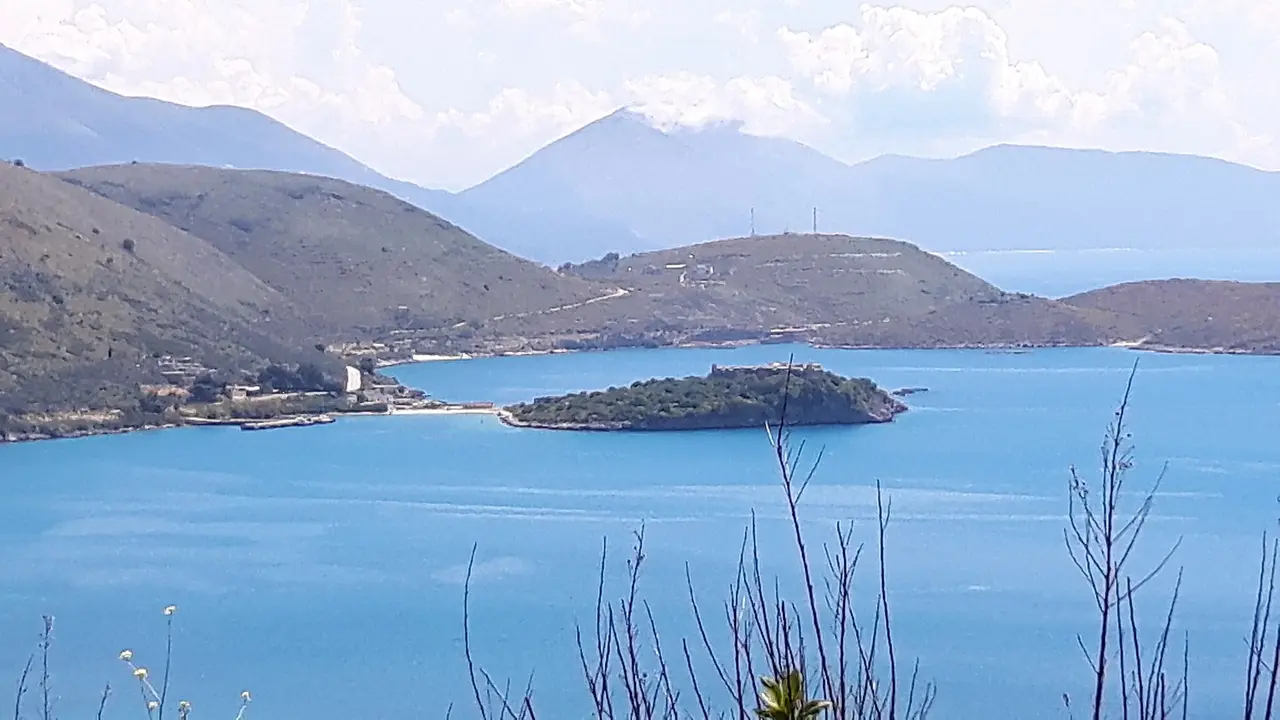
Ten kilometres south of Himara, twenty minutes on the coast road, you pass a bay so enclosed it looks like a lake, with a wooded peninsula and a squat triangular fortress on it. Porto Palermo is the last proper stop of the trip and the one most people drive past. The castle is about a kilometre downhill from the turn-off; entry is 300 lek individually, 200 lek in a group, free for under-12s, with summer hours of 09:00 to 19:00 published by the Vlora heritage directorate. Off season it closes on Mondays and shuts at 16:00. Bring lek: nobody publishes whether the desk takes cards. The full history, including the Ali Pasha legends and the submarine base next door, is in the Porto Palermo Castle guide.
From there it’s 45 km and about an hour into Saranda past Borsh and Qeparo. Arrive with daylight left, because the last hour is the twistiest of the whole trip. Once you’re in, the far south is all short drives: the Blue Eye is 22 km inland at 50 lek entry plus about 200 lek to park, Butrint and Ksamil are south along the same road, and the options are laid out in day trips from Saranda and the Saranda travel guide.
Where to sleep on this drive
Two nights on the road, and each one has a right end of town.
Night one, Vlora. Sleep on the Lungomare, the rebuilt seafront promenade along the bay, rather than inland: it has the widest choice of hotels and apartments in the city, it’s twenty minutes back from Zvernec, and it puts dinner and the evening walk outside your door. It’s also where the Sazan and Karaburun boats load, if you decide the drive can wait a day. Our Vlora guide has the neighbourhoods in detail.
Night two, Himara. Take the town itself, near the harbour, not one of the satellite coves. Livadi, Potami and Filikuri are lovely and roughly fifteen minutes away by car, which is fifteen minutes of unlit coast road each way every time you want dinner. The town has an Old Town on the hill and restaurants that aren’t only beach bars, and you wake up already on the road you need for day 3.
Book ahead for July and August, and filter for parking. The Riviera fills from the Tirana end, and the rooms that go first are the ones with a space off the road. In Saranda the seafront and the hill above it are two very different stays at two very different prices, which is the whole point of where to stay in Saranda.
Distances and costs at a glance
| Leg | Distance | Moving time |
|---|---|---|
| Tirana to Divjake-Karavasta | ~92 km | 1 h 35 |
| Divjake to Apollonia | ~57 km | 1 h 05 |
| Apollonia to Zvernec | ~44 km | 50 min |
| Zvernec to Llogara Pass | ~47 km | 1 h 05 |
| Llogara to Porto Palermo | ~43 km | 1 h 20 |
| Porto Palermo to Saranda | ~45 km | 1 h |
| Total | ~330 km | ~7 h |
Seven hours is moving time only, which is why this is three days and not one. Budget roughly EUR 40 of fuel and 950 lek in entry tickets for Apollonia (600), Porto Palermo (300) and the Blue Eye (50), plus about 200 lek to park at the Blue Eye. Add 250 lek if the Llogara tunnel toll has gone live by the time you drive. Everything except the tickets can go on a card; the tickets can’t.
When to drive it
Late May to June and September to early October are the sweet spot: warm sea, open beach bars, and a Llogara descent you don’t share with a queue of coaches. July and August work, but the coast road is busy, the rooms cost double and the midday light flattens everything. Winter is fine on the tarmac but half the Riviera is shut, and snow can close the pass, in which case the tunnel is the only way through. The seasonal detail is in the best time to visit Albania.
Two more practical things. South of the pass the road is narrow, unlit and full of blind bends where the tarmac has been patched rather than rebuilt, so the kilometre counts here mean far less than the clock does: plan by hours. And if you’d rather loop back inland instead of retracing the coast, the southern Albania road trip picks up in Saranda and runs through Butrint, the Blue Eye, Gjirokaster and the Vjosa valley.
Route day by day
- Days on the road
- 3
- Distance
- ≈330 km
- Budget from
- 55 EUR
- Best season
- May, June, September, October
The route at a glance
-
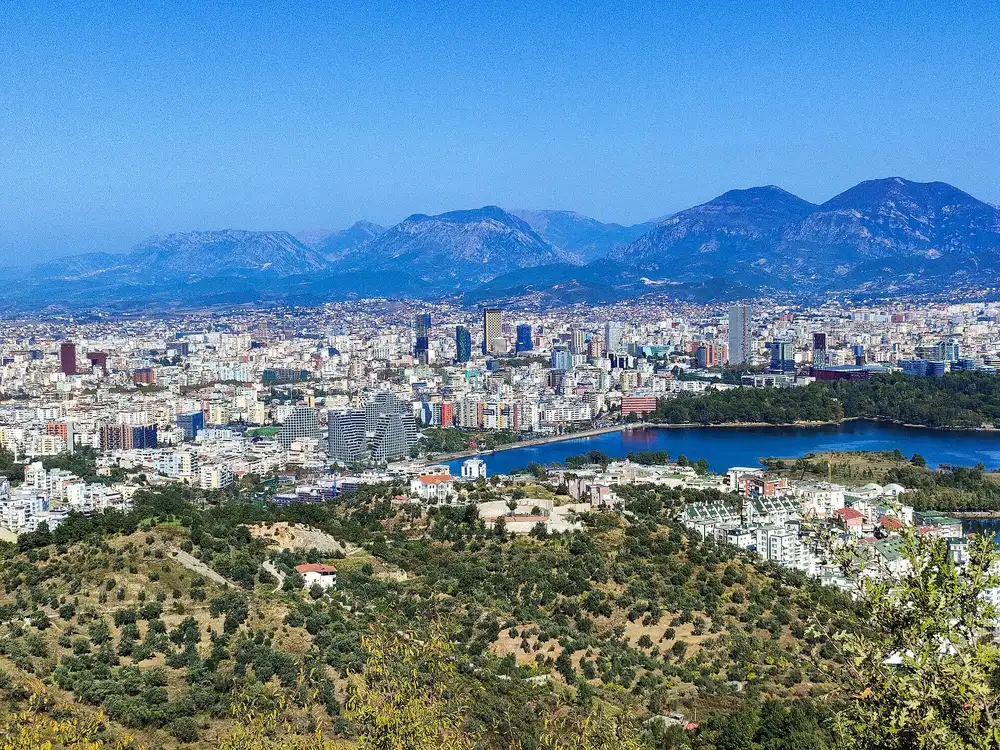
Tirana
Route startstop ≈60 min
Pick the car up, settle the one-way question with the rental desk, and get out through the ring road before the afternoon. The motorway south starts easy.
Photo: BBB2021 / Wikimedia Commons, CC BY-SA 4.0 ( source) -
Divjake-Karavasta National Park
92 km from the startstop ≈90 min
The largest lagoon in Albania and the country's only coastal breeding site for the Dalmatian pelican. Pine forest, a boardwalk and a tall wooden watchtower, about 20 minutes off the main road.
Photo: albinfo / Wikimedia Commons, CC0 ( source) -
Apollonia
149 km from the startstop ≈90 min
An ancient Greek and Roman city on a hill above the Myzeqe plain, 12 km west of Fier. Great Stoa, odeon, re-erected Bouleuterion facade and a 13th-century monastery with a small museum.
Photo: Pasztilla aka Attila Terbócs / Wikimedia Commons, CC BY-SA 4.0 ( source) -
Zvernec island
193 km from the startstop ≈75 min
A 13th-century monastery on a pine island in the Narta lagoon, reached on a wooden footbridge. Twenty minutes north of Vlora and the last easy stop before the mountains.
Photo: Arbenllapashtica / Wikimedia Commons, CC BY 4.0 ( source) -
Llogara Pass
240 km from the startstop ≈45 min
The climb to about 1,027 m where the Ionian appears all at once. There is a proper car park at the viewpoint; the 5.9 km tunnel underneath is the fast alternative.
Photo: Albinfo / Wikimedia Commons, CC BY-SA 4.0 ( source) -
Porto Palermo
283 km from the startstop ≈90 min
A triangular fortress on a causeway peninsula in a near-enclosed bay, 10 km south of Himara and about a kilometre downhill from the coast road.
Photo: ErtonKashta / Wikimedia Commons, CC BY-SA 4.0 ( source) -
Saranda
328 km from the startstop ≈1440 min
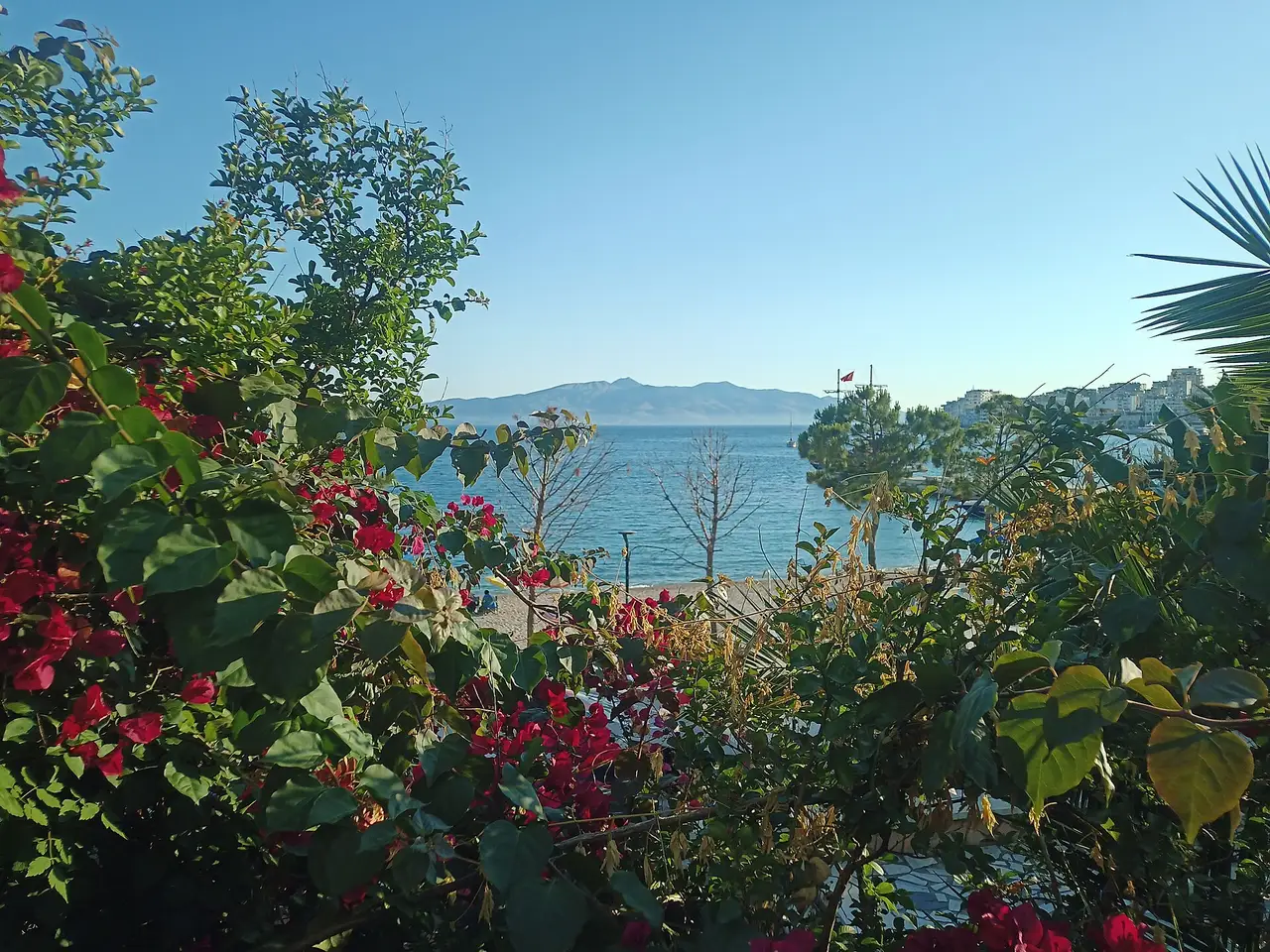
The end of the drive and the base for Butrint, Ksamil and the Blue Eye. Corfu is the low grey line across the channel.
Photo: Aktron / Wikimedia Commons, CC BY-SA 4.0 ( source)
Route map
The map with stops loads on click - to keep the page lightweight.
The map didn’t load. Check your connection and refresh the page.